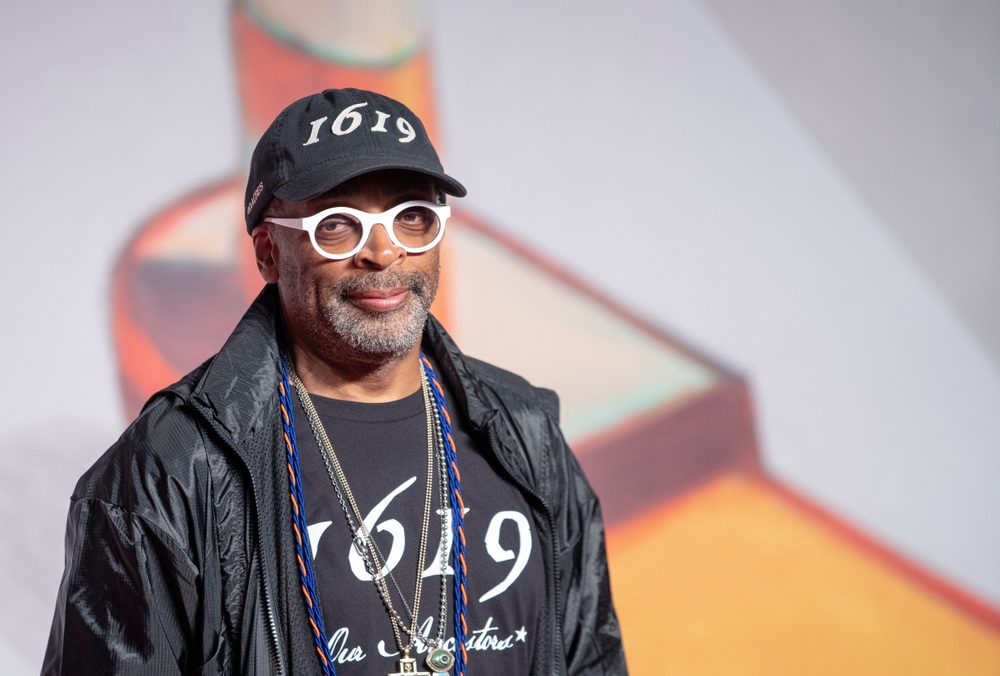
In Do the Right Thing, a Brooklyn block becomes a world of its own. Neighbours argue, work, listen to music and watch one another through a punishing summer day. Spike Lee plays Mookie, one resident among many, while Public Enemy’s “Fight the Power” repeatedly presses into the soundtrack. Released in 1989, the film made room for humour, irritation, affection and anger within the same streets. Its community was vividly particular, even as the conflicts it exposed reached far beyond Brooklyn. 1
Atlanta, Brooklyn and an education in film
Lee was born in Atlanta on 20 March 1957 and grew up in New York. His father, Bill Lee, was a jazz bassist and composer; his mother taught art and Black literature. Music, books and images were therefore part of the household in which he developed. The interests later visible in his films had roots in family life, although the career he would build required a different set of practical skills. 2
After school, he went to Morehouse College in Atlanta, following earlier generations of his family. He wrote for its newspaper, The Maroon Tiger, and worked as a jazz disc jockey. In 1977 he made The Last Hustle in Brooklyn, filming Black and Puerto Rican street life. The city offered subjects close at hand: people and places he could observe while learning what a camera might do with them. 2
He completed his Morehouse degree in 1979 and continued at New York University’s Tisch School of the Arts, earning an MFA. His thesis film, Joe’s Bed-Stuy Barbershop: We Cut Heads, won a Student Academy Award in 1983. A Brooklyn business had already become the setting for a screen story. Film school also supplied the training and professional relationships from which his independent career would develop. 3, 4
Making room for Black everyday life
His breakthrough feature, She’s Gotta Have It, arrived in 1986. Its central character, Nola Darling, negotiates relationships with three men rather than fitting neatly into the future any of them imagines for her. Lee appears as Mars Blackmon, whose comic energy became one of the film’s signatures. Writing about it in 1994, critic Hilton Als emphasised the significance of Black characters with recognisable intimate lives, desires and disagreements at the centre of the screen. 5
The film’s resources were modest, with a final cost of about $175,000 including post-production. Ernest Dickerson, who had met Lee at NYU and photographed his thesis film, helped turn those limitations into a distinctive visual style. David Lee’s photographs introduced the Brooklyn setting. These were specific contributions to a shared production: the cinematographer shaped the moving images, while the director’s brother brought still photography into its presentation of the neighbourhood. 5
School Daze followed in 1988, moving into the rituals and rivalries of a Black college’s homecoming weekend. Laurence Fishburne’s politically engaged Dap and Giancarlo Esposito’s fraternity leader represent competing priorities, while Lee plays a student desperate to join the fraternity. Musical numbers, choreographed by Otis Sallid, carry arguments as well as entertainment. The film also examines divisions around skin colour and attitudes towards the college’s relationship with apartheid South Africa. Its campus contains disagreements within Black life, rather than a single representative viewpoint. 6, 7
A neighbourhood becomes a national argument
For Do the Right Thing, Lee assembled an ensemble including Ossie Davis, Ruby Dee, Danny Aiello and Bill Nunn. The production’s sound and appearance depended on an equally substantial team: Bill Lee supplied the original score, Wynn Thomas designed the sets, Ruth E. Carter created the costumes and Dickerson photographed the film. Public Enemy’s music occupied the same film as the older jazz composer’s work, bringing different musical languages into its portrait of the street. 1
The heat was a filmmaking problem as well as a feature of the plot. Dickerson and Lee used colour and texture to make the summer atmosphere visible, paying particular attention to photographing the cast’s different skin tones. Darnell Martin, who worked as an assistant camera operator, later discussed that care in a Criterion interview. The resulting images make the neighbourhood’s physical conditions part of how the drama is experienced, before a character explains anything. 8
Lee also resisted an obvious, easily predicted route through the story. In a contemporary Film Comment interview, he explained that he wanted audiences to work out where events were leading. Asked about the relatively well-kept setting, he rejected the assumption that people on low incomes necessarily lived without pride in their surroundings. Both decisions mattered to the film’s texture: these characters inhabited a functioning neighbourhood, with lives extending beyond the confrontation towards which the story moved. 7
Malcolm X and the ambition of an epic
Malcolm X, released in 1992 with Denzel Washington in the title role, demanded a larger canvas. Lee had read The Autobiography of Malcolm X at school and described its effect on his understanding of media images and Black public life. In his February 1993 Sight and Sound interview, he explained that he wanted an epic comparable in ambition to a David Lean film. The length and scale were part of the intended portrait. 9
That ambition produced a struggle over money. Lee said he contributed half his salary and secured gifts from supporters including Michael Jordan and Oprah Winfrey to help complete the production. The financial dispute made the film’s scale a practical question: the director had to find ways of paying for the epic he had proposed. Securing that support became part of bringing Malcolm’s life to the screen. 9
The film’s style also required choices about how to represent a historical person. Lee later explained one of its floating camera movements through a conversation with Malcolm’s widow, Betty Shabazz, about her sense of his state of mind before his assassination. Lee and Dickerson used that interpretation to shape a shot. It was an artistic decision informed by testimony, a useful distinction when watching a dramatic biography whose images can become inseparable from public memory of its subject. 11
Family memories and a wider screen
Crooklyn, released in 1994, returned to family life in Brooklyn. It began with a story by Joie Lee, developed into a screenplay with her brother Cinqué before Spike joined the project. Zelda Harris plays Troy, a girl growing up among brothers, with Alfre Woodard and Delroy Lindo as her parents. Arthur Jafa photographed the film. Giving the childhood story to Troy made the daughter’s experience the organising perspective within the family. 10
The film draws on the Lees’ upbringing without reproducing it literally. Its episodes of games, quarrels and domestic routines mix remembered experience with invention. Songs from the late 1960s and early 1970s help establish the period and comment on what happens. Yale Film Archive’s account stresses that its apparently loose collection of incidents develops into a coming-of-age story. Memory here takes the shape of recurring sounds and everyday encounters as much as major events. 10
Lee’s range also included the commercial thriller. Inside Man, in 2006, brought together Denzel Washington, Clive Owen and Jodie Foster in a story involving a bank robbery, a detective and a powerful intermediary with concealed interests. Chiwetel Ejiofor was part of the supporting cast. The film’s suspense depends on competing accounts of what is happening, giving Lee another setting in which characters’ public roles and private agendas do not neatly coincide. 15
Listening to witnesses
Alongside dramatic features, Lee developed substantial documentary work. His 1997 film 4 Little Girls examined the Birmingham, Alabama, church bombing of 15 September 1963, which killed four girls attending Sunday school. It brought relatives’ testimony together with wider accounts of the civil-rights period. Sam Pollard co-produced and edited the film, and Ellen Kuras was its cinematographer: the shaping and recording of those testimonies depended on collaborators working closely with the director. 12, 13
Lee had first approached the family of Denise McNair, one of the children, while he was still a film student. He later explained that his initial idea for a dramatic feature changed into a documentary. He wanted parents, relatives and friends to describe who the girls had been and the lives they had been prevented from living. The change of form gave surviving witnesses a direct place within the film, rather than having actors speak for them. 11
When the Levees Broke: A Requiem in Four Acts, made for HBO in 2006, extended that attention to testimony in the aftermath of Hurricane Katrina. Residents, bereaved families and officials offered different views of the disaster and its consequences. The film examined failures of engineering, emergency response and support for displaced people, while also attending to New Orleans’s music and cultural life. Produced with Pollard, it treated the city as a place of continuing human relationships as well as destruction. 14
History, satire and another generation of soldiers
BlacKkKlansman, released in 2018, adapted Ron Stallworth’s account of infiltrating the Ku Klux Klan while working as a Black detective in Colorado Springs. John David Washington plays Stallworth and Adam Driver the white colleague who attends meetings in his place. The film uses the absurdity of that arrangement within a threatening story. Its characters are dramatised: Driver’s Flip Zimmerman, for example, is not the actual name of Stallworth’s colleague, who remained anonymous. 16
At the 2019 Academy Awards, Lee shared the adapted-screenplay Oscar with Charlie Wachtel, David Rabinowitz and Kevin Willmott for BlacKkKlansman. It was his first competitive Oscar, recognising the four writers’ work together. He had already received an honorary Oscar in 2015 for his contribution to filmmaking. 4, 17
Da 5 Bloods followed in 2020, with four Black American veterans returning to Vietnam to recover their former commander’s remains. Delroy Lindo, Clarke Peters, Norm Lewis and Isiah Whitlock Jr play the older men; Chadwick Boseman appears as their commander in the wartime story. Changes in the shape of the screen help distinguish the flashbacks, recalling the television images through which viewers once encountered the conflict. Adventure, memory and the unfinished consequences of war occupy the same film. 18
Willmott explained that he and Lee reshaped an earlier script by Danny Bilson and Paul DeMeo around Black soldiers and the struggle for rights at home. Marvin Gaye’s What’s Going On became another part of that approach. The writers discussed which songs belonged with particular scenes, allowing music to participate in the storytelling. The project joined Lee’s interest in popular genre filmmaking to questions about whose wartime experiences American cinema had made visible. 19
Teaching and the next film
Teaching has run alongside this career. A 2019 NYU account describes Lee bringing fifteen students onto When the Levees Broke as interns and mentoring filmmakers including Dee Rees, Stefon Bristol and Reinaldo Marcus Green. These relationships connected classroom work with practical production. Students could encounter the demands of a real project, while Lee’s experience as a working director remained part of the education he offered. His earlier training at Tisch had developed into a continuing contribution to it. 3
His work has also entered Britain’s institutions of film culture. The BFI honoured him with a fellowship in 2023, accompanied by a Southbank conversation and screening programme. Its announcement also described collaboration with its National Archive on a new 35mm print of Malcolm X. Recognition and preservation met in a practical task: making the film available to audiences in a form tied to the cinema for which it had been made. 20
In 2025, Highest 2 Lowest reunited Lee and Denzel Washington for their fifth film together. Reworking Akira Kurosawa’s High and Low, it places a music-industry figure inside a ransom plot in contemporary New York. The city, music, money and moral pressure again provide the material for a story, now filtered through an engagement with Japanese cinema. Lee’s connection to Brooklyn has coexisted with an appetite for films and forms from beyond it. 21
When Highest 2 Lowest premiered at Cannes on 19 May 2025, Lee brought former students who were attending the festival to the screening. A new film and an international audience were also an opportunity to include people whose filmmaking he had helped to develop. The classroom and the cinema remained connected through the director’s work. 22
Sources
1. Criterion Collection — Do the Right Thing: film record and production credits.
2. Turner Classic Movies — Spike Lee biography.
3. Nate von Zumwalt, NYU Tisch — A Portrait of the Artist as a Teacher: Spike Lee (2019).
4. Academy of Motion Picture Arts and Sciences — Spike Lee, 2015 Governors Awards.
5. Hilton Als, Criterion Collection — She’s Gotta Have It (1994).
6. Sony Pictures — School Daze: official synopsis and credits.
7. Marlaine Glicksman, Film Comment — Interview: Spike Lee on Do the Right Thing (1989).
8. Criterion Collection — A Palette That Sizzles On-Screen (2019).
10. Michael Kerbel, Yale Film Archive — Film Notes: Crooklyn (2023).
11. Glenn Kenny, Directors Guild of America — Doing the Right Thing: Spike Lee interview (2008).
12. Apple TV — 4 Little Girls: licensed film synopsis and release record.
13. American Film Institute — 4 Little Girls: production credits and release record.
14. Peabody Awards — When the Levees Broke: A Requiem in Four Acts (2006).
15. Universal Pictures — Inside Man: official synopsis and credits.
16. Focus Features — Connecting the Historical Dots: A Who’s Who in BlacKkKlansman (2018).
17. Academy of Motion Picture Arts and Sciences — 91st Academy Awards, 2019 results.
18. Christina Newland, Sight and Sound — Spike Lee on Da 5 Bloods and American lies (2020).
20. British Film Institute — Spike Lee honoured with BFI Fellowship (2023).
21. Festival de Cannes — Highest 2 Lowest: official 2025 film record.
22. NYU Tisch — Professor Spike Lee Premieres Highest 2 Lowest at Cannes (23 May 2025).





Join the conversation
Comments 0
Share a memory, ask a question or add to this story.
No comments yet. Add your perspective.
Add your voice
Create a free account and verify your email to leave a comment.
All comments are reviewed before publication.