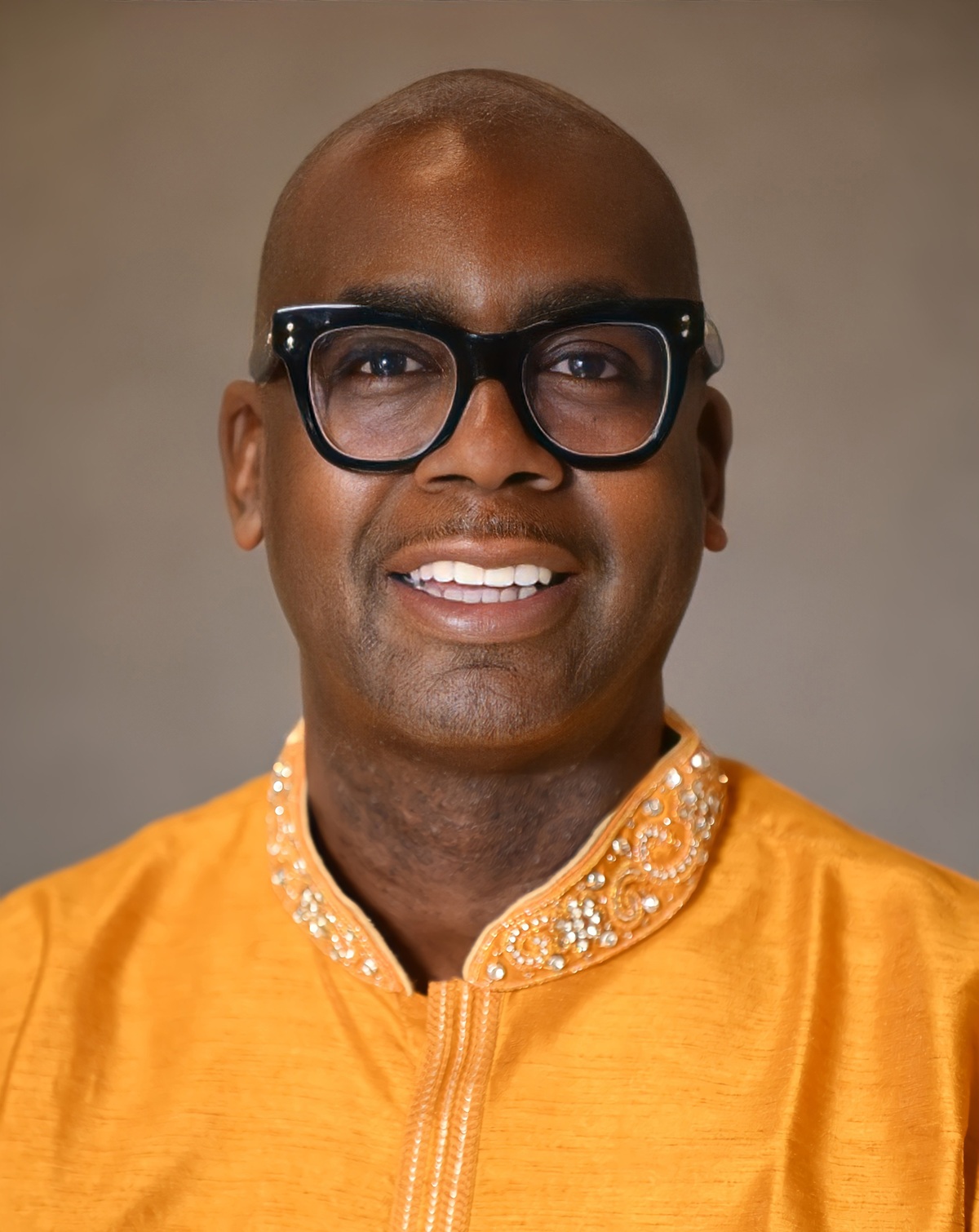
Patrick Vernon’s work often begins with a name that somebody else has overlooked. It might belong to a person in a family photograph, a community campaigner or a figure missing from a popular account of British history. His response has been to make those lives easier to find: through genealogy, public campaigns and books that give readers a place to begin.
The best-known example is 100 Great Black Britons, the project that became a book co-written with historian Angelina Osborne in 2020. Alongside it runs another long campaign, for the contribution of the Windrush generation to be recognised in Britain’s public life. Vernon has pursued that work while holding senior roles in health and community organisations. History and the treatment of people in the present meet throughout his career. [1][2]
A family history rooted in Wolverhampton
Vernon was born in Wolverhampton in 1961. His parents came to Britain from Jamaica in the 1950s, and his interest in family history grew from asking them about their lives. His own accounts describe research that combined conversations with relatives and documentary records. A personal curiosity became part of a wider effort to help other people investigate their histories. [3][4]
In an oral history recorded for Hackney Museum in 2011, Vernon connected researching his ancestry with understanding where he stood in a much larger history. He spoke about belonging in Britain and in Hackney, and about the relationship between family experience, migration and colonialism. The museum record preserves a useful perspective on the person behind the later public campaigns. [3]
Family history can begin on a very small scale. A name on the back of a photograph may lead to a place; a place may lead to a record, a journey or another person to ask. The significance lies partly in the detail. An account of migration becomes more precise when it includes the work someone did, the people they knew and the decisions they faced.
This approach also gives ordinary lives a claim on historical attention. Most people will never appear in a national poll or have a statue. Their memories can still help explain how a neighbourhood developed, how a family supported itself or how public policy was experienced. Vernon’s interest in genealogy makes room for that scale of history alongside his better-known work celebrating prominent Black Britons.
From Every Generation to a public campaign
Writing for Media Diversified in 2017, Vernon dated the creation of Every Generation to 2002. He linked the project to his experience mentoring African and Caribbean boys and young men in Brent and Hackney. Some were struggling at school or finding their way into employment. He wanted access to history and role models to be part of the support available to them. [5]
The 100 Great Black Britons campaign followed in 2003. It responded to the absence of people of African heritage from the BBC’s earlier 100 Greatest Britons list and invited members of the public to nominate Black people they admired. Mary Seacole, the Jamaican-born nurse and businesswoman, emerged at the head of the original poll. [5]
A public nomination is an accessible invitation to do some research. Someone may begin with a well-known sports figure or musician and discover a teacher, organiser, scientist or writer. The act of choosing also opens a debate about the criteria. Fame, achievement, courage and influence are related ideas, but they do not measure the same thing.
There are limits to any list of a hundred people. Its value is greater when it prompts further reading than when it is treated as a final boundary around a subject. For a school or community group, the most revealing discussion might concern someone who is missing: whose evidence survives, who had the opportunity to become visible and which kinds of contribution are easiest to recognise?
A book written with Angelina Osborne
The later campaign invited a fresh round of public nominations, with a panel selecting the hundred names for the updated project. The resulting book, 100 Great Black Britons, was published in 2020, with a foreword by David Olusoga. It brings together biographical accounts and portraits across different periods and fields of endeavour. [1][6]
Angelina Osborne’s contribution deserves full credit. At the book’s 2020 LSE event, she was introduced as an independent researcher and heritage consultant with a doctorate from the University of Hull’s Wilberforce Institute. Her interests included Caribbean enslavement, as well as community and education activism. The book belongs to both authors, bringing historical research into conversation with a long-running public campaign. [7]
The format offers several ways to read. One person might follow a life from start to finish; another might move between entries about a particular profession or period. Reading two accounts together can raise questions that a single biography leaves in the background. Did the people face similar barriers? What organisations supported them? How did their opportunities differ?
That makes the book a useful starting point for a reading group or classroom library. A short biography can introduce a subject and suggest the next piece of research, whether that is an autobiography, an archive collection or a local history. The strongest use of a collection like this is to let it open doors into a much larger body of work.
Windrush: recognition and rights
Vernon became a leading campaigner for an annual Windrush Day, seeking lasting public recognition of the people who came to Britain from the Caribbean and their descendants. In June 2018, the government announced that the day would be marked each year on 22 June. The date recalls the arrival of the Empire Windrush at Tilbury in 1948. [7][8]
The announcement came in the year when the Windrush scandal gained national attention. Long-established residents who could not produce the documentation demanded of them had been wrongly treated as unauthorised immigrants. People lost access to work and services; some were detained or removed from the country. The House of Commons Library’s account sets out those failures and the subsequent government response. [9]
Vernon was among the campaigners pressing for action during that crisis, including through a petition calling for an amnesty for the Windrush generation. His part belonged to a broader effort involving affected people, their families, journalists, lawyers and community organisations. [7]
There is a difficult relationship here between public celebration and practical rights. A country can praise the contribution of a generation while failing people who are still alive and seeking help. Commemoration therefore raises questions about what follows a ceremony: whose testimony is heard, how institutions respond to mistakes and whether people can obtain the support to which they are entitled.
Windrush history also extends beyond a single ship or day. The experiences of Caribbean migration were shaped by different journeys, occupations, family arrangements and places of settlement. A national anniversary can provide an opening into that variety. Its educational value depends on what people are encouraged to learn after they have recognised the name.
Health, loss and whose experience is heard
Vernon’s work in health is a substantial part of his public life. An NHS announcement records that he became interim chair of Birmingham and Solihull Integrated Care Board in January 2023 and substantive chair in January 2024. Before that, he had served as the board’s non-executive lead for inequalities. He received an OBE in 2012 for work tackling health inequalities. [10]
These roles bring a different kind of responsibility from a public history campaign. They concern how an organisation listens, sets priorities and understands the people it serves. Placing them alongside his writing helps explain the breadth of his interests. The questions surrounding recognition can appear in a history book, but they also arise when people explain their experiences to a public institution.
He co-edited Black Grief and Healing: Why We Need to Talk About Health Inequality, Trauma and Loss with Dr Yansie Rolston, published in 2024. The anthology includes stories, poems and essays addressing bereavement, the pandemic, Grenfell and the pressures of continuing inequality. It brings different contributors into a shared space without requiring them to experience loss in the same way. [11]
The NHS also records his establishment of the Majonzi Fund in 2020, supporting commemorative events for people from Black and racialised communities who died during the pandemic. That is a practical link between remembrance and community work: helping families and organisations create a setting in which a life can be acknowledged. [10]
The anthology invites readers to consider what can be missed when bereavement is discussed without attention to someone’s circumstances. A family’s experience may include the loss itself, the treatment they encountered and the difficulty of having that experience understood. Giving different writers room to describe those things is a distinct editorial contribution. It allows readers to encounter experiences they should not assume are universal.
His local public life has included service as a Labour councillor in Hackney and chairing Hackney Thinking Spaces. In June 2026, he told the Hackney Citizen that he intended to continue campaigning on ageing, housing, health and the position of migrant communities. The range of those concerns gives a fuller picture of Vernon than a description confined to anniversaries and historical lists. It also explains why a book about past achievement sits alongside projects addressing the conditions in which people live now. Public history is one of several ways he has sought to take part in that conversation. [15]
Continuing the work of remembrance
Vernon’s later work includes the Windrush 100 network, which looks towards the centenary in 2048. Its stated aims include preserving the stories of the Windrush generation, supporting annual commemorations and encouraging younger people to take part. The long timescale brings an immediate responsibility: first-hand memories need to be recorded while the people who can share them are here. [12]
His public service received further recognition in the 2026 King’s Birthday Honours, when he was awarded a knighthood for services to racial equality. The University of Wolverhampton also lists him as its Pro-Chancellor for Health. These honours form part of the account of his career, while the campaigns and publications show the work behind the titles. [13][14]
For readers coming to him through the Black History bookshop, 100 Great Black Britons is the natural starting point. Readers interested in the connection between public responsibility and lived experience can also explore our features on Doreen Lawrence and Stella Dadzie, whose work offers different examples of organising, education and keeping a record.
Vernon’s career gives readers a reason to look again at the material closest to them. A conversation with an older relative, a local archive or a book about an unfamiliar person can lead into history that a general account has passed over. The next name to investigate need not be famous. It needs someone willing to ask, listen and follow the evidence.
Sources and further reading
- Hachette: 100 Great Black Britons, authorship and publication details.
- Patrick Vernon: biographical account.
- Hackney Museum: oral history interview with Patrick Vernon, recorded in 2011.
- Patrick Vernon: account of researching his family history.
- Patrick Vernon in Media Diversified: origins of Every Generation and the campaign.
- 100 Great Black Britons: campaign and selection process.
- LSE: event with Patrick Vernon and Angelina Osborne, 23 October 2020.
- GOV.UK: announcement of an annual Windrush Day, 18 June 2018.
- House of Commons Library: Windrush Compensation Scheme and background to the scandal.
- NHS Birmingham and Solihull: chair appointment and career background, January 2024.
- Jessica Kingsley Publishers: Black Grief and Healing, editors and contents.
- Windrush 100: purpose and participants.
- Cabinet Office: King’s Birthday Honours List 2026.
- University of Wolverhampton: Pro-Chancellors, updated September 2026.
- Hackney Citizen: Patrick Vernon’s public work and response to his knighthood, June 2026.



Join the conversation
Comments 0
Share a memory, ask a question or add to this story.
There are no published comments on this article.
Comments are closed for this article.