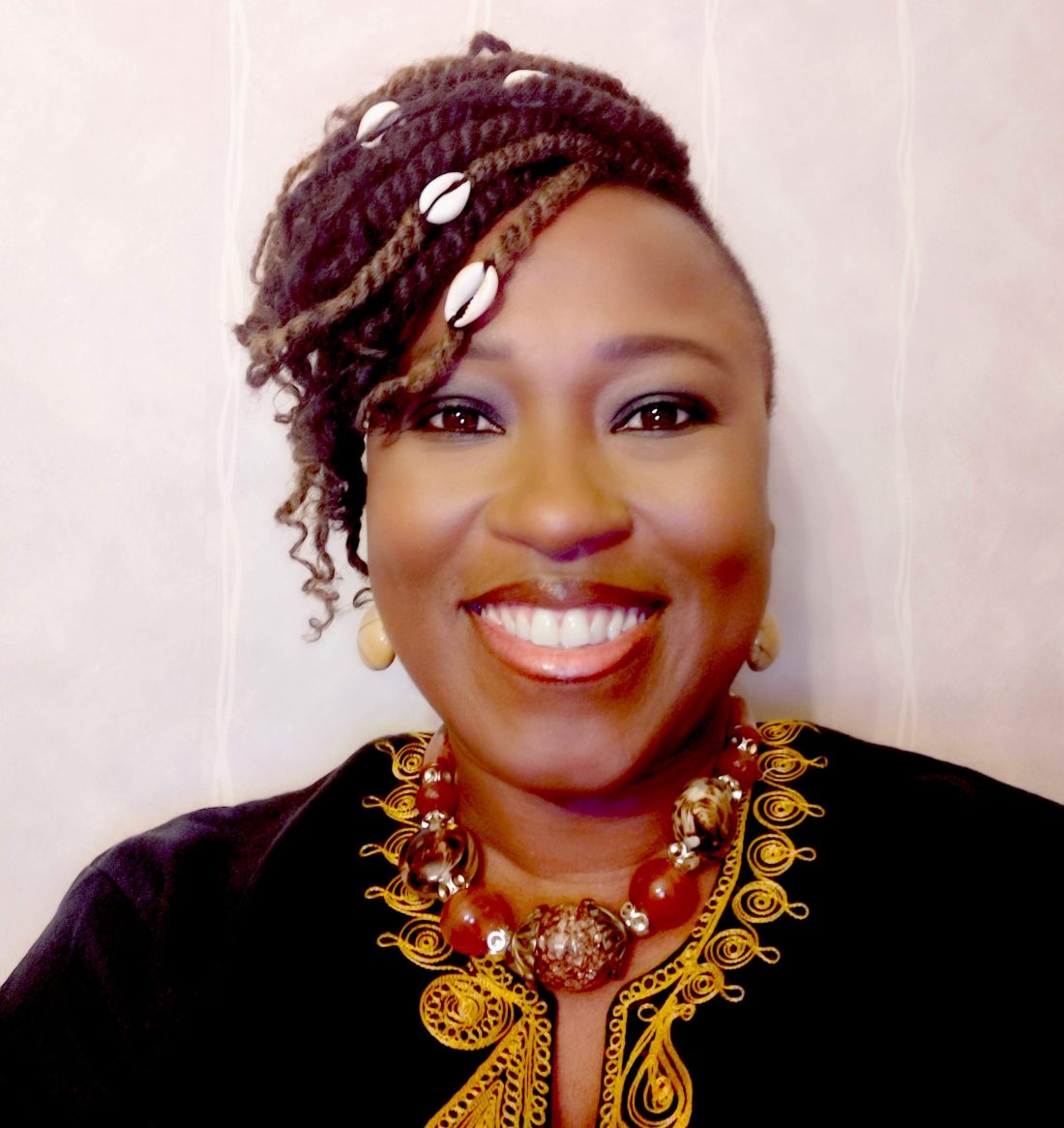
The subtitle of Shola Mos-Shogbamimu’s first book is an instruction: Don’t Define My Black Identity. It puts a question of authority at the centre of her work. Who gets to describe another person’s experience? Who decides whether an account of racism is credible, or whether the person describing it has spoken too forcefully? In This Is Why I Resist, published in 2021, she challenges the assumptions behind those decisions, connecting everyday encounters with wider structures of power in Britain and the United States. [1]
Mos-Shogbamimu approaches these questions as a lawyer, a writer and a campaigner. Those roles help explain the breadth of her public life. Alongside appearances in the media, she has built a women’s leadership publication, supported discussion about access to the legal profession and participated in work on gender equality. The result is a career concerned with both speaking in public and widening the opportunities for other people to do so.
An education across borders
Born in Hackney, Mos-Shogbamimu grew up between London, Nigeria and the United States. Newcastle University’s account of her early life records that she completed her law degree at the University of Buckingham at 19. Her upbringing and education crossed national boundaries long before comparisons between British and American racism became a recurring subject of her public commentary. [2]
Further study took her into several connected fields. She gained a master’s degree in diplomatic studies at Westminster, an LLM in commercial and corporate law at the London School of Economics, a PhD in law at Birkbeck and an executive MBA at Cambridge. LSE identifies her as a member of its 2002 law cohort. Her professional qualifications span two jurisdictions: she is a solicitor of England and Wales and a New York attorney, with experience in financial services. [3] [2]
That background is useful to keep in view when encountering her as a television commentator. Corporate law involves organisations, rules, responsibilities and the exercise of power. It is a different setting from a protest or a discussion about discrimination, but it supplies another way of thinking about the distance between an institution’s stated principles and the decisions it makes. Her public career should not be mistaken for a list of courtroom cases: her established legal experience is broader than the subjects for which she is best known on screen.
In a 2021 interview with Melan Magazine, Mos-Shogbamimu described the encouragement she received from her parents. Her father supported the ambitions of his daughters, while her mother combined employment with raising four children. She linked that upbringing to her own refusal to be confined to one role. The interview also allowed a less formal voice to emerge: a working mother discussing tiredness, faith and taking responsibilities a day at a time. [4]
Making room for women’s leadership
Mos-Shogbamimu founded Women in Leadership as a digital publication for women at different stages of their working lives. Its stated purpose combines personal accounts of leadership with commentary and practical support. Publishing such stories creates space to examine how careers are built: who offers encouragement, who has access to advice, and which obstacles are treated as ordinary professional hurdles even when they fall unevenly. [5]
Her She@LawTalks initiative took a related concern into universities and secondary schools, promoting women and ethnic minority leadership within the legal profession. The Women’s Budget Group also records her work teaching intersectional feminism to women who were refugees or seeking asylum. In that context, the term has a practical meaning. A discussion of women’s rights has to take account of differences in race, migration status and access to resources, because those differences affect what protection and opportunity can mean. [6]
These activities broaden the picture of her activism. Public argument is only one part of it. A school discussion about entering law, an account of a woman’s professional experience and a workshop about overlapping forms of exclusion reach different audiences. Each can give participants language for an experience they may previously have understood as an individual failure. None, on its own, removes the barriers being discussed; the value lies in making those barriers available for examination.
Her work has also entered policy settings. When LSE hosted her for Black History Month in October 2020, its event record identified her involvement with the Commission on a Gender-Equal Economy and the Women’s Budget Group’s policy advisory group. The conversation, with the university’s then director, Minouche Shafik, placed her work within a public discussion of law, women’s rights and equality. Such settings bring campaigners into contact with the research and policy questions behind decisions about economic opportunity. [7]
Her official biography also records her involvement in organising women’s marches. That places her within a collective form of politics: organisers have to bring people together, agree a purpose and make participation possible. The public speaker at the front of a demonstration is one visible part of a much larger effort. Keeping that work in the account of her career helps avoid turning a movement into the story of a single personality. Her leadership projects, campaigning and writing operate through relationships with other people, even when her own voice is the one audiences recognise. [5]
Taking the argument into print
This Is Why I Resist gives readers more time with Mos-Shogbamimu’s ideas than a short broadcast can offer. Its publisher describes a book that examines anti-Black racism through contemporary examples and asks readers to consider their own response. The focus moves between Britain and the United States, while the subtitle insists on the right of Black people to describe themselves. It is a work of argument addressed to a public audience. [1]
In an interview published around its launch by The New European, now The New World, she explained that the idea had developed before the 2020 protests. She wrote the book over six weeks, describing the process as demanding both intellectually and emotionally. The chronology matters: a publication date in 2021 can obscure the longer thinking that preceded it. The book emerged into an intense public conversation, but its concerns were not created by that moment. [8]
The range of subjects also complicates any idea that the book is concerned only with discrimination between a white majority and Black minorities. Melan’s interview and discussion of the book identify colourism, the exclusion of Black trans women from feminism, and forms of allyship that stop at public declarations. These topics ask what solidarity requires within movements as well as beyond them. Shared experience of one injustice does not automatically settle every question about another. [4]
For a reader, the useful approach is to follow the distinctions and examine the examples. A forceful proposition can be tested: what evidence supports it, how broadly does it apply, and what action follows? Agreement with every conclusion is not a condition of serious reading. Attention to the argument matters more than treating the author’s certainty as either a reason for instant acceptance or a reason to stop listening.
What institutions do with their promises
At Anti Racist Cumbria’s first summit, held in Kendal in November 2021, Mos-Shogbamimu discussed equity with the organisation’s chief executive. Her central point was about outcomes. She challenged institutions to compare their stated commitment to equality with persistent differences in pay and treatment. The organisation published the exchange as a resource for further discussion. [9]
The distinction helps explain why her work repeatedly moves beyond the language of good intentions. An organisation can declare itself welcoming while leaving its recruitment practices or routes to promotion unexamined. Assessing equity means looking at what happens after the declaration: whose experience is heard, whether a complaint leads to a response, and who has the authority to change a decision. These are questions that can be asked of a workplace or voluntary organisation without reducing the issue to whether its members consider themselves fair-minded.
They also reveal a tension for public campaigners. A memorable statement can attract attention, but institutional change requires information that is often less visible: records, procedures, budgets and follow-through. Readers interested in the relationship between personal testimony and sustained campaigning can also turn to our feature on Doreen Lawrence’s public life. Their careers are distinct, but both invite attention to how a demand for fairness is carried into organisations with the power to respond.
The right to describe yourself
The personal force of Mos-Shogbamimu’s book is visible in responses to it. Ahead of a University of Gloucestershire event in March 2021, a contributor to the university’s equity and diversity website reflected on its chapter “Can I Be Me?”. The writer connected it to her own experiences of being categorised by others and to questions about mixed heritage and belonging. That response records a reader recognising a question from her own life in a published work. [10]
It is a reminder that identity is not simply an abstract topic for a debate. A name, family connection or account of discrimination can become something another person feels entitled to correct. The demand for self-definition asks the listener to reconsider that entitlement. It does not require assuming that all Black people think alike; it makes room for people to explain themselves without first passing somebody else’s test of authenticity.
Mos-Shogbamimu has pursued public explanation through different formats. In her launch interview, she spoke about using TikTok, with help from her daughter, to address complex questions briefly. She also distinguished writing a book that readers can choose to engage with from an unlimited obligation to provide personal lessons about racism. That boundary is part of the work: publishing knowledge makes it available, while leaving readers responsible for the attention they bring to it. [8]
A continuing public practice
In 2022 she joined the board of Reprieve, the human rights organisation. Its work includes opposition to the death penalty and challenges to abuses carried out in the name of national security. The appointment connected her wider concern with power and unequal protection to an organisation undertaking investigations, legal work and campaigning. Serving on its board added a role in the governance of a charity working across borders, with cases that can require years of sustained effort. [2] [11]
Newcastle University awarded her an honorary Doctor of Civil Law in December 2023, citing her contribution to race equality and opposition to discrimination. The honour is separate from her earlier research doctorate at Birkbeck. It marks an instance of institutional recognition of a career whose arguments have often been directed towards institutions themselves. [12]
For readers meeting her work for the first time, This Is Why I Resist is the place to begin. The book is included in the Black History bookshop, alongside other writing about British activism and public life. Read with time to follow its examples, it offers a fuller encounter with her thinking than an isolated clip. The question running through that work remains concrete: when a person describes an injustice, what would it mean to take the account seriously enough to act?
Sources and further reading
- Hachette: This Is Why I Resist — publisher’s description
- Newcastle University: honorary degree citation, 4 December 2023
- London School of Economics: Dr Shola Mos-Shogbamimu, LLM Law 2002
- Melan Magazine: interview with Shola Mos-Shogbamimu, 7 February 2021
- Shola Mos-Shogbamimu: official website and publications
- Women’s Budget Group: Shola Mos-Shogbamimu commissioner profile
- London School of Economics: In Conversation With Dr Shola Mos-Shogbamimu, 27 October 2020
- The New European (now The New World): This Is Why I Resist — author interview
- Anti Racist Cumbria: Shola Mos-Shogbamimu explains equity, 2021 summit
- University of Gloucestershire: This Is Why I Resist… Too!, 23 March 2021
- Reprieve: Annual Report 2023
- Newcastle University: Equality champion honoured at Winter Congregations, 4 December 2023





Join the conversation
Comments 0
Share a memory, ask a question or add to this story.
There are no published comments on this article.
Comments are closed for this article.