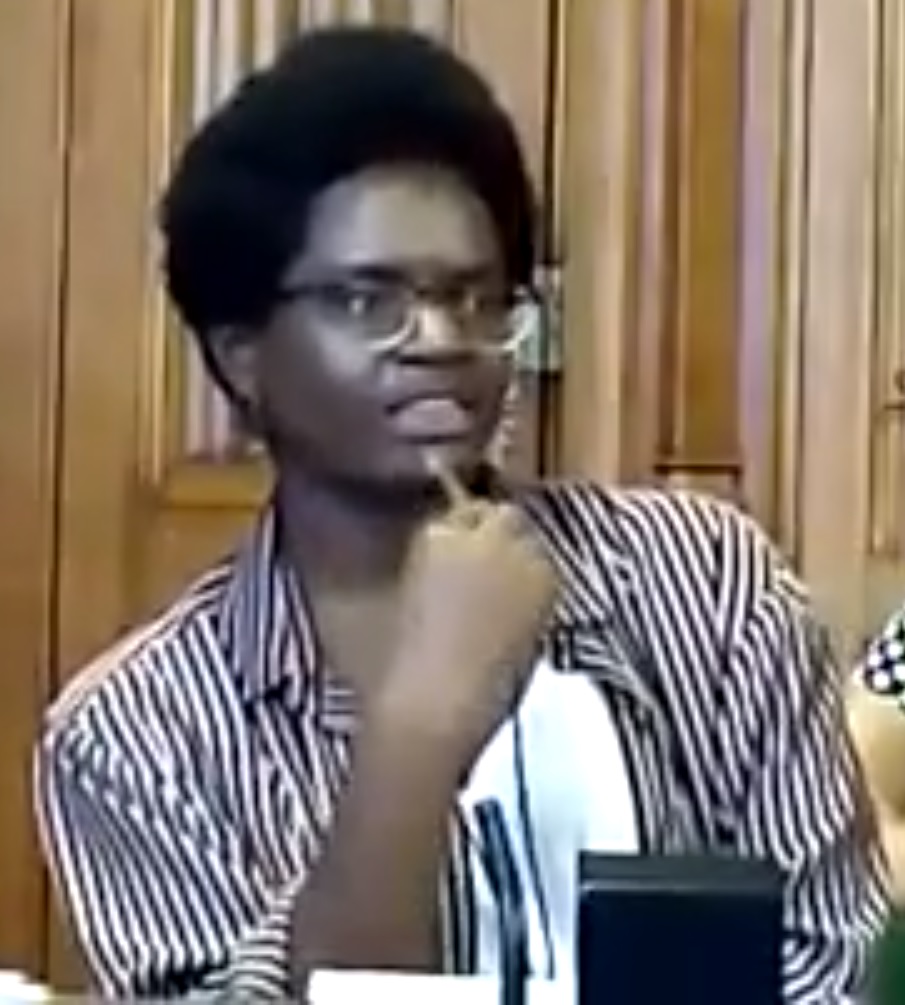
Reni Eddo-Lodge’s best-known title began as a refusal. In a blog post published in 2014, she explained why she would no longer spend her energy trying to persuade people who dismissed the existence of structural racism. Three years later, that argument became the starting point for Why I’m No Longer Talking to White People About Race. The apparent contradiction is part of the book’s force: a writer announcing the limits of conversation produced a work that gave many readers a reason to begin one. [1] [2]
Her career has since taken her into podcasting, public history and publishing. Across these different forms, she returns to questions about who gets heard, whose experiences are treated as credible, and who has the power to decide what becomes common knowledge. Following that career means looking beyond the famous cover. It also means recognising a writer whose interests include feminism, historical memory and the practical business of making room for other people’s work.
A reader who became an activist
Eddo-Lodge was born and brought up in London. In her own account of her early development, she describes becoming involved in feminist activism at about nineteen. The friendships and arguments she encountered helped form her politics. She also began a blog around this period, using it to work through ideas while later supporting herself as a freelance journalist. Writing and activism developed alongside each other. [3]
She studied English literature at the University of Central Lancashire, graduating in 2011, and served as president of its students’ union. The combination of literary study and student representation gives a useful sense of her route into public life: she was learning how writing works while also taking part in organised argument about the institutions around her. [4]
Her subsequent journalism appeared in publications including The Voice, The Guardian, The New York Times and Inside Housing. That range matters. It places her work within a working journalist’s career, with different audiences and commissions, before the success of her first book made her name widely familiar. A bestseller can make the years before publication disappear from view; her bibliography helps restore them. [5]
The argument behind the title
The original blog post described the exhaustion of having an account of racism interrupted, doubted or turned into a debate about the listener’s intentions. Eddo-Lodge was setting a boundary around those exchanges. Her objection concerned a conversation in which one participant was expected to prove the problem existed before being allowed to discuss it. She also left room for public speaking when it might help someone else feel less isolated. [1]
The distinction is useful when approaching the book. Its title can be mistaken for its entire argument, particularly when encountered as a quotation on social media. Reading the work requires more patience. It asks readers to consider the conditions under which a conversation happens: who has to explain themselves, who can walk away, and whose discomfort is allowed to determine the subject.
A reader can disagree with a writer and still take those questions seriously. There is a difference between examining an argument and demanding that its author repeatedly establish her right to make it. The blog’s enduring interest lies in that problem of unequal intellectual labour, as much as in the provocation of its headline.
Putting Britain in the frame
Bloomsbury published Why I’m No Longer Talking to White People About Race in June 2017. Its scope extends from the treatment of Black history to the relationships between race and class. Eddo-Lodge brings these subjects into a British setting, asking readers to examine the society around them rather than treating racism principally as a story that takes place elsewhere. [2]
In a 2017 interview with Australia’s ABC, she explained that she understood the book as an examination of whiteness and power, rather than simply a description of Black experience. In that argument, whiteness refers to a position within social arrangements: the ability to be treated as an individual, or as the unremarkable norm against which other people are defined. Her subject is the distribution of that power. [6]
This also helps explain the term structural racism. It directs attention to patterns produced through institutions and decisions, including outcomes that cannot be understood solely by asking whether a particular person intended to be prejudiced. The approach changes the questions a reader asks. Instead of stopping at an offensive remark, it encourages examination of whose account receives authority and which inequalities have come to seem ordinary.
The book belongs in a wider reading life. It can open a conversation about Britain, but no single work can supply the whole history of a country or represent every Black perspective. Readers can follow its questions into biographies, community histories, archival research and writing that challenges its conclusions. Its usefulness grows when it becomes the beginning of that investigation.
Recognition, and what to do with it
The book won the Jhalak Prize in 2018. The award’s announcement described a unanimous decision by a panel that included Sunny Singh, Catherine Johnson, Tanya Byrne, Vera Chok and Noo Saro-Wiwa. It was recognition from writers assessing a work of writing, alongside its impact in public debate. [7]
Further recognition included the British Book Award for narrative non-fiction and the Bread and Roses Award for Radical Publishing in 2018. The book reached number one in the British charts in 2020, and Eddo-Lodge was elected a Fellow of the Royal Society of Literature in 2021. These achievements chart an unusually broad readership for a book addressing Britain’s racial inequalities. They do not, by themselves, tell us what readers did with its arguments. [8]
Her own account of donating money after the rise in sales offers a more concrete connection between readership and action. In an update on her website, she discussed supporting organisations including Level Up and We Belong. The gesture is worth reading alongside the book: money generated by public attention could be directed towards people already doing campaigning work. Buying or recommending a book may be one useful step; organisations need resources for work that continues after a title leaves the news. [9]
A voice among other voices
Eddo-Lodge’s writing also belongs to collaborative literary projects. She contributed to The Good Immigrant, edited by Nikesh Shukla and published in 2016. The collection brought together writers working in different forms to examine belonging and the experience of being treated as an outsider in Britain. Its contributors included poets, performers, journalists and playwrights: a reminder that an argument about national identity can be made through many kinds of writing. [10]
She also appeared in Margaret Busby’s anthology New Daughters of Africa, a collection of writing by women of African descent. Its international reach and mixture of genres place individual writers in a much larger company. Alongside memoir and essays are poetry, fiction, speeches and other forms, resisting the idea that there is a single authorised way to write from an African or diasporic experience. [11]
These collections are useful companions for anyone reading Eddo-Lodge for the first time. An anthology lets a reader move between voices, notice disagreements and discover an author they had not previously encountered. It also gives a more accurate impression of a literary culture than a reading list built around one famous name. Eddo-Lodge’s contribution can be considered on its own terms while remaining part of a conversation larger than any one book.
Listening across generations
In 2018, Eddo-Lodge launched About Race, made with producer Renay Richardson. Its nine main episodes brought voices from politics, culture and campaigning into a discussion of Britain’s recent history. Contributors included Diane Abbott, Akala, Meera Syal, Farrukh Dhondy and Simon Woolley. The series explored subjects such as political Blackness, class and feminism, alongside episodes about Eddo-Lodge herself and the making of her book. [12]
Audio makes room for a different encounter with an argument. Readers hear people respond, qualify a position and recall a moment in their own voices. For someone arriving through the book, the podcast offers a way to encounter a conversation with several participants rather than expecting one author to stand for an entire field.
Its subjects also offer routes into other lives. Our features on Akala and Diane Abbott explore different connections between learning, public argument and political participation. Reading them alongside Eddo-Lodge helps keep differences between generations, forms of work and individual positions in view.
A different map of London
Another collaboration took these interests into public space. Launched on International Women’s Day in 2022, City of Women London reimagined the Underground map using the names of women and non-binary people associated with the capital. Eddo-Lodge worked with Rebecca Solnit and Emma Watson on a project involving Haymarket Books, Transport for London, UCL and the WOW Foundation, among others. The result was a commemorative map, rather than an official renaming of stations. [13]
Names on the map included Claudia Jones, Mary Seacole, Olive Morris and Malorie Blackman. It also recognised collective organising, including the Organisation of Women of African and Asian Descent. A digital version provided further opportunities to explore the lives represented. The project moved between familiar and less familiar names, inviting people to examine the history of streets and places they might pass through every day. [13]
A map gives a history project a particularly direct form. A name takes up space, and the decision to include it makes a claim about what deserves attention. For a school, reading group or family, it offers a starting point for local research: choose a person, find reliable accounts of their work, and ask how their connection to London might otherwise be remembered.
Making space for other writers
Eddo-Lodge’s work expanded again with Monument Books, an imprint developed with HarperCollins’ 4th Estate. Announced in 2024, it gave her an editor-at-large role alongside publishing director Kishani Widyaratna and the 4th Estate team. The intention was to publish distinctive writing across non-fiction, with selected fiction and classics, and to connect readers with a range of authors. [14]
The launch title, published in February 2025, was Resistance, compiled by Steve McQueen and edited by Clarrie Wallis and Sarah Harrison. Drawing together photographs and writing, it followed protest in Britain across the century from 1903 to 2003. Its subjects included the Black People’s Day of Action, the miners’ strike and campaigns for women’s, LGBTQ+ and disability rights. [15]
Moving into publishing changes a writer’s relationship to the books that reach the public. It involves helping to choose and develop other people’s work, alongside producing one’s own. In Eddo-Lodge’s case, that adds an institutional dimension to the questions running through her career: how knowledge circulates, how readers encounter unfamiliar histories, and who is given the time and support to tell them.
For readers beginning with Eddo-Lodge, Why I’m No Longer Talking to White People About Race remains the place to start; it is included in our Black History bookshop. Read beyond its title, then follow the people, histories and arguments it brings into view.
Sources
- Reni Eddo-Lodge: Why I’m no longer talking to white people about race.
- Bloomsbury: Why I’m No Longer Talking to White People About Race.
- Reni Eddo-Lodge: About Me.
- University of Central Lancashire: International Women’s Day, 8 March 2022.
- Bloomsbury: Reni Eddo-Lodge.
- ABC: Reni Eddo-Lodge stakes a claim for intellectual honesty in race debates.
- Media Diversified: Reni Eddo-Lodge Wins the Jhalak Prize.
- Royal Society of Literature: Reni Eddo-Lodge.
- Reni Eddo-Lodge: An update on paying it forward.
- National Library of New Zealand: The Good Immigrant.
- New Beacon Books: New Daughters of Africa.
- About Race with Reni Eddo-Lodge: official podcast feed.
- Haymarket Books: The City of Women London Tube Map.
- HarperCollins and 4th Estate unveil new imprint with Reni Eddo-Lodge.
- Turner Contemporary: Resistance — Steve McQueen.





Join the conversation
Comments 0
Share a memory, ask a question or add to this story.
There are no published comments on this article.
Comments are closed for this article.