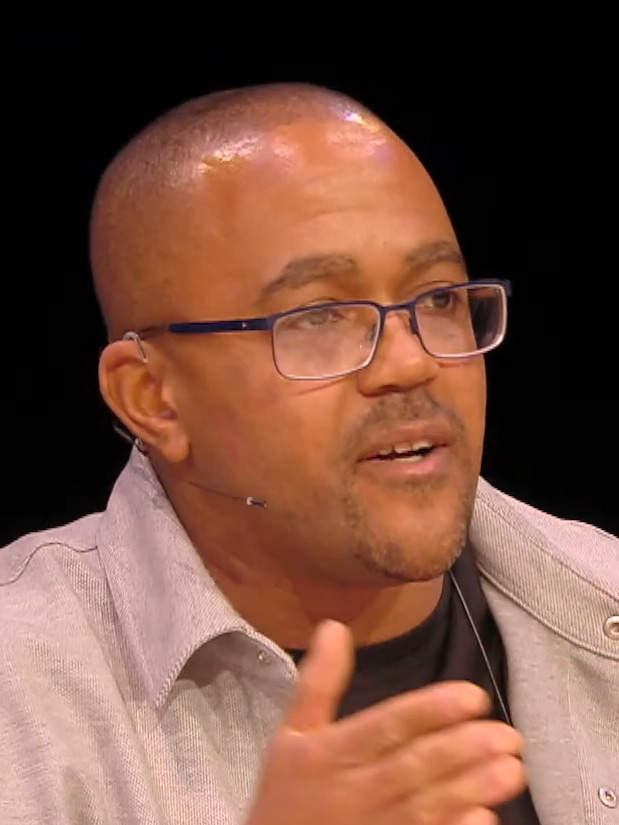
For seven months, Kehinde Andrews worked as a teacher in a Black supplementary school while researching his doctorate. He kept fieldnotes, studied the relationships in the classroom and paid attention to what made the school work. His account also recorded difficulties: attendance could fall, and organisation needed attention. That willingness to examine the practical business of education is a useful place to begin with a writer whose public arguments are often much louder than a Saturday classroom. [1]
Andrews became Britain’s first professor of Black Studies. His books ask how racism is sustained, what freedom would require and who gets to decide which knowledge deserves a place in education. Underneath those large questions sits a persistent concern with people organising for themselves: parents creating schools, scholars building a subject, and communities deciding what they need to learn. [2][4][5]
A Birmingham education
Andrews grew up in Birmingham with parents involved in Black activism. Their interest in education helped shape the intellectual life of the household, although he did not immediately embrace their politics. As the University of Bath’s account of his life explains, his return to that tradition began partly with books already within reach at home. A youth exchange in South Africa also mattered. Seeing inequality after the formal end of apartheid encouraged him to question how much a change in the law could achieve on its own. [2]
There is something recognisable about that route into serious reading. A young person can live alongside books for years before a particular experience makes them urgent. For Andrews, education became a way of connecting everyday experiences to questions about power. The concern was also practical: how could knowledge help people act upon the conditions they faced?
His University of Birmingham doctorate, completed in 2011, brought those interests together. Its title was Back to Black: Black Radicalism and the Supplementary School Movement. Working inside a school gave him evidence about relationships, teaching and confidence, as well as the pressures involved in keeping an independent educational project going. [1]
What parents built
His first book, Resisting Racism: Race, Inequality and the Black Supplementary School Movement, appeared in 2013. It examined a movement that grew from Black communities’ responses to discrimination in mainstream education. Parents, teachers, churches and community organisations gave their time to additional schooling, creating places where children could receive support and encounter knowledge that their weekday lessons neglected. [3]
The book explored differences within the movement as well as its shared purpose. Supplementary schools had relationships with mainstream schools to negotiate, ideas about Black identity to discuss and decisions to make about their future. Treating this work as a subject of sustained research gave due weight to people whose contribution might otherwise remain in family memories or a box of committee papers. [3]
In a subsequent academic article, Andrews argued that independent education had an important place in Black radical politics. He challenged the assumption that creating Black educational spaces necessarily meant retreating from the wider world. His argument concerned the ability of a community to develop its own understanding of racism and its own educational priorities. [4]
That raises demanding questions for any school. Who chooses the reading? Whose experience is treated as knowledge? What happens when a child recognises a problem that the institution has failed to acknowledge? Such questions give the history of supplementary education a relevance beyond the organisations in which it began.
Building Black Studies together
The creation of a university degree grew out of collective work. Writing in The Black Scholar in 2016, Andrews recalled organising the first Blackness in Britain conference with Lisa Palmer in 2013. More than 170 people registered, and the one-day event included 40 papers. Further conferences, publications and the Black Studies Association helped build an intellectual community around the subject. [5]
The undergraduate programme at Birmingham City University began in 2017. [15] Andrews’s account stressed the importance of having a group of Black academics able to develop it together. He also acknowledged earlier African and Caribbean scholarship in Britain. The new degree gave an institutional home to work with a longer history; it did not invent that history. [5]
A lecture he delivered in Leeds in May 2017 made the connection to community education explicit. Held at the West Indian Centre in Chapeltown, it considered both the opportunities and the tensions involved in bringing Black Studies into a university. The choice of venue suited the question. Universities can offer resources, qualifications and time for research, while much of the knowledge they study has been developed elsewhere. [6]
The approach also had consequences for students’ working lives. The course included a second-year placement with an organisation serving Black communities, taking learning into settings beyond the seminar room. [2] A placement can require a student to listen before proposing an answer, to work within an organisation’s limits and to explain ideas to people with different kinds of expertise. It puts a practical demand on the claim that education should be useful: useful to whom, and on whose terms?
This part of Andrews’s career complicates an easy story about individual achievement. A professorship is a personal milestone, but a subject also needs colleagues, students, readers and places to meet. The work of sustaining those relationships deserves attention alongside the firsts.
What does freedom require?
Back to Black: Retelling Black Radicalism for the 21st Century brings Andrews’s political argument to a general audience. Its subjects include Marcus Garvey, Angela Davis, the Black Panthers and more recent movements. It examines different forms of nationalism, Pan-Africanism and Marxism, asking what is lost when radical ideas are softened into stories of progress that leave existing arrangements intact. [7]
For Andrews, racism is embedded deeply enough that admission to powerful institutions cannot by itself amount to liberation. Its value as a starting point lies in making the question of freedom difficult: what would have to change in the distribution of resources and authority, and who would organise that change? [7]
His scholarship also questions the language used to organise opposition to racism. In a 2016 article, he examined “political blackness”, a term used in Britain to bring different minority groups into a shared political identity. Drawing on interviews and research at the George Padmore Institute, he argued that this approach could obscure the particular histories and relationships of people of African descent. [8]
Solidarity and difference are therefore subjects of debate within his work. Readers need not settle that debate before entering it. They can ask what a shared label makes possible, whose experience it captures and where it becomes too broad to explain what is happening. This is one way to read political history actively, rather than simply collecting the names of its best-known figures.
Following empire into the present
The New Age of Empire: How Racism and Colonialism Still Rule the World moves the argument to a global scale. Andrews challenges accounts in which Western wealth and power are explained chiefly through scientific discovery, industry or liberal political progress. He places slavery, colonial conquest and racial violence at the centre of the explanation. [9]
The book argues that the end of formal colonial rule did not end imperial relationships. Andrews examines the power of business, governments and international institutions, including the IMF and World Bank, as part of that continuing order. These are broad and forceful claims about how the world works. [9]
For a reading group, the useful discussion begins with those connections. How does a political relationship survive after its legal form changes? What kind of evidence would establish continuity, and what would demonstrate a break? Asking those questions makes room for a serious encounter with the book, including disagreement.
Public arguments and Malcolm X
In The Psychosis of Whiteness, Andrews turns towards the stories societies tell about racism and their own past. The book uses satire and deliberately provocative language to examine denial, including comforting accounts of Britain’s relationship with slavery. Its title belongs to that political argument; it should not be taken as a clinical diagnosis of a racial group. [10]
That approach gives the reader a different point of entry. Instead of beginning with an international institution, a discussion can begin with an assertion repeated in everyday conversation. What has been left out? Which part of the past has become familiar through repetition? What happens when someone challenges it?
His 2025 book Nobody Can Give You Freedom: The Political Life of Malcolm X returns to a thinker central to Black radical debate. Drawing on Malcolm’s speeches and writings, Andrews examines his ideas about liberation, community organisation and international struggle. He challenges interpretations that reduce Malcolm to a familiar image of anger and asks readers to examine the international reach of his ideas. [11]
The emphasis on a political life invites readers to follow arguments as well as events. A speech was addressed to a particular audience, at a particular moment, for a purpose. Reading it in that setting can reveal questions that disappear when one sentence is lifted out as an inspirational quotation. Our feature on Malcolm X offers further background.
Education beyond the campus
Andrews’s work also has an organisational home outside university life. Make It Plain describes itself as the editorial wing of the Harambee Organisation of Black Unity. Its account connects local organising in Birmingham with wider Black political concerns and draws explicitly on the example of Malcolm X’s Organisation of Afro-American Unity. The aim is to support existing community work and develop further activity where it is needed. [12]
Andrews hosts the Make It Plain podcast, discussing current affairs and interviewing guests. The organisation identifies him as its chair. These activities extend the audience for his ideas beyond people buying an academic book or enrolling on a course. [13]
By August 2026, Andrews had been made redundant from Birmingham City University. [14] The independent settings in which he speaks and writes provide other routes into the subject for people who may never enrol on a degree. [12][13]
Readers approaching Andrews for the first time might begin with the question that most interests them. Back to Black opens a debate about political traditions and strategies; The New Age of Empire asks how international power should be understood. Both are included in our bookshop. Reading them alongside other writers allows the disagreements within Black political thought to remain visible.
The thread connecting the classroom research, the degree and the public books is the work of education itself. Someone has to choose the texts, organise the discussion and keep a place open for the next reader. Andrews’s career brings those decisions into view, and asks what the people doing that work want education to make possible.
Sources
- University of Birmingham: Andrews’s doctoral thesis (2011)
- University of Bath: honorary degree oration (2022)
- Institute of Education Press: Resisting Racism (2013), publisher description on Google Books
- Kehinde Andrews: Towards a Black Radical Independent Education (2014)
- Kehinde Andrews: The Black Studies Movement in Britain (2016)
- University of Leeds: Why We Need Black Studies (2017)
- Bloomsbury / Zed Books: Back to Black
- Kehinde Andrews: The Problem of Political Blackness (2016)
- Penguin: The New Age of Empire
- Penguin: The Psychosis of Whiteness
- Hachette / Bold Type Books: Nobody Can Give You Freedom (2025)
- Harambee OBU and Make It Plain: organisational account
- Make It Plain: podcast
- The Guardian, August 2026
- Birmingham City University: retrospective account of the 2017 degree launch, February 2024.





Join the conversation
Comments 0
Share a memory, ask a question or add to this story.
There are no published comments on this article.
Comments are closed for this article.