When Empire Windrush reached Tilbury in June 1948, Ivor Gustavus Cummings had practical instructions for its passengers. His prepared welcome explained how officials could help them find work, reach relatives or obtain temporary accommodation. It recognised that some already knew Britain, while others were arriving without a settled plan. 1
From West Hartlepool to a wider world
Cummings was born in West Hartlepool in 1913, the son of a Sierra Leonean doctor and a white English nurse. His family’s connections already crossed the boundaries of the British Empire long before the Windrush voyage made Caribbean migration a major news story. 2
He grew up with his mother in the Croydon area, while his father returned to Sierra Leone. The family knew the widow and children of composer Samuel Coleridge-Taylor. School brought racial discrimination, and a period in Sierra Leone did not provide an easy alternative. He eventually found a more encouraging setting at Dulwich College, where his academic abilities developed. 3
He hoped to enter medicine, following his father, but lacked the funds for training. The career that emerged instead was concerned with welfare and the obstacles facing other Black people. Before he became an official greeting passengers at a port, he worked in a London hostel where accommodation, education and racial discrimination were already closely connected. 2
Aggrey House and the politics of student welfare
In the 1930s, Cummings became warden of Aggrey House in Doughty Street. Founded in 1934, the hostel offered accommodation to Black students in London and had the support of the British government. That connection shaped its politics. Government officials wanted to support students while also encouraging loyalty to the Empire. Cummings and Harold Moody, the Jamaican doctor and campaigner, were among its supporters, but their suspicion of communism created tensions with more radical organisations. 4
The West African Students’ Union had developed its own hostel and political community. Its journal linked readers in Britain and Africa, carried arguments about colonial rule and appealed for funds. Government preference for supporting Aggrey House rather than the union’s accommodation prompted a protest pamphlet and boycott in 1934. The dispute concerned who would shape students’ surroundings and political discussions, as well as who could supply a room at an affordable price. 5
Aggrey House nevertheless became a meeting place for people from different parts of Africa and the Caribbean. Debating clubs and study groups discussed colonial affairs, and speakers included the pan-Africanist George Padmore. Negotiations with the West African Students’ Union in 1935 produced an uneasy accommodation between the organisations. Cummings’s work belonged within this argumentative Black London, where people could share opposition to racial discrimination while differing sharply about empire, political strategy and institutional control. 4
Friendship, sexuality and Black cultural life
Cummings was gay and participated in Black gay social and intellectual circles in London. These relationships developed during the 1930s and 1940s, when sexual activity between men was criminalised. His life connected Black public service and migration with networks of gay friendship and mutual support. The surviving accounts place these relationships alongside his official responsibilities. 6
A close friend was the Guyanese dancer and bandleader Ken ‘Snakehips’ Johnson. Johnson’s orchestra performed at the Café de Paris, where he was killed in the bombing on 8 March 1941. Cummings helped organise the memorial arrangements through his official position, connecting his involvement in Black cultural life with assistance to a community during the war. 3, 7
He also supported the actor and lawyer Paul Danquah. In a 2023 account, sociologist Nicholas Boston drew on the speech Danquah sent for Cummings’s memorial service, describing guidance about his African family heritage. This was a relationship of personal encouragement extending beyond an official case file. 8
Advocacy inside the Colonial Office
Cummings joined the Colonial Office in 1941 and became secretary to the Advisory Committee on the Welfare of Colonial People in the United Kingdom. His earlier experience with students was now part of a government responsibility. People arriving from the colonies needed work and accommodation, but the institutions receiving them also carried the racial assumptions of empire. He occupied a position within that system while working on problems it helped to create. 6
The barriers were familiar personally. As the National Archives’ account of his life records, he had sought an RAF commission at the outbreak of war but encountered a requirement for European ancestry. The restrictions subsequently changed, but his working life developed in the Colonial Office. 9
In 1941, he met African and Caribbean seamen in a bomb-damaged house near Cable Street. Architectural historian Sarah Milne’s research describes about 45 men gathering after an invitation from A. K. Lewis, warden of Colonial House. They raised the lack of a suitable club and the effect of racial discrimination on finding housing. They also wanted assurances about treatment after the war, remembering the hardships that had followed the previous conflict. Cummings promised organised welfare support. Milne also records independent work by Kathleen Wrsama to provide accommodation and guide seamen through official systems, placing the civil servant among several sources of help. 10
His work against discrimination extended to boxing. A Colonial Office note describes Cummings and colleagues challenging restrictions on Black contenders for British titles. They questioned the British Boxing Board of Control’s claim that these were competitions reserved for United Kingdom boxers, pointing to white competitors from elsewhere in the Empire. Their argument tested the board’s reasoning against the people it actually permitted to compete. 3
Official standing did not protect him everywhere. In Lagos in 1947, the white manager of the Bristol Hotel refused him accommodation. Historian Tim Livsey places the incident within a wider struggle against racial exclusion in colonial Nigeria. Nigerian newspapers, public meetings and street protests challenged the refusal, and the government issued a circular against the colour bar. The demands extended to access to public institutions and government-supported housing. Cummings’s experience became part of a campaign pursued by Nigerians confronting discrimination in their own city. 11
Planning for the Windrush passengers
The surviving minutes of a meeting on 26 May 1948 show Cummings among officials preparing for passengers expected aboard Empire Windrush. Representatives came from the Colonial Office, Ministry of Labour and Home Office. Their discussions covered employment, accommodation and who would meet the ship. The Home Office representative defined his department’s interest narrowly around admission to the country. Responsibility for what happened afterwards had to be worked out among other offices and local bodies. 12
Cummings suggested a special employment exchange to deal with the arrivals. The Ministry of Labour representative opposed the proposal, warning that it could lead to accusations of segregation. That exchange exposes a practical disagreement within the planning: whether a dedicated service would assist newcomers or separate them unnecessarily. Officials also discussed contacting the Ministry of Health and London County Council about hostels. Work opportunities alone would not solve the immediate problem of where people could sleep. 12
Reception arrangements remained unsettled as the ship approached. Historycal Roots’ examination of the Colonial Office file shows Cummings and colleagues pressing other departments for accommodation. Clapham’s deep shelter entered the discussions in mid-June; Cummings visited on 17 June after its use was agreed. His report considered even the canteen’s limited capacity to provide breakfast and evening refreshments. Such details reveal the short timescale and improvised practical arrangements behind the public welcome. 13
The people behind the welcome
Other Black servicemen and officials contributed to the reception. Johnny Smythe, an RAF navigator from Sierra Leone, was aboard Windrush and attached to Colonial Office welfare work. His son Eddy’s account, preserved by the National Windrush Museum, describes him interviewing passengers and reporting to officials in Britain. The museum also reproduces contemporary reporting of Smythe organising passengers into groups before the reception team boarded. Preparation was taking place at sea as well as in Whitehall. 14
Baron Baker, a Jamaican former RAF policeman, also greeted the ship and helped organise temporary accommodation. The RAF Museum records his recollection of an immediate understanding with passengers who had themselves served in the forces. These military connections were an important part of the arrival: some passengers were returning to a country they already knew through wartime service, and existing Black residents helped them navigate the next stage. 15
Cummings’s address distinguished three groups. Those seeking military service were directed towards temporary accommodation at the Colonial Servicemen’s Club in Wimpole Street. Passengers with destinations elsewhere could obtain travel warrants if they could not afford the journey. People without accommodation could use the Clapham South deep shelter. His instructions make clear that the passengers had different plans and resources, and that the reception extended beyond finding beds at a single London location. 1
Temporary shelter and the search for work
At Clapham, regional welfare officer P. S. Bulleid and Jamaican social worker Colin Bryan would provide advice. Ministry of Labour officials would register residents and interview them about employment. Cummings’s address set out the charges: two shillings nightly for sleeping accommodation, with meals paid for separately. He warned that conditions were unsuitable for a prolonged stay. 1
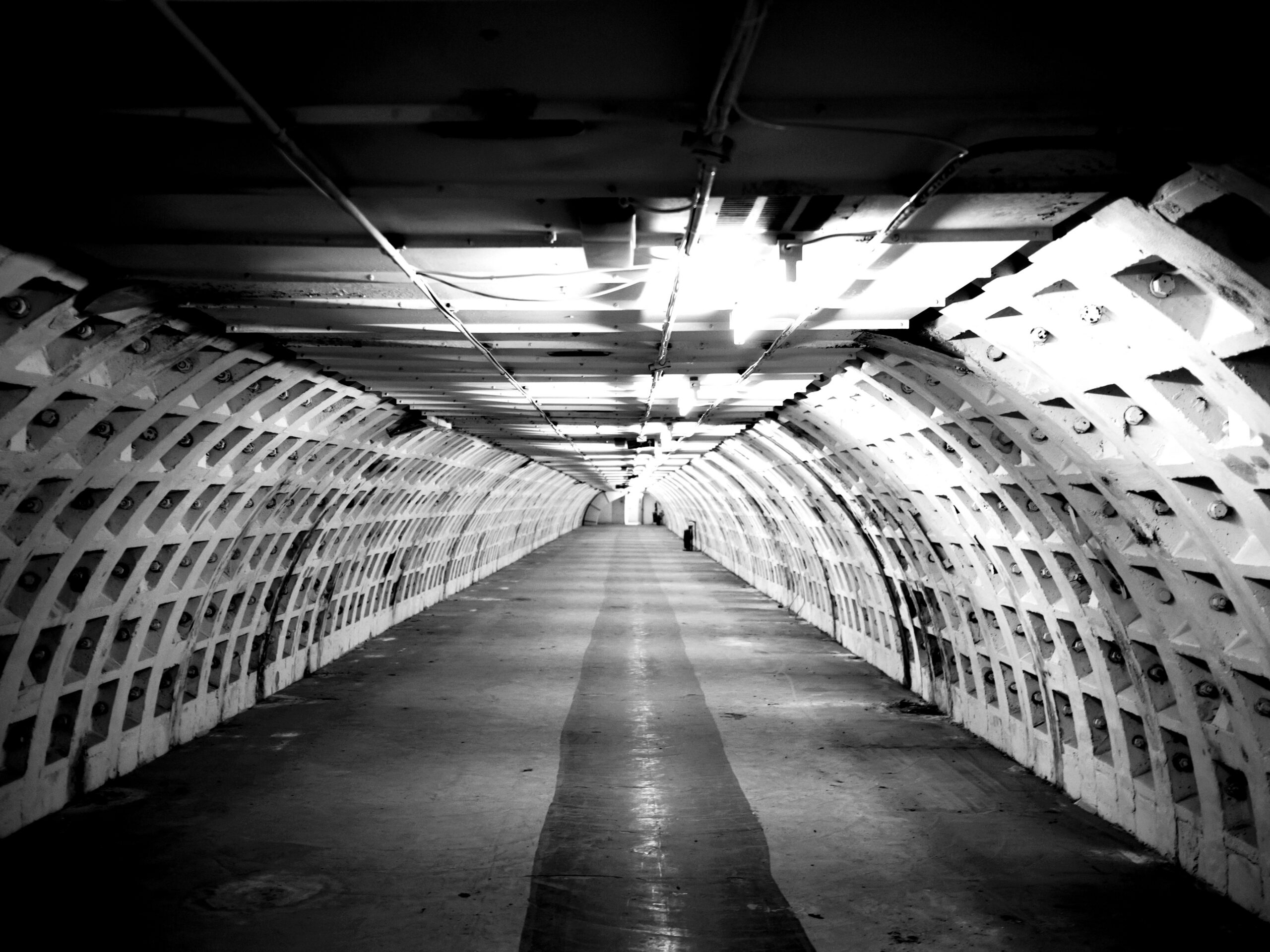
The shelter was a substantial underground complex beneath the Northern line, opened for wartime use in 1944. London Transport Museum’s research describes more than a mile of tunnels divided into named sections, with bunk beds for residents. In later decades the bunks were adapted for archive storage. Their survival, along with messages left on the walls, helps explain the physical setting in which some of the newcomers spent their first nights in Britain. 16
A subsequent National Assistance Board report recorded that the Windrush residents had left the shelter by 12 July. Employment had taken people to places including Scotland, South Wales, the Midlands and Gloucestershire, in work ranging from foundries and railways to carpentry and tailoring. The report also recorded unresolved needs: some men remained unemployed, and towards the end nearly all those at Clapham had exhausted their funds and required National Assistance. 17
By September, the Minister of Labour told Parliament that 219 of the 242 Jamaicans accommodated at Clapham had been placed in employment; 23 had left independently. Those figures concerned a particular group, rather than every passenger. In the same exchange, another MP raised unemployment among Black residents in London’s East End. The immediate reception operation could be reported as completed while wider problems of housing, employment and discrimination continued. 18
Later service and a fuller place in history
Cummings’s career continued beyond the Windrush reception. In 1958, he resigned from the Colonial Office and accepted an invitation from Kwame Nkrumah, then prime minister of independent Ghana, to help train diplomats. Boston’s research records that he chose this work despite an offer of a senior colonial-service post in Trinidad. His professional experience now served a country establishing its own international representation after independence. 8
He died in London on 17 October 1992. The career that began with student welfare had placed the man born in West Hartlepool within the history of migration and settlement in Britain, assisting people whose opportunities were limited by racial discrimination. 2
In February 2026, Beamish Museum’s Head of Story, Rachael Lennon, included Cummings among five figures highlighted in the North East’s LGBT+ history. Its account brought his Hartlepool origins, Colonial Office work and gay social world together, placing these parts of his life within the history of the region where he was born. 6
Sources
2. ‘Ivor Cummings’, Tees Valley Museums.
7. ‘Ken ‘Snakehips’ Johnson’, National Portrait Gallery.
9. ‘Windrush at 75’, On the Record podcast transcript, The National Archives, 2023.
13. ‘In Praise of Ivor Cummings’, Historycal Roots, 17 January 2018, drawing on CO 876/88.
15. ‘Windrush and After’, Pilots of the Caribbean exhibition, RAF Museum.
18. ‘Jamaicans’, House of Commons debate, 21 September 1948, Hansard volume 456, column 667.
Image credit
Clapham South deep-level shelter, which temporarily housed some Windrush arrivals, photographed in March 2019. Photograph: Sam Town, via Wikimedia Commons. Image source; CC BY-SA 2.0.






Join the conversation
Comments 0
Share a memory, ask a question or add to this story.
No comments yet. Add your perspective.
Add your voice
Create a free account and verify your email to leave a comment.
All comments are reviewed before publication.