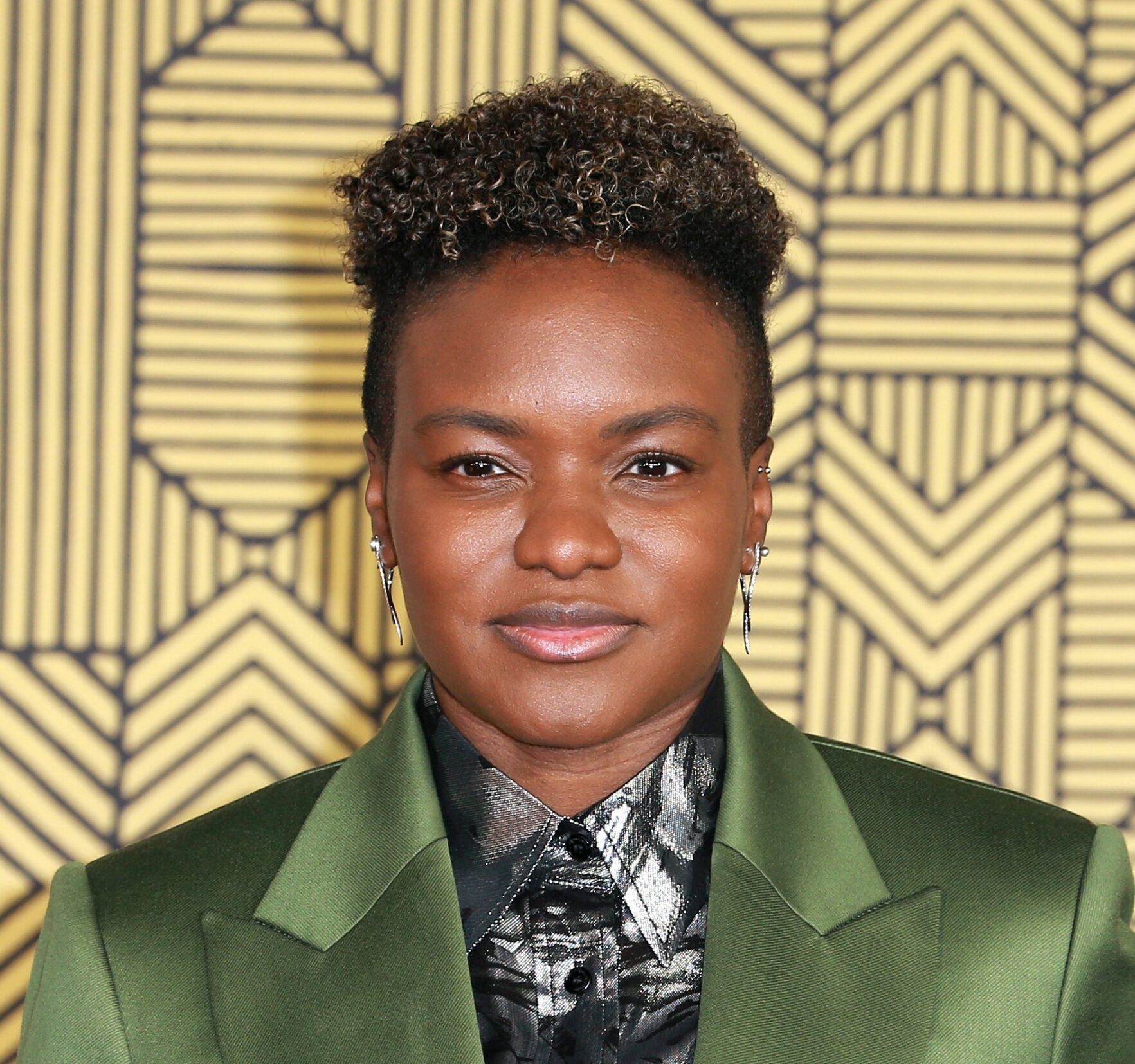
Winning once and returning to win again
At Rio de Janeiro in 2016, Nicola Adams became the first woman boxer to win two Olympic gold medals. Her victory over France’s Sarah Ourahmoune also made her the first British boxer to retain an Olympic title since Harry Mallin in 1924. The result established something beyond the distinction of being first: Adams had remained at the top while rivals studied her and the sport developed around her. She had returned to the biggest competition in her sport and won again. 1
The image of Adams smiling after a fight can make her progress appear uncomplicated. Her career required years in which opportunities were scarce, paid work had to fit around training and injury threatened what she had built. Understanding that preparation gives the medals their proper weight. It also changes the historical question. Her success asks us to consider not only which exceptional athlete won, but what conditions made it possible for a talented girl to become an international competitor. 24
Discovering boxing in Leeds
Adams was born in Leeds in 1982. 13 She began boxing at twelve, training at the city’s Burmantofts club. Reporting before the London Olympics described her as the only girl there, determined to continue despite the difficulty of finding opponents. The gym offered a place to learn, but a training session and an actual competitive bout were different opportunities. A young boxer could practise regularly and still struggle to obtain the experience that comes from facing someone unfamiliar across the ring. 2
The barriers were institutional as well as practical. The National Portrait Gallery’s account records that the Amateur Boxing Association of England did not vote to lift its ban on women boxing until 1996. Adams’s first steps therefore took place while an important governing body still excluded women. This was a restriction within the sport, not a blanket statement that every form of women’s boxing was illegal. The chronology shows how recently the official landscape had begun to change when she was trying to find a route through it. 3
Building a career before the spotlight
In 2001 Adams became the first woman boxer to represent England, and in 2003 she won an English amateur title. International medals followed, but they did not immediately provide the circumstances of a fully supported athlete. Team GB’s retrospective describes work as a builder and as a television extra, including appearances in soap operas, while she pursued boxing. Finding time, facilities and coaches was part of the challenge. A medal record can conceal those demands because it lists results without showing what an athlete had to arrange before entering a tournament. 4
A serious back injury in 2009 interrupted her progress. GB Boxing records that it kept her out of the ring for more than a year. She recovered and joined the first women’s GB Boxing squad in March 2010. That development placed her within the national programme preparing for the Olympics, rather than leaving the next stage entirely dependent on her own arrangements. It is a crucial link between personal determination and institutional support: Adams had already demonstrated her ability, and now there was a more substantial structure in which to develop it. 5
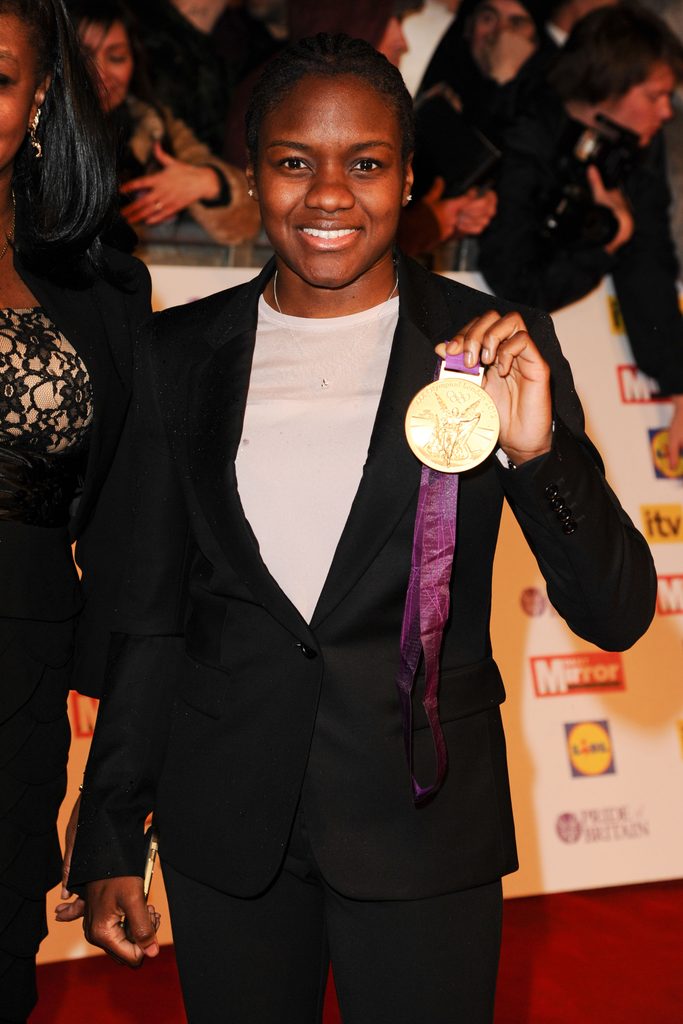
The breakthrough in London
Women’s boxing appeared on the Olympic programme for the first time at London 2012. On 9 August, Adams defeated China’s Ren Cancan 16–7 in the flyweight final at the ExCeL arena, becoming the first woman to win an Olympic boxing title. Ren was a three-time world champion, so this was a victory over an established elite opponent. Adams knocked her down in the second round, and the home crowd responded with sustained noise and support. The historic importance of the final rested on a convincing sporting performance. 6
The occasion offered a highly visible answer to assumptions about who belonged in a boxing ring. A Black woman from Leeds stood at the centre of a British Olympic celebration, having succeeded through technique, preparation and competitive nerve. Yet the event should also be remembered as a contest between skilled athletes. Ren’s record mattered because Adams had beaten someone formidable. Describing the achievement only as a breakthrough for representation would leave out the excellence that made the moment possible. 6
Adding the titles that were still missing
Adams did not treat London as the completion of her ambitions. When women’s boxing entered the Commonwealth Games at Glasgow in 2014, she won the flyweight title by defeating Northern Ireland’s Michaela Walsh. Team England identifies her as the first women’s Commonwealth boxing champion. Another new competition had become available, and Adams was again ready to contend for its first medals. The opportunity also brought a different form of national representation: she competed for England at the Commonwealth Games, having represented Great Britain at the Olympics. 7
She won the inaugural European Games title in Baku in 2015, but a world championship gold remained absent. Adams had taken silver at the world championships in 2008, 2010 and 2012. In 2016, at Astana in Kazakhstan, she finally defeated Thailand’s Peamwilai Laopeam in the flyweight final by a split decision. Added to her 2011 European championship and her Olympic and Commonwealth victories, the result completed a collection of the major titles available to her. The previous silvers are essential to that achievement: even after Olympic success, there was a particular challenge she still needed to solve. 8
GB Boxing’s report of the Astana final described an early lead, a strong second round and a more difficult third as Laopeam improved. Adams then used her experience to protect the advantage in the final round. This account shows a champion managing a contest rather than simply overwhelming an opponent. Success involved recognising when to press and when to preserve what had already been earned. The world title also supplied an important competitive test in the months before Rio. 8
The skill behind the second Olympic title
The Rio final offered another close view of Adams’s boxing intelligence. Against Ourahmoune, she used her reach and jab effectively in the opening rounds, with combinations when the distance closed. The French boxer responded strongly in the third and made the later stages harder. Adams remained composed and secured the decision. Team GB’s contemporary report describes both the quality of her early work and the pressure she faced afterwards. A second gold required adaptation within the bout as well as the preparation that came before it. 9
Her success in Rio also corrected the idea that London’s achievement depended on the advantage of a home Games. The venue, atmosphere and opponents had changed; the standard required had not become easier. At thirty-three, she had the experience to deal with the demands of defending a title while still producing the necessary performance. Her record now included an Olympic defence alongside her other major championships. The smile after the result belonged to someone who had completed another difficult assignment. 1
A different challenge in professional boxing
After Rio, Adams left GB Boxing’s Olympic programme rather than preparing for the Tokyo cycle. The organisation announced her departure in 2017, acknowledging her contribution since joining the squad in 2010. 5 Her professional debut followed in Manchester on 8 April 2017, when she beat Argentina’s Virginia Noemi Carcamo by unanimous decision. Professional boxing offered a new competitive setting, with championship opportunities organised differently from the international tournaments through which she had made her name. 10
The chronology of her WBO success is important. Adams won the interim flyweight title by defeating Isabel Millan in Leicester on 6 October 2018. In July 2019 the WBO elevated her to full champion after Arely Muciño was unable to fulfil her title obligations because of injury. Adams therefore became a professional world champion through an interim victory followed by a governing-body decision; she did not beat Muciño in the ring. This distinction explains the achievement without confusing the two stages or assigning her a fight that never happened. 10
Knowing when to stop
Adams’s professional career ended sooner than she had hoped. Her final bout, against Maria Salinas in September 2019, was a draw. On 6 November she announced her retirement, explaining in an open letter that further impact to an injured eye could cause permanent damage to her sight. She finished with five professional wins and one draw. The decision placed her future health ahead of another defence or a longer record, an important part of an athletic career that cannot be measured only through victories. 11
In the same letter, Adams thanked the people who had supported her, including her coach and mentor Alwyn Belcher. That acknowledgement returns the story to the relationships behind an individual champion. The boxer enters the ring alone, but the career depends on training, encouragement and people who understand the work over many years. Retirement ended her competitive record; it did not remove the value of that shared effort or the influence of what she had already achieved. 11
Being visible beyond sport
Adams also became a prominent LGBTQ public figure. In 2012 she topped the Independent on Sunday’s Pink List of influential LGBT people, as reported at the time by PinkNews. The recognition connected sporting success with another kind of visibility: audiences could see an openly LGBTQ athlete celebrated for her excellence and personality. It did not require her life to become an argument at every appearance. Her presence itself widened the range of people whom the public could recognise as a national sporting hero. 12
Official recognition followed in several forms. Adams received an MBE in 2013 and an OBE in 2017 for services to boxing. Her portrait by Kate Peters entered the National Portrait Gallery’s collection, and she also appears in the collage Work in Progress by Jann Haworth and Liberty Blake. Such records matter because sporting history survives through more than results tables. Portraits, honours and collections establish whose achievements are preserved within the national account, making an athlete’s life available to audiences beyond the immediate excitement of a tournament. 13
Her book Believe appeared in 2017, with the subtitle Boxing, Olympics and my life outside the ring. The memoir offered space for an account longer than a post-fight interview or a medal ceremony. Its publication was another way of identifying the person behind the familiar public image. A career remembered through a few winning moments can otherwise lose the years of ordinary preparation that connect them. The title’s confidence rests against that longer history of work, disappointment and renewed ambition. 14
A new audience on Strictly
In 2020 Adams and professional dancer Katya Jones became Strictly Come Dancing’s first competing same-sex partnership. The programme placed Adams in a different setting: she was a celebrated athlete learning a new skill in public, with an experienced dancer guiding her. Their participation extended her visibility beyond viewers who followed boxing. It also made a same-sex partnership part of a familiar entertainment format, where the immediate task was to learn routines, respond to criticism and improve from one week to the next. 15
Their run ended when Jones tested positive for Covid-19 and the pair had to withdraw under the programme’s protocols. Adams expressed disappointment at leaving and praised Jones for taking her beyond her comfort zone. The curtailed appearance did not erase the importance of the partnership, but the circumstances are part of the story. They left because of the health rules governing that series, rather than because a public vote or the judges had decided their competition was over. 15
The athletes who followed
The most concrete evidence of Adams’s influence comes from other boxers. Ebonie Jones has described sparring with her as a valuable experience, while Lauren Price credited Adams with helping to inspire her choice of boxing over football. Price later won Olympic middleweight gold at Tokyo, where Karriss Artingstall also won a boxing bronze. These are individual careers with their own coaches, decisions and achievements. Their connection to Adams shows how an established champion can make a route feel possible without being responsible for every success that follows. 16
Adams’s place in Black British history rests on both the record and the route to it. The record establishes exceptional competitive achievement. The route reveals a sport changing its rules, building support and admitting athletes whom it had previously excluded. Her career gives those changes a human scale: a girl finding a gym, a contender seeking opponents, a champion returning to defend her title and an experienced athlete deciding when to leave. Each stage belongs in the history.
Sources
[1] UK Sport. Highlights From Day 15; 21 August 2016.
[2] ITV News. How Nicola Adams got her fighting chance for an Olympic gold medal; 8 August 2012.
[3] National Portrait Gallery. Nicola Adams – portrait by Kate Peters; Undated collection record; portrait 2012.
[4] Team GB. Black History Month – The story of Nicola Adams; 29 October 2020.
[5] GB Boxing. GB Boxing confirms the departure of Nicola Adams from Great Britain’s Olympic boxing programme; 2017.
[6] ITV News. Historic first ever Olympic gold for British boxer; 9 August 2012.
[7] Team England. Heroes Through History – Nicola Adams; 6 October 2021.
[8] GB Boxing. Nicola Adams wins World Championship to secure a grand slam of boxing titles; May 2016.
[9] Team GB. Adams victorious as her winning smile lights up Rio; 21 August 2016.
[10] World Boxing Organization. WBO Resolution – WBO Female Flyweight Division – Nicola Adams; 29 July 2019.
[11] ITV News. Two-time Olympic champion boxer Nicola Adams to retire over eyesight fears; 6 November 2019.
[12] PinkNews. UK sport stars top 2012 Pink List; 4 November 2012.
[13] National Portrait Gallery. Nicola Adams; Undated collection biography.
[14] Penguin. Believe – Boxing, Olympics and my life outside the ring; 18 May 2017.
[15] ITV News. Nicola Adams and Katya Jones forced to exit Strictly Come Dancing after positive test for Covid-19; 12 November 2020.
[16] Team GB. Team GB Trailblazers – Nicola Adams; 13 March 2023.
Sources checked on 22 October 2026.




Join the conversation
Comments 0
Share a memory, ask a question or add to this story.
No comments yet. Add your perspective.
Add your voice
Create a free account and verify your email to leave a comment.
All comments are reviewed before publication.