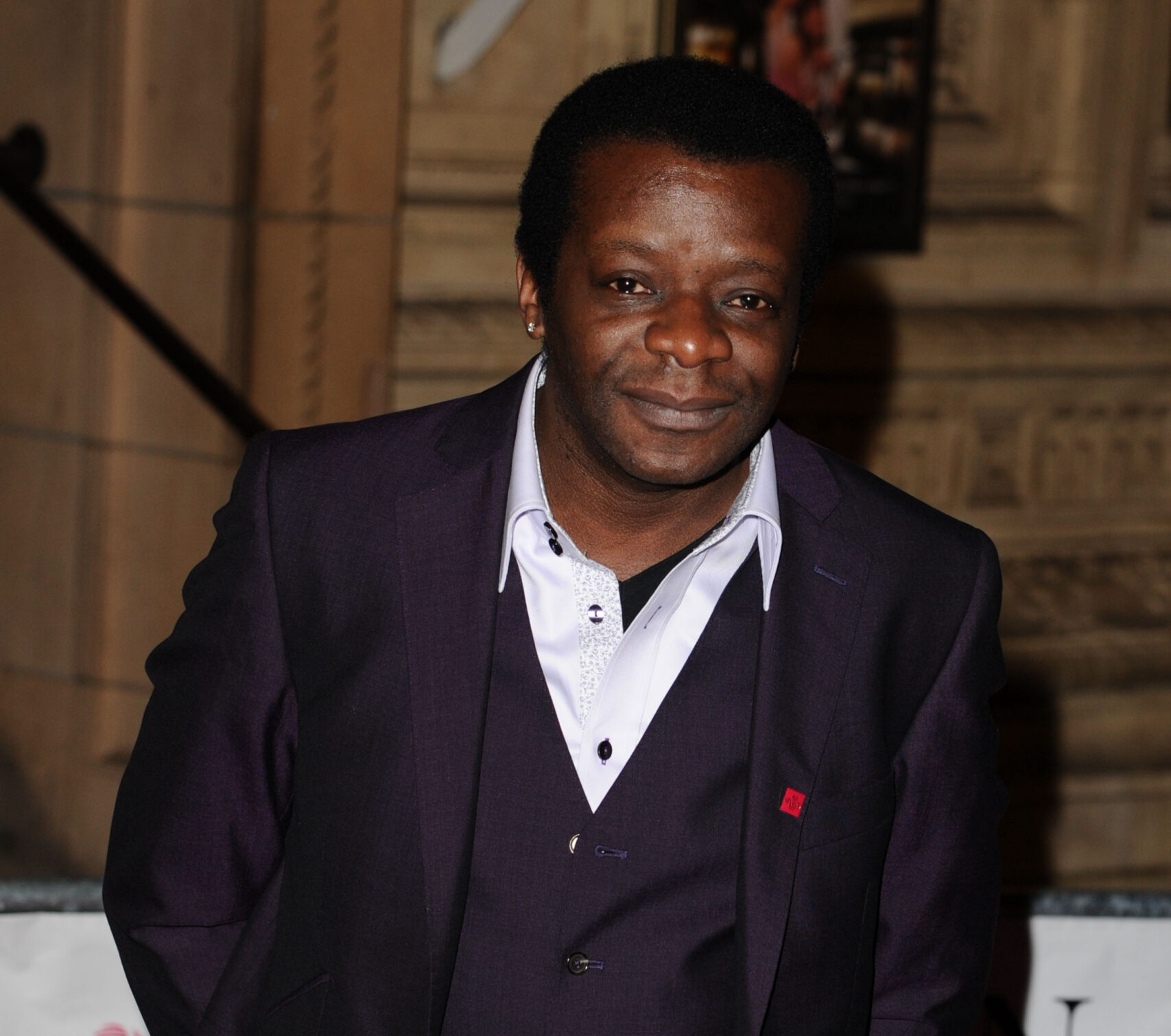
A career built around the audience
Stephen K Amos has worked across stand-up, television, radio and theatre, but his career began with the practical business of keeping a room entertained. His early work included compering at the Big Fish comedy club in south London. Later television appearances included Live at the Apollo and QI, bringing him to viewers who might never have attended a comedy club. That movement between intimate rooms and national broadcasting is central to his story: he developed a recognisable public personality without abandoning the direct exchange between performer and audience. 1
Amos’s work invites audiences into the complicated business of belonging. The family stories of a Black Londoner with Nigerian parents supply a particular starting point: a childhood full of relatives, competing voices and occasions to perform. That household cannot represent every Black British experience, but it can be described in its own detail. Understanding his comedy means paying attention both to the memories he chooses and to the ways he makes them available to other people. 3
Growing up between family stories and public images
Born in London in 1967, Amos grew up in a large family. His later reflections describe a childhood enriched by knowledge of Nigeria alongside everyday life in Britain. That double inheritance supplied characters, memories and different ways of seeing a situation. It also encouraged an awareness that people’s assumptions about a family may bear little resemblance to life inside it. In the same interview, Amos explained comedy as a disciplined craft involving timing, pauses and close attention to an audience’s reactions. The apparently spontaneous performer is also an attentive listener. 2
His 2012 memoir, I Used to Say My Mother Was Shirley Bassey, turned a childhood invention into its title. The publisher describes a boy who, as the only Black child in his class, claimed a connection to the famous singer. The book’s family world includes visiting relatives, gatherings and the bustle of a large Nigerian household in south London. The invented celebrity mother is funny, but it also offers a revealing route into questions about recognition. A child reaches for a familiar public figure to explain himself to others; the adult writer can supply the fuller, less easily categorised story. 3
Making personal experience into stand-up
The 2006 Edinburgh show All of Me brought autobiographical material into particularly sharp focus. A contemporary review described recollections of school, visits to Nigeria and parents who hoped he would become a lawyer. It also noted his ability to work with the crowd. Those elements belong together: personal material does not arrive on stage as a private diary read aloud. It has to become a performance, with a structure and enough room for the unpredictable responses of a live audience. Amos’s family history was part of the substance of the show as well as a source of jokes. 4
All of Me was also the show in which Amos publicly came out as gay. A 2026 Gaydio interview looked back on that moment and on the pressure he had previously felt to conceal his sexuality. The importance of that disclosure was personal before it became representative. For an audience, however, it widened the story that a familiar Black British comedian could tell about himself. Race, sexuality, upbringing and professional ambition could occupy the same stage rather than being treated as separate subjects with separate audiences. 5
Taking difficult questions into documentary
Amos explored homophobia more directly in Batty Man, his 2007 Channel 4 documentary. Made with Maroon Productions, it followed him from south London to Jamaica while examining hostility towards gay people and its consequences. The title itself uses a derogatory expression, signalling the language that the film set out to confront. The documentary moved beyond the protection of a comic routine: Amos became a guide through experiences that could involve fear, rejection and violence. Its focus should not be read as a claim that Black communities share a single attitude towards sexuality. The value lies in opening specific experiences to scrutiny and conversation. 6
The film attracted recognition within broadcasting, including a nomination in the Learning Secondary category at the 2007 BAFTA Children’s Awards. 7 Its documentary approach extended what Amos could do with personal experience. Instead of supplying a punchline and moving on, he could meet people, follow an argument and let an uncomfortable question remain in view. That opportunity gave a different purpose to the familiarity he had established as an entertainer. 6
A television series and the realities of broadcasting
In 2010, BBC Two broadcast The Stephen K Amos Show. Its six episodes combined stand-up with sketches, audience participation and filmed material. The format gave Amos more space than a short guest appearance, allowing him to move between his own stage persona and invented characters. These included security guard Frank and stunt performer Paul Hammer. Performers including Eddie Kadi, Vicki Hopps and Rosalyn Wright appeared alongside him. The programme made his name the organising centre of a television comedy series, while drawing on the variety of skills required to sustain a full episode. 8
The series did not continue beyond its first run. Chortle reported the BBC’s decision in June 2011, alongside its explanation that the channel was making room for other programmes. The response to the show had been mixed. This belongs in the account as much as the initial commission does: a television series can be an important opportunity without becoming a permanent institution. Amos’s subsequent career developed through several forms of performance and writing, rather than depending on the survival of that one programme. 9
Recreating a household on radio
Radio offered another way to work with childhood memories. What Does the K Stand For?, written by Amos with Jonathan Harvey, began on BBC Radio 4 in 2013 and ran for three series, ending in 2017. The comedy guide’s episode record lists sixteen instalments. Amos narrated the series, while Shaquille Ali-Yebuah played the younger Stephen and Ellen Thomas and Don Gilet played his parents. The title refers to Kehinde, the name represented by his middle initial. Here family history became an ensemble comedy, with several voices able to answer back. 10
The form changes what an audience can hear. A stand-up comedian supplies the whole remembered world through one voice; a radio cast allows parents, children and other characters to occupy the scene together. In What Does the K Stand For?, the adult narrator and the younger character also create a distance between remembering an experience and living through it. That makes the programme useful to a wider account of Black British storytelling: a childhood can be presented through domestic comedy, with room for embarrassment and affection as well as questions of identity. 10
Recovering history through ordinary objects
In 2017, Amos and fellow comedian Susan Calman presented Prejudice and Pride: The People’s History of LGBTQ Britain for BBC Four. The two-part project used objects and personal stories to explore changes in LGBTQ life. Items included a banned book, a nightclub membership card, a naval discharge document and an AIDS memorial quilt. Such objects connect large public arguments to individual lives: who could read a book, enter a club, keep a job or mourn someone openly. Amos was taking part in a historical conversation that extended well beyond his own coming-out story. 11
The programme formed part of the BBC’s Gay Britannia season, marking fifty years since the 1967 Sexual Offences Act. The Royal Television Society’s account of the season placed personal testimony alongside drama, documentary and cultural history. This setting helps explain the role of a comedian as a history presenter. Familiarity can make a difficult subject approachable, but the work still depends on the people, documents and memories being presented. Amos and Calman brought an interviewing presence to material whose significance was not reducible to celebrity. 12
A conversation in Rome
A different kind of encounter reached viewers in 2019 through BBC Two’s Pilgrimage: The Road to Rome. During a meeting with Pope Francis, Amos discussed being gay and asked about acceptance. He was also speaking in the context of bereavement, following the deaths of his mother and twin sister. Reporting of the exchange described Francis responding with an emphasis on human dignity and the importance of the person. The scene was striking because Amos was asking an intimate question in the presence of a major religious authority, without hiding the vulnerability behind it. 13
The encounter should be understood at the scale at which it happened: a meaningful conversation about belonging, rather than a change in Catholic doctrine. It revealed another aspect of a performer usually associated with making other people comfortable. Here he needed an answer himself. The episode allowed viewers to see uncertainty and grief alongside the confident public entertainer, and to understand that questions about sexuality and acceptance do not necessarily disappear once someone has become successful. 13
Listening as a professional skill
In a 2020 interview about his show Everyman, Amos described an interest in the things people share, including ageing and mortality, without wanting to deliver a lecture. He discussed the challenge of performing to audiences divided by Brexit and the need to have something worthwhile to add before turning a political subject into material. This is an account of judgement as well as confidence: a comedian chooses what belongs in a room, how far to pursue it and when a familiar public argument has exhausted its usefulness. 14
That approach helps explain why audience interaction is more demanding than it looks. A response has to suit the person who has spoken, the atmosphere of the room and the shape of the performance. Amos’s description of listening, rhythm and timing presents comedy as learned work, not simply a naturally cheerful disposition. His public ease can make the work appear effortless; his own account restores the preparation and attention beneath it. 2
Developing a life in the theatre
Acting has provided further opportunities to work outside his familiar stand-up identity. In 2021, Amos played Benny in Kevin Elyot’s My Night with Reg at the Turbine Theatre. His performance received a nomination for a WhatsOnStage award for supporting acting; the production was also nominated for best play revival. Elyot’s play had first been performed in 1994. The revival placed Amos in an ensemble drama, where the character’s relationships and the writing’s emotional movement shaped the performance. Here the task was to make another person believable within a shared dramatic world. 15
In 2022 he played Alfred P Doolittle in My Fair Lady at the London Coliseum, in the production directed by Bartlett Sher. The cast included Amara Okereke as Eliza Doolittle. A large musical requires an actor to work within a score, choreography and a company, making different demands from a solo show whose direction can change in response to a heckle. The part extended a stage career that had already included appearances in One Flew Over the Cuckoo’s Nest and Talk Radio. 1617
Continuing the conversation
His international live work has continued. The Sydney Comedy Festival advertised Now We’re Talking in 2026, following the touring show Oxymoron. Its programme also noted his appearances on Australian television and a cameo in the film Beetlejuice Beetlejuice. These different settings show the breadth of a working entertainer’s career, but live conversation remains a recurring thread. A tour gives each new audience a chance to encounter the performer directly, beyond the short clips and repeated descriptions through which public figures are often known. 18
Across this body of work, Amos has made personal experience available without making it his only subject. Family memories can become comedy; sexuality can become a documentary question; historical objects can open a discussion about rights. The connective skill is the ability to hold an audience’s attention long enough for a fuller story to emerge. His contribution is therefore both cultural and practical: the stories matter, and so does the work of finding a form in which other people will listen.
Sources
[1] British Comedy Guide. Stephen K Amos; Undated profile.
[2] Galway Advertiser. Stephen K Amos – Who I am and what I am about; 19 October 2017.
[3] Hachette. I Used to Say My Mother Was Shirley Bassey; Book published 20 September 2012.
[4] Broadway Baby. Stephen K Amos – All of Me; 9 August 2006.
[5] Gaydio. A Gay Old Time – Stephen K Amos – Nothing beats authenticity; 8 July 2026.
[6] Maroon Productions. Batty Man; Undated programme page; film 2007.
[7] BAFTA. Children’s Awards – 2007 – Learning Secondary; 2007 awards record.
[8] British Comedy Guide. The Stephen K Amos Show; Undated programme record; series 2010.
[9] Chortle. BBC drops Stephen K Amos Show; 30 June 2011.
[10] British Comedy Guide. What Does The K Stand For?; Undated programme record; series 2013–2017.
[11] Chortle. Comedians investigate the history of gay rights; 24 April 2017.
[12] Royal Television Society. BBC announces major new series of LGBTQ programming with Gay Britannia; 24 April 2017.
[13] PinkNews. Pope Francis tells gay comedian Stephen K Amos that people should focus on humanity; 19 April 2019.
[14] On: Yorkshire Magazine. Interview with Stephen K Amos; 12 January 2020.
[15] Chortle. Stephen K Amos up for a stage acting award; 9 December 2021.
[16] Official London Theatre. Full cast announced for My Fair Lady; 31 March 2022.
[17] Glorious Management. Stephen K Amos; Undated artist biography.
[18] Sydney Comedy Festival. Stephen K Amos – Now We’re Talking at the Enmore Theatre; 2026 programme.
Sources checked on 22 October 2026.





Join the conversation
Comments 0
Share a memory, ask a question or add to this story.
No comments yet. Add your perspective.
Add your voice
Create a free account and verify your email to leave a comment.
All comments are reviewed before publication.