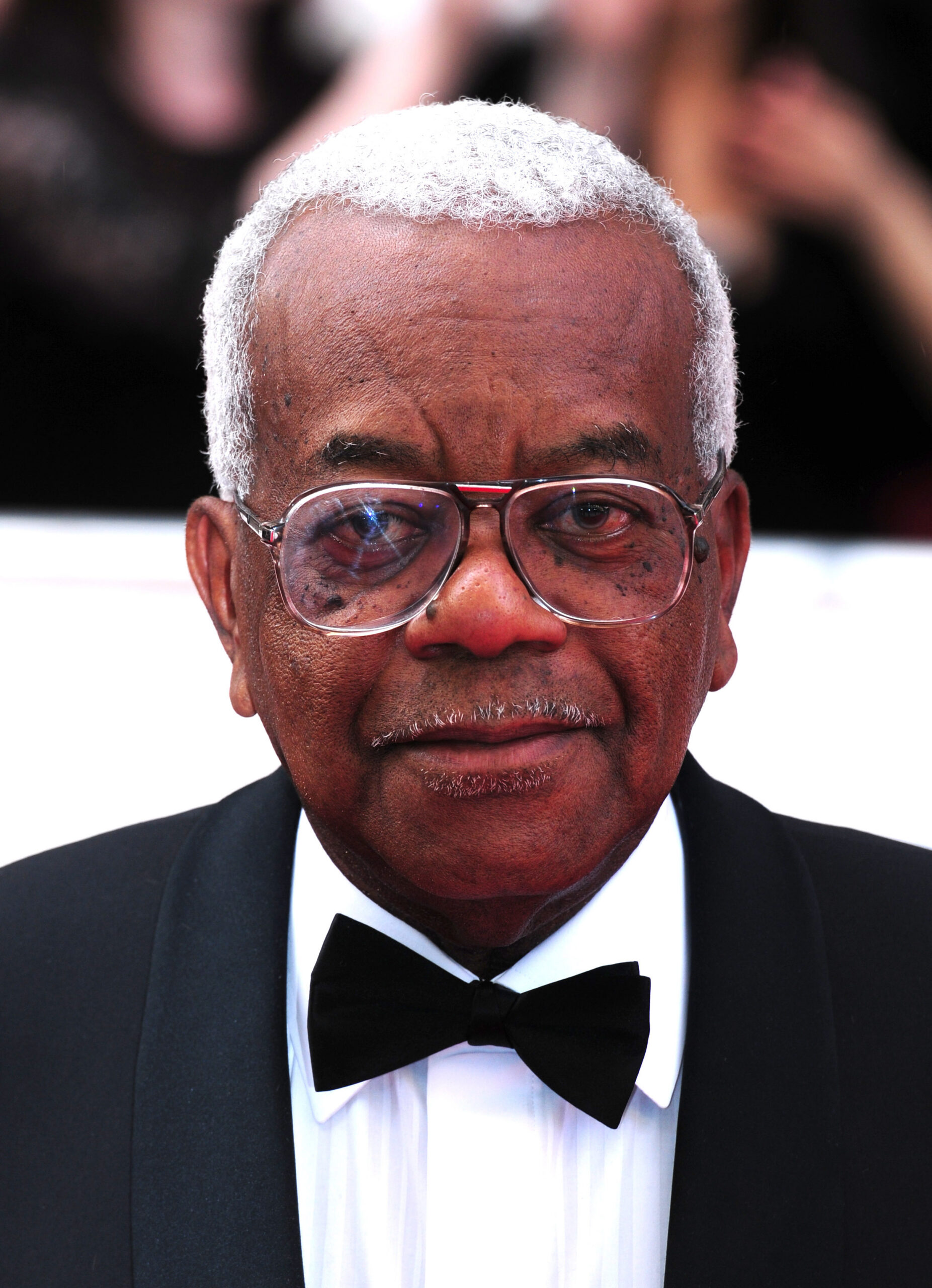
A reporter behind a familiar voice
For many viewers, Sir Trevor McDonald became part of the daily rhythm of finding out what had happened in the world. He became the sole presenter of News at Ten in 1992, after almost two decades at ITN. 1 The measured voice and composed manner suggested authority, but the authority had been earned through reporting: asking questions, preparing interviews and working with colleagues to bring events to a television audience.
His career connects Trinidad, British broadcasting and some of the major political encounters of the late twentieth century. It also belongs to the history of who could speak with authority on British television. McDonald’s importance becomes clearer when the familiar image at the news desk is placed beside the working journalist who travelled, listened and sometimes found himself deeply uncertain. The apparent ease of a broadcast can conceal the difficulty of making it.
Trinidad and an education directed towards Britain
McDonald was born in Trinidad in 1939, when the island was a British colony. 12 Looking back in a conversation with Craig Oliver, he described a school education dominated by British history and literature. Shakespeare, Byron and accounts of British military figures were familiar; West Indian history scarcely featured. London could consequently feel well known in the imagination before it had been experienced as an actual place. 2
His family had little money, but his parents placed considerable importance on education and ambition. Medicine and law were the professions held up as desirable destinations. McDonald remembered being discouraged from dropping Latin because it was considered necessary for those careers. He chose journalism instead, attracted by BBC World Service correspondents reporting from distant cities and interviewing influential people. The combination of travel, knowledge and conversation suggested a life he wanted to pursue. 2
That background helps explain the relationship between Britain and the Caribbean in his story. The journey to a British newsroom did not begin with an unfamiliar country suddenly appearing on the horizon. Britain had already occupied a substantial place in his education. Migration would turn that imagined geography into the practical circumstances of a working life.
The work before national recognition
Before moving to Britain, McDonald worked in print and broadcasting in Trinidad during the 1960s. 3 He joined the BBC World Service in London in 1969 and moved to Independent Television News in 1973. 1 He therefore arrived with professional experience. The later celebrity should not obscure those earlier years of learning how to collect information, conduct an interview and meet the demands of a programme.
At ITN he worked first as a general reporter, then in sport, before concentrating on international politics. His career included diplomatic journalism at Channel 4 News during the 1980s and a return to ITV’s early-evening news in 1989. 3 Moving between subjects and formats mattered. A reporter covering an international event needs to establish its significance for viewers who may know little about the place; a presenter has to connect individual reports into a coherent account of the day.
In an ITV anniversary interview, McDonald recalled reaching News at Ten on his first day at ITN with an interview involving a member of a hard-right political pressure group. Nobody else had been available for the assignment. 4 The memory was about getting a story on air, and it provides a concrete starting point for a career too often remembered only from the studio chair.
A milestone within a longer Black broadcasting history
ITV identifies McDonald’s arrival in 1973 as the beginning of its first Black male news presenter’s career at ITN. 6 That institutional milestone sits within a longer history. The British Film Institute records Clyde Alleyne working for Tyne Tees in 1967, including an interview with Martin Luther King in Newcastle. Barbara Blake Hannah joined Thames Television’s Today in 1968. 56 Remembering these predecessors gives the history depth and prevents one familiar name from obscuring earlier work.
McDonald’s distinctive achievement was sustained prominence in national news. The person introducing a bulletin occupies a position of public trust: deciding how to phrase a transition, questioning a politician and helping viewers distinguish what is known from what remains uncertain. Seeing a Black journalist in that position over many years widened the visible range of British professional authority. The significance lay in the regularity as much as in the breakthrough.
Meeting Nelson Mandela
In February 1990, McDonald interviewed Nelson Mandela three days after his release from prison. The meeting took place at Mandela’s Soweto home. Recalling it for ITV’s Reporting History in August 2026, McDonald described the anxiety he had felt before an encounter of such consequence. He also remembered Mandela asking for the lights to be lowered because his eyes had been damaged while breaking rocks on Robben Island. 7
That small practical exchange placed the physical consequences of imprisonment inside an interview about a country’s political future. McDonald’s account of their later conversation in 1995, before South Africa hosted the Rugby World Cup, followed Mandela into the presidency. Looking back, he emphasised Mandela’s belief that people and political circumstances could change. 7 These were meetings at different stages of a transformation, rather than a single famous encounter standing outside history.
The journalistic task was to ask what freedom might mean in practice. A liberated political leader could become an international symbol while still facing negotiations, institutions and a divided society. An interview had to move between the personal significance of release and the difficult public work that followed. McDonald’s later reflections help preserve the circumstances around the footage as well as the words recorded on it.
Questioning Saddam Hussein
Another major interview in 1990 took him to Baghdad. In November, after Iraq’s invasion of Kuwait, McDonald questioned Saddam Hussein in a palace. Reflecting on the encounter in March 2026, he recalled that the team had waited for more than a week before the interview and had been subjected to rough treatment and searches. He also said that no subjects had been ruled out in advance. 8
The surviving interview allowed him to examine his own performance decades later. He regretted the provocative wording of his opening question and was struck by Hussein’s occasional smiles and controlled manner. 8 This willingness to reconsider is useful evidence of professional judgement. An interview can be historically important without every question being beyond criticism. Reviewing it can reveal what the interviewer missed, what the subject managed to control and how the exchange looks with knowledge of what followed.
The Mandela and Hussein interviews required different judgements about tone and challenge. Admiration could not remove the obligation to ask difficult questions; revulsion could not replace preparation. In both cases, the audience needed to hear the subject respond, while understanding the circumstances that gave the answers their weight.
News at Ten and the longer interview
McDonald later said that presenting News at Ten had not been his original ambition, and that his first appearance as its sole anchor was frightening. 4 That admission complicates the smooth public image. A presenter must handle timing, changing information and communication from the production team while appearing to speak directly to the person at home. Composure is a professional achievement, not evidence that the work creates no pressure.
Tonight with Trevor McDonald began in 1999, giving his name to a current affairs programme with room for more extended reporting. Its first edition included Martin Bashir’s interviews with suspects in the Stephen Lawrence murder investigation. Those interviews were Bashir’s work, within a programme presented by McDonald. In 2002, McDonald himself interviewed President George W. Bush at the White House. 9 The distinction matters because a named presenter can become the public face of work involving several reporters and production teams.
McDonald continued presenting evening news until 2005. 1 His final News at Ten bulletin came on 20 November 2008, following a further period with the programme. 6 Leaving the regular news desk opened more space for documentary work, in which an encounter could develop over a longer period than a nightly bulletin allowed.
Listening in difficult places
Inside Death Row with Trevor McDonald took him into Indiana State Prison to meet men awaiting execution. The programme asked about their crimes and their experience of waiting to die. 10 These were uncomfortable conversations requiring a different relationship with the interview subject from the short exchange of a news report.
At a BAFTA discussion in 2016, McDonald explained that he wanted to hear prisoners’ stories rather than behave as another judge. He also recognised a limit to sympathy: an account of someone’s present suffering must not erase the people they had killed. His discussion of the films connected attention to an individual with responsibility for the wider account being given to viewers. 11
That distinction is central to documentary interviewing. Allowing someone to speak does not oblige a programme to accept their explanation, and understanding a person does not settle questions of responsibility. The interviewer has to make room for an answer while retaining the ability to question it.
He also returned to South Africa for a 2018 documentary marking the centenary of Mandela’s birth. It examined continuing inequality and contrasting conditions within and around Soweto. 12 Returning to a place after its most celebrated political moment extended the story. The end of apartheid could be acknowledged as a historic change while the lives of people living with poverty remained a subject for reporting.
Cricket and a different account of belonging
Cricket remained another lasting interest. His memoir On Cricket, published in October 2024, connects his Caribbean childhood with a lifetime of watching, discussing and playing the game. The publisher describes a book concerned with cricket as a shared language between England, the West Indies and other countries, and with its place in national identity and community life. 13
This provides another way to understand the geographical range of his life. Belonging need not be reduced to choosing one place and relinquishing every attachment to another. A sport can carry childhood memories into a new setting, generate friendships and also bring different loyalties into view. In McDonald’s case, cricket sits beside journalism as a continuing interest through which places and people remain connected.
It also restores something that can disappear behind a distinguished public role: the pleasure of being absorbed in a subject for its own sake. A broadcaster known for explaining the day’s events can also be a spectator, enthusiast and storyteller, returning to an interest that predates national recognition.
Honours and the people behind the broadcast
McDonald received an OBE in 1992 and a knighthood in 1999. 1 The Caribbean Broadcasting Union inducted him into its Media Hall of Fame in 2005, recognising a career whose significance extended beyond Britain. 3 In 2011, BAFTA awarded him its Fellowship, the academy’s highest individual honour. 14 Together, these recognitions place him within Caribbean broadcasting history as well as the British television establishment.
His own account of television has repeatedly directed attention towards colleagues. At the 2016 BAFTA event, he stressed the researchers, producers and other workers who arranged interviews and made a reporter’s appearance on screen possible. He warned against allowing the visible person to absorb all the credit. 11 That view offers a useful way to assess his achievement: a strong presenter contributes to a collective process and helps its work reach an audience.
McDonald’s place in Black British history is therefore both visible and practical. He helped make a Black journalist’s authority an ordinary part of national broadcasting. He also left a record of interviews through which viewers could encounter political power, individual suffering and historical change. The work continues to be examined, including by McDonald himself. Its value rests in the questions asked, the answers preserved and the care with which those encounters are brought into public view.
Sources
[1] Weidenfeld and Nicolson. Trevor McDonald author biography.
[2] Craig Oliver Desperately Seeking Wisdom. Desperately Seeking Wisdom Sir Trevor McDonald interview and transcript; Series 3 Episode 10 undated transcript.
[3] Caribbean Broadcasting Union. Sir Trevor McDonald Media Hall of Fame.
[4] ITV News. News at Ten at 50 Sir Trevor McDonald reflects on some of his amazing highlights; 3 July 2017.
[5] British Film Institute. 13 November 1967 Martin Luther King Interview; Undated catalogue entry for 1967 film.
[6] ITV Press Centre. ITV at 70 70 years of making what matters; September 2025.
[7] ITV News. Sir Trevor McDonald admits he was terrified before historic Nelson Mandela interview; 28 August 2026.
[8] ITV News. Sir Trevor McDonald surprised by smiling Saddam Hussein as he revisits his iconic 1990 interview; 6 March 2026.
[9] ITV News. Changing Britain 20 Years of Tonight; 11 April 2019.
[10] ITVX. Inside Death Row with Trevor McDonald; Undated programme listing.
[11] BAFTA. BAFTA A Life in Television Trevor McDonald transcript; 9 March 2016.
[12] Royal Television Society. What is on TV 18 to 24 June Return to South Africa; 18 June 2018.
[13] Hachette UK. On Cricket; 17 October 2024.
[14] BAFTA. 2011 Academy Fellow Sir Trevor McDonald OBE; 16 May 2011.
Sources checked on 22 October 2026.






Join the conversation
Comments 0
Share a memory, ask a question or add to this story.
No comments yet. Add your perspective.
Add your voice
Create a free account and verify your email to leave a comment.
All comments are reviewed before publication.