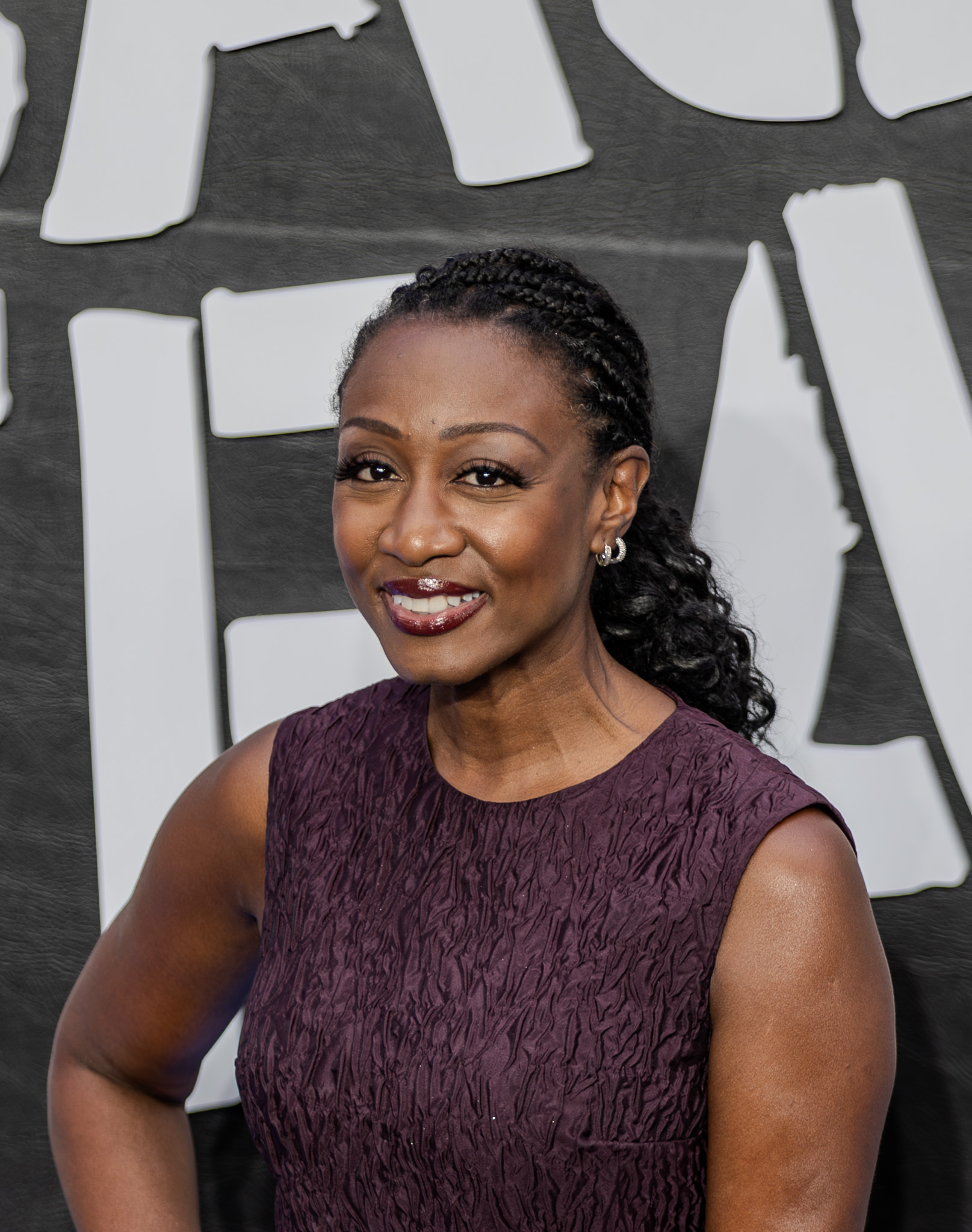
Beverley Knight sang at the opening ceremony of the London Paralympics in 2012. The following year, she took the leading role in the West End musical The Bodyguard. These were different settings for a performer already known through her records: one a great public occasion, the other a continuing commitment to a character and a company. Moving between them became characteristic of her career. The singer who released The B-Funk in 1995 would keep finding new uses for her voice. 1
Learning to sing in Wolverhampton
Born in Wolverhampton in March 1973 to Jamaican parents, Knight grew up in a Pentecostal household. Church was a place to sing and to learn what singing could do. Looking back for The Big Issue in 2023, she explained that the essential lesson involved communicating a message: thinking about how words would reach a congregation and what response they might produce. Technical ability mattered, but the purpose of using it was already clear. Music involved a relationship with the people listening. 2
She began writing songs at thirteen, surrounded by relatives who also sang. School, church and family encouraged her belief that music would remain central to her life, although she did not yet know how a professional career would happen. Her listening crossed generations and styles. Prince was a teenage obsession; Whitney Houston and Aretha Franklin sat alongside Parliament and Funkadelic. In her recollection, these were sources of pleasure and study, rather than separate categories requiring her to choose one permanent musical identity. 2
An encounter closer to home also mattered. Knight remembered seeing Jaki Graham in Wolverhampton town centre when she was eleven. Here was a successful soul singer with a British Jamaican background and Midlands connections, making a recording career seem less remote. Speaking to Rolling Stone UK, Knight described the sighting as a turning point. She later recorded Graham’s Round and Around on Soul UK. That choice gave a musical form to her gratitude towards someone whose example had helped her imagine a future. 3
From local performances to The B-Funk
The route into recording began through local performance. In a 2011 interview with The Soul Survivors Magazine, Knight recalled singing at a Wolverhampton club when a representative of Dome Records heard her. The contact eventually led to meeting the label’s Peter Robinson and securing a deal. Her account preserves the importance of the club circuit: the developing performer was already doing the work of singing before an audience when someone from the industry recognised an opportunity to take it further. 4
Dome released The B-Funk in 1995. Its songs included Flavour of the Old School, Moving On Up, Mutual Feeling and Down for the One. Later editions added club remixes, preserving the connection between the album and the dancefloor audiences through which its songs travelled. The record introduced a substantial body of work, with room for different moods and approaches across its tracks. Its subsequent reissues also allowed listeners who discovered Knight through later hits or theatre to hear how her recording career began. 5
The next album, Prodigal Sista, brought recognition from the MOBO Awards, whose 1999 record names it Best Album. That evening also recognised Lauryn Hill internationally and Shanks and Bigfoot in dance music. Knight’s achievement sat within an event bringing different strands of Black music before a national audience. The album award gave attention to a complete project and its place within her growing recording career. 6
Building a recording career on her own terms
Shoulda Woulda Coulda reached number ten in the UK singles chart in March 2002. The Official Charts record shows five weeks in the top forty, while the same song reached number one on the specialist Hip Hop and R&B singles chart. Those parallel chart histories capture something of Knight’s position. Her music could circulate among listeners following soul and R&B closely while also reaching the broader audience counted by the national chart. 7
Such success did not settle every question about artistic control. When Knight discussed her 2009 album 100% with Blues & Soul, she linked its title to owning her master recordings and having full creative control. Releasing it through Hurricane Records changed her relationship to the work she made. She described recovering some of the freedom she had enjoyed at the beginning, before commercial expectations became more restrictive. The album’s independence concerned practical decisions about recordings as well as the confidence to choose their direction. 8
Nor did she want soul to become a narrow set of rules. In her interview with The Soul Survivors Magazine, Knight described listening to David Bowie, Jimi Hendrix and the more experimental side of Funkadelic. Their influence helped explain musical choices that surprised listeners who associated her with a single style. She regarded her voice as rooted in soul while allowing the surrounding music to change. Understanding that range makes the shifts across her records easier to hear as parts of one developing career. 4
Putting British soul back into the story
Soul UK, released in 2011, made musical inheritance its organising idea. Produced by Martin Terefe and Future Cut, the album revisited British songs that had influenced Knight before and during her emergence. The selection included Soul II Soul’s Fairplay, Loose Ends’ Don’t Be a Fool and Junior Giscombe’s Mama Used to Say. Knight chose material connected to her own experience, giving the collection a personal shape rather than attempting to make an exhaustive catalogue of British soul. 9
Some choices carried stories about discovering who had made the music. Knight recalled searching for Jamiroquai’s When You Gonna Learn while studying in Cheltenham, initially assuming she had heard an older record. She was also struck by learning that songwriter Rod Temperton, whose Always and Forever she included, came from Cleethorpes. These discoveries enlarged her understanding of British musical achievement. The album invited listeners to follow similar paths, from a familiar sound to the people and places behind it. 9
In an interview with FemaleFirst, Knight explained that she hoped listeners would investigate the original artists after hearing her versions. A successful cover could become the beginning of further listening. This gave Soul UK a purpose beyond revisiting songs she admired: it could introduce one generation’s work to another and return attention to performers whose wider catalogues deserved exploration. She used her own audience to help other music be heard again. 10
A new discipline in the West End
In September 2013, Knight made her West End debut as Rachel Marron in The Bodyguard at the Adelphi Theatre. She took over from Heather Headley, with Tristan Gemmill playing Frank Farmer. Thea Sharrock’s production adapted the film story around songs associated with Whitney Houston. Knight had admired Houston since childhood, but this engagement required more than admiration or vocal resemblance. The songs now belonged to a dramatic narrative, performed alongside other actors within a production she was joining and helping to sustain. 11
Her second West End appearance followed in Memphis, which opened at the Shaftesbury Theatre in October 2014. Knight played Felicia alongside Killian Donnelly as Huey, a white radio presenter seeking to bring her singing to a wider audience. Directed by Christopher Ashley, the musical placed their relationship within the segregated music world of Tennessee. David Bryan’s original score offered different material from The Bodyguard. A London cast recording subsequently preserved the company’s performances, extending the production’s life beyond the theatre. 12
The Drifters Girl brought another kind of music story. Knight was cast as Faye Treadwell, the manager whose work helped sustain the Drifters through changing fortunes and legal disputes. The production, directed by Jonathan Church, was rescheduled for a 2021 premiere in Newcastle before its London engagement. Its focus widened the history presented on stage: familiar records were connected to the business decisions and determined management behind a group’s survival. Knight’s character occupied that demanding space between musical talent and the organisation needed to support it. 13
Playing women who changed the story
At the Old Vic in 2023, Knight played Emmeline Pankhurst in Sylvia, with Sharon Rose in the title role of Sylvia Pankhurst. The production combined dance, hip hop, funk and soul in a story about the suffrage movement. Knight portrayed Sylvia’s mother, bringing her voice to a musical centred on the younger woman’s political life and her family relationships. 14
For this performance, Knight won the 2023 Olivier Award for Best Actress in a Supporting Role in a Musical. The achievement also reflected a collaborative production. Kate Prince directed and choreographed the show, wrote its lyrics and shared the book with Priya Parmar; Josh Cohen and DJ Walde composed the music. Sylvia had first appeared at the Old Vic as a work in progress in 2018. Its return brought years of development to the stage, with Knight’s award forming one part of that collective history. 14
In 2025, Marie and Rosetta gave her the role of Sister Rosetta Tharpe, opposite Ntombizodwa Ndlovu as Marie Knight. George Brant’s play, directed by Monique Touko, imagined the musicians preparing to work together in the segregated American South. The Rose Theatre production included live musicians, with guitarist Shirley Tetteh as musical director. For Beverley Knight, the role brought gospel and theatrical storytelling into close contact. It also placed the artistry and working relationship of two Black women at the centre of the evening. 15
Recording The Fifth Chapter
Theatre continued alongside recording. The Fifth Chapter arrived in September 2023, the year Knight turned fifty, with collaborators including Diane Warren, Andrew Roachford, Jimmy Hogarth and AC Burrell. On Systematic Overload she worked with Romanian producer Serban Cazan, bringing her voice to a modern disco setting. These collaborations gave the record a range of writers and production styles, held together by her singing. 16
Knight explained the change in working method to Graham Norton on Virgin Radio. Theatre had occupied so much of her time that she did not want to write an album simply because a new release required one. Instead, she met writers in Britain and Los Angeles and considered material they brought her. She remained responsible for bringing the project together, while giving other songwriters a larger role. Interpreting a song convincingly could be an active creative choice within her own recording career too. 17
In the same conversation, she described the challenge she enjoyed at festivals. Unlike a concert audience that had specifically bought tickets to see her, a festival crowd might have arrived for many different performers. She liked winning those listeners over during a set. Her account returned to the relationship between singer and audience: the work happened in the exchange, as an unfamiliar or casually interested listener became more involved. After decades of performance, that process still held her attention. 17
Staying connected to Wolverhampton
Knight’s public work also includes support for Christian Aid, Stop AIDS and the Terrence Higgins Trust. The National Portrait Gallery records her work as a charity ambassador and campaigner alongside her musical career. Her support connects her public profile with organisations working on concerns beyond the recording studio and theatre. 1
A further local commitment became formal in February 2026, when she was announced as an ambassador for Wolves Foundation. She had already attended its gala dinners and taken part in the Molineux Sleepout the previous November, raising funds for the Foundation and the Good Shepherd. Fellow ambassador Suzi Perry welcomed her through a conversation about their Wolverhampton childhoods. The appointment continued an existing relationship with the city and its organisations, supported by participation in events as well as expressions of pride in her roots. 18
Knight also spoke about wanting to support young musical talent through the Foundation and to use music to connect people. She hoped that her experience could help young people develop their abilities and bring people together through music. Wolverhampton remains a community to which she can contribute, as well as the place associated with her beginnings. The voice heard on records and theatre stages continues to have a local life. 18
Sources
1. National Portrait Gallery — Beverley Knight.
2. The Big Issue — Beverley Knight’s Letter to My Younger Self, 2023.
3. Rolling Stone UK — Beverley Knight on her British soul career.
4. The Soul Survivors Magazine — Beverley Knight interview, 26 May 2011.
5. Cherry Red and Dome Records — The B-Funk reissue.
6. MOBO Organisation — The 1999 awards.
7. Official Charts — Shoulda Woulda Coulda.
8. Blues & Soul — Beverley Knight discusses 100%.
9. Blues & Soul — Beverley Knight discusses Soul UK.
10. FemaleFirst — Interview with Beverley Knight, 20 June 2011.
11. Official London Theatre — Beverley Knight joins The Bodyguard, June 2013.
12. Official London Theatre — Beverley Knight in Memphis, January 2015.
13. Official London Theatre — The Drifters Girl’s 2021 premiere announcement.
14. The Old Vic — Sylvia, 2023 cast, creative team and Olivier Award.
15. Rose Theatre — Marie and Rosetta, cast and production credits.
16. MBC PR — The Fifth Chapter and Systematic Overload, 2023.
17. Virgin Radio — Beverley Knight’s interview with Graham Norton, July 2023.
18. Wolves Foundation — Beverley Knight becomes an ambassador, February 2026.
Image credit
Beverley Knight at the London premiere of Caught Stealing, August 2025. Photograph: Amy Martin Photography, via Wikimedia Commons. Image source; CC BY-SA 4.0.





Join the conversation
Comments 0
Share a memory, ask a question or add to this story.
No comments yet. Add your perspective.
Add your voice
Create a free account and verify your email to leave a comment.
All comments are reviewed before publication.