When Moira Stuart moved into national television news in 1981, she brought years of BBC radio experience to the desk. Her arrival was a landmark in the visibility of Black women on British television. She became familiar through programmes including News After Noon and BBC Breakfast, and also worked in documentaries, music and entertainment. The daily bulletin was an important chapter in her story. 1
London, the Caribbean and a family history
Stuart was born in Hampstead, London, on 2 September 1949. Her mother, Marjorie Gordon, came from Dominica; her father, Harold Stuart, was a Barbadian lawyer. She was one of three daughters. The family spent part of her adolescence in Bermuda, moving there when she was thirteen. She returned to London at fifteen to attend college. Her childhood therefore crossed places connected by Caribbean migration, education and family relationships, rather than belonging to a single journey from one country to another. 1
Those connections reached back through earlier generations. Her maternal grandmother, Clara Marguerite Christian, enrolled to study medicine at the University of Edinburgh in 1915. There she met another medical student, Edgar Fitzgerald Gordon. Christian did not complete her degree, while Gordon qualified as a doctor. Their lives subsequently took them back to the Caribbean. The family history contained educational achievement alongside interrupted opportunities, particularly for women whose studies and employment were shaped by domestic responsibilities and colonial inequalities. 3
Learning the work of radio
Stuart’s BBC career began in the 1970s in the Radio Talks and Documentaries department, where she worked as a production assistant. She subsequently became an announcer, newsreader and programme presenter on Radio 4. Her training therefore began in programme production, before listeners knew her voice. Television followed several years of learning the work of broadcasting from inside the BBC. 2
Her first Radio 4 news bulletin came in 1978. Recalling her career when Northumbria University honoured her in 2022, Stuart described public service broadcasting as a commitment through which she had challenged stereotypes. She acknowledged that the experience had been difficult. She had continued reading BBC radio news summaries until 2018: four decades separated her first Radio 4 bulletin from those later broadcasts. 2
A sustained presence in television news
Her television assignments took her across the BBC’s daily schedule. News After Noon reached a lunchtime audience; BBC Breakfast accompanied the start of the day. She also read news on The Andrew Marr Show, where bulletins appeared within a programme of political interviews and discussion. These were recurring national broadcasts in which a Black woman was entrusted with delivering the news. Their regularity made Stuart a continuing presence in viewers’ lives. 14
Recognition arrived relatively early in her television career. She received the TV and Radio Industries Club’s newscaster award in 1988 and a Women of Achievement television personality award the following year. Long before the lifetime honours, she was winning awards for the work itself. 14
Her 2007 television news departure prompted an ageism row. Colleagues campaigned for her retention; the BBC praised her professionalism. 6
Investigating the history behind familiar stories
Stuart had already begun bringing her own family history before an audience. Her 2004 appearance on Who Do You Think You Are? explored the lives of her ancestors, including her grandmother’s time at Edinburgh. Christian’s unfinished medical education became part of the story told by her granddaughter. The programme made room for a different kind of question from the daily bulletin: how family circumstances and wider structures had shaped an individual life, and why an opportunity available in principle might never be fully realised. 3
In March 2007, In Search of Wilberforce took that questioning into the commemoration of Britain’s abolition of the slave trade. Produced and directed by Gillian Bancroft, the documentary followed Stuart through Ghana, Jamaica, the United States and Britain. She examined how William Wilberforce’s place in British memory related to the experiences of enslaved people. The programme’s subject required a distinction between the end of British slave trading in 1807 and the later struggle over slavery itself. The commemorative anniversary supplied a starting point for investigation. 4
The people Stuart met helped widen that account. In Ghana, academic and poet Abena Busia guided her through sites associated with the confinement of enslaved Africans. In Jamaica, historian Verene Shepherd discussed resistance and the importance of Sam Sharpe. A contemporary review by the Institute for the Public Understanding of the Past and the Institute of Historical Research highlighted the documentary’s attention to enslaved people’s agency. Stuart’s contribution included putting questions to historians and testing the completeness of a familiar national story. 4
Returning to the morning audience
Radio again became central to her working life. She read the news on Chris Evans’ Radio 2 breakfast programme for nine years, becoming part of the team through which listeners began their day. Her return continued the radio career she had established before television, within a programme combining news, music and conversation. 7
Music also had its own place in her BBC schedule. She presented the Sunday-night Radio 2 programme Music ’til Midnight, introducing recordings at the other end of the broadcasting day. Alongside early-morning newsreading, she now had a programme built around the music itself. These different assignments allowed both parts of her broadcasting interests to develop. 7
Her move to Classic FM in 2019 brought news and music together within one station. The appointment combined weekday morning newsreading with plans for a Saturday programme of her own. The station announced both responsibilities together, recognising the experience she brought to news and giving her a further opportunity to present music. This continued a combination she had already established at the BBC. 8
Moira Stuart’s Hall of Fame Concert gave substantial works time to unfold. Its format included complete concertos and symphonies, drawing on listeners’ choices in the station’s annual poll. It brought established recordings together with newer releases. A listener could stay with a work beyond its most familiar passage, hearing it in full as part of a programme Stuart had introduced. 8
Music as a starting point for conversation
Moira Stuart Meets… added an interview series in 2020. The first eight-part run was announced with Katherine Jenkins and Tim Rice among its opening guests. Each guest chose classical music connected with their life, giving the conversation a personal structure. Stuart’s role was to explore the experiences around those choices: childhood, work, memory and the moments a piece of music could bring back. The format made an interview with a public figure depend on listening to that person’s account as well as asking questions. 9
The series developed during the Covid pandemic. Stuart described its combination of music and people as a welcome escape from lockdown. Its guests could discuss experiences beyond the achievement for which listeners knew them. Katherine Jenkins opened the series, with Tim Rice following her: a singer and a lyricist approaching music through their different working lives. 9
Her own musical choices reveal how personal that enthusiasm could be. In a 2021 interview published with woman&home, she connected Vaughan Williams’s The Lark Ascending with childhood memories of Springfield Park, lying in the grass and listening to birds. The association linked a familiar concert work with an ordinary London landscape. Music was attached to a place and a remembered experience, rather than presented only as something to be ranked, explained or treated with solemnity. 10
Other selections in the same interview crossed musical traditions. Stuart chose a recording combining Jan Garbarek’s saxophone with the chant Parce mihi, Domine, alongside Erik Satie’s Trois Gymnopédies. These preferences help explain the breadth behind her presenting. Her interest could move between orchestral writing, piano music and a meeting of early vocal music with jazz. The specific choices give a fuller picture than a description of her simply as a newsreader who later moved to a music station. 10
A familiar voice in a different role
Her television appearances had included entertainment from the beginning. In 1980, before joining television news, she played Darong in the first series of the science-fiction game show The Adventure Game. It is an unexpected early credit in a career usually associated with the news desk. 1
The Big Spell gave her speaking voice another practical job. Sky announced the programme in 2016 with Sue Perkins presenting, Joe Lycett working backstage with the parents, and Stuart serving as the pronouncer. The competition brought together twenty children aged nine to thirteen for challenges involving spelling, words and meanings. Stuart’s role was clearly defined within the team. The children needed to hear the word they were being asked to spell, making careful delivery part of the workings of the competition. 5
The eight-part series was produced by Remarkable Television, whose other programmes included Pointless and Deal or No Deal. Its mix of word games and spelling challenges required the three presenters to work together around the contestants. Stuart’s newsreading experience had found another use in a competition centred on children and language. 5
Recognition and helping people stay connected
In March 2020, the Broadcasting Press Guild gave Stuart its Harvey Lee Award for five decades of broadcasting. The guild’s journalists specialise in television, radio and the media. Its award recognised a newsreader and presenter whose working life had crossed both media, with new programmes still being added to the career it was celebrating. 12
Her formal recognition included appointment as a CBE in the 2022 New Year Honours. The London Gazette identified her as a presenter and broadcaster, recording the award as being for services to media. It acknowledged work across several kinds of programme. 11
In September 2024, Stuart joined an AbilityNet and BT Group initiative offering older people practical help with digital skills. She travelled with a group from Birmingham to Blenheim Palace while trainers ran short sessions on the coach. Participants learned about online scams and using QR codes, with volunteers supporting the session. This was a specific setting in which a recognised broadcaster could draw attention to learning that people needed for everyday tasks, including keeping in contact and navigating services online. 13
In 2025, she took part in a BT campaign about the change from analogue to digital landlines. She visited customers in Boston, Lincolnshire, who had received an engineer’s help with the change. Stuart explained that she had relied on a landline for much of her own life and wanted to understand the new service. The campaign combined that familiar experience with information about practical support. 15
On the 2024 coach trip, participants used their new QR-code skills on the journey home to complete feedback about the day. They could put a lesson into practice while help was still available. Stuart encouraged them to keep learning. It was a fitting setting for a broadcaster whose own career had required her to learn new forms of communication, and to help an audience understand them. 13
Sources
1. Classic FM — Moira Stuart: career and family background.
2. Northumbria University — Broadcaster Moira Stuart honoured.
3. University of Edinburgh, UncoverED — Clara Marguerite Christian.
4. Institute of Historical Research / IPUP — In Search of Wilberforce review, 2007.
5. Sky — The Big Spell announcement and presenters’ roles.
6. The Guardian — BBC News departure, October 2007.
7. Knight Ayton — Moira Stuart career biography.
8. Classic FM — Moira Stuart joins the station, December 2018.
9. Classic FM — Moira Stuart Meets… launch, August 2020.
10. Classic FM / woman&home — Music with personal memories, June 2021.
11. The London Gazette — New Year Honours, 1 January 2022, page N10.
12. Broadcasting Press Guild — 2020 awards.
13. AbilityNet — Moira Stuart and the digital-skills coach trip, September 2024.
14. PA Media, via The Standard — Moira Stuart career and honours, November 2022.
15. BT Group — Digital Voice campaign with Moira Stuart, April 2025.
Image credit
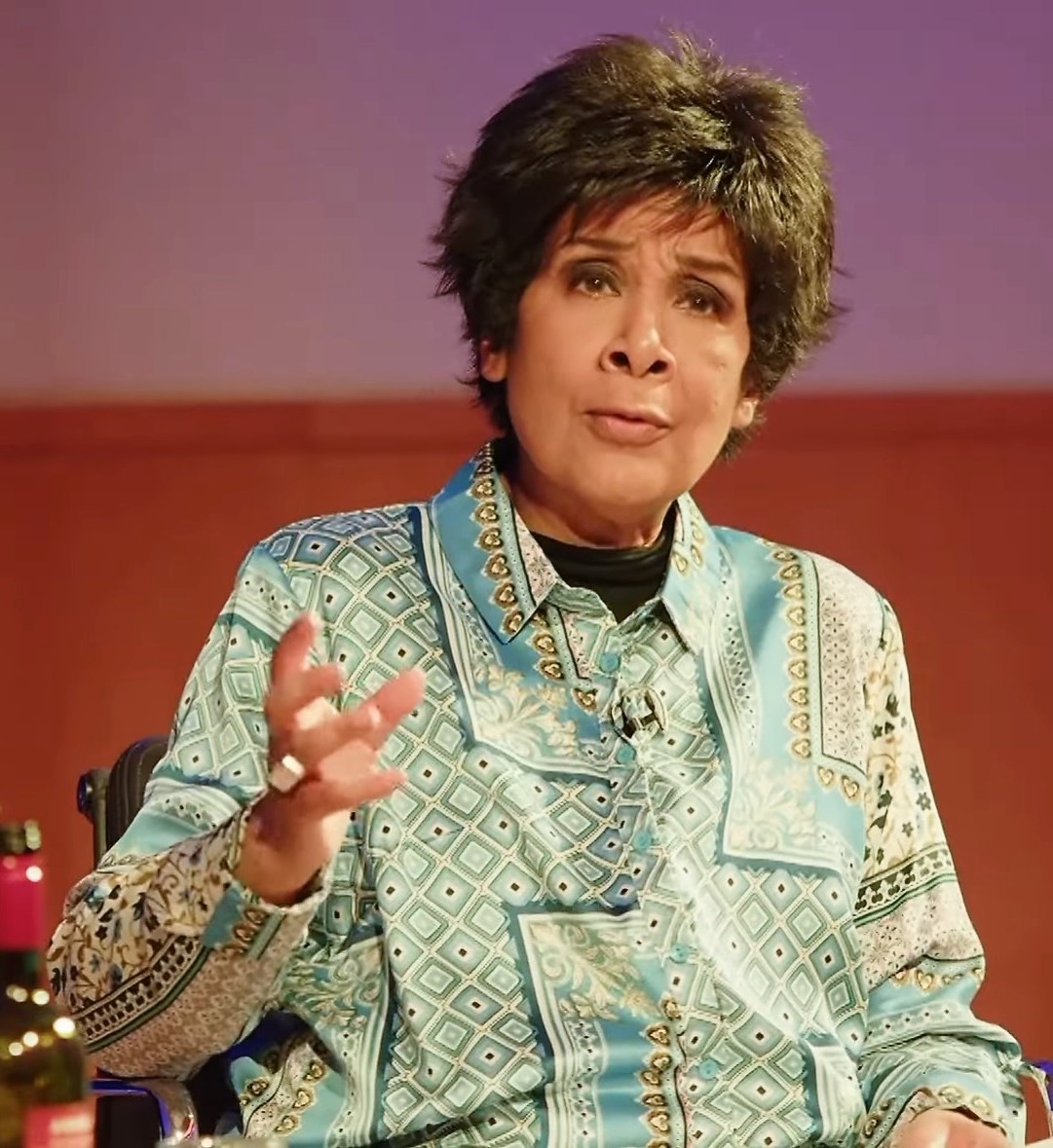
Moira Stuart hosting a British Library event in 2022. Video still: The British Library; cropped and brightened version via Wikimedia Commons. Image source; CC BY 3.0.






Join the conversation
Comments 0
Share a memory, ask a question or add to this story.
No comments yet. Add your perspective.
Add your voice
Create a free account and verify your email to leave a comment.
All comments are reviewed before publication.