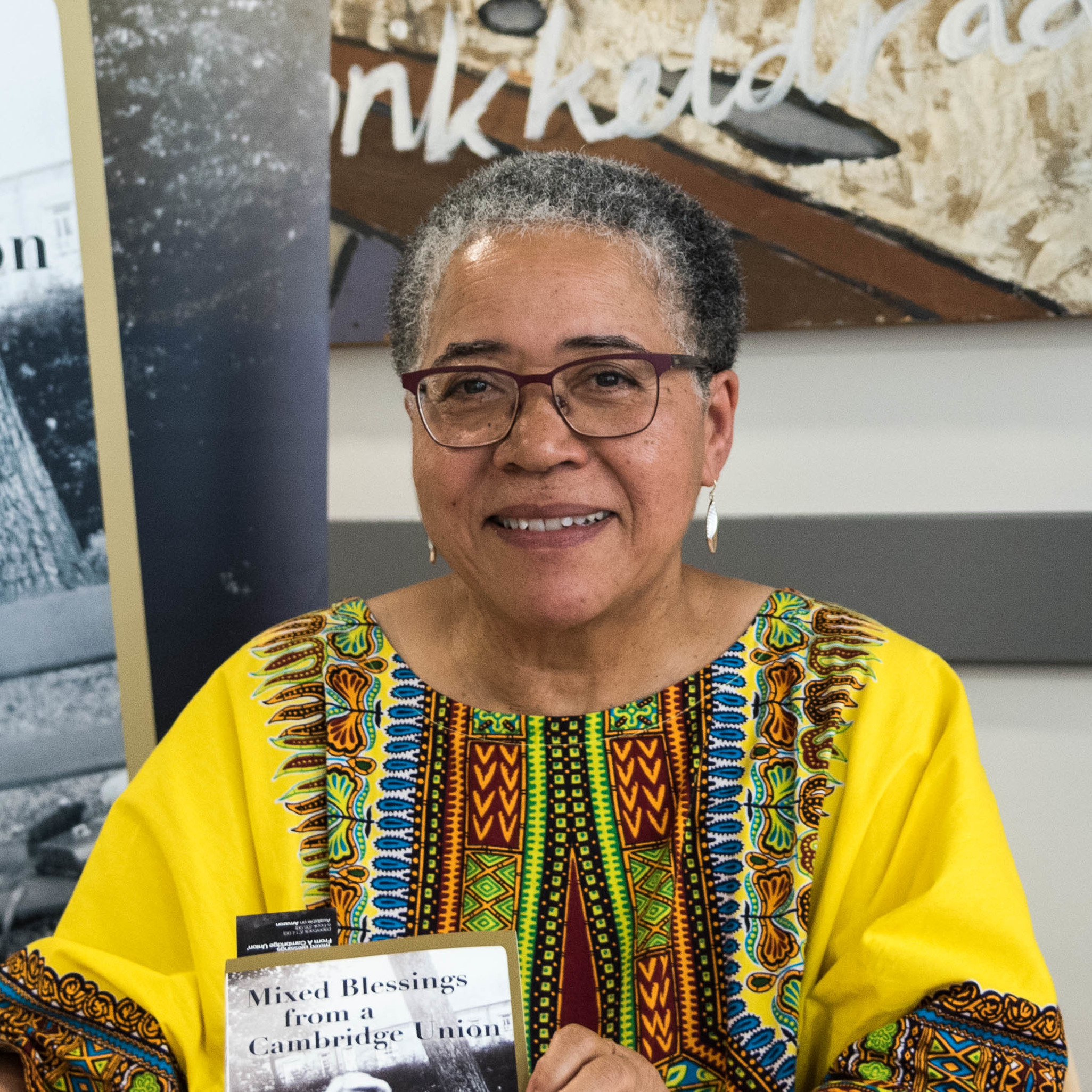
Elizabeth Anionwu remembered visiting a mother whose child was in severe pain from sickle cell disease. The mother could not take the pain away; Anionwu, then a health visitor, felt ashamed that her own training had left her so poorly prepared to help. She responded by seeking the knowledge she lacked. That encounter helps explain the direction of her working life. Families needed nurses who understood their condition, and the health service needed to take their experiences seriously. Becoming Britain’s first sickle cell and thalassaemia nurse specialist was one part of that much larger task. 1
A childhood shaped by care and exclusion
Born in Birmingham in 1947, Anionwu is of Irish and Nigerian heritage. She spent much of her early childhood in care, within a Catholic institution run by nuns. Severe eczema made the changing of dressings a painful routine. One nursing nun approached the task with skill and humour, helping her laugh while she was being treated. Anionwu later identified that relationship as the beginning of her wish to become a nurse: she had experienced how much the manner of giving care could matter. 2
Her mother had been a Classics student at Cambridge when she became pregnant. The stigma attached to unmarried motherhood placed enormous pressure on the family, although she refused to give up her daughter for adoption. Anionwu eventually joined her mother and stepfather, but subsequently experienced abuse and moved to her maternal grandparents. In her account to The King’s Fund, these changes form a history of repeated upheaval, alongside the relatives and other adults who offered protection and encouragement. 3
At sixteen, she began NHS work as a school nurse assistant in Wolverhampton. Her early employment included a residential school caring for children with conditions such as asthma, cerebral palsy and heart problems. It provided experience of looking after children whose needs extended beyond an occasional hospital appointment. The work also gave her a route towards professional training. Nursing became a practical possibility, reached through employment and the help of people who recognised her interest and ability. 11
Learning the profession and finding her voice
Getting into training was not straightforward. Anionwu recalled applying to four London teaching hospitals with seven O-levels. Each requested a photograph and information about her father, whose identity she did not then know. None replied. She later spoke about these applications as an early barrier in her career. Their silence is part of the story: a qualified applicant could be left without an interview, an explanation or an opportunity to challenge the judgement being made about her. 1
She found her place at Paddington General Hospital and enjoyed the three-year nursing course, despite initially being painfully shy. Friendship and conversations with patients gradually increased her confidence. In adulthood, meeting her Nigerian father helped her understand a side of her family history that had previously been missing. She later took his surname. Anionwu described these developments as connected: growing professionally and gaining a fuller understanding of her own identity helped her respond more confidently to other people. 3
Learning also happened away from hospitals. While living in Paris, she became friends with a French-Beninese midwife whose questions about colonialism exposed gaps in her reading. The friend recommended Frantz Fanon’s Black Skin, White Masks. Anionwu found in it an explanation of experiences she had struggled to understand, including the shame she had once felt about her skin colour. Her later oral history records this discovery as a significant moment in recognising that experiences she had treated as personal were also political. 4
Creating a different kind of sickle cell service
Community nursing brought her into sustained contact with families living with sickle cell disease. She sought further training in the United States, where she found more developed opportunities to learn about the condition. Back in Britain, she worked alongside consultant haematologist Dr Milica Brozovic to help establish the nurse-led Sickle and Thalassaemia Screening and Counselling Centre in Brent in 1979. Their collaboration joined specialist medical knowledge with the experience of a nurse who knew families in their homes and communities. 5
The Brent centre offered walk-in screening, genetic counselling, bereavement counselling and visits to patients at home or on hospital wards. These services addressed different stages of living with an inherited condition, rather than leaving support to begin and end at a hospital admission. Historian Grace Redhead places the centre within a broader movement involving nurses, doctors, local support groups and community organisations. By 1985, seven dedicated centres had been established in England and Wales, although provision remained uneven. 6
The same year that the Brent centre opened, Anionwu was among the founding members of the Sickle Cell Society. Its development created another route through which patients, relatives and health professionals could work together. The Society’s own history identifies inadequate treatment and poor understanding as central concerns at its formation. A service within the NHS and a voluntary organisation outside it could do different kinds of work, while drawing on the knowledge and determination of many of the same people. 7, 8
Making patients’ experiences part of the evidence
Anionwu also helped produce research that made the condition more visible in Britain. A paper published in the British Medical Journal in January 1981, written with Diana Walford, Milica Brozovic and Betty Kirkwood, examined seventy identified cases in Brent. More than half of those studied had been born in Britain, and most were under twenty-five. The researchers considered medical records alongside personal and family histories. The study located sickle cell disease within the life of a British community, with consequences for local services. 9
The paper also reported diagnoses made through routine screening among people who had no symptoms. Its significance here is historical: systematic investigation could reveal needs that were not apparent simply by counting people admitted to hospital. Anionwu’s participation shows how nursing knowledge could contribute to medical research. The questions raised through community work became part of a published record, allowing other professionals to examine the evidence and consider what their own services might be missing. 9
A Churchill Fellowship in 1981 supported further learning in Jamaica and the United States. Anionwu later described its influence on her confidence, teaching and advocacy for the nursing contribution to sickle cell care. International exchange was especially valuable for someone developing a new specialist role in Britain. It allowed her to look beyond the arrangements she had inherited, meet people working with the same condition elsewhere and bring different experience into British clinical and voluntary organisations. 10
Education, research and a place for Black nurses
Anionwu earned a PhD in 1988 and subsequently worked in community genetic counselling at University College London’s Institute of Child Health. These academic responsibilities extended the educational work already present in her nursing. She also co-authored The Politics of Sickle Cell and Thalassaemia with Karl Atkin, published in 2001. The book’s subject brought questions of health provision into explicit conversation with politics: who received attention, whose knowledge counted, and how services responded to communities whose needs had been marginalised. 12, 13
At the institution now known as the University of West London, she founded and led the Mary Seacole Centre for Nursing Practice. Its remit brought a multi-ethnic perspective into recruitment, education, clinical work, management and research. That breadth mattered. Recruiting more Black nurses was connected to what they were taught, how they were supported and whether their experience influenced decisions. The centre gave these questions an institutional setting, with research projects and publications that could be discussed beyond a single classroom or workplace. 14
One collaborative study, published in 2008, examined the relationship between nursing students’ backgrounds and whether they progressed through or left their courses. Its authors included Jon Mulholland and Anionwu, alongside other colleagues. The researchers examined student records collected between 2003 and 2005, considering factors including age, ethnicity, educational qualifications and country of birth. Such work moved the discussion beyond counting who entered training. It asked what happened afterwards, and why a profession’s efforts to widen access also needed attention to students’ experiences and completion. 15
Putting Mary Seacole into public view
Anionwu first learned about Mary Seacole through the republication of her autobiography in the 1980s. She was struck by how little she had been taught about a woman whose grave lay close to the hospital where she had trained. Naming the nursing centre after Seacole was a deliberate educational choice: people unfamiliar with the name would have a reason to ask about it. The decision joined professional education to a broader question about which lives British institutions remembered. 5
The campaign for a public statue required sustained collective work. Anionwu served as vice-chair of the Mary Seacole Memorial Statue Appeal, chaired by Clive Soley. After twelve years of campaigning, the statue by Martin Jennings was unveiled by Floella Benjamin in the grounds of St Thomas’ Hospital on 30 June 2016. Thousands of individual supporters contributed to the fundraising, alongside larger donors. The resulting memorial therefore carried the history of an organising effort as well as the life of the woman it depicted. 16
For Anionwu, the connection was also professional and personal. As a nurse of mixed heritage, she saw Seacole’s recognition as relevant to the staff and patients using the hospital around the statue. She also drew attention to how few public statues represented women, and Black women in particular. The memorial became part of an effort to make Black contributions to healthcare visible in public space, where recognition could reach people who had never opened a specialist history book. 17
Telling her own family’s story
Her memoir first appeared in 2016 as Mixed Blessings from a Cambridge Union. A revised edition, Dreams From My Mother, followed in 2021. The titles draw attention to the relationship between her parents’ opportunities and her own. Her mother’s university education was interrupted by pregnancy, while her daughter eventually built a career encompassing clinical care, research and teaching. Writing brought the family history into the public account of a nurse more often introduced through her professional achievements. 13, 18
The revised memoir places childhood, race, identity, friendship and family at the centre of that account. It also preserves the mother’s determination to remain connected to her daughter despite the pressures around them. This matters when reading Anionwu’s life: her progress did not erase the effects of separation or make the original circumstances fair. The story makes space for affection and opportunity as well as injury, and for the people whose support helped her build a different future. 18
Change made with families and colleagues
Anionwu has repeatedly resisted an account in which health professionals alone delivered progress. In her interview with the Young Historians Project, she emphasised the pressure created by Black communities, affected families and interested clinicians. Individual specialists could be committed to improving care while the wider health service still lacked a coherent response. Campaigning helped make that gap harder to ignore. Her recollection restores patients and relatives to the history as organisers and knowledgeable participants in shaping the services they needed. 4
Recognition of her work has included a damehood in 2017 for services to nursing and the Mary Seacole Statue Appeal. Yet the two areas named in that honour are most revealing when considered together. One concerned the care available to people living with an inherited condition; the other challenged the absence of a Black woman from familiar accounts of nursing history. Both required organisations to reconsider whose experience they recognised, and both depended on work sustained over many years. 12
In a 2024 interview, she explained why she had maintained clinical links even while working in higher education: teaching nurses required continuing knowledge of care itself. She also stressed the contributions of the wider workforce, including porters and cleaners, to a functioning health service. That attention to others runs through her career. Anionwu’s achievement includes a pioneering specialist post, but also the relationships, research and practical opportunities through which more people could provide informed care and expect to receive it. 11
Sources
1. Royal College of Nursing — In conversation with Dame Elizabeth Anionwu.
2. Elizabeth Anionwu — About Me.
3. The King’s Fund — Professor Dame Elizabeth Anionwu: nursing, resilience and building statues.
4. Young Historians Project — Dame Elizabeth Anionwu oral history.
5. London South Bank University — Dame Elizabeth Nneka Anionwu, Honorary Doctor of Science.
7. Sickle Cell Society — Spring 2020 newsletter.
8. Sickle Cell Society — About the Sickle Cell Society.
10. The Churchill Fellowship — Elizabeth Anionwu.
11. Skills for Health — An interview with Dame Elizabeth Anionwu.
12. Black Cultural Archives — Dame Elizabeth Anionwu.
13. Irish in Britain — Professor Dame Elizabeth Nneka Anionwu.
14. Mary Seacole Centre for Nursing Practice — Centre history and research.
15. Jon Mulholland and colleagues — Diversity, attrition and transition into nursing.
16. Mary Seacole Trust — Memorials.
17. University of West London — Your University, Winter 2016.
18. Hachette — Dreams From My Mother.
Image credit
Dame Elizabeth Anionwu at a book signing in 2017. Photograph: Michael (obliquepanic); cropped version via Wikimedia Commons. Image source; CC BY 2.0.






Join the conversation
Comments 0
Share a memory, ask a question or add to this story.
No comments yet. Add your perspective.
Add your voice
Create a free account and verify your email to leave a comment.
All comments are reviewed before publication.