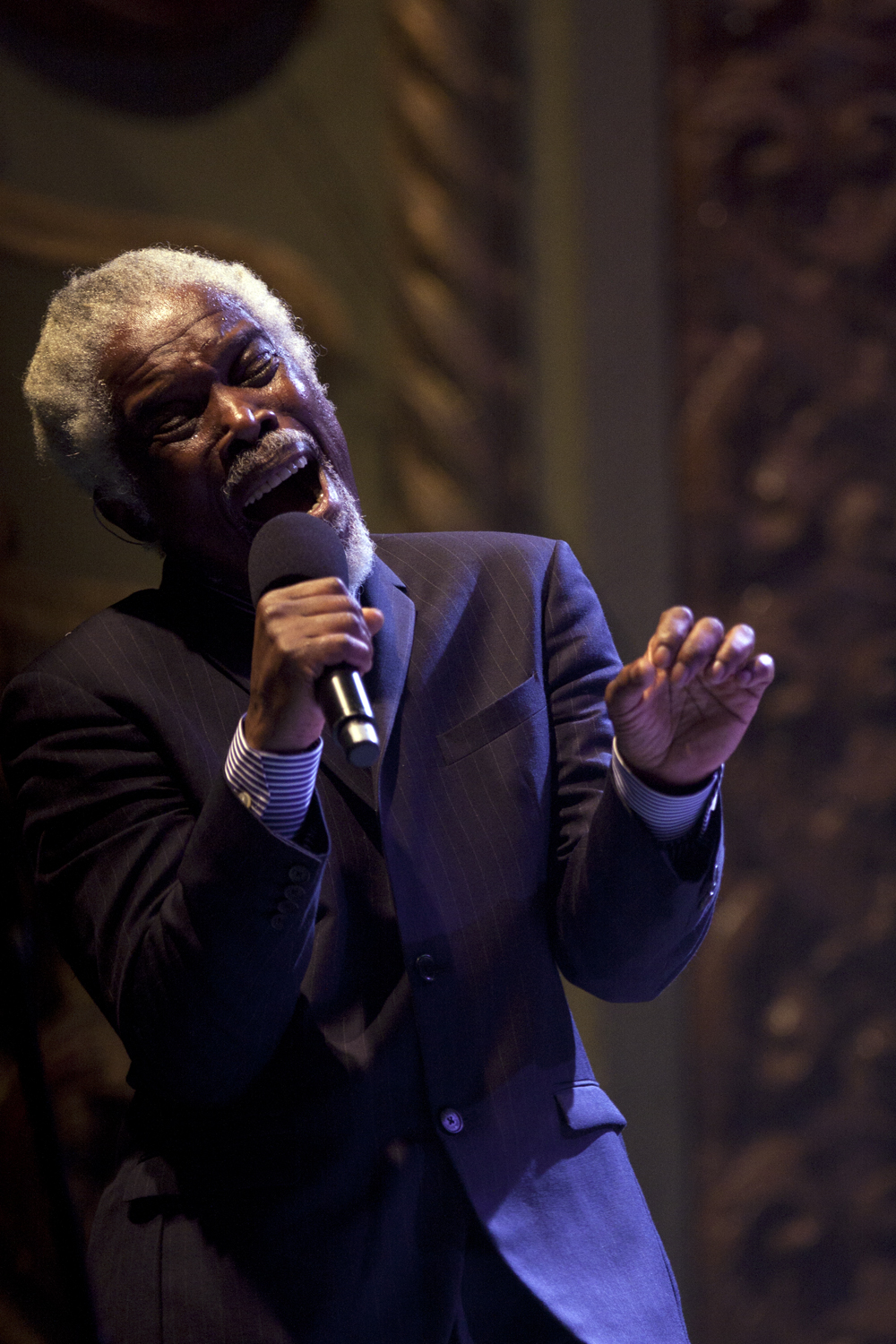
Billy Ocean’s career stretches across musical generations. Love Really Hurts Without You introduced him to 1970s pop audiences; Caribbean Queen reached a larger international audience in the following decade. Behind the stage name is Leslie Sebastian Charles, born in Fyzabad, Trinidad, on 21 January 1950 and brought to England as a child. His career developed through British clubs and recording studios before taking him onto the international stage. 1
The music he brought from Trinidad
Music entered Ocean’s life through people and instruments close at hand. His father played guitar and wrote calypso; his mother also sang and encouraged him to sing to her. A ukulele given to him as a small child provided an early practical education. He learned a few chords, worked out others and made improvised instruments that imitated steelpan. Rhythm, melody and participation were part of his childhood, long before a record company became involved. 2
In Trinidad, a headteacher took him to sing at school competitions. Ocean remembered feeling intensely nervous, even though singing was already something he loved. Radio widened the possibilities further: Sam Cooke, Nat King Cole and Frank Sinatra joined the calypso he knew. After the move to England, British groups and imported American records expanded that mixture. Looking back, he valued the variety available to him. His education depended on listening across styles and learning by doing, rather than following a formal route through written music. 2
Learning a trade, finding a song
Earning a living and making music developed alongside one another. Ocean worked in the clothing trade while pursuing opportunities to sing. In his account to SongwriterUniverse, a piano offered by a woman at work became a turning point: he borrowed money to buy it and began teaching himself. The instrument gave him a way to develop ideas beyond his voice. Listening to the rhythmic force of Motown and American soul helped him find patterns he could explore with his own hands. 3
One of those experiments became Love Really Hurts Without You. Ocean recalled a figure arriving in his left hand, chords in his right and a vocal idea forming over them. He kept the song until an opportunity arose to present it to a producer for whom he had sung demonstration recordings. The producer helped complete it. That account reveals how much lay behind the apparent immediacy of a pop single: private practice, unfinished material, paid session work and the judgement to recognise an idea worth keeping. 3
Released in 1976, Love Really Hurts Without You reached number two in Britain. The follow-up singles Love on Delivery and Stop Me (If You’ve Heard It All Before) also entered the Top 20. Red Light Spells Danger reached number two in 1977. This was a substantial first chapter, establishing Ocean years before his best-known 1980s recordings. Those early chart entries also make the later change in his sound easier to understand: he was developing an existing career, with an audience already familiar with his voice. 1
Success did not remove uncertainty. Recalling the difficult period before his next major breakthrough, Ocean told interviewer Bob Andelman that he kept performing with recorded backing tracks. He removed his own vocal and sang over the instrumental accompaniment, treating it as a substitute band. Tapes could stick and equipment could fail, but continuing to sing mattered. These small-scale performances supplied practice during a period when the business around him was unstable. The later international star had learned to work through the ordinary technical difficulties of a club appearance. 4
A new partnership, a larger audience
Ocean wanted his music to move forward. He later described frustration when the company that acquired GTO Records wanted more material resembling his earlier hits, while he was becoming excited by newer American sounds. Jive’s Clive Calder helped create a different opportunity by introducing him to songwriter and producer Keith Diamond. Diamond stayed at Ocean’s home, where they developed Lucky Man and Suddenly. Their work persuaded Calder to support a period in America, giving the singer access to another recording environment and another group of musicians. 5
In New York, Ocean used a flat above the record company’s offices as a writing space. Caribbean Queen, the 1984 single that emerged from his collaboration with Diamond there, transformed his career. Ocean’s recollections emphasise the pleasure of working with experienced musicians and the importance of respecting what others brought to a session. He remembered recording at Unique in New York and only later fully appreciating the standing of the musicians around him. His new international profile grew from that combination of personal authorship and shared expertise. 5
The Recording Academy’s record of the 1985 Grammy Awards captures both sides of that achievement. Ocean won Best R&B Vocal Performance, Male for Caribbean Queen (No More Love on the Run). The same recording also earned Ocean and Keith Diamond a nomination for Best Rhythm & Blues Song. The distinction is useful: one category recognised his performance, while the other acknowledged the composition. The success depended on a song he had helped create, as well as the way he sang it. 6
Ocean explained his working method particularly clearly in 1986. Co-writing did not mean dividing every task into fixed territories, with one person supplying words and another supplying music. Ideas could come from anyone. He wanted a melody and lyric strong enough to be sung by somebody else, and saw his own performance as the next stage of that work. His confidence in moving between energetic singles and ballads rested on the quality of the composition before any vocal flourishes were added. 4
Writing for the cinema and the charts
When the Going Gets Tough, the Tough Get Going brought that collaborative approach into the cinema. The commission was for The Jewel of the Nile, and Barry Eastmond later recalled being given a 48-hour deadline. Discussing the experience at a Songwriters Hall of Fame session, he described working with Robert ‘Mutt’ Lange as a process of guidance and exchange. A deadline gave the writers a definite task, while collaboration allowed them to build on one another’s ideas. The result carried the directness a film theme needed: a memorable central phrase and a musical identity that could stand beyond the screen. 7
The single entered the British chart in January 1986 and spent four weeks at number one. Its chart run shows the speed of that arrival: from number 28, it rose to six, then reached the top. By this point Ocean could turn an assignment connected to a major film into a record with an independent life in Britain. The song’s title became one of the most recognisable in his catalogue, joining the earlier singles that had introduced him to listeners almost a decade before. 8
The musical relationships continued across other recordings. Ocean identified Barry Eastmond and Wayne Brathwaite as his co-writers on There’ll Be Sad Songs (To Make You Cry), Love Zone and Love Is Forever. For Get Outta My Dreams, Get into My Car, he worked with Lange. In Ocean’s account, Calder wanted a record capable of connecting R&B, pop and rock audiences, and Lange was the collaborator suited to that brief. These were deliberate creative choices about songs, production and audience, made by musicians who could bring different strengths to the same project. 9
Caribbean Queen, There’ll Be Sad Songs and Get Outta My Dreams, Get into My Car each reached number one in the United States. Together they show the breadth of Ocean’s appeal: his international success lasted beyond a single breakthrough and encompassed more than one songwriting partnership. For a Trinidad-born singer whose career had developed in England, that American reception was a major achievement. It placed a British-based Black performer within the centre of the international pop market while preserving the importance of the Caribbean beginnings recorded in his own life story. 10
Making room for life beyond the stage
The scale of success brought pressures that are less visible in a list of hits. Ocean later told Rolling Stone that the atmosphere around him had changed and that, after touring in 1988, he wanted more time with his family. The glamour had become less satisfying than he had expected. His decision makes the quieter years of his career more understandable: he was weighing professional opportunities against the experience of being present at home, with a different sense of what his time should be for. 11
He released Time to Move On in 1993, so this period should not be mistaken for a complete disappearance from recording. A fuller return to touring and new work followed in the 2000s. Ocean recalled finding renewed motivation as his children grew up and left home. Because I Love You appeared in 2009. Returning meant rebuilding a working rhythm around music after a long change of pace, and discovering whether the desire to perform could find a comfortable place within the life he had chosen. 11
Returning through songs he loved
Here You Are, released in 2013, approached that return through other people’s songs. Ocean told Echoes that producer Phil Ramone had suggested a covers collection, an idea he later developed by revisiting music associated with his childhood. He remembered hearing Nat King Cole’s Time and the River on the family radio, loved Sam Cooke’s songs and wanted to include Bob Marley. The choices connected a later recording project with the sounds through which he had first encountered the possibilities of a singer’s voice. 12
He also wrote the title track, wanting the collection to carry the name of one of his own compositions. Working again with Barry Eastmond gave the project an established musical relationship. Ocean described some nervousness at the beginning of his return to performance, followed by reassurance when audiences responded. Listeners knew the songs and had chosen to come. That familiarity changed the demands of the occasion, allowing him to enjoy performing without feeling that every appearance had to establish his credentials all over again. 12
The MOBO Awards recognised Ocean with their Lifetime Achievement Award in 2010. That honour placed his career within an institution created to celebrate music of Black origin in Britain. It also connected the longer history represented by his recordings with an awards programme recognising a new generation of performers. Ocean’s place in that history includes popular songwriting, romantic ballads and dance records: forms through which Black musicians have made enduring contributions to everyday British listening. 13
New recordings, familiar musical friendships
One World followed in 2020. In conversation with Smooth’s Angie Greaves, Ocean described recovering the confidence to make original material and working again with Eastmond. Familiar songs had offered a way back into recording; new compositions required another step. He spoke about creativity as something that remained with him, even through long changes in the pace of his career. The album grew from an existing partnership whose members could return to the practical work of writing and recording together. 14
Ocean also explained the purpose of the new record to RnB Junkie. He wanted music to bring encouragement and pleasure in difficult circumstances. Writing fresh material with Eastmond followed naturally from their earlier reunion, and from the satisfaction of having worked together again. For an artist so strongly associated with familiar hits, making another album involved deciding what he still wanted to contribute as a songwriter and trusting the musical relationship that allowed him to do it. 9
Its credits show how widely Ocean participated. On Love You More he is credited with acoustic guitar and percussion alongside his vocals and songwriting. On the title track, his contributions include keyboards and arrangement. Eastmond supplied production and keyboards, with musicians including guitarist Sherrod Barnes, bassist Wayne Nunes and drummer Perry Melius. Backing singers Sharon Bryant, Cindy Mizelle and Vaneese Thomas appear across the record. All Over the World also features the James Thorpe Children’s Choir, extending the voices involved beyond the principal singer and his regular collaborators. The familiar voice belongs to a writer and instrumentalist, still working with others to give a song its shape. Those credits preserve a fuller picture of Ocean’s musicianship alongside the much-loved hits. 15
Sources
1. Official Charts — Billy Ocean: full Official Chart history.
2. Big Issue — Billy Ocean: Letter to My Younger Self (2020).
3. SongwriterUniverse — Billy Ocean interview (2019).
4. Mr. Media — Billy Ocean interview, originally published 18 July 1986.
5. Eonmusic — Billy Ocean talks the songs that shaped his career (2024).
6. Recording Academy — Billy Ocean: Grammy awards and nominations.
7. Songwriters Hall of Fame — Siedah Garrett and Barry Eastmond at NYU (2018).
8. Official Charts — When the Going Gets Tough, the Tough Get Going.
9. RnB Junkie — Billy Ocean interview: One World and greatest hits (2020).
10. Billy Ocean official website — About and frequently asked questions.
11. Rolling Stone — How Billy Ocean found his way back to music (2020).
12. Echoes — Ocean’s Away: Billy Ocean interview (2013).
14. Smooth Radio — Billy Ocean interviewed by Angie Greaves (2020).
15. Qobuz / Sony Music — One World: track and recording credits.
Image credit
Billy Ocean at the State Theatre, 25 January 2012. Photograph: Eva Rinaldi. CC BY-SA 2.0. Unmodified. Image source; CC BY-SA 2.0.







Join the conversation
Comments 0
Share a memory, ask a question or add to this story.
No comments yet. Add your perspective.
Add your voice
Create a free account and verify your email to leave a comment.
All comments are reviewed before publication.