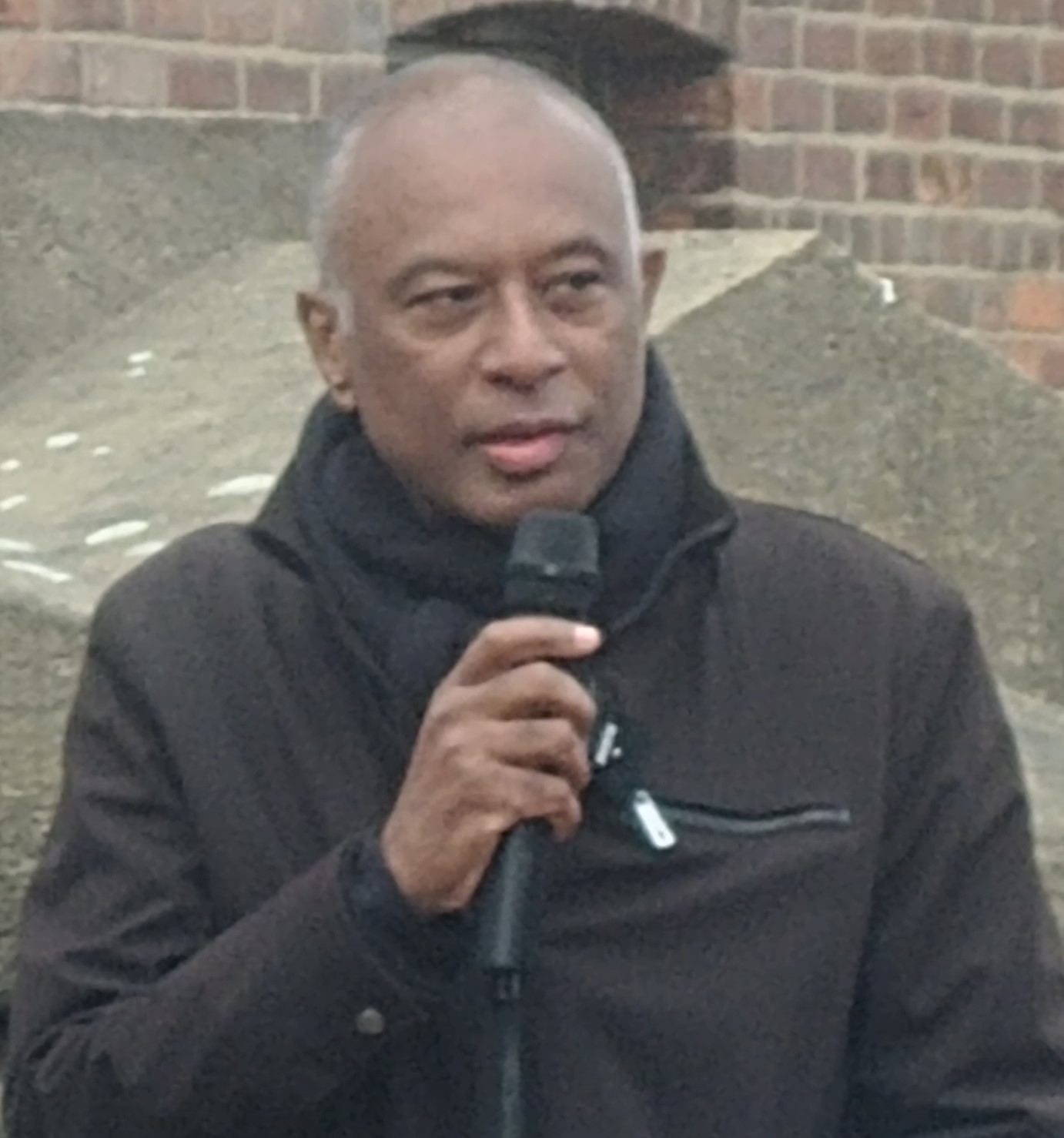
Caryl Phillips’s books return to a question with unusually intimate consequences: what happens when the place a person calls home refuses to recognise them? Across novels, essays, plays and screenwriting, he has examined the journeys connecting the Caribbean, Britain, Africa and America. His subjects include families seeking a future, people negotiating the aftermath of slavery, and neighbours whose apparently ordinary lives conceal histories of loss. 1
From St Kitts to Leeds
Phillips was born on St Kitts in 1958. He came to Britain with his parents at four months old, grew up in Leeds, and went on to study English literature at Oxford. 1, 6
His parents had made the decision to migrate; their children grew up with its consequences. In a conversation with the writer Pico Iyer, Phillips described parents who had learned about English literature, history and geography under colonial rule. Britain was already familiar in their imaginations. They expected recognition when they arrived, and the failure of that expectation brought a particular hurt. Their efforts to give their children confidence in being British could not prevent the racial abuse those children encountered at school. 2
Class complicated that encounter. Phillips recalled that his mother had grown up with considerable advantages in the Caribbean, yet British society assigned her a diminished status. He attended a comprehensive school and experienced the distance between his parents’ hopes and his own daily life. In his account, migration opened possibilities while also creating silences within the family: parents and children could struggle to understand the different injuries each had suffered. 2
Learning what a writer could do
Reading helped Phillips imagine a working life beyond the boundaries he had inherited. He later explained that Richard Wright’s Native Son was an important discovery during his student years. Here was a Black writer addressing urban fear and social pressure, subjects recognisable from his own upbringing. It widened his understanding of who could become an author and which experiences a novel could contain. Literary ambition acquired a more personal, usable form. 3
His early professional writing included the plays Strange Fruit, Where There Is Darkness and The Shelter, followed by work for radio, television and cinema. He also wrote the screenplay for Playing Away. This range placed actors, audiences and spoken voices alongside prose in his working life. His first novel, The Final Passage, appeared in 1985. 1
The film Playing Away, directed by Horace Ové in 1986, offers a particularly accessible example of that range. A West Indian cricket team from Brixton travels to an English village for a charity match. The visitors and their hosts bring assumptions about one another; the encounters surrounding the game expose and unsettle them. With Norman Beaton among its performers, the film makes social observation part of a comedy of manners. Cricket supplies a shared activity, while differences of place and experience complicate the apparent simplicity of a weekend invitation. It is a useful reminder of the humour within Phillips’s work. 4
A family journey and a divided plantation
The Final Passage follows Leila Preston, a young Caribbean woman whose mother has gone to England for medical treatment. Leila travels with her husband, Michael, and their child. The marriage already has difficulties before departure, and England brings further problems, including racist restrictions on accommodation. Phillips makes the family’s internal tensions part of the migration story: people carry damaged relationships and uncertain expectations across an ocean alongside their belongings. 5
That approach gives Leila’s journey several meanings at once. She is a migrant, a daughter, a wife and a mother, with demands that may pull in different directions. Finding somewhere to live cannot by itself settle those competing needs. 5
Cambridge turns towards an earlier movement between Britain and the Caribbean. Discussing its origins with Graham Swift, Phillips recalled reading travel journals in the British Library and becoming interested in women who visited Caribbean estates. The novel’s English visitor, Emily, emerged before the enslaved man whose name gives the book its title. Her account occupies much of the narrative, but Cambridge’s own account changes the reader’s position and challenges the authority of what has come before. 6
Phillips stressed the significance of Cambridge’s hard-won literacy in a society that withheld education from enslaved people. Writing allows the character to assess his experiences and the societies through which he has moved. The competing voices also prevent either person from becoming a convenient emblem. Emily’s vulnerability as a woman exists alongside her racial assumptions; Cambridge’s education brings contradictions of its own. Phillips described trying to understand both characters without allowing his disagreement with their beliefs to close down that understanding. 6
Across the Atlantic and through Europe
Crossing the River widens the frame again. Its stories include a formerly enslaved man travelling to Liberia as a missionary in the 1830s, a woman on the American frontier, and an African American serviceman who loves a white Englishwoman during the Second World War. A father’s loss of his children supplies the novel’s larger imaginative frame. The journeys extend across different generations and locations, giving the African diaspora a structure made from separate lives. 7
The reader therefore encounters movement through different kinds of relationship: religious obligation, family separation, love and the longing for safety. These stories do not provide one continuous family chronology. Their connections ask readers to hold distinct historical experiences together, recognising recurring pressures without assuming that everyone displaced from a homeland faces the same choices. Britain enters this history through an intimate wartime relationship as well as through its wider imperial connections. 7
The Nature of Blood brings other histories of exclusion into view. At its centre is a young woman who has survived a Nazi death camp. Her story appears alongside those of her uncle, Jews facing persecution in fifteenth-century Venice, an Ethiopian Jewish migrant seeking acceptance in Israel, and a figure drawn from Shakespeare’s Othello. The range is deliberately demanding: the characters inhabit different societies and periods, with particular dangers and loyalties. 8
The juxtaposition invites attention to the ways communities define who belongs and who can be cast outside. Its historical situations require care; persecution takes different forms, and one character’s suffering cannot simply explain another’s. For readers approaching Phillips through Black British history, the novel makes clear how widely his interest in exclusion extends. European ideas about race, religion and descent become questions tested through individual vulnerability, rather than a single account of migration. 8
His nonfiction also follows these connections. The Atlantic Sound combines travel with accounts of people caught within the histories of Atlantic slavery and its aftermath. Among its subjects are a West African businessman encountering white Methodists in nineteenth-century Liverpool and a judge pursuing racial justice in Charleston in the 1940s. Phillips moves between historical research and his own experience of places where that history has left traces. 9
The method gives cities and ports a double presence: they are places where people live now, and places through which earlier lives can be recovered. A visit becomes an occasion to question which stories are remembered and which have disappeared from public view. The book’s concern with belonging therefore extends beyond personal memory. It includes the accounts through which a community explains its past to itself, and the people those accounts leave out. 9
English lives under pressure
A Distant Shore brings those concerns into contemporary England through Dorothy, a white Englishwoman, and Solomon, an African newcomer. Their tentative friendship develops amid private distress and public suspicion. Explaining the novel, Phillips said that the language used against asylum seekers recalled language directed at his parents’ generation. He also resisted making the African character a representative of one particular country: several histories informed the imagined background. 10
The book’s movement backwards through its characters’ lives changes what readers know about people initially seen as neighbours. Their visible routines do not reveal the experiences that brought them there. Phillips emphasised the difficulty with which the friendship forms, and the scrutiny surrounding it. The novel won the Commonwealth Writers’ Prize in 2004, bringing major recognition to a story in which national questions remain inseparable from damaged, hesitant personal relationships. 10
Foreigners: Three English Lives, published in 2007, approaches belonging through historical people. Its subjects are Francis Barber, associated with Samuel Johnson’s household; the boxer Randolph Turpin; and David Oluwale, the Nigerian migrant whose life and death in Leeds became a focus of concern about racism and policing. Their experiences reach across centuries and involve very different relationships with English society, from domestic service to sporting celebrity. 11
Phillips combines reporting, historical material and fiction, using a different narrative voice for each life. That mixture makes the book an imaginative engagement with the past rather than a conventional collective biography. Its recreated perspectives need to be understood as literary constructions. The title presses a question of its own: why can people whose lives are deeply entangled with England continue to be regarded as outsiders? Public visibility, usefulness or acclaim offers no simple guarantee of acceptance. 11
Reading another writer’s exile
Phillips’s interest in the stories Europe tells about itself also informs The European Tribe. Looking back on that book, he explained that he wanted readers to recognise the longstanding Black presence in Europe and its visible presence during his own travels. He challenged the habit of describing other societies as tribal while overlooking Europe’s divisions. The traveller’s viewpoint allowed familiar European places to be examined from a position they did not usually grant authority. 3
In A View of the Empire at Sunset, Phillips turns to Jean Rhys, the author of Wide Sargasso Sea, who was born on Dominica. The novel centres on the significance of her 1936 return to Dominica and reconstructs aspects of her earlier life. In conversation with Hilton Als, Phillips explained that he had visited addresses connected with Rhys in London and Paris, but that travelling to Dominica gave the project its shape. He wanted her Caribbean formation to receive the attention often given to her European literary life. 12
The result is biographical fiction: research creates conditions for imagining, without making an invented interior life a verified record. Phillips’s explanation also offers an insight into his own method. Places acquire meaning through someone’s earliest knowledge of the world, including what they learned to see and name. Rhys’s return interested him because coming back to a birthplace could expose another distance. The hoped-for recovery of home might fail, carrying consequences for love and self-understanding as well as national identity. 12
Returning to the London streets
Another Man in the Street, published in 2025, returns to the possibilities and disappointments of postwar migration. Its central figure, Victor Johnson, comes from the Caribbean to London in the 1960s hoping to become a journalist. Instead, he collects rent for the landlord Peter Feldman and becomes involved with Peter’s secretary, Ruth, who has herself moved from northern England. The characters’ separate journeys converge through work, housing and emotional need. The story extends across nearly half a century, allowing the consequences of arrival to unfold over a long period. 13
Phillips has also resisted reducing his own belonging to a choice of one country. Interviewed about Colour Me English in 2011, he spoke of Britain, St Kitts and the wider Caribbean, and the United States as places that mattered to him. His growing willingness to criticise American society reflected an increasing investment in it. Attachment, in this account, included the responsibility and frustration of caring about what a place became. 14
The idea of home that emerges from Phillips’s account is plural and unsettled. Familiarity need not require a final choice among the societies that have shaped a person; affection can survive alongside disagreement. Home is also the place whose failings someone feels compelled to challenge. 14
Sources
1. Caryl Phillips — Biography.
2. Granta — Pico Iyer and Caryl Phillips in conversation.
3. Public Books — Caryl Phillips on Baldwin, fiction and sports.
4. British Film Institute — Playing Away.
5. Penguin Random House — The Final Passage.
6. BOMB — Caryl Phillips interviewed by Graham Swift.
7. Penguin Random House — Crossing the River.
8. Penguin Random House — The Nature of Blood.
9. Penguin Random House — The Atlantic Sound.
10. Penguin Random House — A Distant Shore and author interview.
11. Caryl Phillips — Foreigners.
12. Farrar, Straus and Giroux — Caryl Phillips and Hilton Als, The Lingering Colonial Presence.
13. Caryl Phillips — Another Man in the Street.
14. Small Axe — The Narrative Is Not Written in Stone, Part I.
Image credit
Caryl Phillips at Leeds Bridge on 25 April 2022. Photograph by Lajmmoore, via Wikimedia Commons. CC BY-SA 4.0. Image source; Licence.






Join the conversation
Comments 0
Share a memory, ask a question or add to this story.
No comments yet. Add your perspective.
Add your voice
Create a free account and verify your email to leave a comment.
All comments are reviewed before publication.