Janet Kay helped make lovers rock part of Britain’s popular music. When Silly Games reached number two in 1979, it carried a sound already developing within Black British musical life into the national spotlight. Known as the Queen of Lovers Rock, she built a career encompassing songwriting, acting and recordings with an extensive audience in Japan. 1
A London voice with several musical homes
Born Janet Kay Bogle in London to Jamaican parents, she was the eldest of six children. Motown helped awaken her love of singing. In 1977, while attending secretarial college, she went with her friend Sonia Ferguson to a band rehearsal. Tony Gad heard her singing and introduced her to Alton Ellis, the Jamaican vocalist and producer. Their meeting led to Kay recording a reggae version of Minnie Riperton’s Lovin’ You. Further recordings included I Do Love You and That’s What Friends Are For. Rehearsal rooms and personal recommendations offered a route into recording, with more experienced musicians opening the way. 2
Lovers rock gave singers a way to bring several musical worlds together. Emerging in Britain during the 1970s, it combined reggae rhythms with the melodies and arrangements of soul, often at a slower pace suited to close dancing. Women were prominent in its development. Hackney Museum’s oral histories place Kay alongside a wider generation of female singers, while documenting the contribution of artists such as Ginger Williams. A romantic song could belong to the same life as work, family, friendship and the search for somewhere to enjoy an evening. The voices at its centre gave young Black British listeners familiar feelings in a sound being made around them. 3
Kay has explained that Caribbean music came through her parents, while British radio and television exposed her to pop, R&B and Motown. She remembered enjoying the Beatles and Lulu as well as Diana Ross, the Temptations and Stevie Wonder. For her, lovers rock joined those experiences together. That account helps explain its particular British character: young performers brought what they heard at home into conversation with the wider musical culture in which they were growing up. 4
How Silly Games found its voice
Dennis Bovell wrote Silly Games with an unusually demanding vocal moment in mind. An advertisement in which Ella Fitzgerald’s singing shattered a glass had prompted his interest in a spectacular high note. While engineering one of Kay’s earlier sessions, he heard that she could sing comfortably at that height. When he played his new composition to her, the challenge became part of its attraction. Bovell also imagined listeners attempting the note themselves. The song’s celebrated peak was therefore conceived as both a display of a singer’s ability and an invitation to the people on the dance floor. 4
The instrumental arrangement required equally careful decisions. Recalling the recording in Menelik Shabazz’s documentary The Story of Lovers Rock, Bovell describes working with Aswad’s drummer Angus Gaye, known as Drummie Zeb, while playing bass himself. A drum roll initially surprised him, but hearing it back persuaded him to keep it. He also brought the sound of a Fender Rhodes piano forward and developed the synthesiser introduction. The finished record carried the evidence of those experiments: a distinctive opening, an active rhythm beneath the singing and a voice capable of reaching beyond the accompaniment. Kay’s performance emerged from an exchange between musicians listening closely to what each contribution could do. 5
The record’s progress was gradual. Official Charts records its entry into the singles chart in June 1979, followed by two weeks at number two in July and fourteen weeks on the chart altogether. A song made within the British reggae scene had become a substantial pop hit, giving Kay a public presence far beyond the audiences who had first encountered her early recordings. Its national success brought wider attention to a style whose performers and listeners had already developed their own musical relationships. 6
Kay remembered being on her first trip abroad when the record entered the charts. Her mother telephoned to tell her that she was needed back in England. Having paid for the holiday and obtained her passport, she was reluctant to cut it short. An invitation to perform on Top of the Pops then brought home the scale of what was happening. Her recollection gives the chart breakthrough a human dimension: the singer still had to change her plans, travel home and prepare to appear before an unfamiliar audience. 5
A hit record and a working musician
Success brought Kay onto Top of the Pops, putting a Black British woman singing reggae before the programme’s large audience. The appearance linked the record’s sound to a recognisable performer. For listeners following British reggae, there was a particular significance in seeing an artist from that musical world on a national television stage. Kay’s contribution was visible as well as audible, and the song could circulate through another medium. 7
Her debut album, Capricorn Woman, also established her as a songwriter. The National Portrait Gallery’s account of her career emphasises the original writing within a record that followed several successful interpretations of other people’s songs. Her later catalogue included Love You Always, For the Love of You and Making History. They required her to develop material, choose songs to interpret and return to the studio with different collaborators. Silly Games supplied an enduring point of recognition while new records continued to expand the repertoire. 1
From the recording studio to the theatre
Acting opened another route. In 1980 Kay joined the Black Theatre Co-operative for Mama Dragon, written by Farrukh Dhondy and directed by Charlie Hanson. The production needed someone who could act and sing. Victor Romero Evans helped bring her into the company, whose work brought Black writers and performers to audiences in theatres and community venues. Mama Dragon had music by Matumbi and played venues including the ICA and Riverside Studios. Kay subsequently appeared in the company’s national tour of Edgar White’s Redemption Song in 1984. These productions placed her within a shared theatrical undertaking, with other actors, a script, rehearsals and the changing demands of different venues. 8
Television viewers also knew her as Angel in No Problem!, the Channel 4 sitcom created by the Black Theatre Co-operative. The part extended her public identity beyond singing. An audience could encounter Kay through a record, a television character or a stage production, with each form asking something different of her presence and timing. Music and acting became continuing parts of the same career. 7
Her musical presence also entered British cinema. In Menelik Shabazz’s Burning an Illusion, released in 1981, she appears performing Imagine That in a club. The film follows Pat Williams, played by Cassie McFarlane, and uses music within its account of a Black woman’s changing understanding of her life. Kay’s appearance belongs to that wider setting. It preserves a connection between a contemporary singer and the social world being depicted, bringing British reggae into a film concerned with relationships, independence and political awareness. 9
Making work with the BiBi Crew
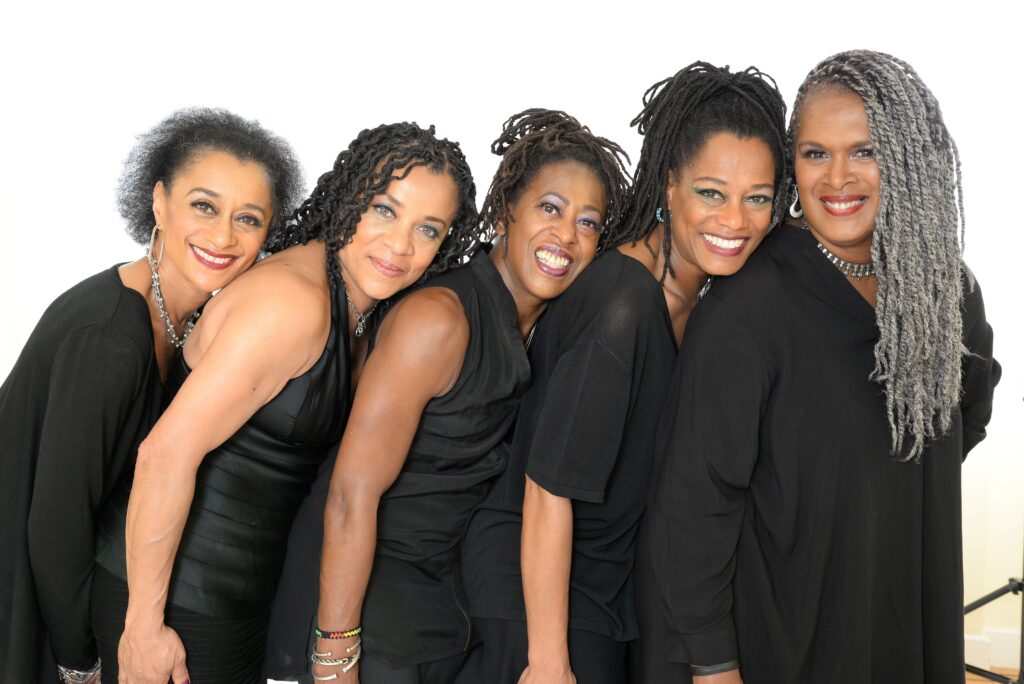
Kay later helped form the BiBi Crew with Joanne Campbell, Judith Jacob, Suzette Llewellyn, Josephine Melville, Beverley Michaels and Suzanne Packer. The all-Black female company wrote, directed and produced its own plays, performing in London and New York. That combination of responsibilities gave the women an active role in deciding what reached the stage. For Kay, it added collective authorship to the work of interpreting a song or playing a character. The company’s productions grew from the skills of its members, who shared responsibility for making the performance happen. Kay belonged to the development of Black women’s theatre as well as British reggae. 10
The National Theatre’s Black Plays Archive records Kay in On a Level, staged at Theatre Royal Stratford East in 1992. Its production credits name Delroy Murray as musical director and Jenny Tiramani as designer. Those details reveal the collaborative structure surrounding the performers: music, visual decisions and acting belonged within one production. A surviving poster is held by Black Cultural Archives, preserving a record of work that existed through live encounters with its audiences. 11
The journey to Japan
Japan became a major part of Kay’s recording and performing life. Looking back in a 2013 interview, she recalled her surprise at the first invitation to perform there and the emotional response of audiences. She explained that Lovin’ You, rather than Silly Games, was her best-known song among those listeners. She also remembered returning at least annually between about 1990 and 2009. The experience gave her a different perspective on her own catalogue: a career associated with one signature record in Britain could be understood through another elsewhere. 12
Making History, originally released in Japan in 1998, demonstrates the range of those recording relationships. Omar produced several tracks and joined her for the duet Giving My Heart to You. Shinichi Osawa produced What Cha Gonna Do for Me and Stay, while Omar also worked on a new version of Silly Games. The credits connect Kay with British soul and Japanese production within a single album. Returning to an established song alongside new material also made her catalogue something open to further interpretation. Her own digital edition later made this Japanese release available to listeners discovering more of her work. 13
The exchange continued with Dramatic Lovers I in 2012. The project recast well-known Japanese television drama themes as English-language lovers rock recordings. Its repertoire included Everything, Can You Keep a Secret? and La La La Love Song, while the arrangements involved Aswad and Tony Gad alongside other British and Japanese contributors. Kay was now applying a form shaped in Britain to songs carrying their own associations for Japanese audiences. The project gives a concrete example of cultural exchange through musical work: familiar material changes language and arrangement, while a recognisable singer provides a connection between the versions. 14
Remembering through performance
The Lovers Rock Monologues brought Kay’s singing and theatrical experience together with Carroll Thompson and Victor Romero Evans. She described it as a sequence of spoken recollections moving into songs, covering clothes, the music people heard and the experiences of parents arriving from the Caribbean. The format allowed performers to explain the world around a record before singing it. Memory became part of the performance itself, giving audiences stories to place beside songs they might already know by heart. 12
Steve McQueen’s Lovers Rock, released in 2020 as part of Small Axe, gave Silly Games a striking new screen presence. During the film’s London house party, the guests continue singing after the recording stops. The scene turns listening into participation: Kay’s performance has supplied something the gathering can carry forward in its own voices. The BFI’s programme notes describe the sequence as central to the film’s treatment of shared pleasure and time. The song helps hold together an evening that also contains tensions and reminders of the world outside. Its place in the film shows how a record can become part of the way an earlier generation’s cultural life is imagined and passed on. 15
Kay received an MBE for services to music in the 2023 New Year Honours. Recognition came to an artist whose working life had connected recordings, theatre, touring and television. The familiar high note opens the door to this larger story: a performer who kept finding new songs, partners and audiences through which to use her voice. 2
Sources
1. National Portrait Gallery — Janet Kay: Devotional.
2. Janet Kay — Official biography.
3. Hackney Museum — Leading Ladies of Lovers Rock.
4. Red Bull Music Academy — Key Tracks: Janet Kay’s Silly Games.
5. PBS / ALL ARTS — The Story of Lovers Rock: documentary and transcript.
6. Official Charts — Silly Games by Janet Kay.
7. National Portrait Gallery — Janet Kay Bogle: collection biography.
8. Unfinished Histories — Black Theatre Co-operative.
9. British Film Institute — 10 great reggae films.
10. National Theatre, Black Plays Archive — The BiBi Crew.
11. National Theatre, Black Plays Archive — On a Level.
12. Rebelbase — Janet Kay interview, Hackney Empire, February 2013.
13. Janet Kay — Making History: official digital release and credits.
14. Sony Music Japan — Dramatic Lovers I: release information and credits.







Join the conversation
Comments 0
Share a memory, ask a question or add to this story.
No comments yet. Add your perspective.
Add your voice
Create a free account and verify your email to leave a comment.
All comments are reviewed before publication.