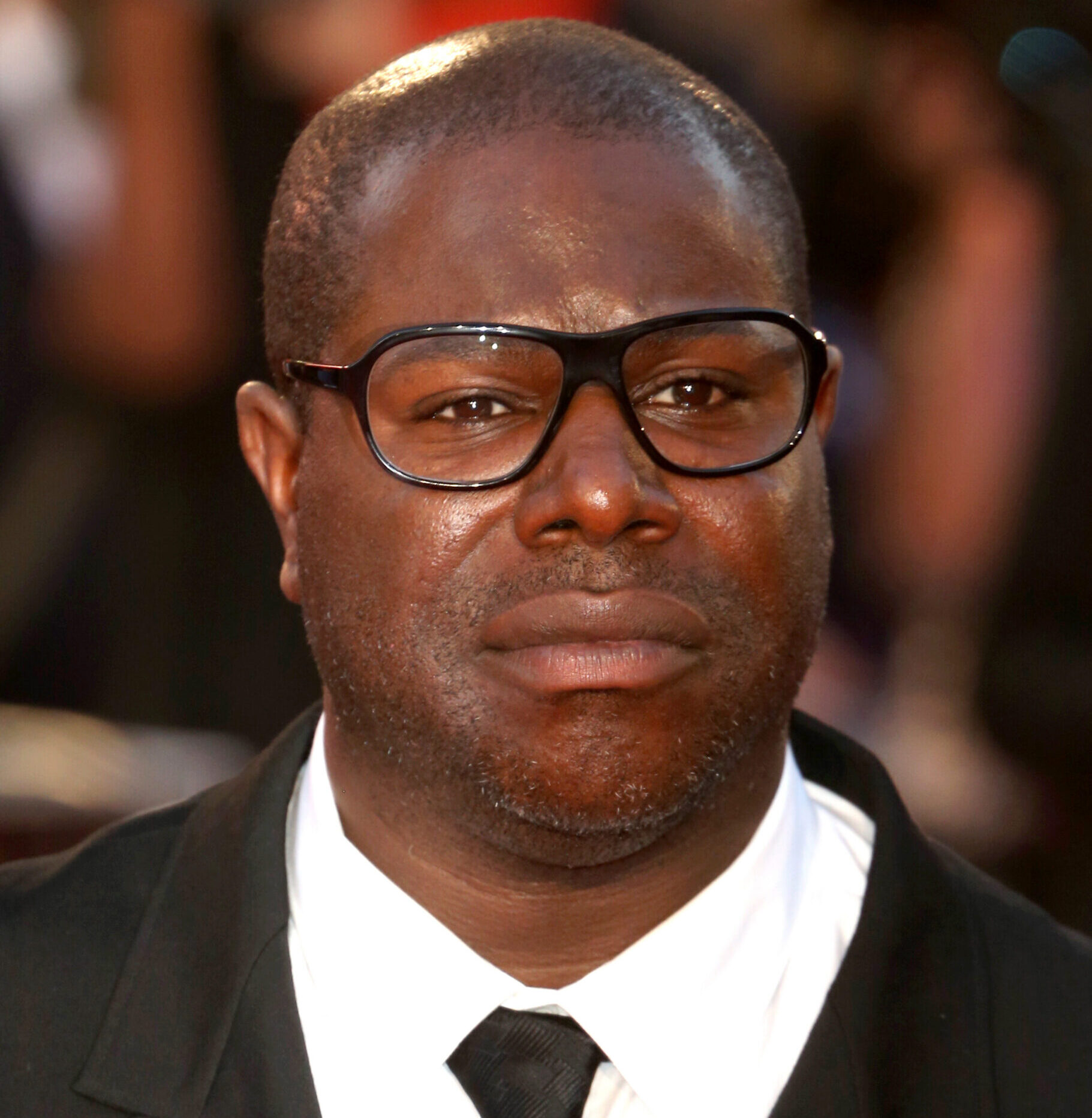
In November 2019, photographs of London schoolchildren appeared on more than 600 billboards across the capital. The children sat and stood in the familiar rows of a class photograph, alongside their teachers and teaching assistants. Steve McQueen’s Year 3 brought those ordinary school arrangements into railway stations, Underground stations and high streets. At Tate Britain, the portraits gathered into an immense display: 76,146 children from 1,504 schools, a generation given room on the gallery walls. 1
Growing up in west London
Steve McQueen was born in 1969 and grew up in Hanwell, west London, with Grenadian and Trinidadian family roots. He was a boy who enjoyed football and drawing. In a 2024 interview, he recalled the ease with which he could make an image when he put pen to paper. Dyslexia and a lazy eye complicated his schooling, while racism narrowed the expectations placed upon him. Drawing offered a skill he could recognise and develop for himself. 2, 22
Speaking to historian David Olusoga in 2020, McQueen described being placed, at fourteen, in a school stream intended for pupils expected to enter manual work. He remembered returning in 2000 to present achievement awards and hearing the headteacher acknowledge the school’s earlier institutional racism. His account of being written off would eventually feed into Education, one of the films in Small Axe. 3
He continued through art education and graduated from Goldsmiths with a BA in Fine Art in 1993. There he began making films, including Bear, an encounter between two naked men, one played by McQueen himself. Their movements carried suggestions of confrontation and attraction. Goldsmiths’ account of his work describes how he subsequently projected films onto the walls of enclosed gallery spaces, bringing viewers physically close to the images. 4
The camera as an artist’s tool
In Deadpan, made in 1997, McQueen returned to a famous stunt from Buster Keaton’s Steamboat Bill, Jr. A building’s front wall falls towards a standing man, who survives because an open window passes around him. McQueen cast himself in the role and filmed the falling wall from different angles. His stillness, and the action’s repetition, altered the rhythm of the original comedy. The silent film lasted less than five minutes, but its installation enlarged the encounter between a human body and a collapsing structure. 5
McQueen won the Turner Prize in 1999. The artist later recognised with the BFI Fellowship and a knighthood had established a public career well before his feature films. His work entered the National Portrait Gallery’s collection both through other artists’ portraits of him and through his own image-making, including the photographic self-portrait Portrait as an Escapologist. Art was a continuing part of his work as his film career developed. 2
Caribs’ Leap / Western Deep, first presented in 2002, joined work made in Grenada and South Africa. Cinematographer Robby Müller worked on the Grenadian footage, which followed island life and included figures falling through the sky. Sean Bobbitt filmed the journey into South Africa’s TauTona gold mine, with its lift cages, tunnels, noise and darkness. Shown together, the films placed very different experiences of descent beside one another. The installation reached London in the former Lumière Cinema on St Martin’s Lane. 6
Hunger and the move into feature films
Hunger, released in 2008, brought McQueen into feature filmmaking through the story of republican prisoners in Northern Ireland and the 1981 hunger strike. Michael Fassbender played Bobby Sands, with Liam Cunningham as the priest who argues with him about his decision. McQueen co-wrote the screenplay with Irish playwright Enda Walsh; Laura Hastings-Smith and Robin Gutch produced the film. It won the Caméra d’Or at Cannes, the festival’s award for a first feature. 7, 9
McQueen remembered following the hunger strike as an eleven-year-old. Preparing the film meant reading, visiting Belfast and meeting people on different sides of the conflict, including Sands’s relatives and prison officers. He initially imagined a film without dialogue. Working with Walsh changed that approach, and a long conversation between Sands and the priest became central to the finished work. McQueen later described the scene as fully scripted, despite the immediacy he felt the actors achieved in performance. 8
Shame followed in 2011, again with Fassbender, this time playing Brandon, a New Yorker whose sexual compulsions dominate his life. Carey Mulligan played his younger sister, whose arrival disrupts his apartment and routines. McQueen wrote the film with Abi Morgan. It brought his close attention to bodies and controlled spaces into a contemporary urban story, with the relationship between the siblings at its centre. 10
An American history and a shared Oscar
For 12 Years a Slave, released in 2013, McQueen directed John Ridley’s adaptation of Solomon Northup’s 1853 memoir. Chiwetel Ejiofor played Northup, a free Black man kidnapped and enslaved; Lupita Nyong’o played Patsey. The production filmed in Louisiana, drawing on places whose buildings and landscapes carried histories of enslavement. Bobbitt was cinematographer and Joe Walker edited the film. Alongside McQueen, the producers included Dede Gardner, Jeremy Kleiner and Brad Pitt, whose Plan B company helped bring the project to the screen. 11
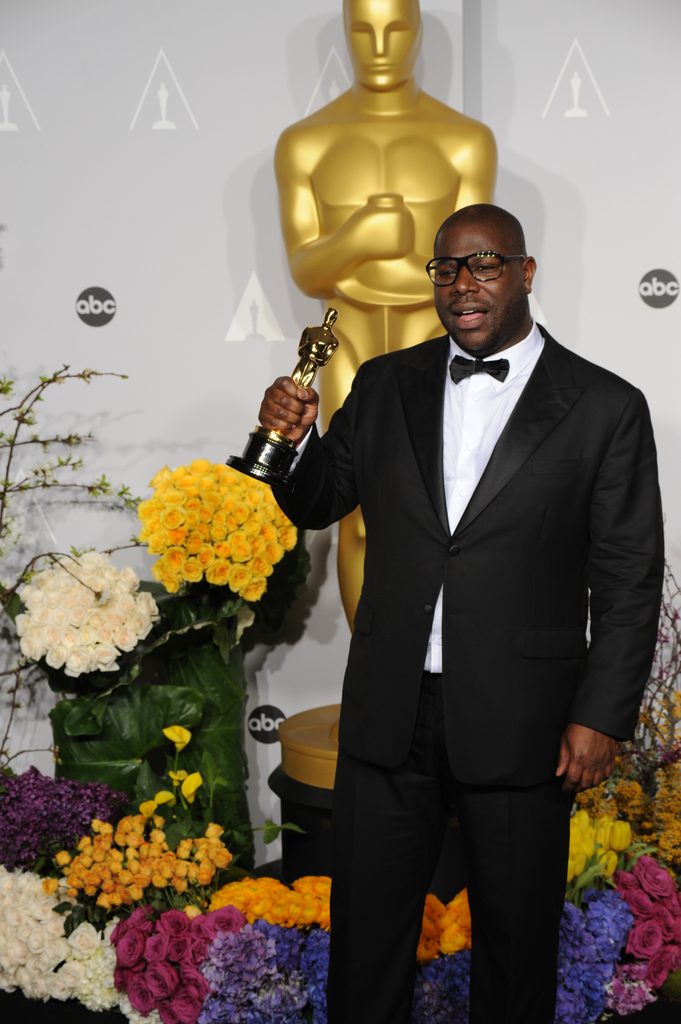
At the Academy Awards in March 2014, 12 Years a Slave won Best Picture. McQueen shared that award as one of its producers, alongside Pitt, Gardner, Kleiner and Anthony Katagas. Nyong’o won Supporting Actress and Ridley won Adapted Screenplay. McQueen also received a directing nomination; the Directing award went to Alfonso Cuarón for Gravity. 12
His next feature, Widows, grew partly from a television memory. McQueen had watched Lynda La Plante’s original British thriller as a teenager in the 1980s. With novelist and screenwriter Gillian Flynn, he adapted it for contemporary Chicago. Viola Davis, Michelle Rodriguez, Elizabeth Debicki and Cynthia Erivo played women drawn together by the consequences of their husbands’ crimes. The film opened the 2018 BFI London Film Festival, returning a story he had encountered on British television to a large London screen. 13
Building Small Axe from living memories
The research for Small Axe had begun years earlier. Producer Tracey Scoffield recalled receiving an approach from McQueen’s agent in 2010 about a drama concerning the first generation of West Indian migrants in London. Journalist Helen Bart subsequently conducted around 126 interviews. Those testimonies helped move the project towards individual stories, developed with co-writers Courttia Newland and Alastair Siddons. By the time the five films reached television in 2020, a decade of development lay behind them. 14
Some of the material came from people already close to McQueen. Lovers Rock drew on his aunt’s memories of slipping out to blues parties in Ladbroke Grove, helped by an uncle who left a door open. Alex Wheatle joined the project as a consultant before McQueen suggested making a film about Wheatle’s own life. These were sources with voices, memories and relationships of their own, participating in the process of deciding what the films would tell. 3
Mangrove centred on the restaurant and the campaign against police harassment that led to the Mangrove Nine’s trial. Red, White and Blue followed Leroy Logan’s entry into the police. Scoffield described close work with Logan and Wheatle on their stories. Research could extend to a piece of clothing: costume designer Sinéad Kidao worked with Logan to locate his old tailor, who helped with the outfits. Such details gave the production connections to the people whose lives it was representing. 14
Music, classrooms and first-hand testimony
Lovers Rock allowed a house party to occupy the screen. Amarah-Jae St. Aubyn played a young woman who slips out for a night of music and dancing in west London. Reggae and dub came through a homemade sound system as friendships and flirtations developed. Shabier Kirchner’s photography followed the gathering into the early morning. Across Small Axe, he photographed settings ranging from that dance floor to courtrooms and classrooms, helping give each story its own visual character. 15
Education returned to the child’s experience of an institution judging his ability. Kenyah Sandy played Kingsley Smith, a boy who loved drawing and dreamed of becoming an astronaut before being sent to a school designated for the supposedly ‘educationally subnormal’. Sharlene Whyte played his mother. Shot on Super 16 film to recall 1970s television drama, the story followed the family towards collective action by Black parents challenging the treatment of their children. 15
With James Rogan, McQueen then made Uprising, broadcast in 2021. The three-part documentary examined the New Cross fire of January 1981, in which thirteen young Black people died, the Black People’s Day of Action and the Brixton uprising. Archive footage accompanied interviews with survivors, relatives, activists, police and journalists. The directors returned to a period also explored in Small Axe, while making room for participants to describe events in their own words. 16
Among those participants were DJ Wayne Haynes, who described the fire and his injuries, and Sandra Ruddock, who remembered family members killed in it. Leila Hassan Howe spoke about organising the Black People’s Day of Action. The series did not establish a definitive cause of the fire. It documented the loss, the suspicions and the arguments, alongside the organisation that followed, allowing bereaved people and campaigners to remain central to the historical account. 16
London’s children and the work of remembrance
Year 3 belonged to a different kind of collaboration. Tate, Artangel and A New Direction invited every London primary school to take part in 2018. A New Direction organised engagement with schools and helped them prepare for photography sessions, drawing on its existing relationships with teachers. The invitation reached across boroughs and school types. The scale of the work depended on that patient coordination as well as on McQueen’s idea for a collective portrait. 17
The resulting photographs preserved the familiar arrangement of a class group. State, independent, faith and special schools participated. Some images appeared on billboards before the Tate Britain exhibition opened in November 2019, bringing the children’s faces into everyday journeys across the city. The work’s subjects were seven- and eight-year-olds, shown alongside the adults who taught them. Each class occupied its own photograph within the larger portrait, keeping small groups visible inside a project involving tens of thousands of children. 1
For Grenfell, McQueen filmed the damaged tower in December 2017, six months after the fire that killed seventy-two people. He recorded the building before it was covered, intending to preserve a record of its appearance. The resulting work was shown free at Serpentine in 2023. Serpentine announced that the work would then enter the care of Tate and the Museum of London’s collection. A building in the west London landscape of his own upbringing became the subject of a work made explicitly against forgetting. 18
New histories and continuing experiments
Occupied City, released in 2023, placed contemporary Amsterdam alongside accounts of its Nazi occupation. McQueen worked from Bianca Stigter’s book Atlas of an Occupied City, moving through addresses associated with persecution and murder. Modern streets and ordinary activities accompanied the historical narration. In their interview with the Associated Press, the filmmakers discussed the distance between what places once witnessed and the lives continuing within them. The film also recorded the pandemic and protests, adding another layer of history to the city. 19
Blitz, released in 2024, returned to London during the Second World War. Elliott Heffernan played nine-year-old George, sent away from the capital by his mother Rita, played by Saoirse Ronan. His attempt to return home drove the story. McQueen wrote and directed the film, working again with production designer Adam Stockhausen and composer Hans Zimmer, alongside cinematographer Yorick Le Saux. The cast also included Benjamin Clementine and Paul Weller, with Weller playing George’s grandfather. 20
By October 2026, McQueen’s work also included a new installation at the Guggenheim Museum Bilbao. In 66–76–26, recordings of Nina Simone and David Bowie singing Wild is the Wind played from opposite ends of a darkened gallery, with their instrumental accompaniments removed. There was no projected image. A filmmaker celebrated for the power of his pictures had constructed a work around listening: a duet that the singers had never performed together, created for people sharing the same room. 21
Sources
2. National Portrait Gallery — Steve McQueen.
3. David Olusoga interviews Steve McQueen about Small Axe, Sight and Sound (2020).
4. Goldsmiths, University of London — Steve McQueen.
5. Museum of Modern Art — Steve McQueen, Deadpan (1997).
6. Artangel — Caribs’ Leap / Western Deep.
7. British Film Institute — Hunger (2008).
8. BFI Southbank programme notes — Steve McQueen on Hunger.
9. Festival de Cannes — Caméra d’Or: Hunger by Steve McQueen (2008).
11. American Film Institute Catalog — 12 Years a Slave (2013).
12. Academy of Motion Picture Arts and Sciences — The 86th Academy Awards (2014).
13. British Film Institute — Widows to open the 62nd BFI London Film Festival (2018).
14. Shilpa Ganatra, Royal Television Society — Small Axe: The real Black British experience (2020).
15. The Criterion Collection — Small Axe.
16. Alex Ramon, Sight and Sound — Uprising and the 1981 New Cross Fire (2021).
17. A New Direction — Steve McQueen Year 3.
18. Serpentine — Grenfell by Steve McQueen (2023).
19. Jake Coyle interviews Steve McQueen and Bianca Stigter about Occupied City, Associated Press (2023).
20. Apple TV Press — Blitz (2024).
21. Guggenheim Museum Bilbao — Steve McQueen: 66–76–26 (2026).
22. Nate Freeman interviews Steve McQueen, Vanity Fair (2024).
Image credit
Steve McQueen at the New York Film Festival, October 2024. Photograph: Bryan Berlin; cropped version via Wikimedia Commons. Image source; CC BY-SA 4.0.






Join the conversation
Comments 0
Share a memory, ask a question or add to this story.
No comments yet. Add your perspective.
Add your voice
Create a free account and verify your email to leave a comment.
All comments are reviewed before publication.