A life worked out in paint
Frank Bowling’s paintings ask us to notice what paint can do: spread across a surface, gather into a ridge, stain fabric or carry a fragment of something once used elsewhere. Across a career connecting Guyana, Britain and the United States, he has repeatedly changed his methods while returning to questions of colour, light and structure. Born in British Guiana, now Guyana, in 1934, he arrived in London in 1953. His subsequent work brings personal history into conversation with artistic traditions extending from English landscape painting to American abstraction.1
Learning to look in London
Bowling’s route into painting developed through encounters with other artists. During RAF service he met Keith Critchlow, who introduced him to the National Gallery and London’s art world. Bowling worked as an artists’ model before pursuing formal training. A scholarship took him to the Royal College of Art in 1959, where his fellow students included David Hockney, Derek Boshier and Patrick Caulfield. He graduated in 1962, having written his thesis on Piet Mondrian, and received the college’s silver medal for painting.2
His early work involved people, domestic spaces and unsettling emotional situations. Yet architecture and the organisation of a picture were already becoming important. Mirror, made between 1964 and 1966, includes a spiral staircase linking the Royal College’s painting department with the Victoria and Albert Museum. That structure connects an identifiable setting with Bowling’s growing interest in how a painting could move towards abstraction. The change emerged through his existing work.2
New York and the map paintings
When Bowling settled in New York in 1966, he wanted room to develop on his own terms. In an interview with SFMOMA, he recalled feeling constrained by expectations that his paintings should address postcolonial politics. New York offered friendships and conversation with artists exploring different possibilities. Larry Rivers helped him obtain accommodation at the Hotel Chelsea through an arrangement exchanging art for rent. Bowling carried canvases bearing screen-printed images of his mother’s house, so the move opened another stage in his work with family memory.3
Maps became one of his principal devices. At first he painted the outlines by hand; later he sprayed paint around stencils taken from wall maps and atlases. Working with canvases on the floor, he combined recognisable landmasses with washes and splashes of acrylic. Continents could seem to float, surface or disappear within colour. The Museum of Fine Arts, Boston, describes these paintings as an exchange between geographical shapes and expanses of paint suggesting oceans. Their scale made that exchange a physical encounter for the viewer.4
During these years Bowling also reduced the visibility of familiar images, allowing colour to take a larger role. His interest in other painters appears in titles such as Who’s Afraid of Barney Newman and Looking at Barney & Mark, referring to Barnett Newman and Mark Rothko. These references place his experiments within a continuing argument about painting: how a band of colour, a boundary or an expanse of surface might carry expressive force.4
Night Journey, painted in 1969–70, shows how historical associations remain available within that approach. The Metropolitan Museum of Art identifies the faint forms of South America and Africa within its layered colour. Its interpretation connects the yellow area with the Atlantic and the Middle Passage, the forced ocean crossing endured by enslaved Africans. This reading locates the painting within an Atlantic history of violence and movement, while its staining and partially submerged shapes also demand attention as painting. Looking slowly allows those concerns to meet. A continent is recognisable, then becomes difficult to separate from the surrounding colour. The work therefore offers more than a straightforward illustration of a route: its relationships between visibility, colour and distance shape the experience of encountering that history.5
Making room for Black abstraction
Bowling’s defence of artistic freedom included organising opportunities for other artists. In 1969 he brought together 5+1 at Stony Brook University, using a classroom space with support from its Black Studies programme. The five were Melvin Edwards, Daniel LaRue Johnson, Al Loving, Jack Whitten and William T. Williams; Bowling supplied the additional one. They shared an interest in abstraction, although their work took different forms. The exhibition offered a setting in which those differences could be encountered beyond the usual museum structures.6
The surviving archive shows that he was questioning how institutions selected and presented Black artists. His essays resisted treating Black experience as a single, easily defined category. This position allowed experience to remain important without prescribing what every artist should make. The choice of a university also created space for discussion and inquiry. Exhibiting together became a practical intervention in the conditions under which their work could be seen and assessed.6
In his later conversation with art historian Alex Bacon, Bowling connected his writing to the controversy surrounding the Metropolitan Museum’s 1969 exhibition Harlem on My Mind. He recalled objecting to a presentation dominated by documentary material that failed to engage adequately with what artists were making. An invitation to write for Arts Magazine followed. His criticism defended abstract painters and sculptors whose work he admired. This was an argument about artistic judgement as well as representation: inclusion meant taking the work seriously, allowing its methods and ambitions to matter. His account also complicates any suggestion that a commitment to abstraction involved withdrawal from public debate. He challenged the treatment of Black artists through criticism and organisation while insisting on latitude within his own painting.7
Gravity, surfaces and structure
Experiment took a particularly direct form in Bowling’s poured paintings. He built a platform that could tilt, allowing paint to descend across the canvas from a height. As he explained to SFMOMA, the apparatus gave him control over the speed of that movement. Gravity contributed to the result, but the artist still established the conditions. The method makes a useful distinction between an accident and an experiment: unexpected effects can become material to study, adjust and develop.3
By the time of his 1986 Serpentine exhibition, the surface had acquired another kind of physical presence. The gallery records paintings built around grids, heavily covered with paint, with strips of plastic foam forming linear accents. These materials introduce actual relief into the painted field. A line can become a raised strip; structure can be something built into the canvas. Thinking about this change helps explain why looking only for a depicted subject misses so much of Bowling’s activity. The materials organise the work and affect how its surface is encountered. They also make the relationship between painting and construction visible, extending the means through which colour and form can work together.8
Light, rivers and remembered places
Memory did not depend on retaining recognisable photographs or maps. Speaking to Melissa Chemam for Art UK in 2021, Bowling recalled a visit to Guyana in 1989 that changed his understanding of his paintings. He had associated their light with London, but seeing Guyana again made him recognise a connection with the atmosphere of his birthplace. This was a later recognition within an established practice, rather than a simple programme he had followed from the beginning. New Amsterdam, where he grew up, continued to return in recollection. His account gives migration a layered presence in the work: one place can affect how another is remembered or seen. London remained formative to his artistic education, while Guyana’s light and waterways entered his understanding of what he had already been making.9
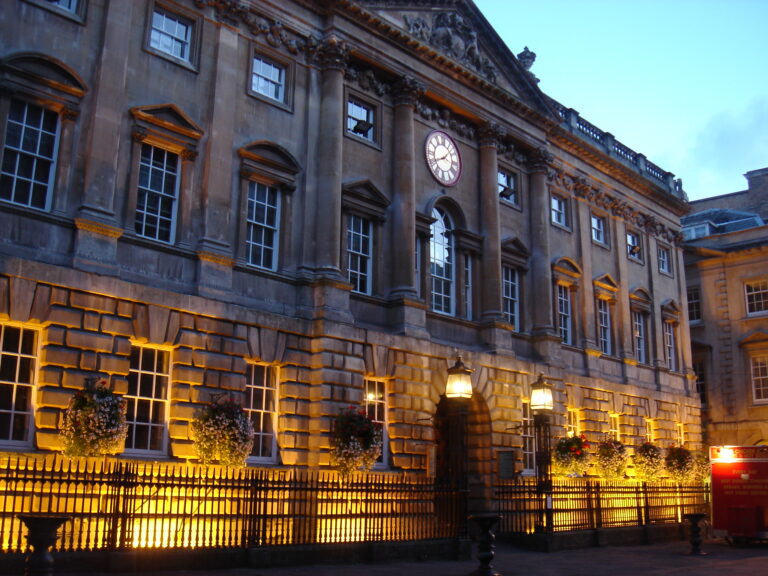
Arnolfini’s 2021 exhibition Land of Many Waters brought recent paintings together with work from the preceding decade. Its presentation emphasised the movement between material experiments and autobiographical associations. Paintings made in 2020 used comparatively stripped-back surfaces, while other works carried textiles, collage and assorted additions. That range matters because Bowling’s development has involved revisiting procedures as well as inventing them. A discovery need not become a fixed signature used indefinitely. The exhibition included works whose titles recalled encounters and relationships, such as Ella and her mum Zoe’s visit. Photographs, texts and materials from his studio helped connect those paintings with the circumstances of their making. Together they suggested a practice sustained by repeated work and by the people, objects and recollections that entered its daily setting.10
Returning to earlier discoveries
Looking West Again, made in 2020, brings several of those discoveries into one painting. The Met describes translucent vertical colour bands beneath streams and islands of pigment. A circular mark at its centre resulted from lifting a bucket from the wet canvas. Acrylic gel and found objects contribute to its layered construction. Earlier concerns with maps, flowing paint and accumulated material reappear in a new arrangement. The museum also interprets the title as raising questions about the West as an idea onto which people project desires, including colonial ambitions. That interpretation gives geography a conceptual dimension alongside the visible organisation of the painting. A humble studio implement has left a conspicuous trace, yet the resulting composition invites thoughts of places and distances. The painting holds together those different scales of attention: an ordinary action, a constructed surface and the possibility of a wider world.11
The freedom to continue
Bowling has also described titles as a place for verbal play, giving viewers hints while leaving the paintings room to communicate. In his interview with Chelsea College of Arts, he explained how painting had first appealed through its physical involvement: it engaged his body in applying material. That pleasure in making sits alongside practical support for younger artists. In 2014 he announced scholarships covering course fees for two MA Fine Art students at Chelsea. He connected the decision with his own experience of financial support and the pressures facing students. Creative freedom requires time, materials and workable circumstances, as well as permission to think independently. His assistance acknowledged those conditions, extending an interest in artistic possibility beyond his own studio. It is a useful companion to the public history of his exhibitions.12
Election to the Royal Academy in 2005, the major Tate Britain retrospective in 2019 and a knighthood in 2020 brought further public recognition. The longer achievement remains available in the paintings themselves. Across changing materials and methods, Bowling made room for colour, memory and artistic inheritance to interact. His career invites sustained attention to that work: to the decisions a surface preserves, and to the possibilities each new painting opens.1
Sources and further reading
1. Frank Bowling: Biography.
2. Frank Bowling Archive: Chronology.
3. San Francisco Museum of Modern Art: Caroline Harris, Alexxa Gotthardt and Cristina Chan: Mapping a Life in Paint — An Interview with Frank Bowling (2023).
4. Museum of Fine Arts, Boston: MFA Boston Presents First Major American Survey of Frank Bowling’s Work in Over Four Decades (2022).
5. The Metropolitan Museum of Art: Frank Bowling: Night Journey, 1969–70.
6. Museum of Fine Arts, Boston: Frank Bowling and 5+1.
7. The Brooklyn Rail: Frank Bowling with Alex Bacon (2023).
8. Serpentine Galleries: Frank Bowling: Painting, 1–31 March 1986.
9. Art UK; interview reproduced by Arnolfini: Melissa Chemam: Land of many waters — an interview with Frank Bowling (11 August 2021).
10. Arnolfini: Frank Bowling: Land of Many Waters (2021).
11. The Metropolitan Museum of Art: Frank Bowling: Looking West Again, 2020.
12. Chelsea College of Arts, University of the Arts London: An interview with Frank Bowling.





this is an excellent article