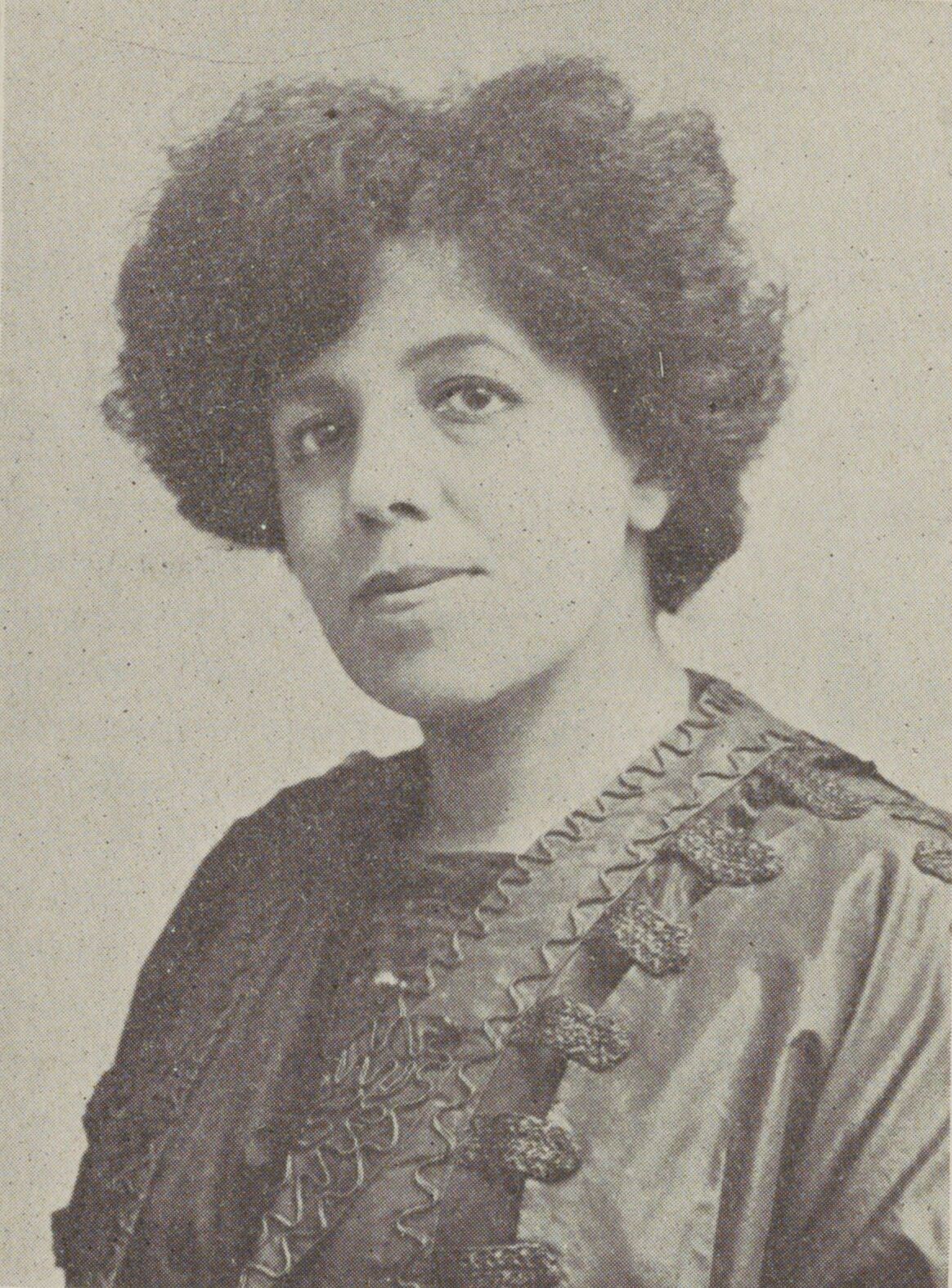
On published sheet music, Montague Ring named a composer of songs and instrumental pieces. Behind that name was Amanda Aldridge, an experienced singer and a respected teacher. Her pupils included Paul Robeson, Roland Hayes and Marian Anderson. Bringing these parts of her career together reveals a musician whose influence travelled through lessons, personal encouragement and the music people carried away to perform. Her contribution lay in both creating music and helping other voices develop. 1
A musical childhood and a place at the Royal College
Born in south London on 10 March 1866, Amanda was the daughter of the African-American actor Ira Aldridge and the Swedish singer Amanda Brandt. Her father died when she was little more than a year old. Her mother encouraged the children’s musical education, giving Amanda a foundation that preceded any conservatoire training. At fifteen she appeared in a concert at the Crystal Palace. Music was already becoming a public activity as well as something learned and practised within the family. 3
In 1883, aged seventeen, she won a foundation scholarship to the newly opened Royal College of Music. Her singing teachers included Jenny Lind and George Henschel. Lind’s international reputation made her a distinguished teacher, but Aldridge’s scholarship also represented recognition of her own ability. She studied at the college during its earliest years, developing the skills on which her working life would depend. Her education extended beyond its classrooms: she was also a pupil of the actor Madge Kendal. Vocal training and dramatic communication would both be relevant to her later work with performers. 2
The concert singer behind the teacher
Aldridge’s concert repertoire was wide. Music historian Christopher Reynolds identifies works by Mozart, Schubert, Brahms, Dvořák and Samuel Coleridge-Taylor among the music she sang. She performed in several languages, including Danish. This required more than the possession of an attractive voice. A singer had to carry words, phrasing and changes of musical character convincingly from one piece to another. Her subsequent teaching grew out of experience with that varied repertory, and her own compositions emerged alongside an established knowledge of other composers’ work. 14
Contemporary reviews recognised both the sound of her contralto voice and the care with which she used it. The Daily Telegraph praised its richness in 1896, while a 1905 review in The Times admired her warmth, style and musical intelligence. These notices give substance to a career sometimes compressed into the few words “singer turned teacher”. Before she became a mentor to celebrated performers, Aldridge had faced the demands of the concert platform herself and received attention for the quality of her interpretation. 5
Laryngitis damaged her voice and limited the future of her singing career. Teaching and composition became increasingly important to her livelihood. She also worked as a piano accompanist, another role requiring close attention to the way a singer breathes, shapes a phrase and handles a text. The change in her circumstances therefore brought different parts of her training to the foreground. The experience acquired through performing could be used in the studio and at the writing desk, even when her own concert prospects had narrowed. 13
Choosing Montague Ring in the sheet music market
Montague Ring was her professional name as a composer. Aldridge explained that she wanted to distinguish that work from her activities as a singer and instructor. Composing had its own public identity within a working life that also included performance and teaching. The separation was never complete. Reynolds points to a London review from July 1909 that praised her singing and piano playing under the name Ira Aldridge, and her composition under the name Montague Ring. Listeners and readers could encounter different professional identities belonging to the same woman. 14
The market she entered also carried the racism of its period. Katherine Fry’s archival research shows that some of Aldridge’s early songs were sold within a commercial tradition shaped by blackface minstrelsy, with degrading language and stereotypes. A full account of her work must acknowledge that material. Fry traces how these publications gave her an opening into the sheet music business, followed by work with publishers including Chappell, Boosey and Ricordi. The evidence supports a complicated professional history; it does not justify assigning a single intention to everything she composed. 6
Piano suites, dances and music for bands
Three African Dances offers one way into her instrumental writing. A 1913 edition preserved by Boston Public Library names three movements: The Call to the Feast, Luleta’s Dance and Dance of the Warriors. Published by Chappell in London and New York, it is a work for piano. Its sequence of individually named dances gave a player several connected pieces to explore within one publication. The surviving edition also makes the Montague Ring identity tangible: the name appears as the composer of an actual score that can be opened, studied and played, rather than remaining merely a detail in a biography. 7
Her music also circulated in arrangements for larger groups. The Library of Congress holds a 1920 band edition of Three Arabian Dances, credited to Montague Ring with Dan Godfrey as arranger. Its movements are Caravan, By the Fountain and Bedouin. The publication appeared in The Army Band Journal, a setting quite different from a song accompanied at a household piano. The instrumental parts preserve the practical form in which several musicians could perform the work together. They also show why a history of her output needs to include arrangers, publishers and performing ensembles alongside the original composer. 8
On Parade, published in 1914, was a quick march. Its surviving instrumental parts have allowed musicians to recover the piece for modern performance. Editor Kaitlin Bove describes a structure that includes an additional section within the trio, taking the music into another key. That detail gives a glimpse of the craft behind a seemingly straightforward light work. Aldridge wrote for the pleasures of melody and movement, while making choices about musical shape that still require attention from an editor, conductor or player approaching the score. 10
The London teacher sought out by American singers
Her teaching connected her to a remarkable group of African-American performers. Paul Robeson’s surviving letters show that he valued her compositions as well as her musical judgement. He asked for a copy of Summah is de Lovin’ Time, explaining that he wanted to record it and include it on a concert tour. His programme already contained spirituals, revival songs and work songs; he wanted a love song to bring greater variety. The exchange reveals Aldridge as a source of repertoire for a performer thinking carefully about the range of Black life and feeling that his audiences should hear. 3
Marian Anderson began lessons with Aldridge at Weeks Studio in Hanover Square in January 1928. Anderson had come to Europe seeking further training and already knew of her reputation. In a letter dated 4 January 1929, after returning to Philadelphia, she thanked Aldridge for teaching that remained useful and reported that listeners had noticed an improvement. She also regretted having to leave Britain so soon. This is direct evidence of a pupil’s assessment: Aldridge’s contribution continued to matter after the lessons themselves had ended and Anderson had resumed work across the Atlantic. 9
The care of a voice was central to Aldridge’s teaching reputation. Jenny Lind’s recommendation had praised her understanding of how a voice should be formed and developed healthily, and endorsed her as a teacher. Her instruction extended to diction and elocution, skills valuable to actors as well as singers. The connection between clear words and musical expression helps explain the breadth of that work. A teacher capable of listening closely to both could assist a performer with the communication of a whole piece, as well as individual notes. 5
Care at home and songs for a former pupil
Family responsibilities restricted her movements. In 1921 she declined W. E. B. Du Bois’s invitation to the Pan-African Congress because her sister Luranah was seriously affected by rheumatism. Their maid was away, and Amanda explained that she could leave the house for only a few minutes. She wished the meetings success and invited Du Bois to visit. The letter places her within a wider circle of Black intellectual and political contacts while recording a practical reason she could not join an important gathering. Caring work shaped her opportunities. 6
Composition continued beyond her main years of commercial publication. Around 1934 she wrote two songs with Anderson’s contralto voice in mind: Shine, Pale Moon and Pent. The manuscripts carry different signatures, Montague Ring on the first and Amanda Ira Aldridge on the second. Pent sets a poem by Georgia Douglas Johnson, extending her engagement with Black American writing. In 1950 she was still hoping Anderson might sing it. The correspondence shows an older composer continuing to think about the right performer for a work and seeking a place for it in recital. 9
Continuing to work into her eighties
Accounts of Aldridge in later life describe a woman whose voice still made an impression in conversation. Writing in The Era in 1933, Archibald Haddon remarked on her deep contralto speaking tones and precise enunciation. Historian Stephen Bourne draws attention to that description in his account of her life. It offers a small but revealing reminder that vocal accomplishment could remain audible beyond a concert career, in the everyday speech of someone who had spent decades attending to words and sound. 11
She continued teaching well into old age. At eighty-seven she was still travelling into central London by bus to work with pupils, a journey reported as taking forty minutes. Music remained part of her daily routine, with lessons requiring both physical effort and sustained attention. This long working life adds another dimension to the familiar list of her famous students. Her professional experience was built through repeated journeys, scheduled lessons and the continuing task of helping a person use their voice, year after year. 4
Her later years also brought contact with people documenting her family’s history. The Schomburg Center at the New York Public Library preserves correspondence between Aldridge and Ira Aldridge’s biographer Owen Mortimer from 1953 to 1955. Mortimer had collected material on the actor for years, and some of it was exhibited in Chicago in 1954. Amanda was therefore a living correspondent for someone investigating the earlier generation. Those letters sit alongside the separate traces of her own professional relationships, reminding researchers to look for the daughter’s working life as well as the celebrated father. 12
At eighty-eight, Aldridge appeared on the television programme Music for You, accompanying Muriel Smith in one of her compositions. A musician trained during the first years of the Royal College of Music was presenting her work through a medium that had arrived much later in her life. She died on 9 March 1956, the day before her ninetieth birthday. The television appearance had given another audience the chance to encounter her as a practising musician, taking part in a performance of music she had created. 1
Bringing the music back into performance
Aldridge’s scores still require the practical work that turns historical material into performance. Bove’s 2020 edition of On Parade adapted the original parts for modern instrumentation, corrected errors and supplied rehearsal aids, including bar numbers and tempo information. Recordings by ensembles at San José State University and the University of Hawaiʻi demonstrate the result. Such work makes the process of recovery concrete: an old set of separate instrumental parts becomes music that a conductor can rehearse with a band and an audience can hear. 10
Her songs offer another route. The Art Song Augmented project brings together scores and recorded performances, including Azalea, performed by Patricia Hammond, Andrea Kmecova and Matt Redman with voice, piano and zither banjo. The combination introduces listeners to a different sound from the orchestral concert or the solo piano suite. These performances return attention to decisions about pace, character and expression within the music itself. Amanda Aldridge’s story can begin with an unfamiliar name on a title page; it becomes fuller when musicians put that music before an audience again. 4
Sources
1. Royal College of Music: The influence and legacy of Amanda Aldridge, by Dr Anna Maria Barry.
3. David and Roxanne Gleave, Historycal Roots: Amanda Aldridge (10th March 1866 to 9th March 1956).
4. Art Song Augmented: Amanda Aldridge; biography, scores and recorded performances.
5. Paula Maust, Expanding the Music Theory Canon: Amanda Aldridge.
7. Boston Public Library, via Internet Archive: Three African dances, by Montague Ring, 1913 edition.
9. Katherine Fry, Women’s Song Forum: Amanda Ira Aldridge’s Songs for Marian Anderson, 22 November 2024.
10. …And We Were Heard: On Parade: Quick March, Amanda C. E. Aldridge, edited by Kaitlin Bove.
12. New York Public Library, Schomburg Center: Guide to the Owen Mortimer collection, 1953–1999.
13. Music by Women: Amanda Ira Aldridge, aka Montague Ring.
14. Christopher Reynolds, Women’s Song Forum: Women Composing as Men, Part 1, 16 October 2024.
Image credit
Portrait of Amanda Aldridge published in The A.M.E. Church Review, October 1912. Photographer unknown. Library of Congress, Rare Book and Special Collections Division; via Wikimedia Commons (cropped). Image source; No known copyright restrictions.






Join the conversation
Comments 0
Share a memory, ask a question or add to this story.
No comments yet. Add your perspective.
Add your voice
Create a free account and verify your email to leave a comment.
All comments are reviewed before publication.