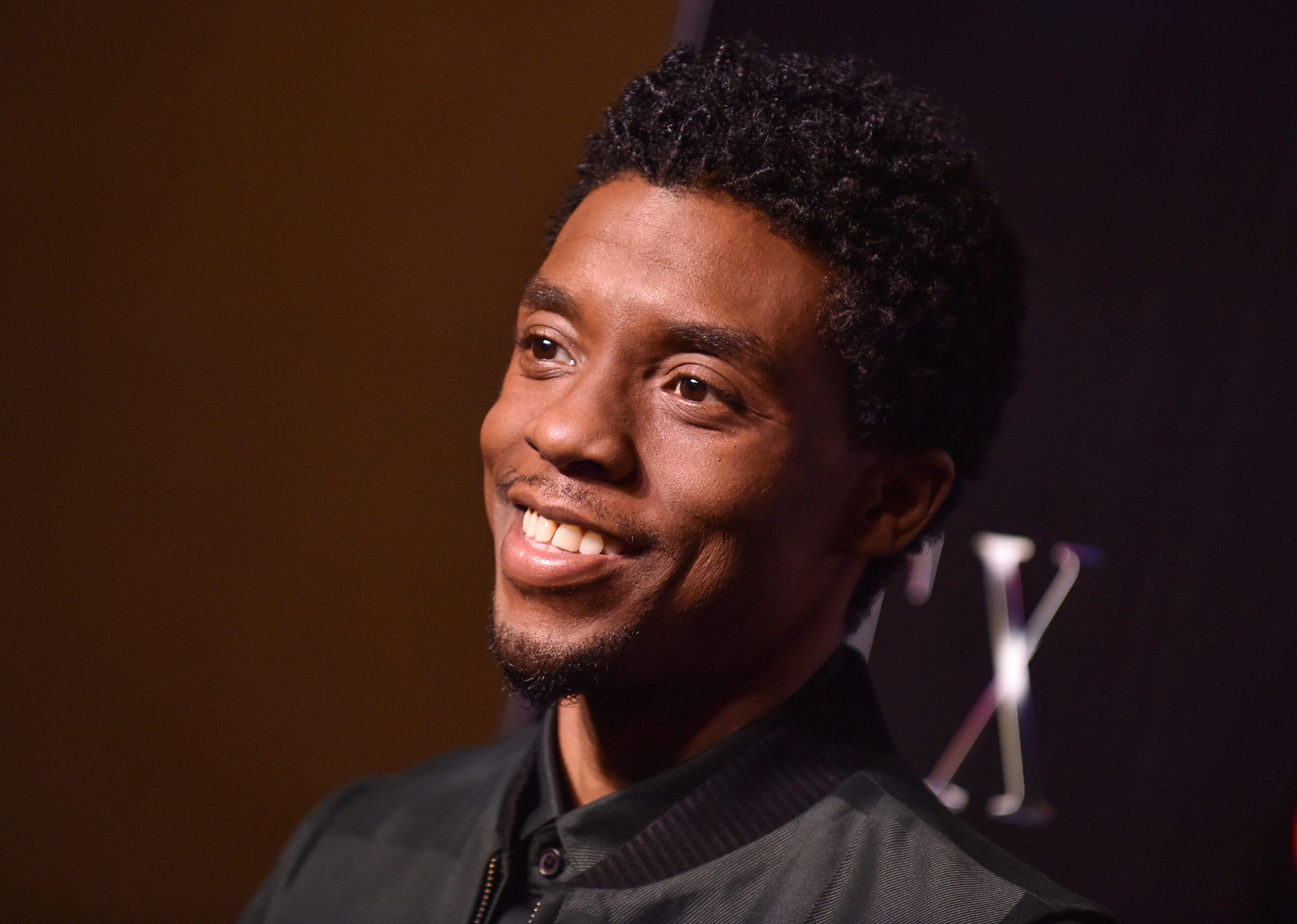
When Chadwick Boseman returned to Howard University to deliver its 2018 commencement address, he connected four very different roles. His education, he told the graduates, had prepared him to play Jackie Robinson, James Brown, Thurgood Marshall and T’Challa. The university awarded him an honorary Doctor of Humane Letters. His speech concerned the choices behind a career: the standards an artist carried into an industry, and the difficulty of keeping them when opportunities appeared to depend on compromise. 1
From South Carolina to Howard University
Chadwick Aaron Boseman was born on 29 November 1976 in Anderson, South Carolina, to Leroy and Carolyn Boseman. At T. L. Hanna High School, he participated in speech and debate and played basketball. He also wrote a play, Crossroads, after a friend was shot and killed. Writing offered him an early way to respond to events affecting people he knew, bringing language and performance into the life of his school. 2
At Howard, he studied directing and graduated with a Bachelor of Fine Arts in 2000. He became president of the Howard Players and joined efforts to preserve the College of Fine Arts. Actress Phylicia Rashad was among his teachers and mentors. These activities placed him within a community concerned with the making of theatre, the education of artists and the institutional support that allowed both to continue. 3, 21
His training also brought him to Britain. In 1998, he attended the British American Drama Academy’s Midsummer in Oxford programme. When he could not afford the summer course, Rashad sought help from friends, including Denzel Washington, to make the trip possible. The experience formed part of a wider education that connected his work at Howard with another theatrical tradition, years before international film audiences knew his name. 3, 4
Playwriting and the work of a teacher
Boseman developed plays in the growing field of hip-hop theatre. He co-wrote and performed in Rhyme Deferred, then wrote Hieroglyphic Graffiti, a reworking of the ancient Egyptian myth of Ausar and Auset. He also directed stage productions and the short film Blood Over a Broken Pawn. In his own account of this period, he described moving beyond a musical framework towards plays whose spoken language could carry the emotional weight associated with classical verse. 5
Deep Azure extended that experiment. Commissioned by Congo Square Theatre Company, it reached a full production in 2005 after readings and workshops. The story follows a woman whose fiancé has been killed by a police officer, exploring grief, body image and the pressures within a Black community. Boseman’s artist statement describes language drawing on hip-hop, jazz, scripture and other sources. A chorus called Street Knowledge uses movement and beatboxing, making the performers’ abilities central to the play’s theatrical world. 5
Alongside his own work, Boseman taught acting in the Junior Scholars programme at the Schomburg Center for Research in Black Culture in Harlem from 2002 to 2009. The New York Public Library remembered that sustained connection after his death. It also noted that, even after Black Panther made him internationally famous, he continued to draw attention to the centre and its importance to Black culture and film. 6
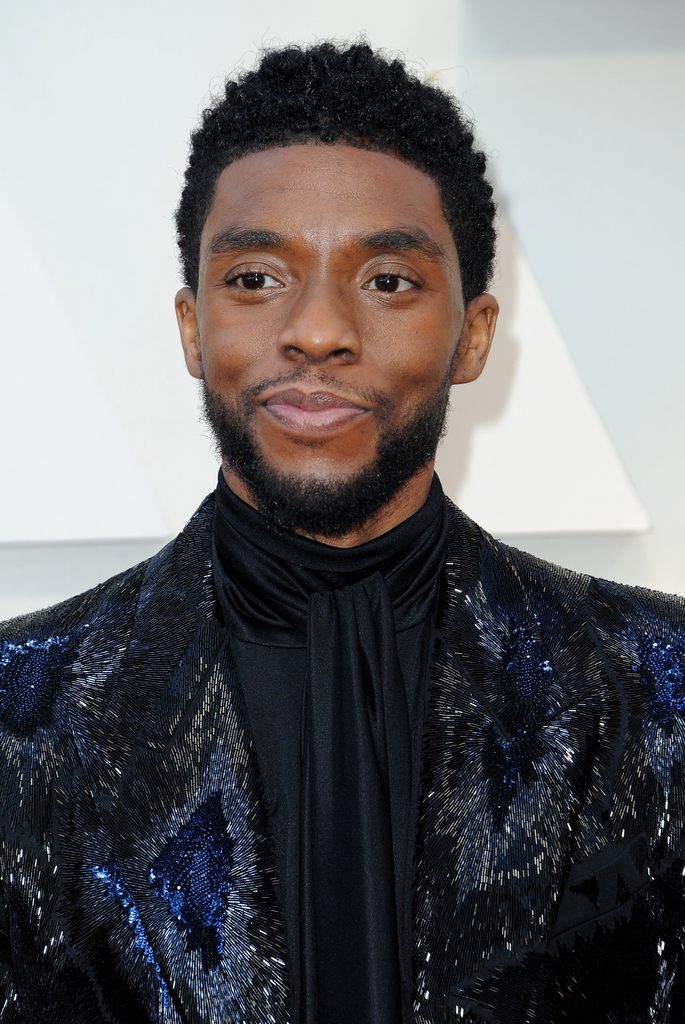
Television supplied another strand of his working life. Guest appearances included Third Watch, Law & Order, CSI: NY and ER. A recurring role in Lincoln Heights and a regular part in Persons Unknown followed. This was a career built across different kinds of work, with television roles preceding the leading film performances that would make him widely recognisable. 7
Preparing to play Jackie Robinson
In 42, released in 2013, Boseman played Jackie Robinson as he entered the Brooklyn Dodgers and faced the hostility surrounding baseball’s racial barrier. Brian Helgeland wrote and directed the film, with Harrison Ford playing Branch Rickey, the executive who signed Robinson. The drama required Boseman to show athletic ability alongside the strain of absorbing racist abuse. Robinson’s restraint, as presented in the film, involved constant pressure on a man whose actions were being closely watched. 8
Rachel Robinson participated in the production, reading drafts and visiting the set. Speaking to interviewer Bonnie Laufer in 2013, Boseman recalled wanting to do justice to her husband for her sake. He described her willingness to allow the film to show Robinson’s vulnerability. That relationship mattered to his preparation: the historical figure was also someone whose wife could discuss his life with the actor, question details and respond to the screenplay’s choices. 9
For the physical work, Boseman trained from January to May, mainly in Los Angeles, with coaches from college and major-league baseball. Practices were filmed, then compared on a split screen with footage of Robinson batting, fielding and running bases. He told Vanity Fair that this exposed the distance between his own technique and Robinson’s. Repetition and comparison helped him approach the distinctive movements of the player who had made his Dodgers debut in April 1947. 10
James Brown and the detail of performance
Get on Up followed in 2014, directed by Tate Taylor. Its account of James Brown moved between different periods, from childhood to musical success. Viola Davis played Brown’s mother. The structure required Boseman to move across phases of the singer’s life rather than build a performance around one familiar image. Brown’s changing appearance, voice and stage manner all became part of the work of representing him. 11
Boseman initially doubted that he could manage Brown’s dancing. He was not a professionally trained dancer, and footage of the performer made the task appear formidable. In an interview with ABC’s Nightline, he described studying performances and interviews, noticing how Brown changed over time. He practised with a choreographer for five to eight hours a day. Understanding Brown’s underlying groove, he explained, was the key to making the other movements work together. 11
The production’s musical work was a collaboration. Choreographer Aakomon Jones helped shape the performances, while music editors and supervisors coordinated the actors with original recordings from Brown’s archive. Boseman had to sing and dance in time, respond to musicians and deliver dialogue within the same sequences. Brown’s own recorded voice supplied the concert performances; Boseman’s singing was also heard in some scenes away from the stage. The convincing screen image depended on those different contributions fitting together. 12
Thurgood Marshall as a young lawyer
Reginald Hudlin’s Marshall, released in 2017, approached another famous life through an earlier chapter. Boseman played Thurgood Marshall as a young lawyer, before Brown v. Board of Education and his appointment to the United States Supreme Court. The film centred on the defence of Joseph Spell, a Black chauffeur played by Sterling K. Brown, accused of sexual assault and attempted murder by his white employer, played by Kate Hudson. Its focus was a particular criminal case rather than a complete life story. 13
Boseman studied recordings of Marshall speaking to develop his cadence and researched the younger man behind the familiar later image of a Supreme Court justice. The setting was Connecticut in the 1940s, when Marshall worked for the NAACP. In his interview with Vanity Fair, Boseman emphasised that the screenplay attracted him as drama in its own right. The historical importance of the subject was accompanied by the immediate task of making a character work within a story. 14
Creating T’Challa and the world of Wakanda
Black Panther, released in 2018, gave Boseman a different kind of leading role. T’Challa was the king of Wakanda, a fictional African country whose advanced technology had developed beyond the reach of colonial conquest. Ryan Coogler directed and co-wrote the screenplay with Joe Robert Cole. The story placed a newly crowned ruler at the centre of a threat to the country’s isolation. African leadership and technological invention formed part of the imagined world that audiences encountered. 15
Boseman had already introduced T’Challa in Captain America: Civil War. Coogler later recalled seeing an unfinished version of that film and being struck by a scene between Boseman and John Kani, who played T’Challa’s father. They spoke Xhosa, Kani’s own language. In his tribute after Boseman’s death, Coogler explained how the two actors’ choices helped establish the language of Wakanda. A detail developed in performance became part of the fictional country’s identity. 16
Boseman also argued for T’Challa to speak English with an African accent. During the film’s promotion, he connected that decision with his education at Howard, where Black writers and their work had been treated as classics. He said African intonations could express the full emotional range of a character. Within the story’s logic, a ruler educated in an unconquered Wakanda had no reason to adopt a European voice as the mark of authority. 17
Wakanda took shape through many artists. Ruth Carter’s costumes combined African styles with modern silhouettes, handcrafted details and accessories made through 3D printing. Boseman acted alongside Lupita Nyong’o as Nakia, Danai Gurira as Okoye and Letitia Wright as his sister Shuri. At the film’s press conference, Nyong’o stressed the women’s different forms of power and their ability to disagree. T’Challa’s relationships with capable people around him helped give the imagined society its texture. 15, 17
The different demands of his final films
Boseman’s work continued beyond Wakanda. In Spike Lee’s Da 5 Bloods, released in 2020, he played Norman, an American soldier killed during the Vietnam War. Four surviving veterans, played by Delroy Lindo, Clarke Peters, Norm Lewis and Isiah Whitlock Jr., return to recover his remains and a cache of gold. Norman’s death gives their journey a personal purpose, linking the film’s present-day search with the wartime experiences that continue to shape the men. 18
Ma Rainey’s Black Bottom brought him back to the work of a Black American playwright. Directed by George C. Wolfe and adapted by Ruben Santiago-Hudson from August Wilson’s play, it centred on a recording session in Chicago in the 1920s. Viola Davis played Ma Rainey; Boseman played Levee, an ambitious musician determined to establish himself in the industry. Denzel Washington and Todd Black were among the producers, with Glynn Turman, Colman Domingo and Michael Potts in the cast. 19
Wolfe gave the actors two weeks of rehearsal to work with Wilson’s language before filming. In an interview about the production, he described Levee as a man of considerable talent and possibility, haunted by events from his childhood. That tension shaped the part: confidence in a future career existed alongside damage from the past. Wolfe remembered the cast’s hard work, generosity and enjoyment of one another, and spoke of the pride he took in Boseman’s performance. 20
Boseman died in Los Angeles on 28 August 2020, aged forty-three. Ma Rainey’s Black Bottom, his final live-action film role, was released later that year and earned him a posthumous Academy Award nomination. His voice work as T’Challa in the animated series What If…? also reached audiences after his death and received an Emmy in 2022. 7, 18
A continuing life in classrooms and theatres
In May 2021, Howard announced that its re-established College of Fine Arts would bear Boseman’s name. The university’s president recalled discussing plans for the college with him during his 2018 return. His widow, Simone Ledward-Boseman, and his family supported the naming. The honour attached his name to the education of artists in the institution where he had trained, linking a public memorial with work continuing through teachers, students and future productions. 21
His writing has also returned to performance. In 2026, Shakespeare’s Globe presented the UK premiere of Deep Azure in the Sam Wanamaker Playhouse, directed by Tristan Fynn-Aiduenu. Selina Jones played Azure, with Jayden Elijah as Deep. The play’s mixture of hip-hop, song and verse entered a London theatre associated with Shakespeare, giving audiences another way to encounter Boseman’s work and the questions about language and tragedy that had occupied him before his film breakthrough. 22
The production also made a connection with his own training. During its development, twelve Howard students attending the British American Drama Academy’s 2025 Midsummer in Oxford programme spent four days working with Fynn-Aiduenu and the creative team in London. They explored storytelling, movement, beatboxing and voice, and shared their experiences of studying at a historically Black university. Boseman’s script became material through which another group of students could test ideas and develop their own performances. 4
Sources
3. Howard University, Chadwick A. Boseman College of Fine Arts — Chadwick Boseman.
7. Television Academy — Chadwick Boseman: biography and Emmy record.
8. Legendary Pictures — 42 (2013).
10. Julie Miller interviews Chadwick Boseman about playing Jackie Robinson, Vanity Fair, 12 April 2013.
14. Krista Smith interviews Chadwick Boseman about Thurgood Marshall, Vanity Fair, 9 October 2017.
15. Academy of Motion Picture Arts and Sciences — The Art of Costume Design: Black Panther (2018).
19. Netflix Media Center — Ma Rainey’s Black Bottom (2020): synopsis, credits and release record.
22. Shakespeare’s Globe — Deep Azure, UK premiere at the Sam Wanamaker Playhouse (2026).





Join the conversation
Comments 0
Share a memory, ask a question or add to this story.
No comments yet. Add your perspective.
Add your voice
Create a free account and verify your email to leave a comment.
All comments are reviewed before publication.