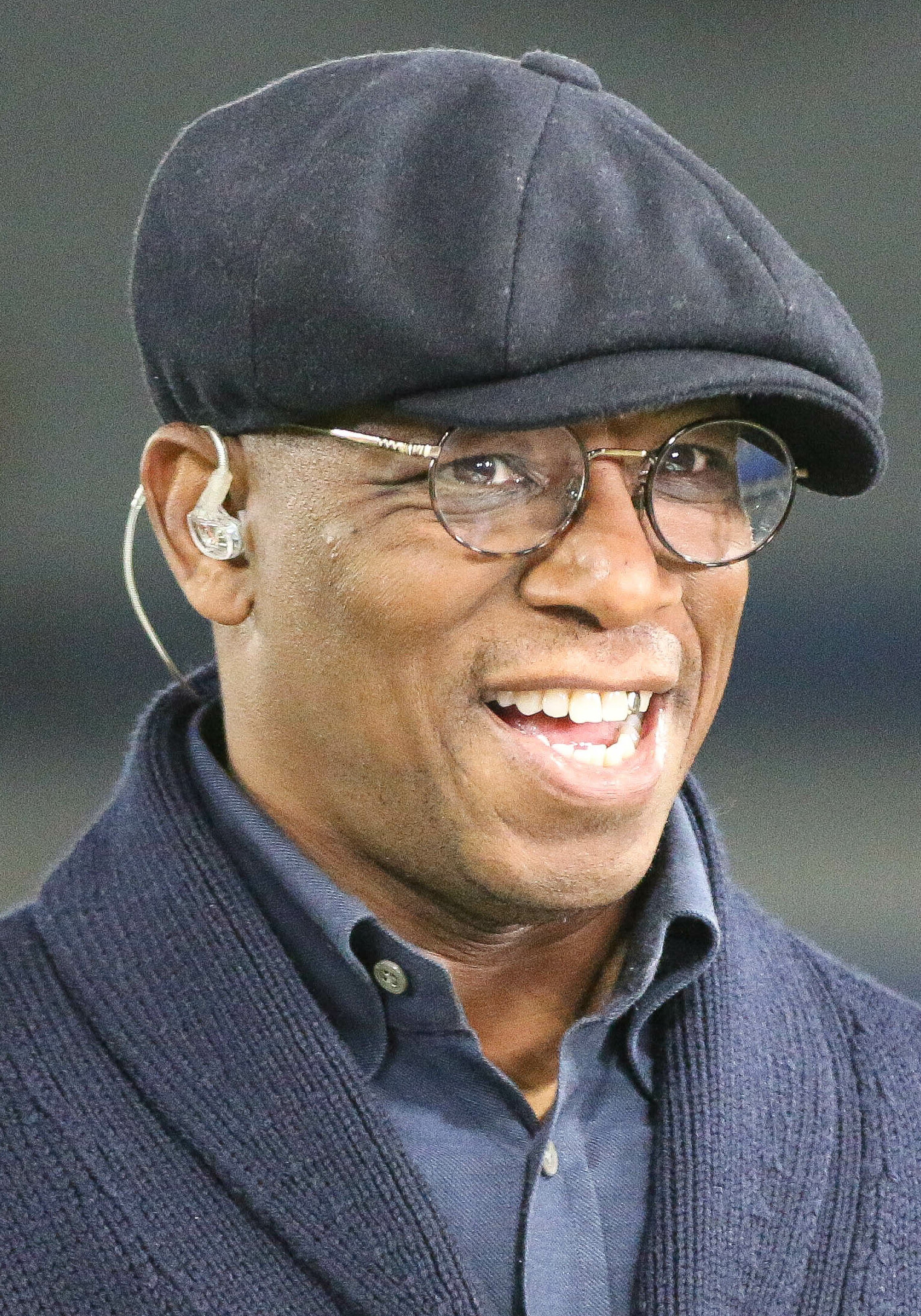
Ian Wright could score the goal that made a crowd rise before anyone had quite understood how he had done it. He could also arrive close to the net for the simplest finish. Both qualities belonged to the same striker: quick to recognise an opening and ready to act upon it. Arsenal’s leading scorer through the Premier League’s first five seasons, he eventually helped the club win the championship in 1998. Yet the professional game had almost passed him by. 1
The football education of a south London boy
Born in Woolwich in 1963, Wright grew up in Brockley, where football occupied streets, parks and the spaces around the estate. In his own account, his older brother Maurice was both an example and a demanding critic. When Maurice challenged his ability, Ian practised with a tennis ball against a wall, working on either foot, his heading and his first touch. The spectacular striker of later years had spent hours repeating small movements, trying to become a more complete player. 2
At Turnham Primary School, Sydney Pigden offered a different kind of instruction. Wright remembered being disruptive in class and struggling with reading. Pigden gave him time, taught him and helped him direct his energy. He also made him a school monitor, entrusting him with responsibilities. In an interview with Tes, Wright explained how the teacher’s belief altered the way other adults responded to him. A child accustomed to being treated as a problem began to experience being trusted. 3
Pigden’s football lessons were practical. Wright later told The42 that his teacher showed him how to place a finish past a goalkeeper instead of simply striking it as hard as possible. He introduced him to the example of Jimmy Greaves and the value of composure near goal. Wright dedicated his autobiography, A Life in Football, to Pigden. His debt to the teacher concerned a technique he could use throughout his career as well as the encouragement that helped him begin it. 4
Crystal Palace takes a chance
Recognition did not follow quickly. Wright worked as a plasterer, trained as a bricklayer and endured unsuccessful trials before receiving his first professional contract at 21. He had already spent years earning his living outside football. The professional opportunity came when many players of his age were established in a first team. 5
Crystal Palace signed him from Greenwich Borough in 1985. Under Steve Coppell, Wright developed into a forward capable of transforming a match, forming a potent partnership with Mark Bright. By 1990 Palace had reached the FA Cup final, but Wright’s participation was uncertain: he had broken his leg twice during the season. His later recollections give considerable credit to physiotherapist David West. The final appearance remembered for its goals also depended on rehabilitation and the work of someone away from the spotlight. 6
Against Manchester United at Wembley, Wright came off the bench and scored twice, first equalising and then putting Palace ahead in extra time from John Salako’s delivery. United recovered to draw 3–3 and won the replay. Looking back for the club in 2025, Wright still described the occasion with exceptional affection. His subsequent association with Arsenal never erased the significance of Coppell’s decision to give him his opportunity. 6
Rocastle, friendship and the move to Highbury
One of the people who believed in Wright before professional clubs did was David Rocastle. They had known each other since childhood on the Honor Oak Estate, with Wright four years older. Rocastle’s progress at Arsenal gave their conversations a particular importance. When Wright faced rejection, his younger friend encouraged him to continue, judging his ability against the players he encountered himself. Their connection belonged to the neighbourhood long before it became a story about two men wearing the same famous shirt. 7
The friends became Arsenal teammates in 1991. Wright’s first league appearance for the club brought a hat-trick against Southampton; Rocastle scored too. Their time together in the Arsenal side lasted only one season, before Rocastle’s move to Leeds United in 1992. Rocastle died in 2001, aged 33. In later recollections, Wright has consistently described Rocastle’s influence in deeply personal terms. The importance of their partnership cannot be measured simply by counting the matches they played together. 7
Arsenal were already reigning champions when George Graham brought Wright to Highbury for £2.5 million. The attack contained established talents, including Alan Smith, Paul Merson and Kevin Campbell, so an expensive new striker did not answer an obvious shortage. Wright nevertheless made his case immediately, scoring on his debut in the League Cup against Leicester City. His arrival added another kind of threat: a forward whose finishing could turn an awkward half-chance into the decisive moment of a game. 8
The goals that helped bring trophies
In 1993, Arsenal won both domestic cup competitions, meeting Sheffield Wednesday in each final. Wright scored in the drawn FA Cup final and again in the replay, where his first-half finish gave Arsenal the lead. Wednesday recovered through Chris Waddle, leaving the teams level until the closing moments of extra time. Andy Linighan then headed in Paul Merson’s corner. Wright had supplied crucial goals across the campaign, but the cup was secured through another player’s intervention in a team that found several ways to win. 9
The following year brought the European Cup Winners’ Cup, won against Parma in Copenhagen. Wright had contributed to the campaign but was suspended for the final. Alan Smith scored the only goal as Arsenal defeated a side containing Gianfranco Zola and Faustino Asprilla. Wright’s teammates completed the victory without him, adding a European trophy to the domestic cups they had won together. 10
A record built from many kinds of finish
Dennis Bergkamp’s arrival in 1995 gave Wright a partner who could recognise and reward his movement. Arsenal’s own account of their partnership emphasises the Dutch forward’s ability to occupy defenders and find Wright’s runs. Their understanding offered another way to appreciate the scorer’s skill. Finishing began before the ball arrived: with a change of direction, a run into space or the decision to move at precisely the right moment. Wright’s goals were the visible conclusion of work shared with a creative teammate. 8
In September 1997, against Bolton Wanderers, Wright passed Cliff Bastin’s Arsenal record. The celebration briefly ran ahead of the arithmetic: after drawing level, he revealed a shirt announcing the record before scoring again to make the announcement correct. He finished his Arsenal career with 185 goals in 288 appearances across all competitions. Thierry Henry eventually overtook the total, but Wright’s achievement remains an essential part of the club’s history. 3, 5
The championship arrived in Wright’s final Arsenal season, 1997–98. His scoring had sustained the side through the Premier League’s early years, when he led the club’s league scoring in each of its first five seasons in the new competition. The title gave that period a satisfying culmination. His Arsenal career had begun before the Premier League existed, crossing the boundary between the old First Division and the competition that followed. 1
England brought another measure of achievement: 33 senior appearances and nine goals. Those numbers sit alongside the club record, rather than matching its extraordinary scale. They also connect his story with the generations that followed him out of south London. Decades later, when Eddie Nketiah received his first senior England call-up, the national association traced the shared geography of their careers: Hilly Fields, Arsenal and the national team. Wright had become someone a younger forward could contact for advice about navigating that journey. 11
Using television to tell a wider story
After Arsenal, Wright played for West Ham United, Nottingham Forest, Celtic and Burnley before retiring in 2000. A second career in television and football analysis followed. 5
Wright’s television work has given him ways to examine football beyond the result of the latest match. In 2018 he presented Out of Their Skin for ITV, a two-part documentary looking across decades of Black participation in the English game. Interviews and archive footage brought together experiences of success, abuse and exclusion. Contributors included Ashley Cole, Les Ferdinand and Paul Ince. The programme also considered the difficulties Black former players encountered when seeking opportunities in management, extending its questions beyond who appeared on the pitch. 12
The programme returned to the generation associated with Viv Anderson’s senior England breakthrough in 1978 and followed the changes that came afterwards. Placing individual careers beside one another allowed Wright to examine progress without treating a celebrated player’s success as evidence that every obstacle had disappeared. His role was that of a presenter listening to other footballers’ experiences, bringing their accounts into a history larger than his own. 12
Ian Wright: Home Truths took that willingness to examine difficult experience into another area. The BBC documentary, produced by Brook Lapping, connected his personal account with an investigation of the effects on children of living in psychologically abusive and violent homes. It gave his public storytelling a subject beyond football and asked audiences to consider what children carry with them from their earliest relationships. 13
Encouragement for the players who followed
Wright’s relationship with Nketiah shows what encouragement can look like over time. Speaking in 2023, Nketiah described conversations during his 2019 loan at Leeds United, when Wright sometimes went to watch him play. The contact continued afterwards. Nketiah valued the opportunity to exchange ideas with a striker of Wright’s experience, while also acknowledging other former players who helped him. The picture is of sustained interest and useful conversation, with the younger player doing the work of building his own career. 11
His advocacy has also extended to girls who want the simple opportunity to play. When the Football Association announced in November 2025 that its target for equal football access in PE at Key Stages 2 and 3 had been met, Wright stressed participation as an ordinary expectation. The target concerned 90 per cent of schools in England, with further work still needed elsewhere. Speaking as a Barclays ambassador, he credited the FA, schools and the girls themselves. The achievement belonged to a wider effort also driven by the Lionesses. 14
Sometimes that work has involved changing the facilities available. Barclays documented Wright and former England forward Kelly Smith joining Volunteer It Yourself at Cheetham Hill Sports Club to help improve a changing room for girls. Wright returned to plastering, a skill connected to his working life before professional football. Alongside the familiar faces were young people learning practical skills and a club seeking better provision for its players. A usable changing room is a modest detail beside a stadium, but it shapes who can comfortably take part. 15
A place to play, and a friendship remembered
In April 2023, Wright returned to his former primary school to open the Rocky & Wrighty Arena with members of Rocastle’s family. The new pitch at Turnham Academy stood beneath the estate where the friends had grown up. Funding came from the Football Foundation’s partners and EA Sports, while local artist Lionel Stanhope created a mural honouring both men. Wright spoke of the facility as a tribute to his friend and a place where another generation could discover its own attachment to football. 16
The uses of the pitch give that tribute substance. Reporting two years later, the Football Foundation described PE lessons for children from Turnham Academy and nearby Drumbeat School, which supports pupils with special educational needs and disabilities. Outside school hours, Millwall’s community organisation, Hillyfielders and Girls United ran sessions. Floodlighting and an all-weather surface allowed the space to serve different groups throughout the week. Remembering two footballers had produced something people could actually use, with room for more than one route into the game. 17
Wright had described the direction of this later work in his own writing years earlier. He wanted children to encounter opportunity from the beginning, without depending on the lucky arrival of someone willing to notice them. That ambition carries the memory of Pigden and the people who encouraged him through years of uncertainty. The goals explain his place in football’s record books. His continuing attention to other people explains why the story reaches beyond them. 2
Sources
1. Premier League — Ian Wright, Hall of Fame inductee.
2. Ian Wright, The Players’ Tribune — Earning My Smile (2018).
3. Hannah Frankel, Tes — Ian Wright on his best teacher, Mr Pigden (interview first published 2007).
4. The42 — Ian Wright interview on Sydney Pigden (2018).
5. National Football Museum — Ian Wright, Hall of Fame.
6. Crystal Palace — Voices of Wembley: Ian Wright (2025).
8. Arsenal — Greatest 50 Players: Ian Wright.
9. Arsenal — 1992/93 FA Cup win.
10. Arsenal — Lifting the 1993/94 Cup Winners’ Cup.
11. Frank Smith, England Football — Eddie Nketiah on his first England call-up and Ian Wright (2023).
12. ITV — Watch Out of Their Skin on ITV4 (2018).
13. Zinc Media Group — Ian Wright: Home Truths.
14. England Football — Equal football access in PE at Key Stages 2 and 3 (2025).
15. Barclays — Community Sport Fund: Ian Wright and Kelly Smith at Cheetham Hill Sports Club.
16. Football Foundation — Ian Wright opens the Rocky & Wrighty Arena (2023).
17. Football Foundation — Celebrating two years of the Rocky & Wrighty Arena (2025).
Image credit
Ian Wright at England Women’s match against the Czech Republic, October 2022. Photograph: James Boyes; cropped version via Wikimedia Commons. Image source; CC BY 2.0.








Join the conversation
Comments 0
Share a memory, ask a question or add to this story.
No comments yet. Add your perspective.
Add your voice
Create a free account and verify your email to leave a comment.
All comments are reviewed before publication.