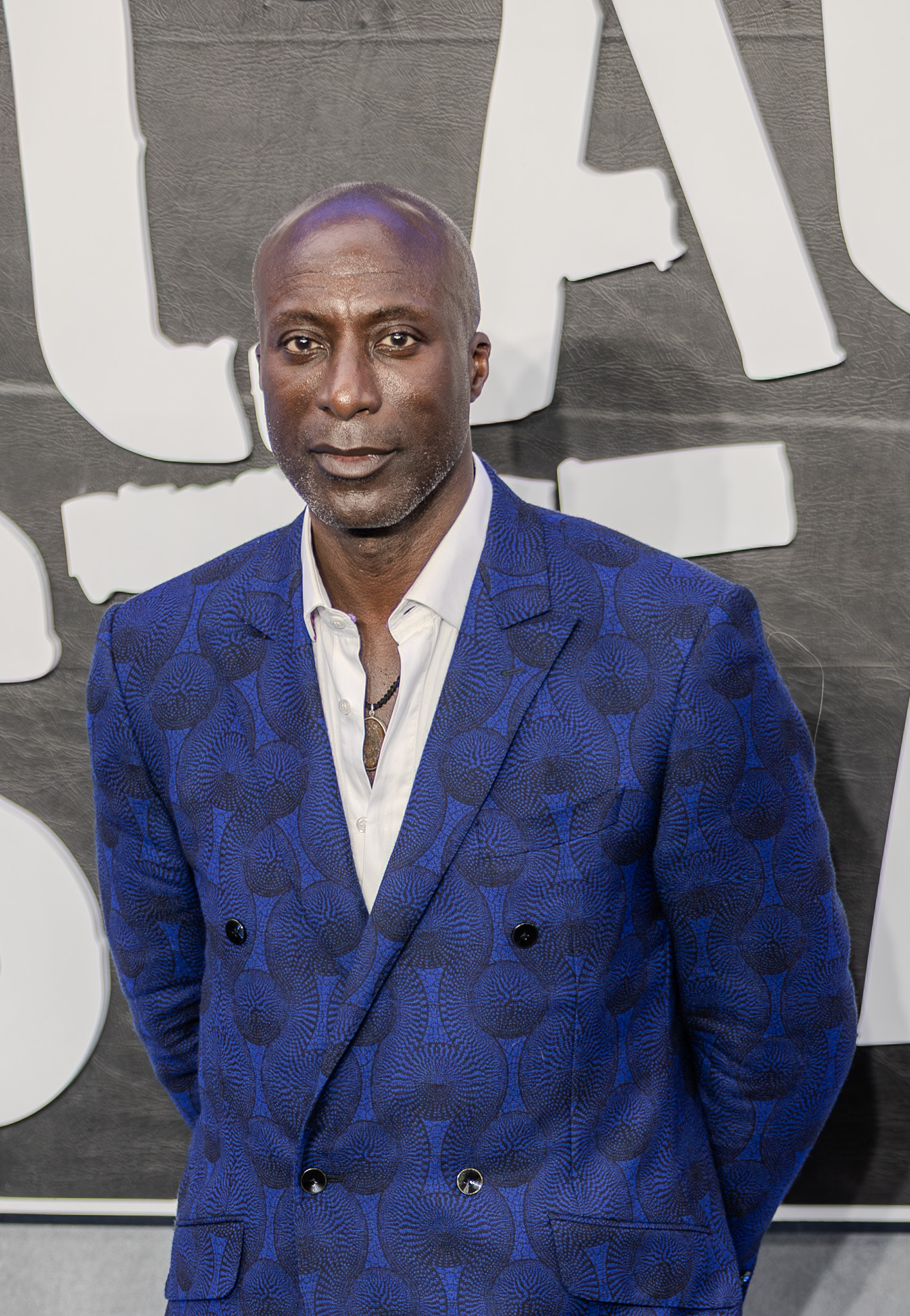
At the Victoria and Albert Museum in 2005, Ozwald Boateng marked twenty years in fashion with a presentation of his menswear. The museum’s Fashion in Motion programme put clothes before an audience as garments to be worn and seen moving. It was an appropriate setting for a designer whose reputation depended on the meeting of careful construction and immediate visual impact. A suit could retain the discipline of British tailoring while making room for a different shape, a stronger colour and the personality of the person inside it. 1
A north London education
Boateng grew up in north London with Ghanaian parents and a strong sense of family expectation. In a 1999 interview with the Times Educational Supplement, he recalled his father’s academic ambitions and determination that he should work hard. His father had been a headteacher in Ghana and encouraged his confidence as well as his education. Yet the career that eventually emerged was far from the one his family had imagined. At school, Boateng had disliked needlework and failed to see its usefulness. 2
Clothing was nevertheless part of his childhood. His mother made clothes and pursued business opportunities; his father dressed in suits. Boateng remembered a purple mohair suit made for him as a young child, and the pleasure of wearing school uniform. These memories gave tailoring a personal history long before it became his profession. The suit belonged to family life, authority and self-presentation, while his mother’s sewing machine offered a practical means of making something himself. 3
He initially studied computing, then moved towards fashion. His company’s history records that he studied at Southgate College, made a first collection using his mother’s sewing machine and sold the clothes to Sprint, a menswear shop in Covent Garden. The early work therefore involved both making and selling: producing clothes that another person would choose to wear, and persuading a retailer that there was an audience for them. A design studio on Portobello Road followed, placing him within another of London’s established centres of clothing and individual style. 7
What changed in the cut
Boateng’s contribution was visible in proportion as well as colour. His suits developed a slim, structured outline, with close attention to the shoulder. Speaking to British GQ in 2012, he described that line as fundamental to the rest of the garment. The colour of a suit also required judgement: for him, the question was finding a shade that suited the wearer. A bright fabric still needed a convincing cut, and a strongly shaped jacket still needed to work with the shirt beneath it. 4
The company calls its approach bespoke couture, joining the making of individual garments with a fashion designer’s creative direction. Its bespoke service involves suits cut from scratch and made by a team of tailors. The phrase can sound abstract, but the working distinction is straightforward: a distinctive design has to become a finished garment through cutting, construction and fitting. Boateng’s name identifies the style, while the labour of skilled people makes it possible to wear. The finished suit carries both the designer’s decisions and the workshop’s knowledge. 5
Making a place in Mayfair
In 1995 Boateng opened on Vigo Street, around the corner from the southern end of Savile Row. Tommy Nutter had helped introduce him to that tailoring world. Boateng joined designers including Richard James and Timothy Everest in bringing a younger sensibility to the area. His relationship with the Row became more firmly established with headquarters at 12a Savile Row in 2002. The sequence matters: the first shop was nearby, followed by premises on the street itself. 6
The later flagship at 30 Savile Row made that presence substantial. Adjaye Associates’ 2007 project brought together clothing displays, accessories, an enclosed bespoke room and a gallery, with offices and workrooms below. Different parts of the shop were given distinct characters. The gallery used the language of an art space; other areas were more enclosed and intimate. A visitor could encounter clothes as objects of design before entering the private process of commissioning a suit. The building also kept the business and its making close to the public face of the brand. 8
Rebuilding a business and working at Givenchy
Recognition did not produce an uninterrupted rise. In 1998 the business suffered a severe financial collapse after an order from the Far East fell through during the Asian economic downturn. The following year, the Times Educational Supplement reported that Boateng had started again. That interruption belongs within the history of the clothes. Selling an admired design still depended on orders being honoured and a company being able to continue trading. Public attention could establish a reputation without removing the risks involved in manufacturing and selling fashion. 2
His international ambitions had already taken him to the Paris menswear collections in 1994. A further step came in 2003, when he was appointed creative director of menswear at Givenchy. The position brought him into a French fashion house while he continued to be associated with British tailoring. The V&A later treated this appointment alongside the quality of his cutting and finishing when explaining the significance of his work. He was being recognised for a developed approach to menswear, with the technical demands of making clothes at its centre. 1
The clothes also travelled through the relationships of their wearers. Boateng recalled that Will Smith introduced him to Jamie Foxx, whom he dressed for the Academy Awards when Foxx was nominated for Ray. He described taking something from the film into the suit while retaining the actor’s own identity. Such commissions made tailoring visible to audiences far beyond a Mayfair shop. They also demanded a close understanding of how a particular person should appear at a particular public moment. 4
Fashion on film and on stage
Varon Bonicos’s documentary A Man’s Story offers another record of the career. Filmed between 1998 and 2010, it follows Boateng’s professional and personal life across twelve years. The British Film Institute’s account connects the period with his Hollywood clientele, the fashion show at the 2007 African Union summit and his presentation at London Fashion Week in 2010. The extended filming period gives the work a different scale from a single collection launch. It follows the effort of continuing a career through changing opportunities and circumstances. 9
At Harlem’s Apollo Theater in 2019, Boateng presented a show celebrating the centenary of the Harlem Renaissance. His first full womenswear collection included laser-cut leather dresses, sharply shaped blazers and printed silk shirts. Music and film formed part of the presentation. The event placed clothing within a larger cultural setting, bringing the designer’s work into conversation with the history of Black performance. The words Artistic Intelligence, projected during the presentation, suggested a broad understanding of creativity in which fashion could work alongside other forms of expression. 10
In a 2022 interview with PAUSE, Boateng discussed the renewed prominence of his Ghanaian heritage in his collection, including his use of kente-inspired designs. He also explained why Savile Row had mattered to him. The street represented British culture, and establishing a business there offered a means of changing perceptions from within it. The ambition was larger than occupying an expensive address. He wanted his work to affect the way tailoring was understood, including who could create it and which cultural experiences it could contain. 11
Designing clothes for a working day
The British Airways uniform commission brought a different set of demands. Work began in 2018, and the airline unveiled the collection in January 2023. Boateng spent time observing employees at work, while more than 1,500 colleagues contributed to its development. A uniform had to serve people carrying out different tasks, in different environments, throughout a working day. The project therefore required attention to movement, weather and equipment as well as appearance. Design workshops, prototype feedback and wear trials formed part of the process. 12
The details of that testing reveal the practical work behind the finished photographs. Engineers asked for accessible tool pockets; ground handlers wanted gloves that would work with touchscreens. Apron pockets were widened following cabin crew feedback. Outdoor garments were tested under powerful showers and in freezers. These adjustments show why the wearer’s knowledge mattered. An attractive sleeve, pocket or fastening also had to allow a person to do a job, and a designer could learn about those requirements from the people using the clothes. 12
The rollout began with operational ground teams in May 2023. By October, cabin crew, pilots and airport staff were entering the next stage of the change. The collection comprised 96 individual garments, with choices including trouser suits, dresses, skirts, a jumpsuit and different cuts of men’s trousers. Scarves and ties used a pattern inspired by moving air, while the tailored fabric referred to the airline’s speedmarque. The scale of the commission brought Boateng’s work into everyday public view. 13
The uniform also attracted criticism. London Museum’s account records staff concerns about the transparency of a blouse and the practicality of the jumpsuit. These responses are part of its design history. A large commission brings competing needs into a shared wardrobe, and the experience of wearing it remains a necessary measure of the result. 6
Ghanaian references in cloth and interiors
Boateng’s work with fabric makes his Ghanaian connections particularly explicit. The company describes developing cloth with mills by selecting fibres, weave and colour, rather than treating fabric simply as something chosen after a design is complete. Its signature kente pattern is a modern interpretation of Ghanaian cloth. Other designs draw on Adinkra symbols associated with ideas such as knowledge, patience and craftsmanship. These are presented as sources of meaning for the wearer. Pattern becomes a way of carrying a cultural reference within a garment’s construction. 14
In 2023 that approach extended into interiors through a collaboration with Italian furniture maker Poltrona Frau. The Culture and Craft collection reworked established furniture designs using rich colours and patterned leather and velvet. Accessories included cushions, wallpaper and a mancala board game. The manufacturer described the application of Boateng’s pattern through hand embossing, giving the surface a textured effect. Here the connection with tailoring lay in the handling of materials: the relationship between a familiar form, a carefully worked surface and the decisions that made it recognisably his. 15
The people who carry the craft forward
A 2025 Vogue Business interview turned attention to two people working in the company: tailor and senior designer Kouadio Amany, and production coordinator Marvin Diankenda. Diankenda described entering through a placement, while Amany discussed the importance of skills and making tailoring accessible to young people. Their accounts show the range of work behind a named fashion house. Design, production, presentation and the training of new staff all contribute to its continued life. 16
Boateng’s insistence on individuality can be understood through that collective work. His company describes bespoke as a relationship between the customer, the designer’s approach and the tailors who make the clothes. An individual garment emerges through that exchange. The reputation of a fashion house depends on repeating the process while responding to different people. The lasting interest of Boateng’s tailoring lies in this combination: a recognisable visual language, rooted in careful making, which leaves space for the wearer to remain visible. 5
Sources
1. Victoria and Albert Museum — Fashion in Motion: Ozwald Boateng.
2. Times Educational Supplement — My best teacher: Ozwald Boateng.
3. The Independent — Ozwald Boateng: Cutting edge.
4. British GQ — Personal Style: Ozwald Boateng.
5. Ozwald Boateng — Bespoke Couture.
6. London Museum — Ozwald Boateng: A star of Savile Row.
8. Adjaye Associates — Ozwald Boateng Store.
9. British Film Institute — A Man’s Story.
10. Vogue — Ozwald Boateng at the Apollo Theater.
11. PAUSE — Interview with Ozwald Boateng, March 2022.
12. British Airways — New uniform announcement, January 2023.
13. British Airways — Uniform rollout for cabin crew, pilots and airport teams, October 2023.
14. Ozwald Boateng — Colour and Fabric.
15. Poltrona Frau — Culture and Craft converge.
16. Vogue Business — Kouadio Amany and Marvin Diankenda.
Image credit
Ozwald Boateng at the London premiere of Caught Stealing in 2025. Photograph: AmyMartinPhotography, via Wikimedia Commons. Image source; CC BY-SA 4.0.





Join the conversation
Comments 0
Share a memory, ask a question or add to this story.
No comments yet. Add your perspective.
Add your voice
Create a free account and verify your email to leave a comment.
All comments are reviewed before publication.