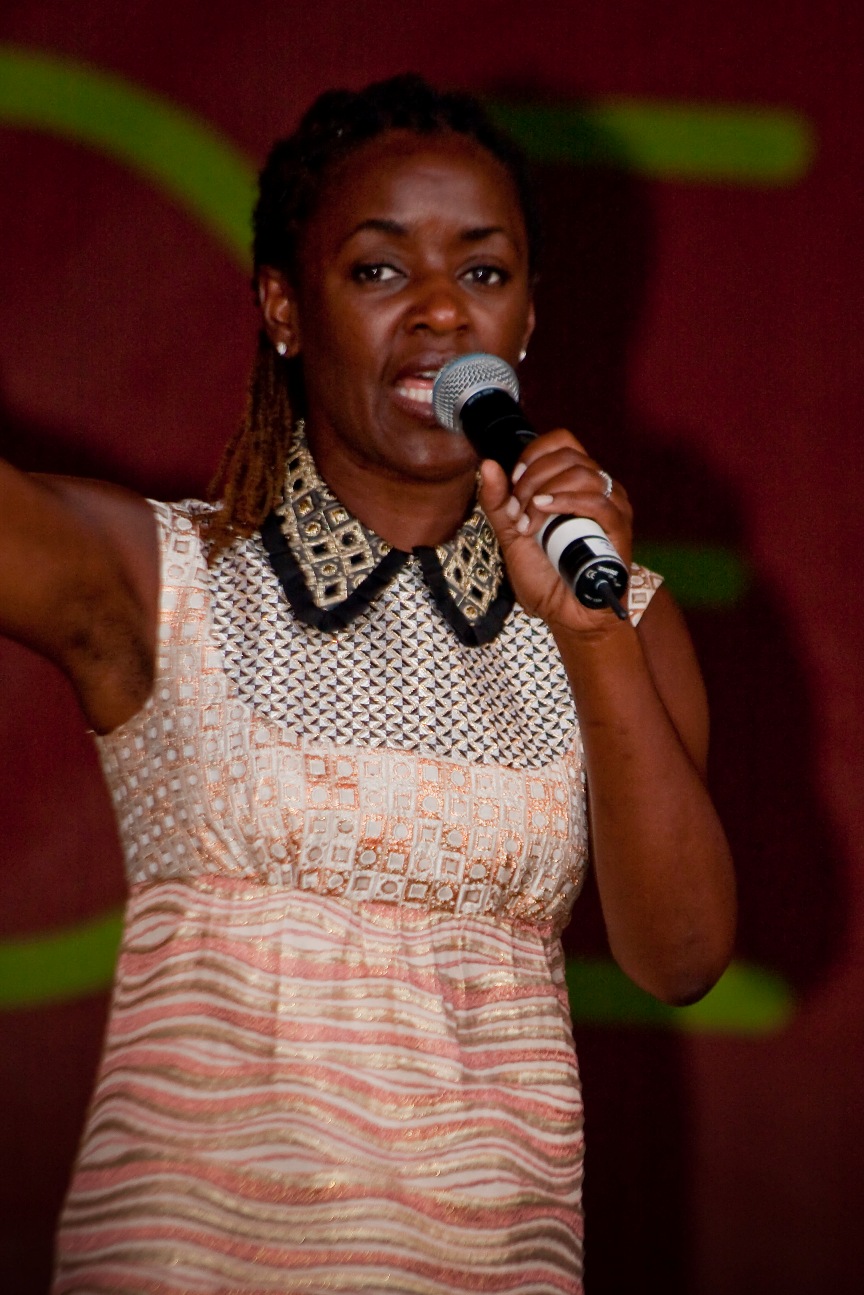
For many viewers who grew up in the 1990s, Diane-Louise Jordan remains a familiar part of childhood. She spent six years presenting Blue Peter before moving into a long career that included Songs of Praise and BBC radio. More recently, she has developed The Making of Black Britain, gathering personal accounts of life in the country. 1
Growing up and being seen
Jordan was born in London in 1960 and grew up in Hatfield after her family moved there when she was small. In a 2022 interview, she recalled her parents’ fear of racist violence in London and their wish to protect their children. Moving away brought its own difficulties: the family remained conspicuous, while her parents missed the friends they had left behind. 2
Her own contribution to The Making of Black Britain describes becoming conscious of race at an early age. She remembered her parents arranging where the children slept with the danger of something being thrown through a window in mind. Alongside these recollections, the archive includes ordinary family photographs: Jordan on swings with her sister, and children together in Hatfield. The photographs show the ordinary pleasures of childhood alongside the family’s concern for safety. Her account gives those experiences the detail that a brief description of prejudice cannot supply. 3
The questioning of her place in Britain continued as she grew older. Writing in 2022, she recalled a prospective landlady who sounded welcoming on the telephone but changed her response when they met. Jordan also described being treated as Jamaican in Britain and British in Jamaica. Such encounters made belonging a personal question long before it became the subject of her archive. They help explain her interest in allowing people to describe an experience in their own terms. 4
An actress before a presenter
Jordan trained at Rose Bruford College and began her working life as an actress. Photographs she contributed to her oral history record her student years and her work with Theatre Centre in 1984. They preserve a period of her career that television fame can easily overshadow: rehearsing, working with other performers and taking on characters before audiences came to know her by her own name. 3, 9
Her screen work included a role as a chemist-shop assistant in Mike Leigh’s 1988 film High Hopes. The film, whose central cast includes Philip Davis and Ruth Sheen, places interconnected London lives against the divisions of late-1980s Britain. Jordan’s appearance belongs to her acting career before Blue Peter made her a widely recognisable television presenter. 5
The route to children’s television involved a connection made through theatre. In her account, a director who had seen her play Eliza Doolittle in My Fair Lady later recommended her when the BBC programme Corners needed someone to stand in. That temporary opportunity led to an audition for Blue Peter. Its editor, Lewis Bronze, was looking for a replacement for Caron Keating. Jordan recalled a demanding sequence of auditions built around the kinds of activities presenters would undertake. Her appointment followed an introduction, a short job and repeated demonstrations of what she could do. 2
The work behind Blue Peter
Her arrival in 1990 made her the programme’s first Black presenter. The significance lay partly in the setting: she was joining a children’s programme in which a presenter could become a regular presence in family life. Over the following six years, audiences had time to know her through the work itself. 9
One surviving example is her 1995 introduction to the internet. In the BBC archive item, Jordan explores updating the Blue Peter website and sending an email to the then US president, Bill Clinton. Archives for Education preserves the seven-minute piece as a record of the programme’s encounter with a developing technology. The subject called for a presenter who could turn an unfamiliar process into something children could follow. It also places a Black woman in the role of explaining a new means of communication, within the everyday work of a popular programme. 6
Jordan later described Bronze’s emphasis on respecting both viewers and guests, maintaining high production standards and keeping presenters’ egos out of the way. Those lessons concerned how to treat people as much as how to appear on camera. In a 2016 interview, she spoke warmly about the team and about adults who still approached her with memories of watching Blue Peter as children. 7
Family responsibilities and questions of faith
The period leading to her television career also brought a profound change in her family life. Following the sudden death of her sister, Jordan adopted her young niece, Justine. Touring as an actress became difficult alongside caring for a child, and she claimed benefits before the Blue Peter job arrived. She later spoke about the contradictory criticism directed at her as a parent, first for needing financial support and then for working. That experience informed her willingness to discuss the pressures placed on mothers. 7
Songs of Praise became another sustained part of her career after she left Blue Peter. Rose Bruford’s account of its former student records that move from children’s television into religious broadcasting. The programmes placed different demands on her: a presenter associated with children’s curiosity and activity was now working in a setting organised around worship and people’s spiritual lives. The transition widened the audiences with whom she built a relationship. 9
Jordan describes growing up in a Christian home, later questioning belief, and finding an Alpha course useful as she explored those questions. She has also spoken about friends who pray with her. Faith, in that account, involves relationships and reflection alongside her public work. 7
A voice on radio and in the classroom
In February 2012, Jordan took over BBC Radio 2’s Sunday Half Hour from Father Brian D’Arcy. The programme became The Sunday Hour the following year, bringing together hymns, gospel and choral music in an early Sunday morning slot. Radio offered a different kind of regular company from television: the audience could recognise a voice without seeing a face. Announcing her departure in July 2017, she expressed gratitude for listeners’ loyalty. Radio 2’s head, Lewis Carnie, also acknowledged the rapport she had built over five years. 8
Children continued to encounter her work beyond Blue Peter through BBC School Radio’s Time to Move. The teaching notes for A Traditional Harvest credit Jordan as presenter of two dance sessions based on apple picking and reaping. Children are invited to stretch, crouch, turn and work with partners to traditional music. The notes repeatedly ask teachers to help them listen to her instructions and coordinate their movements. This is presenting with a specific practical purpose: words and timing help a class turn an imagined activity into movement. 10
In the apple-picking session, pairs gradually combine gestures into a larger circle dance. The guidance becomes less frequent as they grow familiar with the sequence. Jordan’s voice gives the class a structure within which to try something together. The children learn through listening and doing, and become less dependent on the instructions as their confidence grows. 10
Using a public platform for others
Jordan’s charitable work has sometimes required becoming the learner herself. In 2019, she joined the line-up for Channel 4’s Sink or Swim in support of Stand Up To Cancer. The project brought together celebrities with different levels of swimming experience and gave them professional training, with an English Channel attempt as its eventual goal. It was designed to address fear and the stigma attached to being unable to swim. Her involvement continued a connection between entertainment and fundraising, while placing the participants’ efforts to acquire a skill at the centre of the programme. 11
A more personal undertaking took her to Rwanda with the charity CBM in February 2020. Accompanied by her grandson Preston, she followed the treatment of Etienne, a child who had lived with cataracts and whose family could not afford surgery. Her published diary explains why the visit mattered to her: her father had experienced sight loss, and she wanted Preston to understand lives beyond his own circumstances. She recorded the work of the medical team at Kabgayi Eye Unit and the family’s response when Etienne could see after treatment. 12
The diary also describes the barriers that had kept treatment out of reach, including uncertainty about what could be done and the cost. Jordan’s role was to make an individual family’s experience visible to supporters. The account gives space to the child, his parents and the people providing care, showing how an established broadcaster could help audiences understand the human circumstances behind a fundraising appeal. 12
The questions behind The Making of Black Britain
The Making of Black Britain grew from questions Jordan wished she had asked sooner. Writing at the project’s launch in March 2022, she recalled losing both parents in 2011. Towards the end of their lives, she had tried to learn more about why they left Jamaica for Britain and what they found here. Their deaths left gaps in her understanding of her own history. Conversations with friends showed that others felt a similar incompleteness about family experience and the meaning of being Black British. 13
She turned that concern into a project for collecting and preserving personal stories. Its launch invited people across Britain to contribute, with recording planned in the lead-up to the 75th anniversary of the British Nationality Act of 1948. Her aim included hearing uncomfortable or unfamiliar opinions as well as accounts close to her own. The emphasis was on making a record of how people had lived together and understood the country they inhabited. 13
The archive’s presentation on Google Arts & Culture combines recorded recollections, selected text and photographs. It also includes historical context, with historian Philip Murphy discussing citizenship and the imperial background to ideas of Britishness. That combination allows a family memory to sit beside a wider explanation without asking either to do the other’s job. The project invites contributions across generations and backgrounds, making Black Britain a subject explored through relationships as well as individual identities. 14
Making room for different lives
Photographer Vanley Burke is both a contributor to the archive and a maker of portraits used within it. In his own recorded account, he recalls coming to Britain from Jamaica and explains his wish to photograph the people around him. His recollections connect the act of recording a community with having lived through its formation. Including his testimony places the person behind the camera within the historical record too. His images and his account bring different kinds of observation into the collection. 14, 15
Another contribution comes from Auntie Anne, a foster parent born in northern England. Her story moves through difficult family relationships and the care she offered children, accompanied by photographs from her life. It gives sustained attention to experiences that would rarely receive a television profile. Preserving such an account means that caring for children, managing a household and remembering an earlier generation can become subjects of history in their own right. 16
Jordan has described collecting stories in people’s homes, communities and workplaces. Those settings place the conversation close to the lives being discussed. Her interest in the project includes what happens when somebody encounters a story that complicates an existing opinion. Listening, as she presents it, can become a way of reconsidering the assumptions people make about others. 4
Loughborough University recognised Jordan with an honorary Doctor of Letters in 2023. Its account connected her broadcasting with her work on equality and the archive. The Making of Black Britain extends a career spent communicating with audiences by inviting more people to become speakers whose accounts can be kept, revisited and passed on. 1
Sources
1. Loughborough University — Diane-Louise Jordan: honorary degree oration, 2023.
2. SheerLuxe — Chapters In My Life: Diane Louise Jordan, 26 September 2022.
3. The Making of Black Britain — Diane: oral history and photographs, 2021.
4. HUNGER — Diane Louise Jordan on being Black and British, 21 October 2022.
5. BFI Southbank — High Hopes: programme notes and cast credits.
6. Archives for Education — Blue Peter discovers the internet, 1995.
7. Woman Alive — Being good enough: interview with Diane Louise Jordan, 9 February 2016.
8. RadioToday — Diane Louise Jordan leaves The Sunday Hour, 4 July 2017.
9. Rose Bruford College — Alumni I–K: Diane-Louise Jordan.
10. BBC School Radio — Time to Move: A Traditional Harvest, teacher's notes, 2019.
11. Channel 4 — Celebrity line-up revealed for Sink or Swim, 28 June 2019.
12. CBM UK — Witnessing Etienne's Miracle: Diane Louise Jordan's Rwanda diary, 10 June 2020.
13. HUNGER — Diane Louise Jordan launches The Making of Black Britain, 31 March 2022.
14. The Making of Black Britain — Introducing the oral history project.
15. The Making of Black Britain — Vanley: oral history, 2021.
16. The Making of Black Britain — Auntie Anne: oral history, 2021.
Image credit
Diane-Louise Jordan at the London Week of Peace Concert in Trafalgar Square, 27 September 2009. Photograph: Garry Knight. CC BY-SA 2.0. Cropped version supplied by Wikimedia Commons; no further changes. Image source; CC BY-SA 2.0.






Join the conversation
Comments 0
Share a memory, ask a question or add to this story.
No comments yet. Add your perspective.
Add your voice
Create a free account and verify your email to leave a comment.
All comments are reviewed before publication.