Eddy Grant took musical independence into the machinery of the record business. He wrote songs, played instruments and produced recordings; he also operated studios, issued music through his own label and manufactured records in his own factory. These activities gave him unusual control over the journey from an idea to something a listener could buy. His career developed across Britain and the Caribbean, carrying musical influences in both directions. 1
From Guyana to north London
Edmond Montague Grant was born in 1948 in British Guiana, now Guyana. In 1960, he joined his parents, who were already living and working in London. Seeing Chuck Berry perform at the Astoria in Finsbury Park helped convince him that music could become his life. Berry offered an example of Black musical authority expressed through songwriting, guitar playing and performance. For a young arrival finding his place in Britain, that encounter carried lasting importance. 2
Grant’s ambitions had initially included medicine. He remembered reading science and the autobiographies of surgeons, encouraged by a family in which his paternal grandfather had been a pharmacist. His father found the turn towards a musical career difficult to accept. Grant also recalled guidance from Lee Shepherd, who managed the Equals for a period and urged him to treat music with the discipline he would have brought to medical training. It was advice about preparation and respect for the work, offered as performing began to compete with his education. 3
At school in London, he made his first guitar with help from woodwork teacher Alan Ronketty. He had previously played trumpet, but the popularity of guitars among other young musicians drew his interest. When buying an instrument proved too expensive, his teacher supplied plans and guidance; after the guitar was finished, his father bought an amplifier. His account links the start of his career to practical ability, patient teaching and a negotiated measure of family support. His later songwriting successes would include the Equals’ Baby Come Back. 4
The Equals and the sound of a changing city
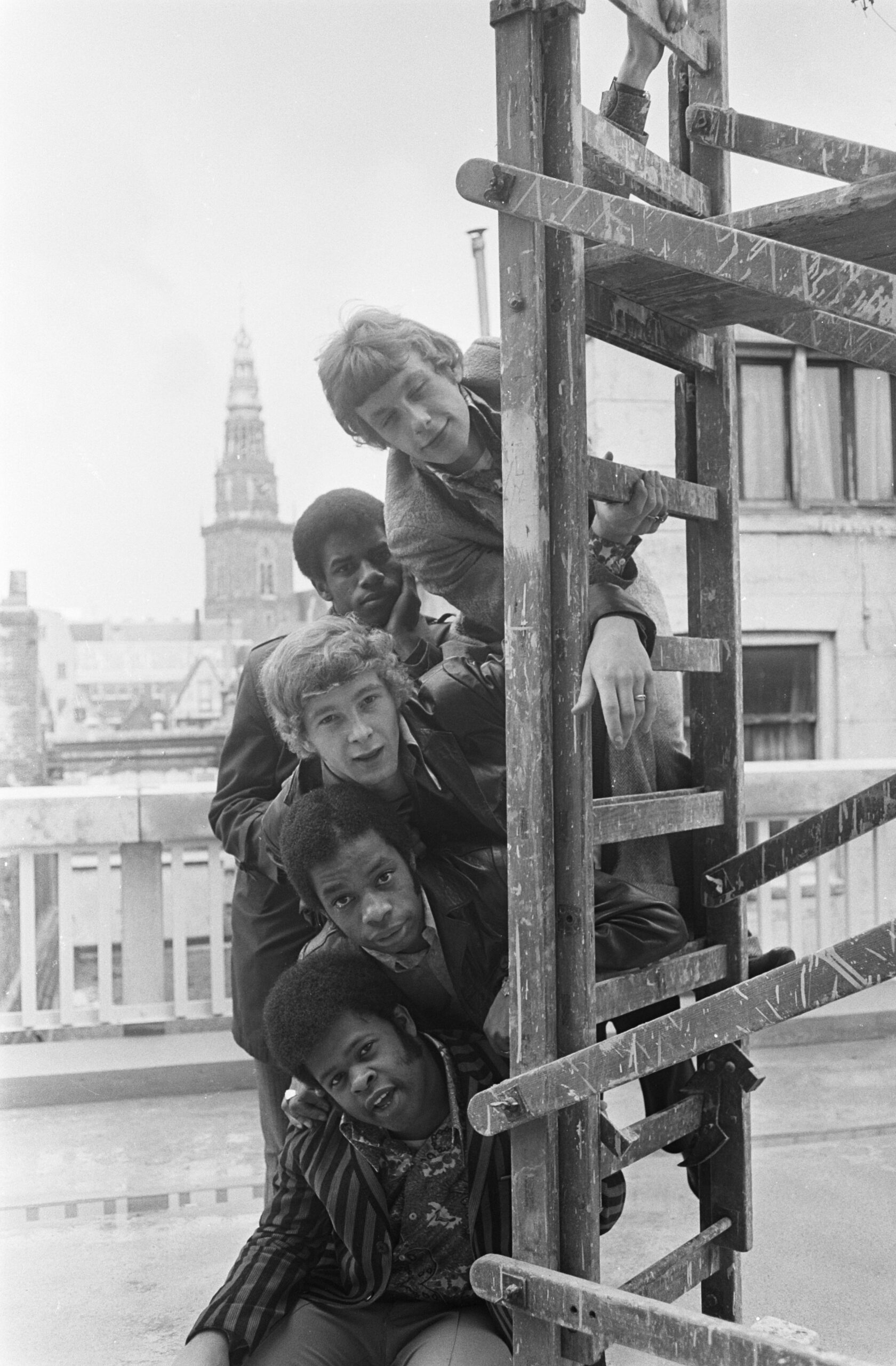
The Equals formed in north London in the mid-1960s. Their original members were Grant, Pat Lloyd, John Hall and brothers Derv and Lincoln Gordon. Grant played guitar, while Derv Gordon was the lead vocalist. Their performances combined pop, blues and R&B with ska and blue-beat influences. The sight of Black and white musicians working together made the group distinctive within British pop. They brought friendships and shared musical enthusiasms into public view, giving their name an everyday meaning through the people on stage. 5
Signed to President Records, the group recorded Baby Come Back. It initially appeared alongside Hold Me Closer and found an audience in continental Europe before its British breakthrough. In 1968 it reached number one in the UK. Further hits included Viva Bobby Joe, which reached number six, and Black Skin Blue Eyed Boys, which entered the chart in December 1970 and peaked at number nine. Their success was sustained across several singles and a period of rapid musical change. 5, 6
Grant’s songwriting also travelled through other performers. The Clash recorded Police on My Back, and Rockers Revenge later had success with Walking on Sunshine. In an interview published in 1989, Grant expressed particular appreciation for the Clash’s version of his song. These recordings carried his compositions into different musical worlds. They also show how a writer’s influence can extend beyond the records bearing their own name: a song may become familiar to listeners who have little knowledge of its first performer or its author. 7
A studio of his own
A heart attack in the early 1970s forced Grant to reconsider the pace of his life. He later described the experience as a turning point in his understanding of his own mortality. Leaving the Equals’ touring operation did not immediately end his involvement with the group: he continued contributing as a writer and recording musician. The change opened a difficult period in which he had to establish another way to earn a living and make music. 3, 8
Coach House, his London studio, became central to that rebuilding. In a 2002 interview, Grant described working with an engineer and using the studio for early stages of recordings by the Pioneers and the Equals. Projects needing more tracks could move to larger facilities. This was a developing operation, with limits that required decisions about where each stage should happen. Owning a studio gave him somewhere to experiment and a sound he could make his own, while technical collaborators remained part of the process. 8
He gradually took on more instrumental parts himself. In 1984 he explained that his experience filling gaps and adding overdubs during Equals sessions had helped him learn drums, bass, keyboards and guitar in a recording context. He did not follow one fixed method. A track might begin with a voice and piano, or guitar and a guide beat; further parts were added as the arrangement developed. When an imagined sound could not be produced by an ordinary instrument, he might turn to a synthesiser. 9
His use of technology remained selective. He described placing live drums over a machine-generated bass drum, preserving the movement of a human performance. Multitrack recording allowed him to assemble parts separately, but the result still needed to feel coherent. He could work as several players in sequence, choosing how their contributions would interact. The freedom came with a substantial commitment of time: decisions that a band might divide between its members became his to make. 9
Finding an audience again
Solo success did not arrive immediately. Message Man appeared in 1977, before the wider breakthrough associated with Walking on Sunshine and Living on the Frontline in 1979. Grant was building another audience through recordings after his years with the Equals. 4
He later recalled having unsold records after an important export market closed to him. Copies circulated into British clubs, where a response developed. His account of Living on the Frontline emphasised listeners taking the music up after its prospects had seemed poor. It is a reminder of the risk behind independence: manufacturing and distributing your own work also means carrying the cost when it fails to sell. A record’s route to an audience could be indirect and difficult to predict. 7
Living on the Frontline reached number eleven in the UK in 1979. Do You Feel My Love followed at number eight in 1980, and Can’t Get Enough of You reached number thirteen in 1981. I Don’t Wanna Dance then spent three weeks at number one in 1982. The progress covered several records and several years, establishing Grant as a solo artist before Electric Avenue became his most widely recognised international song. 10
Electric Avenue: London heard from the Caribbean
After relocating to Barbados in the early 1980s, Grant established Blue Wave, his recording studio in the parish of St Philip. It became the base for Killer on the Rampage, the 1982 album containing I Don’t Wanna Dance and Electric Avenue. The move changed his working surroundings while his music retained connections with Britain. A recording made from a Caribbean base could still address the experiences and tensions of London. 1
Electric Avenue drew its title from Brixton and its impulse from the unrest there in 1981. Its international success carried the name of a particular London street into places far beyond the city. That geographical connection matters: a British urban experience travelled through a record made by a musician whose life already crossed countries and cultures. The street entered a wider musical imagination, connecting audiences to a place many would never have visited. 2
In the UK, Electric Avenue reached number two in 1983; Killer on the Rampage reached number seven on the album chart. Gimme Hope Jo’anna would give him another top-ten single in 1988, reaching number seven. Socially engaged songs sat among his commercial successes, alongside recordings with different moods and subjects. His audience was encountering political ideas within everyday pop listening. 10
Looking back on Killer on the Rampage, Grant described his interest in emerging digital instruments and the possibilities they seemed to offer. The album itself was an analogue recording. That distinction helps explain a musician who was curious about new tools without treating novelty as an instruction to replace everything he already knew. He wanted technologies he could use according to the needs of his music. The decisions remained musical ones: a machine was useful when it helped make the sound he was seeking. 11
Songs with a public purpose
Gimme Hope Jo’anna addressed apartheid in South Africa with a strong sense that change remained possible. Discussing it with Classic Pop, Grant explained his belief that music could encourage people to imagine a different society. He did not suggest that a song could force them to change. Its power lay in creating receptiveness and carrying an idea to listeners who might otherwise resist it. He recalled the song finding an audience among white South Africans as well as those suffering under the system it criticised. 12
That balance between criticism and accessibility helps explain the place of political writing in his career. He valued the relationship between a message, a beat and the listener’s imagination. Gimme Hope Jo’anna could work as a popular song while confronting a specific injustice. Later, Reparation, released in 2006, returned to questions of historical responsibility through the subject of the transatlantic slave trade. His commitment to such material continued beyond the records that made him a familiar presence in the charts. 12
Keeping Caribbean music in circulation
Grant’s record business also supported music beyond his own catalogue. Through Ice Records, he acquired recordings and songs associated with major calypso figures, including Mighty Sparrow, Roaring Lion and Lord Kitchener. Speaking to Blues & Soul, he described approaching former label owners and wanting to introduce the music to new listeners. His interest began in childhood and developed into a responsibility he chose to take on as a successful musician. Acquiring rights gave him a means of keeping older work available and encouraging another generation to value it. 13
He also developed the Caribbean musical concept he called ringbang. His account presents it as an effort to create a new direction through recording and to reach younger audiences. The work connected his enthusiasm for rhythmic experiment with his interest in the region’s music businesses. Calypso’s past and new recordings could sit within the same enterprise, supported by an owner who was also a working musician. 13
Plaisance, his 2017 album, returned directly to his Guyanese roots. Discussing it, Grant described I Belong to You as a dedication to his home community, wife and children, and Is Carole King Here? as a tribute to a songwriter whose work he had admired before he knew her name. These subjects broaden the picture of his writing: family, place and respect for another composer stood alongside his public concerns. 4, 11
Recognition and the value of practical skill
In 2018, the University of Guyana awarded Grant an honorary Doctor of Letters for music and civic engagement. At the ceremony, he called for space within the university to advance technical and vocational skills. The appeal was consistent with the practical breadth of his own work. He understood the value of knowing how to build, operate and make things, as well as how to perform. His success had depended on several kinds of expertise working together. 14
Guyana’s 2020 national honours list named Edmond Montague Grant as a recipient of the Cacique’s Crown of Honour, within the Order of Service. He was among those honoured to mark the country’s fiftieth anniversary as a republic. 15
Grant’s independence joined artistic decisions to the work of sustaining them. Studios and record businesses gave him room to pursue his ideas, while an enduring curiosity about instruments and recording kept the possibilities open. 11
Sources
1. University of Guyana — Honorary Doctorate Candidates: Eddy Grant.
2. National Portrait Gallery — Eddy Grant.
3. The Big Issue — Eddy Grant, Letter to My Younger Self interview.
4. UK Music Reviews — Interview: Eddy Grant.
6. Official Charts — Equals: Full Official Chart History.
7. Phaze 1, January 1989, via mu:zines — File Under Genius.
8. DJ History — Eddy Grant Defined the Frontline.
9. One Two Testing, September 1984, via mu:zines — Grant Enlarger.
10. Official Charts — Eddy Grant: Full Official Chart History.
11. Chaos Control Digizine — Eddy Grant: Electric Avenue, His Career and Controlling His Music.
12. Classic Pop — Eddy Grant Interview.
13. Blues & Soul — Eddy Grant: Electric Interview.
15. Office of the President, Guyana — President David Granger Announces Appointments of National Awards.
Image credit
The Equals in Amsterdam, 29 April 1968. Photograph: Eric Koch / Anefo, Nationaal Archief, Netherlands (921-2979). CC0. Unmodified. Image source; CC0 public-domain dedication.







Join the conversation
Comments 0
Share a memory, ask a question or add to this story.
No comments yet. Add your perspective.
Add your voice
Create a free account and verify your email to leave a comment.
All comments are reviewed before publication.