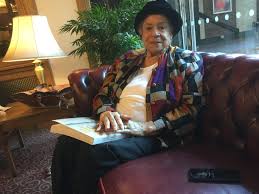
Jocelyn Barrow brought a teacher’s understanding of opportunity into some of Britain’s most influential public institutions. Born in Trinidad in 1929, she was already a qualified teacher when she came to England in 1959 for further study. Her work would connect classrooms with the campaign against racial discrimination and make her the BBC’s first Black woman governor. Across these settings, she addressed a recurring problem: institutions could claim to serve the whole public while failing to recognise the lives, abilities and ambitions of Black people. 1
From Trinidad to London
Barrow arrived with political experience as well as professional training. In an interview with Patrick Vernon, she recalled her involvement in the People’s National Movement in Trinidad and her support for Caribbean cooperation through the West Indies Federation. Moving to Britain continued an education already shaped by public affairs. She also remembered the contradiction confronting Caribbean newcomers: people with qualifications and useful skills encountered discrimination in employment and housing, alongside open hostility. Their experience challenged the idea that effort and education would automatically bring fair treatment. 2
Teaching in London’s East End brought those inequalities into daily view. In her account for the Windrush Foundation, Barrow described schools that expected too little of Black children and bright pupils struggling in an unfamiliar educational environment. With colleagues, she developed Each One Teach One. They visited homes and offered additional educational support to Caribbean families. The work continued for two years. By bringing support into households, the project gave families practical help at the point where educational difficulties were being experienced. 3
Supporting learners and training teachers
Her interest in learning extended beyond school age. Barrow later worked on the Caribbean Communication Project, an adult literacy initiative drawing on the national programme On the Move. In Vernon’s interview, this appears alongside her work helping parents and pupils: education was a continuing need across generations. An adult who needed help with literacy deserved an opportunity to learn, just as a child needed teachers who recognised their potential. These projects gave her campaigning a close connection to the people affected by institutional assumptions about ability. 2
She also helped prepare people entering the teaching profession. The University of Greenwich’s account of her career records her work as a senior lecturer in education at Furzedown Teachers’ College. In 1979 she began a three-year secondment to the University of London’s Institute of Education. Her influence could therefore reach beyond the pupils she taught herself, through the professional education of other teachers. Greenwich awarded her an honorary doctorate of laws in 1993. Its account places educational work alongside the public responsibilities for which she had become better known. 4
Organising against the colour bar
The Campaign Against Racial Discrimination, generally known as CARD, gave Barrow another means of pursuing change. Discussions among campaigners gained momentum after Martin Luther King Jr’s visit to London in 1964. Barrow was among CARD’s founders and became its general secretary. The organisation sought effective protection against discrimination affecting African, Caribbean and Asian people in Britain. Her contribution belonged to a collective effort: campaigners worked to make the treatment of minority communities a question that government and Parliament had to address. 5
Barrow’s own recollection also reveals the difficulties within that effort. CARD attracted lawyers, doctors, graduates and lecturers, and organised conferences around the country. She valued that expertise, while wishing the movement had stronger grassroots participation. Some people feared that joining a campaign would cost them their jobs or expose them to further discrimination. Those fears made organising harder. The people who most needed protection could have compelling reasons to avoid becoming publicly associated with a challenge to employers or other powerful institutions. 3
The Race Relations Act 1965 created an important but limited framework. It prohibited discrimination in specified public places, including hotels, restaurants and public transport, and established the Race Relations Board to pursue complaints through conciliation. It also made incitement to racial hatred a criminal offence. Employment and housing remained outside its discrimination provisions. For someone refused a job or somewhere to live because of their colour, that omission was fundamental. Parliament’s later historical briefing identifies CARD among the organisations whose pressure helped bring the legislation forward; the gaps in the Act also explain why campaigning had to continue. 6
The detail of changing the law
A letter preserved in the Parliamentary Archives shows Barrow’s willingness to address politicians who were not already convinced. During the passage of the 1968 Race Relations Bill, she wrote to David Renton, the Conservative MP for Huntingdon, seeking support for amendments. Renton had opposed allowing the Bill to proceed to committee. Her letter referred to Enoch Powell’s inflammatory intervention in the debate about immigration, while recognising differences between the two Conservatives. The approach was specific and purposeful: identify a decision-maker, explain the changes sought and make an argument that might move the discussion. 7
Another surviving document shows how CARD connected parliamentary work with its wider membership. After the Bill’s second reading, the organisation circulated proposed amendments and encouraged members to contact their MPs. David Pitt, CARD’s chairman, was associated with this appeal. Campaigning involved studying the wording of legislation and asking supporters to act at a moment when it could still be changed. These records preserve work that can disappear behind a headline about a new law: letters drafted, amendments considered, arguments circulated and constituents encouraged to use their own relationship with Parliament. 8
The Race Relations Act 1968 received royal assent on 25 October. It extended protection into employment and housing, as well as the provision of goods and services, and strengthened the Race Relations Board. These were areas central to everyday security and independence. The legislation was an achievement shared by many campaigners and parliamentarians, and discrimination did not disappear when it passed. For Barrow and CARD, however, the wider scope answered a clear weakness in the earlier law. A public commitment to equality had to reach the places where people earned a living and made a home. 9
Entering the BBC’s governing body
Broadcasting had already given Barrow a sharp experience of exclusion. In an account recalled by Black Cultural Archives, she described being kept apart from Enoch Powell during a television appearance in 1968. She recalled that Powell had refused to be interviewed in the same studio as her. The episode stayed with her as an example of how a broadcaster could accommodate unequal treatment. Her later involvement with the BBC therefore followed years of thinking about who could appear on equal terms in public debate. 5
Barrow joined the BBC’s board of governors in 1981. The BBC’s historical list records her term continuing until 1988. Learie Constantine had previously served from 1969 to 1972, placing her appointment within a longer, still very limited history of Black participation in the corporation’s governing body. Barrow brought experience of education and organised campaigning to that position. Her presence mattered at the level where an institution’s public responsibilities were considered, as well as to the people who encountered its programmes. 10
Broadcasting standards and independence
A further appointment followed. On 27 July 1988, Home Secretary Douglas Hurd announced that Barrow had agreed to become deputy chair of the new Broadcasting Standards Council. She was to begin after leaving the BBC’s board later that year. The announcement placed her among the people entrusted with establishing another part of Britain’s broadcasting framework. It also meant that her public work would continue beyond her term as a BBC governor, in a body with responsibilities across broadcasting. 11
The council’s remit concerned public anxiety about the portrayal of sex and violence. Explaining its work in Parliament that July, the government described a body that would monitor programmes, examine complaints and undertake research. The wider debate exposed disagreements about what audiences should see and how broadcasters should answer criticism. Barrow was entering a contested area, involving judgements about programme content and public accountability. 12
Her independence became part of the argument about the council itself. In a Commons debate in February 1989, its deputy chair was defended as an educationist respected across party lines who could not simply be treated as a government loyalist. The praise came amid disagreement over broadcasting policy and the council’s role. It offers a contemporary glimpse of the standing Barrow had acquired: her record gave supporters grounds to argue that she would exercise her own judgement, even while serving on a body created by ministers. 13
Making room for community histories
Questions about public institutions also shaped her heritage work. Barrow chaired the Mayor of London’s Commission on African and Asian Heritage, established in August 2003. Its inquiry considered how heritage organisations were managed, how staff were trained and whether education reflected the contributions of African, Asian and Caribbean people. It also examined the position of community organisations already collecting and presenting their own histories. The commission connected decisions inside major institutions with work taking place beyond them, where knowledge and experience could be substantial even when resources were limited. 14
The resulting report, Delivering Shared Heritage, was launched at the Victoria and Albert Museum in July 2005. In evidence later submitted to Parliament, the Mayor of London explained its recommendations: more representative governing bodies, stronger partnerships with community organisations, better access to heritage careers and collections that spoke to a wider public. Communities should contribute expertise to researching, interpreting and displaying material. The report also called for support for organisations preserving their own heritage. This was a programme affecting appointments, resources and professional practice, with education running through it. 15
One response was announced at the report’s launch. The National Archives proposed an internship pilot for graduates of Asian, African and Caribbean backgrounds who were interested in archival careers. Developed with University College London’s School of Library, Archive and Information Studies, it was intended to provide experience before postgraduate training. The National Museum Directors’ Conference reported the announcement in August 2005. It was a concrete attempt to address entry into a profession: potential archivists needed access to practical experience, alongside encouragement to consider the work. 16
Sharing experience with another generation
Barrow continued to support younger people seeking opportunities in public and professional life. In October 2017 she spoke at the Miranda Brawn Annual Diversity Leadership Conference at the University of Law’s Moorgate campus. A patron of Brawn’s foundation, she joined speakers including Chi-chi Nwanoku, Patrick Vernon and Jacqui Gavin. The event was aimed at young people aged 14 to 21 from minority ethnic backgrounds, with a particular interest in access to the legal profession. Its programme brought experienced campaigners into direct contact with people beginning to consider their own careers. 17
Her public service received an OBE in 1972 for education and community relations, followed by a DBE in 1992 for work in broadcasting and on the European Community’s Economic and Social Committee. Those honours recognised different stages of a career that had kept returning to questions of participation and opportunity. 1
After Barrow’s death in 2020, community activist Yansie Rolston recalled the part she had played in Rolston’s own development as an activist. Her tribute also remembered a gathering for Barrow’s ninetieth birthday, where experiences from childhood, political life and community work were shared. Such recollections bring the public appointments back into a human relationship: somebody with long experience making time for others who would carry on organising. Through the people she taught, worked alongside and encouraged, Barrow’s influence travelled beyond the institutions in which she held office. 18
Sources
1. National Portrait Gallery — Dame Jocelyn Anita Barrow.
2. Black Cultural Archives — Patrick Vernon interviews Dame Jocelyn Barrow.
3. Windrush Foundation — Jocelyn Barrow, in her own words.
4. University of Greenwich — Honorary graduates: Dame Jocelyn Barrow, 1993.
5. Black Cultural Archives — Dame Jocelyn Barrow, 1929–2020.
6. House of Lords Library — Race Relations Act 1965: 50 years.
7. UK Parliament — Jocelyn Barrow’s letter to David Renton, 1968.
8. UK Parliament — Campaign Against Racial Discrimination, 1968.
9. House of Lords Library — Race Relations Act 1968: 50 years.
10. BBC — Board of Governors, 1927–2006.
11. Hansard — Broadcasting Standards Council, 27 July 1988.
12. Hansard — BBC portrayal of police activities, 25 July 1988.
13. Hansard — Broadcasting debate, 8 February 1989.
14. Society of Antiquaries of London — Salon IFA 127: Commission on African and Asian Heritage.
15. UK Parliament — Memorandum submitted by the Mayor of London, January 2006.
16. National Museum Directors’ Conference — August 2005 newsletter.
17. University of Law — Miranda Brawn Annual Diversity Leadership Conference, 2017.
18. The Ubele Initiative — Yansie Rolston’s tribute to Jocelyn Barrow.




Join the conversation
Comments 0
Share a memory, ask a question or add to this story.
No comments yet. Add your perspective.
Add your voice
Create a free account and verify your email to leave a comment.
All comments are reviewed before publication.