When Everyday Muslim began working on its Black British Muslim heritage project in 2015, community members helped decide what should be recorded. They advised on interview questions, suggested participants and contributed ideas for exhibitions. Childhood, working life, clothing and celebrations became subjects of historical enquiry. The resulting London-focused project gathered accounts across three generations, alongside photographs and documents. 1
Students building an association
One institutional history reaches back to February 1961, when Nigerian students in London formally established the Muslim Association of Nigeria UK. Its purpose included religious and social contact within the Nigerian Muslim community. An organisation formed around students gradually acquired a more lasting role, supporting people whose lives in Britain extended beyond a period of study. 2
The association used several locations, including London Central Mosque, the Nigeria High Commission and East London Mosque. After further fundraising, it acquired and adapted a former pub in Southwark in 1993. This became the Old Kent Road Mosque and Islamic Cultural Centre. Its history shows how gathering a community and obtaining a permanent building were separate stages of institution-building. 2
A community of converts
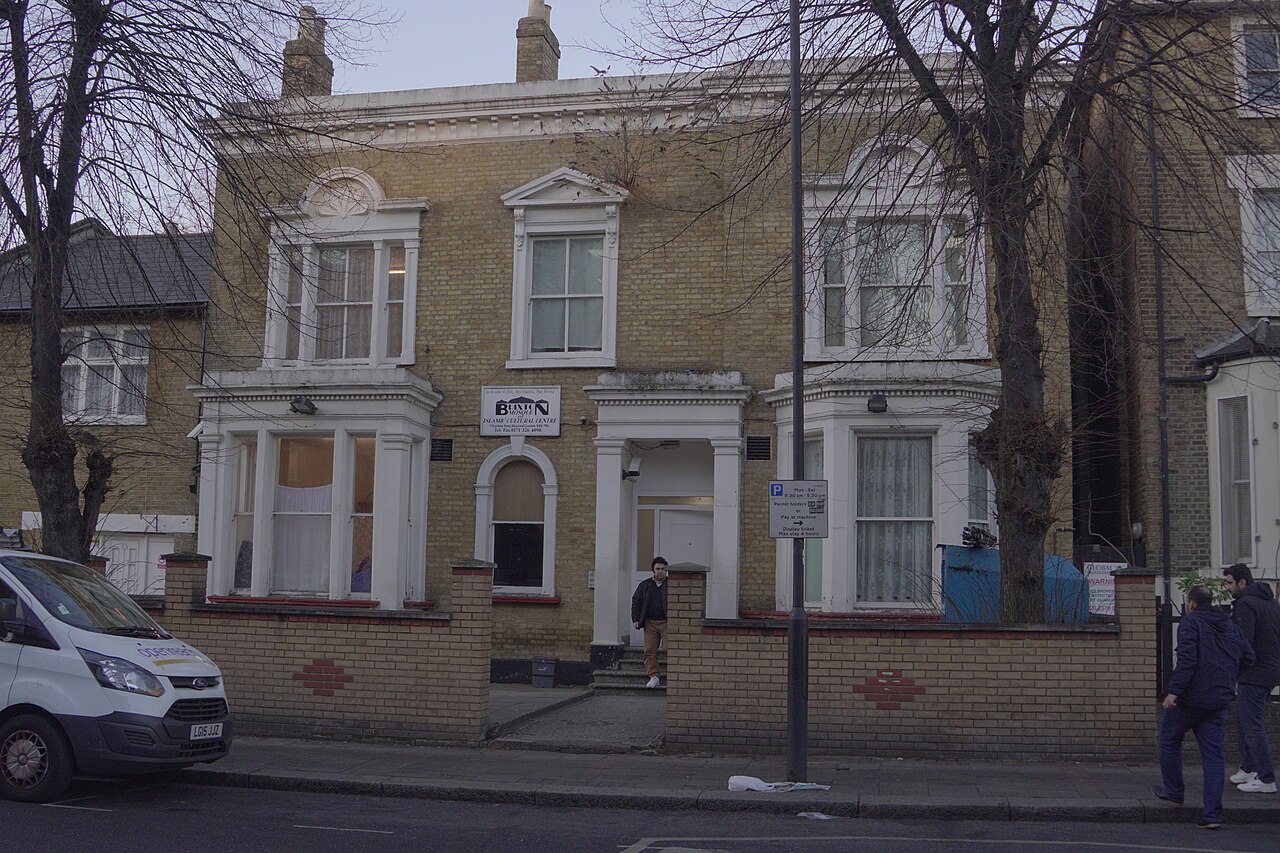
Brixton Mosque traces its roots to connections made during Ramadan in 1975, when organisers met at Regent’s Park Mosque and began sharing Islam within the Afro-Caribbean community. Its own history describes people joining the faith and making rooms available for religious activity. Conversion and locally developed relationships formed another route into collective Muslim life. 3
These relationships produced practical institutions. The community established the Al-Shahada housing co-operative in 1988, then acquired and refurbished a building on Gresham Road for Brixton Mosque in 1990. Prayer, housing and education became connected concerns. The mosque’s account also describes support for Somali refugees, showing how a community initially built by converts developed relationships with people arriving through different circumstances. 3
Faith within family life
Other histories become clearer through the experiences of families. Giulia Liberatore’s Somali, Muslim, British, published in 2017, drew on research with twenty-one households in London. It examined Somali Muslim women’s aspirations and how these changed across generations and over the course of their lives. Religious commitment appeared alongside concerns such as financial security and ideas about modern life. 4
This approach gives a different account from one organised only around migration or public arguments about integration. It follows what women themselves were trying to achieve. It also recognises change within households: sharing a religious or national background does not mean that mothers, daughters and other relatives understand their priorities in precisely the same way. 4
Belonging could be contested
The communities people built did not remove every form of exclusion. In research published in 2021, Sheymaa Ali Nurein and Humera Iqbal interviewed eleven Black Muslim women, aged eighteen to twenty-five, who lived in London and were studying at university. Participants discussed racism in religious settings and occasions when other Black people questioned their belonging. 5
Their accounts also described the ways gender shaped these encounters. A shared identity could provide connection while still leaving someone marginalised within a particular organisation or group. These were detailed interviews with a small sample, rather than a measure of every Black Muslim woman’s experience. They document differences that a single story about community solidarity would miss. 5
Writing from different positions
In September 2022, the Muslim Council of Britain launched Race, Faith & Community in Contemporary Britain, bringing together more than forty contributors. The collection covered education, employment, health, politics, sport, arts and religious life. Its range made visible the many settings in which Black Muslim experience takes shape, from professional work to cultural organisations and family concerns. 6
The contributors included writers on Somali heritage, Black supplementary education, women’s health and local religious institutions. The collection placed these perspectives beside one another without presenting them as identical. It provides a record of the questions Black Muslim contributors were raising at that point, including representation and exclusion within wider society and Muslim communities. 6
Preserving everyday evidence
Everyday Muslim’s project makes a related contribution through oral history. Its consultation group helped frame what entered the archive, rather than simply supplying answers to questions chosen elsewhere. The evidence includes work, faith, culture and celebration. These records allow histories of institutions to be read alongside the lives of the people who created, joined and sometimes changed them. 1
Sources and further reading
1. Exploring the Diversity of Black British Muslim Heritage in London. Everyday Muslim.
2. Our History. Muslim Association of Nigeria UK.
3. About Us: Our History. Brixton Mosque.
4. Somali, Muslim, British. University of Oxford, COMPAS.
5. Identifying a Space for Young Black Muslim Women in Contemporary Britain. Ethnicities.
6. Race, Faith and Community in Contemporary Britain. Muslim Council of Britain.
Featured image. Brixton Mosque on Gresham Road, photographed in December 2016. Photograph: Jwslubbock, 29 December 2016, via Wikimedia Commons. Image record · CC BY-SA 4.0
