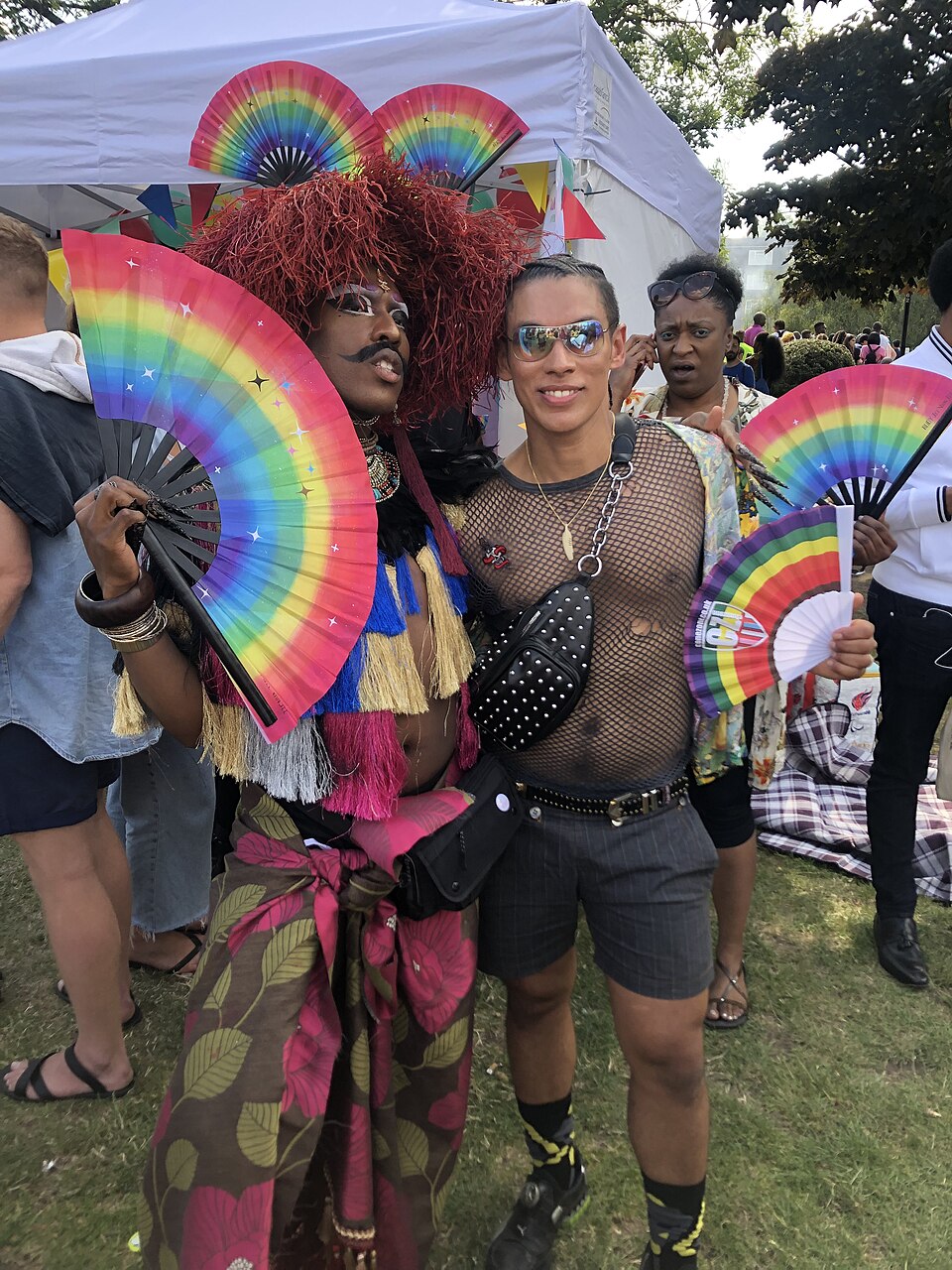
UK Black Pride brings cultural celebration and community organising into the same space. Its stated purpose embraces education, the arts, advocacy and the wellbeing of LGBTQ+ Black people and people of colour. That range helps explain its development: an annual gathering can make people visible to one another, while work between events addresses the conditions in which they live. 1
From seaside gatherings to a public celebration
The organisation traces its beginnings to 2005 and gatherings organised by Phyll Opoku-Gyimah, widely known as Lady Phyll, and other Black lesbian activists. Trips to Southend-on-Sea gave members of that community opportunities to meet and celebrate together. Its own history records three coachloads travelling to the 2005 gathering and distinguishes those beginnings from an official launch in 2006, when patrons and sponsors became involved. 2
The organisers identified a specific problem: Black LGBTQ+ people were underrepresented in mainstream Pride events. A separate space allowed participants to place their own experiences, relationships and cultural backgrounds at the centre of the programme. 2
London Museum connects that early organising to Black Lesbians in the UK, known as BLUK. It also places Lady Phyll within a longer record of trade-union work, including roles in the Public and Commercial Services union. Organising around sexuality therefore developed alongside experience of employment, racial discrimination and collective representation. 3
The scale changed considerably. According to the museum, 25,000 people gathered at Queen Elizabeth Olympic Park in 2022, when the event returned after the pandemic. Admission was free, an important practical feature of a celebration intended to reach people with different incomes and circumstances. 3
Asking people about their lives
In May 2021, an online survey conducted by Kantar gathered responses from 1,464 LGBTQI+ Black people and people of colour. Stonewall analysed the findings in partnership with UK Black Pride. Published as We Will Be Heard, the research asked about community, public spaces, discrimination, employment and wellbeing, giving the organisation a more detailed account of what respondents wanted. 4
A third of respondents reported discrimination or harassment because of their race or ethnicity within an LGBTQI+ space. Respondents also asked for more regular activities and better inclusion of people outside London. These findings describe the people who answered the survey; they should not be read as a census of every LGBTQ+ person of colour in Britain. 4
Turning findings into support
The Community Action Fund translated this research into a programme of practical support. Its 2024 round organised funding around four areas: places and visibility, mental and emotional wellbeing, safety in public spaces, and work. Community organisations and smaller charities could apply, alongside eligible individuals and religious groups. 5
Those priorities extended the organisation’s activity beyond producing a festival. A community might need somewhere to meet, support after harassment or help with conditions at work. The fund offered a way to direct resources towards such needs through people and organisations already working with the communities concerned. 5
Keeping Black lesbians visible
The Black Lesbian Power List, developed with DIVA for Lesbian Visibility Week, returned attention to the women whose organising preceded UK Black Pride’s wider growth. Its accompanying statement explicitly recognised BLUK and included Black women and non-binary people. The project connected public recognition with an older demand to be represented within queer media and community life. As the organisation’s constituency expanded, this work kept its lesbian origins within the public account of its history. 6
An organisation beyond one event
On 7 May 2026, UK Black Pride announced that its large annual Pride event would pause that year. The organisation described the decision as an opportunity to review its long-term direction and prepare for a return in 2027. The announcement did not mean that all its work had stopped: it identified continuing partnerships, cultural activities and community events. 7
That distinction matters when following its history. The large summer celebration has been its most recognisable gathering, but research, funding, advocacy and smaller events form part of its work too. The 2026 announcement set out the challenge of sustaining that activity while planning the next major public celebration. 7
Sources and further reading
1. Our mission. UK Black Pride.
2. Our history. UK Black Pride.
3. Lady Phyll: Activist & co-founder of UK Black Pride. London Museum.
4. We Will Be Heard: 2021 UK Black Pride Survey Report. UK Black Pride.
5. Community Action Fund. UK Black Pride.
6. Black Lesbian Power List. UK Black Pride.
7. UK Black Pride Announces Strategic Reset Ahead of Landmark Return in 2027. UK Black Pride.
Featured image. Participants at UK Black Pride on 7 July 2019. Photograph: Josiefraser, 7 July 2019, via Wikimedia Commons. Image record · CC BY-SA 4.0
