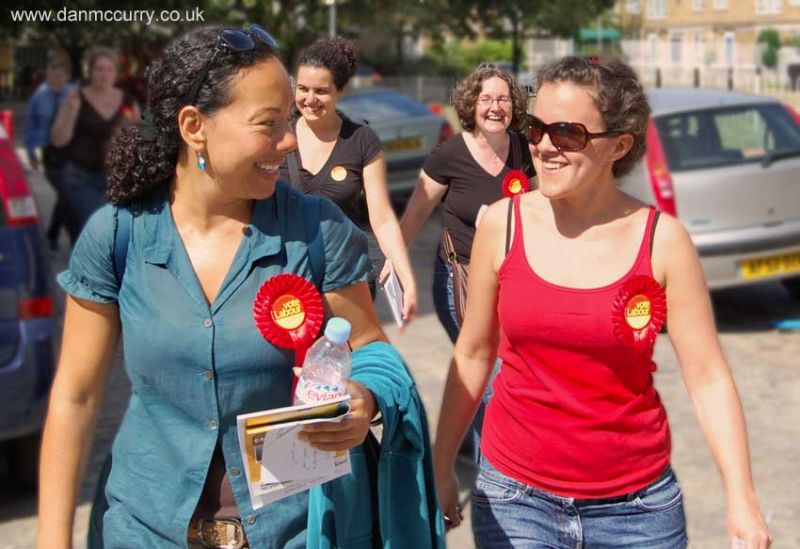
Oona King represented Bethnal Green and Bow in the Commons from 1997 to 2005, then served in the House of Lords from 2011 to 2024. Her parliamentary record includes work on international development, housing and adoption, alongside the political disagreements that shaped her years as an MP. 2
Education and political ambition
The daughter of an African-American academic and an English Jewish mother, King grew up with a strong interest in politics. In a 2007 interview, she credited her mother, a teacher, with encouraging her belief in a fairer society. She studied politics at York and spent a scholarship year at the University of California, Berkeley. After graduating with a first-class degree, she worked as a political researcher. These experiences preceded her election to represent a constituency in London’s East End. 1
Constituency work and housing
Housing was a recurring concern in her Commons work. In a Westminster Hall debate on 6 February 2002, King welcomed stronger priority for young homeless people and care leavers but argued that councils needed funding to meet the additional demand. She also pressed for less reliance on temporary accommodation, more affordable homes and changes to overcrowding standards. Her speech questioned how national rules operated in an area with acute housing pressures. 3
She was prepared to argue for contested approaches. Having seen successful transfers of council housing to other landlords, she said that option should be considered. She also sought restrictions on right-to-buy sales in regeneration areas and challenged proposed rent restructuring. These interventions combined support for changes in housing management with pressure to address the costs, funding and conditions that affected residents. 3
Iraq and the 2005 election
King supported the government in the decisive Commons vote on Iraq on 18 March 2003. Her name appears among the 412 MPs voting for the main motion; 149 voted against. The division placed her on the government’s side in a major dispute over military action, alongside MPs from more than one party. 4
At the general election on 5 May 2005, George Galloway, standing for Respect, defeated her. The official results record 15,801 votes for Galloway and 14,978 for King, a majority of 823. This ended her eight years representing Bethnal Green and Bow, despite her party retaining government nationally. 5
In her later interview, King accepted that support for the Iraq war had cost her the seat. She also discussed racist and antisemitic abuse, and her concern about rumours and mistrust between communities. Her account connected those experiences with a subsequent role chairing the Institute of Community Cohesion, based at Coventry University. 1
Representation in broadcasting
King became Channel 4’s head of diversity in 2009. The broadcaster’s submission to Ofcom described a role spanning staffing, commissioning and suppliers. Its Diversity and Talent team worked with programme commissioners, offered advice and supported training for minority ethnic and disabled people in the industry. The programme treated who made television and who held senior responsibilities as part of the same question as who appeared on screen. 6
The submission set out mentoring, placements and career-development measures, together with monitoring of independent production companies. It also described an industry pledge requiring participating organisations to publish action plans. These arrangements brought her work on representation into recruitment, professional development and commissioning. They extended beyond selecting the subjects of individual programmes to the employment structures through which television was produced. 6
Adoption and the House of Lords
In a May 2013 Lords debate, King drew on her service on the Adoption Legislation Committee and her experience as an adoptive parent. She supported improving adoption but argued against allowing it to overshadow other lasting care arrangements. Many older children in care, she pointed out, were unlikely to be adopted. Policy therefore needed to consider the wider population of children, including those for whom another form of permanent care was more appropriate. 7
She also defended early support for birth families, questioning the redirection of money from early-intervention grants towards adoption. Her argument distinguished help that might prevent children entering care from action taken after a family could no longer care for them. The debate placed resources and professional practice alongside the wording of legislation. 7
Her Lords committee work also included the Olympic and Paralympic Legacy Committee in 2013. Parliament records her retirement from the upper chamber on 9 July 2024, closing a later phase of parliamentary service in which committee scrutiny and debates on social policy had followed her earlier elected role. 2
Sources and further reading
1. Profile: Oona King. Times Higher Education.
2. Parliamentary career for Baroness King of Bow. UK Parliament.
3. Housing (London), 6 February 2002. UK Parliament.
4. Iraq, 18 March 2003. UK Parliament.
5. General Election 2005, final edition. House of Commons Library.
6. Channel 4 response to Ofcom’s Single Equality Scheme consultation. Channel 4 / Ofcom.
7. Adoption: Adoption Legislation Committee Reports, 16 May 2013. UK Parliament.
Featured image. Oona King, pictured on the left, in a photograph by Dan McCurry. Photograph: Dan McCurry, via Wikimedia Commons. Image record · CC BY-SA 3.0
