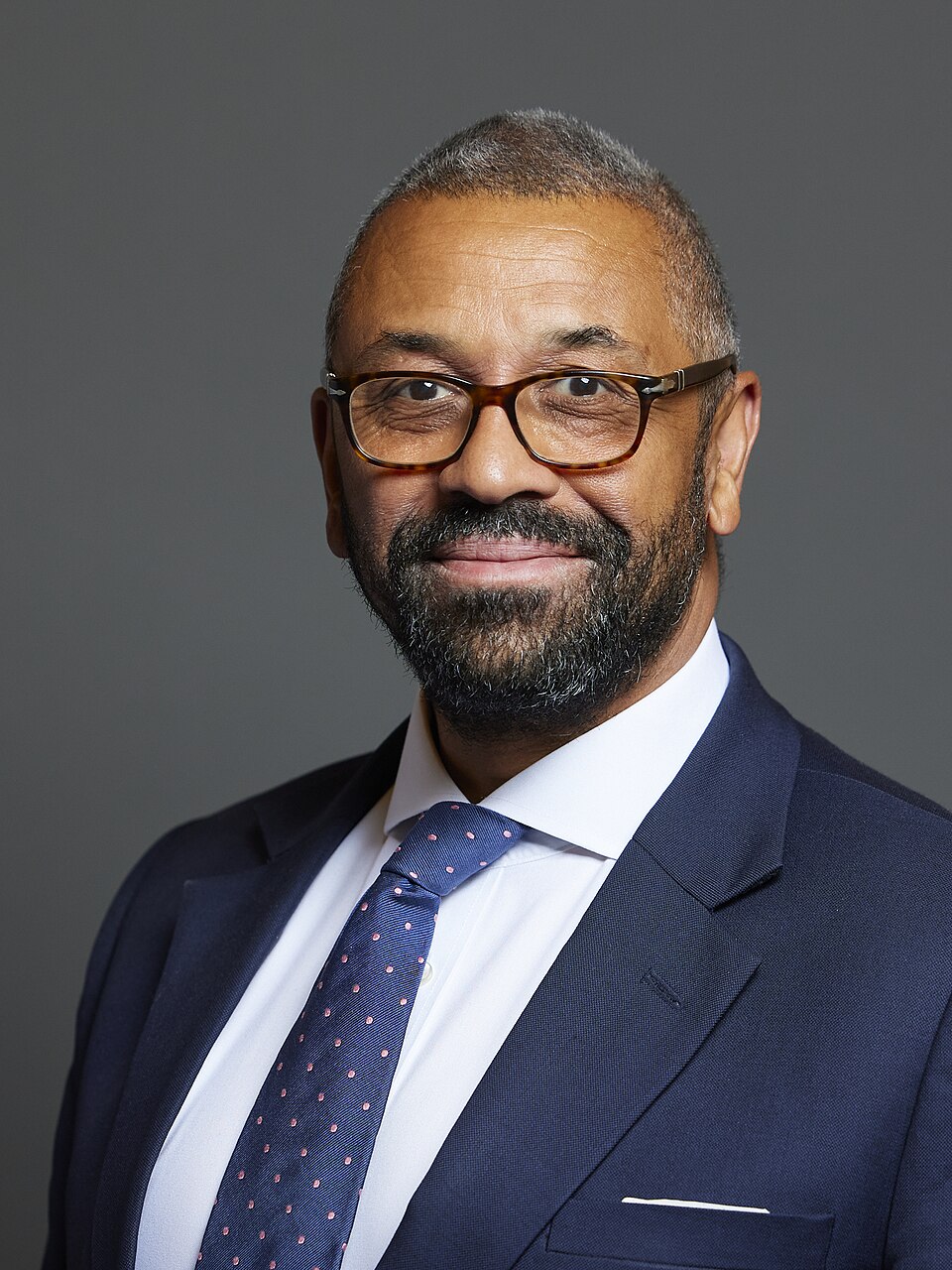
James Cleverly’s election as Conservative MP for Braintree in 2015 began a parliamentary career that took him through several departments and into the offices of Foreign Secretary and Home Secretary. 3
Family, publishing and reserve service
Cleverly was born and grew up in Lewisham. His mother, who came from Sierra Leone, worked as a midwife; his father’s family came from Wiltshire. In his autobiographical account, he described an early attempt at an army career interrupted by injury, followed by further education and service in the Territorial Army. His civilian career developed in magazine and digital publishing. These strands of professional and reserve experience preceded his election to the London Assembly. 1
Responsibilities in London
He won the Assembly seat of Bexley and Bromley in 2008. His early responsibilities included serving as the Mayor’s Youth Ambassador. He subsequently chaired the London Waste and Recycling Board, before taking on the chairmanship of the London Fire and Emergency Planning Authority in 2012. He also chaired the London Local Resilience Forum, holding both chairmanships until March 2015. These roles involved different parts of the capital’s administration, from waste management to preparation for emergencies. 2
The Assembly biography also records his longstanding Territorial Army service and command of a Royal Artillery reserve battery. By the time he entered Parliament, his public work therefore extended beyond party campaigning to elected scrutiny and the governance of London services. 2
Moving through national government
After junior appointments, Cleverly served briefly as Education Secretary from July to September 2022. He became Foreign Secretary on 6 September 2022, remaining until 13 November 2023, when he moved to the Home Office. His Home Secretary tenure ended on 5 July 2024. The sequence brought rapid changes of department and responsibility within a comparatively short period. 3
Diplomacy and the relationship with China
His Mansion House speech in April 2023 set out an approach to China that combined engagement with security concerns. Cleverly argued that Britain needed communication and commercial links while protecting critical interests and working with international partners. He rejected treating the relationship as a choice between complete cooperation and complete disengagement. The speech also condemned repression of Uyghurs in Xinjiang and called for greater openness about China’s military intentions. 4
He presented trade, investment, human rights and strategic competition as connected responsibilities. Britain, he argued, should support businesses seeking opportunities while avoiding dangerous dependencies in supply chains. His account of diplomacy therefore involved managing disagreements alongside areas of cooperation, rather than expecting one description of China to settle every policy question. 4
The Rwanda policy and the courts
At the Home Office, Cleverly faced the consequences of the Supreme Court’s unanimous judgment of 15 November 2023. The court upheld the finding that the Rwanda asylum policy was unlawful under the arrangements it examined. Its central concern was the risk that people sent to Rwanda would be returned to countries where they faced persecution or serious ill-treatment, known as refoulement. The judges considered evidence about how the asylum system operated, including material from the UN Refugee Agency. The ruling concerned the legal safeguards and risks facing those affected. 5
On 5 December, Cleverly signed a new treaty with Rwandan foreign minister Vincent Biruta. The government presented it as a response to the judgment. It provided for stronger monitoring, a route for confidential complaints and a new appeal body involving Rwandan and other Commonwealth judges. These provisions sought to address how asylum claims would be handled and how the treatment of people transferred under the partnership would be checked. The proposed appeal arrangements and monitoring mechanisms were central to the government’s case for continuing the policy. 6
Defending policy from opposition
After the change of government in July 2024, Home Secretary Yvette Cooper announced the end of the partnership. In the Commons on 22 July, Cleverly challenged that decision, defending the scheme as a deterrent and questioning how it had been communicated to Rwanda. Cooper criticised its costs and set out a different approach centred on border security and enforcement. The exchange showed him defending a policy he had administered, while the authority to direct the Home Office had passed to his opponent. 7
He served as shadow Home Secretary until November 2024. Parliament records a later appointment as shadow Secretary of State for Housing, Communities and Local Government from 22 July 2025 to 31 August 2026. These were opposition posts, following his period of executive responsibility in government. 3
Sources and further reading
1. About Me. James Cleverly.
2. James Cleverly (Past staff). Greater London Authority.
3. Parliamentary career for Sir James Cleverly. UK Parliament.
4. Our position on China: Foreign Secretary’s 2023 Mansion House speech. Foreign, Commonwealth & Development Office.
5. R (AAA and others) v Home Secretary [2023] UKSC 42: press summary. UK Supreme Court.
6. Treaty signed to strengthen UK-Rwanda migration partnership. Home Office.
7. Commons Chamber, 22 July 2024: Border Security and Asylum. UK Parliament.
Featured image. James Cleverly in his official parliamentary portrait from July 2024. © House of Commons / Laurie Noble, 16 July 2024, via Wikimedia Commons; source-provided crop. Image record · CC BY 3.0
