Around 1969, two north London homes became places of organised learning. The George Padmore Supplementary School taught older children at John La Rose’s house; younger pupils attended the Albertina Sylvester school, initially in her home. Lessons continued outside ordinary school hours. 1
Such provision demanded commitment. Research by Heidi Safia Mirza and Diane Reay, published in 2000, described parents transforming a front-room school into a larger operation: finding premises, clearing rubbish and carrying out repairs. Teaching depended on work that happened before the children even sat down. The researchers’ small study of four schools brought particular attention to the women who sustained that work. 2
Challenging the labels
Parents were confronting racial assumptions about children’s abilities and wrongful placement in schools designated ‘educationally subnormal’, or ESN. In 1971, New Beacon Books published Bernard Coard’s How the West Indian Child is Made Educationally Sub-Normal in the British School System for the Caribbean Education and Community Workers Association. Campaigners circulated it widely, including door to door. The book strengthened an existing movement; supplementary schools had already begun. 1
A different place to learn
Mirza and Reay found that the schools they studied created space for Black children to feel at ease with their identities while pursuing academic achievement. These were exploratory findings, not a national survey. They also challenged the assumption that parents lacked interest in education: organising and maintaining a school required sustained collective effort. 2
The curriculum could combine English and mathematics with African and Caribbean history and culture. Additional teaching and a stronger sense of belonging were closely connected. 1
An education movement beyond London
In Leeds, Gertrude Paul was a leading figure in the United Caribbean Association’s supplementary school. Her work crossed the boundaries between classroom teaching, community organisation and public institutions. She was a headteacher and served on the Commission for Racial Equality, while supporting learning beyond conventional school settings. 3
Her daughter Heather Paul, writing about that work in 2025, emphasised the wider network around her: people in Chapeltown and across Leeds, with connections to activists in Bradford and Huddersfield. That account gives a sense of the movement’s local strength. An experienced teacher’s contribution mattered, but so did the people whose time, knowledge and relationships helped keep a project going. 3
Working together nationally
The National Association of Supplementary Schools was formally established in October 1987. John La Rose became chair, alongside officers including secretary Mavis Milner-Brown and vice-chair Valentino Jones. Its ambitions reached beyond assembling a list of schools. It offered guidance to groups starting new projects and sought to influence government and local education authorities. 4
The association promoted cooperation between parents, supplementary schools and mainstream schools, and proposed a resource unit for sharing information. Funding from the Inner London Education Authority supported courses combining Black history, culture and identity with national curriculum subjects. Maintaining independent community organisation and seeking changes within public education were connected parts of the same programme. Its history complicates the idea that Saturday schools represented a retreat from the wider education system. 4
Sharing resources and supporting older pupils
Later research documented new forms of cooperation. Selina Nwulu’s 2015 RSA report described Manchester’s Making Education a Priority consortium working with Manchester Metropolitan University. Community organisations shared resources, while student ambassadors helped with English, mathematics, science and music. Partnerships also opened access to cultural activities that project leaders had not previously known about. 5
The same investigation found support continuing beyond younger children’s lessons. Participants from Black supplementary schools described helping former pupils look for work or stay engaged with university. Resources limited how much could be offered, especially as older pupils followed different subjects and careers. But the relationship could outlast attendance: someone who had once arrived for extra lessons could return later for advice from adults who already knew them. 5
Sources and further reading
1. Black Education Movement. George Padmore Institute.
2. Spaces and Places of Black Educational Desire: Rethinking Black Supplementary Schools as a New Social Movement. Sociology. 2000.
3. From inspiration to research: Heather Paul’s work at Leeds Beckett continues her mother’s legacy. Leeds Beckett University. 2025-02-28.
4. National Association of Supplementary Schools. George Padmore Institute.
5. Beyond the School Gates: Developing the Roles and Connections of Supplementary Schools. RSA. 2015-09.
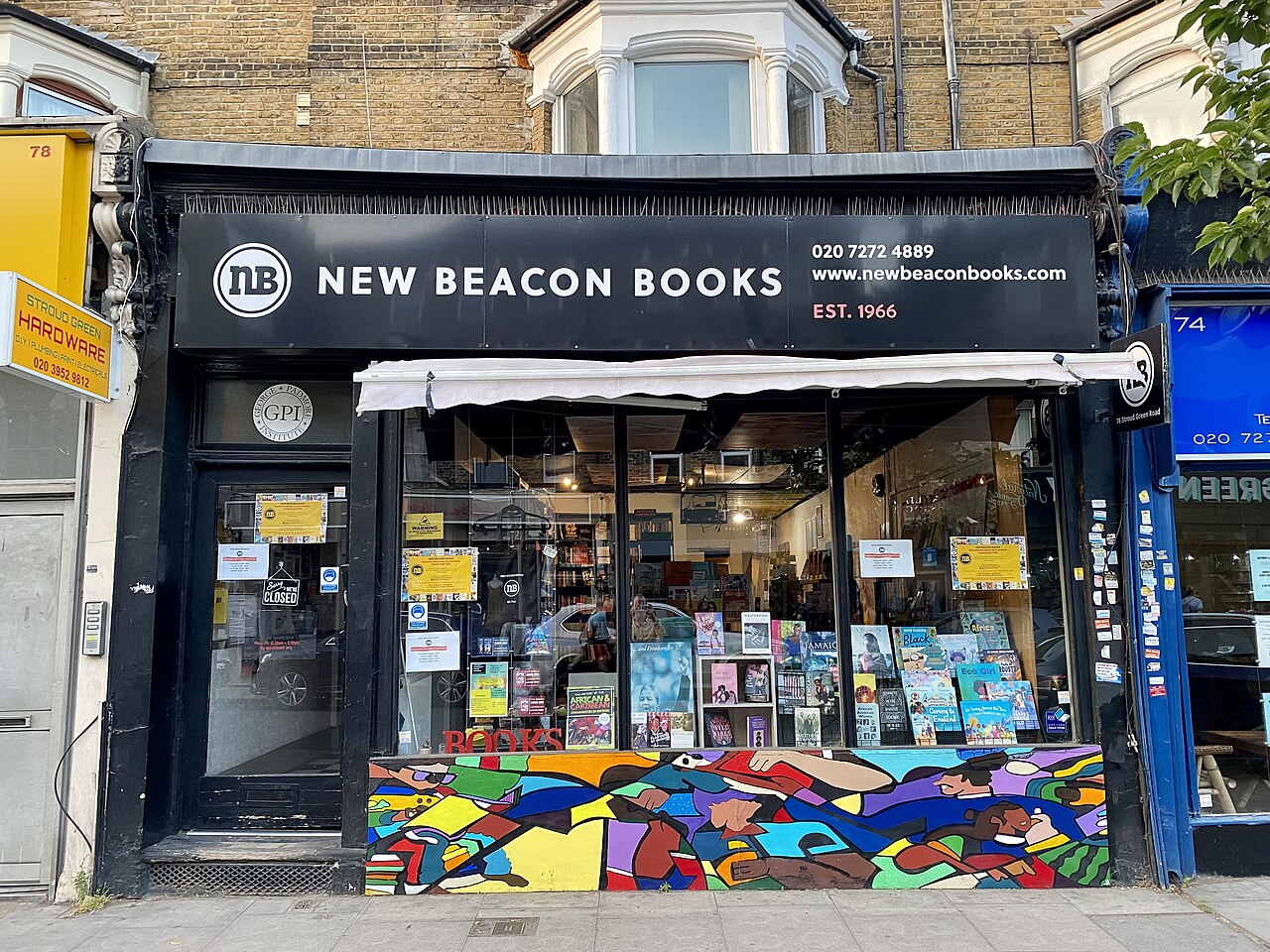
Featured image. New Beacon Books on Stroud Green Road, photographed in June 2023. The George Padmore Institute, which preserves records of the Black education movement, shares this building. Photograph: No Swan So Fine, 9 June 2023, via Wikimedia Commons. Image record · CC BY-SA 4.0 · Archive location · Supplementary-school records
