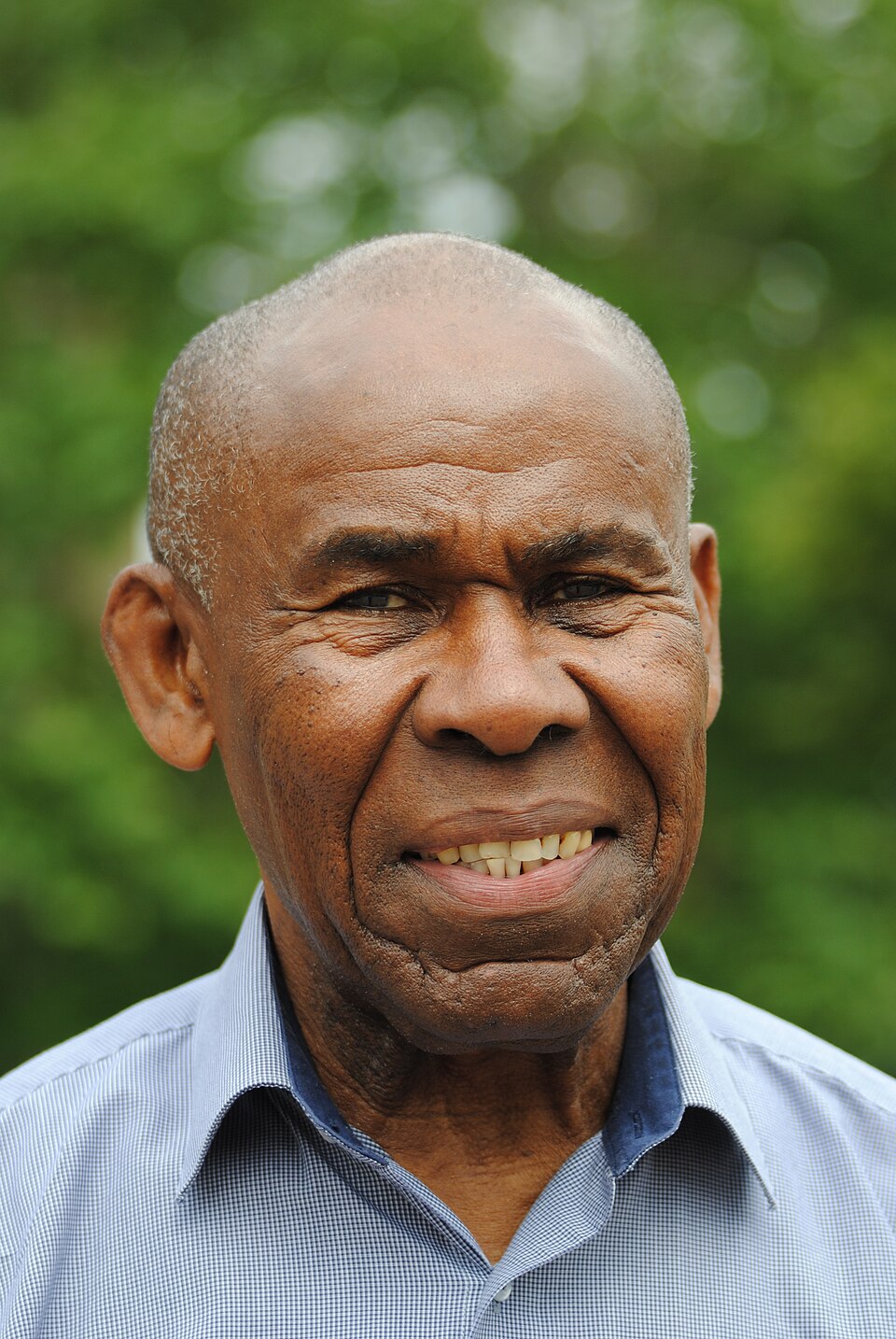
When Gus John arrived in Moss Side on New Year’s Day in 1971, schooling could not be separated from the streets around it. In a later interview, he recalled school leavers struggling to find work, families displaced by redevelopment and young people returning to a neighbourhood where they could no longer live. The practical response included securing funding for a hostel in 1972. Youth work meant understanding what happened after the school gate closed. 1
Learning in Grenada and Oxford
Born in Grenada in 1945, John grew up among relatives who took a shared interest in children’s education. In his 2025 oral history, he remembered teachers within the extended family and parents whose ambitions for their children exceeded their own opportunities for schooling. Books, conversation and encouragement all belonged to that upbringing. 2
His route to Britain passed through religious study in Trinidad. He arrived in 1964 and studied theology at Blackfriars in Oxford, while reading writers including James Baldwin and W. E. B. Du Bois. Encounters with British racism made questions about faith, political power and racial inequality immediate. Education was already taking place across several settings, beyond a single institution or qualification. 2
Youth work becomes research
John worked with young people in Notting Hill and undertook training in Leicester before researching Handsworth for the Runnymede Trust. That work produced Race in the Inner City. Between 1973 and 1979, he led a National Association of Youth Clubs research project; his report In the Service of Black Youth appeared in 1981. Youth organisations themselves became subjects of scrutiny: how did they understand the people they were supposed to serve? 3
Manchester also involved organising. After the disturbances of 1981, John helped the Moss Side Defence Committee support defendants and challenge official accounts. He later described an approach that kept defendants involved in preparing their own cases. The experience connected public argument with the detailed work of representation. 1
From administration to advocacy
John subsequently held senior responsibilities in the Inner London Education Authority and became Hackney’s director of education in 1989. He had moved from investigating institutions to helping run them. His later campaigning continued to address the relationship between schools and the communities they served. 3, 4
In 1999, he joined Gerry German and other teachers, lawyers and social workers in founding Communities Empowerment Network. The organisation supported families dealing with educational difficulties, particularly permanent exclusion. Its work included supplying advocates for hearings and appeals, giving parents help when decisions about a child’s schooling were being contested. 4
In evidence submitted to Parliament in November 2015, CEN also argued for approaches that repaired harm and relationships before exclusion became the default response. Advocacy in an individual case sat alongside a broader challenge to how schools handled conflict. 4
Following lives after exclusion
John’s research collaborations asked what followed removal from school. A 2005 study with Cecile Wright, Penny Standen, Gerry German and Tina Patel examined the experiences of 33 African-Caribbean young people who had received support from voluntary organisations. It investigated whether, and how, they had overcome exclusion. 5
This was a defined group with a particular history, rather than a survey representing every excluded pupil. Its focus nevertheless matters: the young people had lives and possibilities beyond the disciplinary decision. Following those experiences meant examining support and transitions into adulthood, rather than ending the account at expulsion. 5
What schools owe their pupils
The National Union of Teachers’ 2007 charter Born to Be Great, introduced by John and general secretary Steve Sinnott, set out responsibilities across the school community. It recognised differences among Black Caribbean boys instead of treating them as a uniform group. 6
Its proposals were specific: pupils should help shape decisions affecting them, receive useful feedback and encounter their heritage in the curriculum. Teachers needed training, resources and leadership. Parents deserved respectful communication. Pupils also had responsibilities towards one another and their own learning. This placed educational success within a set of relationships whose quality adults had a duty to improve. 6
Sources and further reading
1. Gus John and the Moss Side Defence Committee. Manchester’s Radical History. 2011-10-01.
2. Gus John: oral history. University of Manchester. 2025-08-29.
3. Thinking ‘The Idea of Black Culture’ Critically. University of Dundee. 2023-11-30.
4. Written evidence from Communities Empowerment Network. UK Parliament. 2015-11.
5. Overcoming school exclusion and achieving successful youth transitions within African Caribbean communities. University of Salford repository. 2005.
6. Born to Be Great: A Charter on Promoting the Achievement of Black Caribbean Boys. National Union of Teachers. 2007.
Featured image. Professor Gus John, photographed in July 2019. Photograph: Andy Mabbett, 15 July 2019, via Wikimedia Commons. Image record · CC BY-SA 4.0
