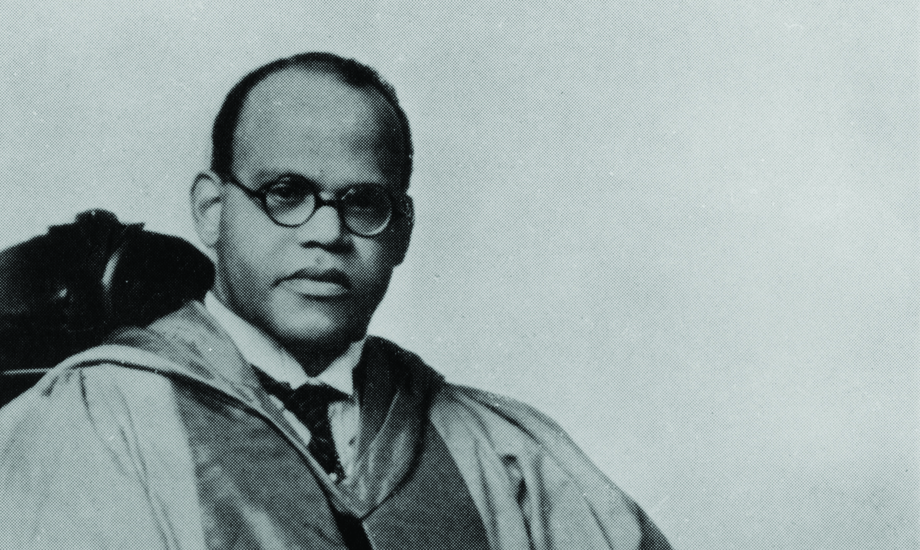
On 25 November 1944, Harold Moody left his Peckham surgery to help after a V2 rocket struck New Cross Road. He was part of a team of local doctors called to a devastated shopping area. The account preserved by the Goldsmiths History Project places him within the medical response to one of south London’s worst wartime disasters. 1
By then, Moody had spent three decades working as a GP in the area. His public role as a campaigner for racial equality had developed alongside a continuing responsibility to patients, including the urgent demands of wartime civilian medicine. 1, 2
Qualification and exclusion
Moody came to Britain in 1904 to study medicine at King’s College London and qualified in 1910. His training brought several academic awards, including the Todd Medal in Clinical Medicine. The record of those distinctions makes clear that his later difficulty finding work cannot be explained by a lack of recognised achievement. 3
He was born in Kingston, Jamaica, in 1882, the son of a pharmacist. After qualifying, he encountered explicit racial objections to employing him in a hospital and as a medical officer for the Camberwell Board of Guardians. In February 1913, he opened his own practice in Peckham. 4
That year he married Olive Mable Tranter, a nurse he had met while studying. They would have six children. Professional work, family life and his growing involvement in public affairs developed in the same south London community. 4
The house in Queens Road
In 1922, the family moved to 164 Queens Road, which became both home and surgery. It also provided a welcome for Black visitors who struggled to find accommodation or a meal elsewhere. The Jamaican writer Una Marson was among those who stayed there. 2
Such hospitality dealt with the immediate consequences of the colour bar. Refusal at a lodging house created a practical need that somebody had to meet. At Queens Road, Moody’s medical work existed alongside this less formal support, and the house later became a base for the League of Coloured Peoples. 2
Building the League
On 13 March 1931, he chaired the meeting at the Central London YMCA where the League of Coloured Peoples was formed. The organisation combined Black leadership with cooperation across racial and religious lines. Moody believed that coordinated argument, public pressure and relationships with sympathetic organisations could produce change. 5
The League’s campaigns included the employment of Black nurses in British hospitals and the removal of racial barriers in the armed services. Access to medical work therefore remained a collective concern. The discrimination Moody had encountered as a doctor was part of a wider pattern affecting other trained professionals. 3
A programme beyond the surgery
The League published The Keys and approached trade unions, the Civil Service and Parliament. Its concerns included Black merchant seamen’s employment and wages for Trinidadian oil workers. These campaigns connected decisions made in Britain with the livelihoods of people elsewhere in the empire. 2
A July 1943 letter held at SOAS shows Moody, writing as the League’s president, proposing discussion between representative African, European and American councils about Africa’s future. The invitation went to prominent African figures. It provides a specific example of the correspondence through which he tried to create wider political discussion. 6
In 1944, the League organised a conference that produced a Charter for Coloured Peoples. It demanded equal economic, educational, legal and political rights, the prohibition of discrimination in employment and public places, and self-government for colonial peoples. The programme reached beyond individual appeals for fair treatment. 4
The work continued
In the last months of his life, he travelled to the Caribbean as part of an appeal for a cultural centre in London. Press cuttings held in the missionary archives at SOAS document the visit. He became ill and died shortly after returning in April 1947. The proposed centre belonged to the same practical work as the welcome offered at Queens Road: making space for people whose place in Britain was repeatedly questioned. 6
Sources and further reading
1. The V2 Woolworths Rocket Bomb Disaster, 25 November 1944. Goldsmiths History Project. 2023.
2. Dr Harold Moody. English Heritage.
3. Head of Dr Harold A. Moody. Southwark Heritage.
4. Dr Harold Moody. King’s College London.
5. Afro-metropolis, in Black London. University of California Press. 2015.
6. Harold Moody: Archival Collections. SOAS Library. 2018.
Featured image. A bronze bust of Harold Moody by his brother Ronald Moody, at the National Portrait Gallery. This cast is dated 1997, based on a 1946 portrait. Sculpture: Ronald Moody. Photograph: 14GTR, 9 September 2023, via Wikimedia Commons. Image record · CC BY-SA 4.0
