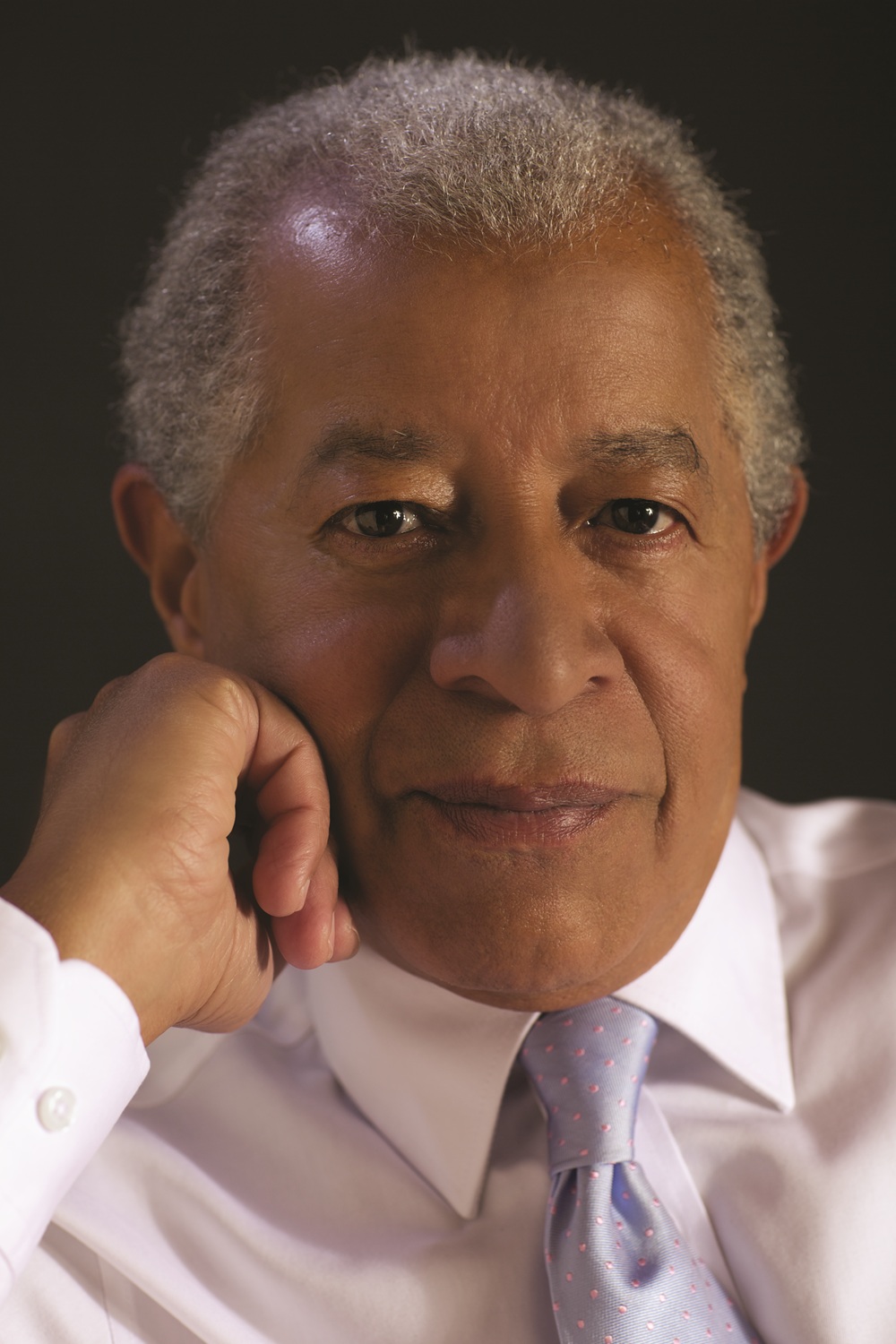
In 2015, young people from George Mitchell School in Leyton visited the House of Lords for an evening celebrating their work with Journey to Justice. Herman Ouseley and Jeremy Beecham hosted the event. Before it began, Ouseley took the students into the gallery. The charity later remembered the respect he showed them and his effort to make them feel that Parliament belonged to them too. The visit offers a useful starting point for understanding his public life: access to powerful institutions mattered, including whether people felt entitled to enter them and be heard.1
Ouseley resisted the suggestion that one prominent Black figure spoke for everyone. In a 2016 interview with Black History Month, he explained that nobody had authorised him to represent all Black people. His aim was to help others gain the confidence to speak for themselves.11
A childhood in London
Born on 24 March 1945, Ouseley came to England from Guyana in 1957. He later studied at Catford College in Lewisham, gaining a diploma in municipal management. The qualification was directly relevant to the field in which he would build his career. His route into public life began with the practical work of local administration, and his later university honours recognised expertise developed through that working life. Staffordshire University awarded him an honorary doctorate in 2011.2, 3
Remembering his childhood in a 2018 interview, he described living in Peckham with his mother and stepfather in a house shared with five other families. He recalled bottles being thrown through the windows at night and the broken windows eventually being boarded up. He placed those memories alongside the intimidation experienced by other immigrant households. They help explain why questions about safety, belonging and the willingness to challenge abuse remained personal concerns, even when his work took him into senior public office.4
Responsibility inside local government
Ouseley worked in local government from 1963 to 1993. His career included an appointment as a principal race relations adviser, bringing the treatment of minority communities into the work of public administration. This experience preceded the national profile that football campaigning would later give him.5
He headed the Greater London Council’s Ethnic Minorities Unit between 1981 and 1984, then served as assistant chief executive at Lambeth from 1984 to 1986. He moved to the Inner London Education Authority as director of education in 1986 and became its chief executive in 1988. From 1990 to 1993 he was chief executive of Lambeth. These were distinct responsibilities: advising on equality, directing education and leading an authority’s administration. Following their sequence shows how his work expanded from specialist advice into responsibility for the operation of major public institutions.6
His appointment at the Inner London Education Authority marked his becoming the first Black chief executive of a local authority in England. This was a substantial breakthrough in who could hold senior administrative authority. His subsequent move to Lambeth placed him at the head of a borough administration, extending the experience he had gained in education and equality work.2, 6
In 1993, Ouseley became chair and chief executive of the Commission for Racial Equality, remaining until 2000. The appointment brought together his experience of running public services and his work against racial discrimination. It also put him in a position from which he could press other large organisations to examine how they treated people.5
Making institutions answer for their decisions
The armed forces provide one concrete example of that work. In May 1998, defence minister Lord Gilbert told Parliament that the Commission had decided against pursuing legal action over the Household Cavalry following changes made across the services. A five-year partnership was intended to maintain compliance with an action plan attached to a 1996 agreement between the Commission and the Ministry of Defence. Training for service advisers had also begun at Shrivenham. The minister reported Ouseley’s favourable assessment of the leadership shown. This was a negotiated programme with continuing obligations; it illustrates how scrutiny, the prospect of legal action and practical changes could operate together.7
His concern with racial equality also included discrimination against Irish people in Britain. In 1994 he commissioned research by Mary Hickman and Bronwen Walter. Irish in Britain later described how the findings helped its community make the case for recognition. Evidence about poorer health among Irish migrants and their children demonstrated the limitations of recording nationality alone. Ouseley’s foreword acknowledged that official bodies and race relations research had neglected Irish experiences. He supported the Federation of Irish Societies’ campaign for an Irish category in the 2001 census. Here, the practical issue was what institutions could recognise and measure: without suitable information, unequal experiences could remain obscured in the statistics used to plan services.8
Changing the terms of football
While leading the Commission, Ouseley helped launch Let’s Kick Racism Out of Football in 1993. The campaign involved the Professional Footballers’ Association and players including Paul Elliott and John Fashanu. It was a collective effort, bringing players and organised football into a public challenge to racism. In 1997 it became Kick It Out, reflecting a wider commitment to tackling discrimination. Ouseley’s long chairmanship gave the campaign continuity, but its work depended on staff, players, supporters and partner organisations.9
He remained demanding about the responsibilities of football’s leadership. In his 2018 interview, he argued that providing money for Kick It Out could become a substitute for football authorities accepting responsibility themselves. He wanted coordinated action and leaders willing to change obstructive structures. He also explained why the campaign worked with academies: young players could learn with people from different backgrounds before prejudices hardened. His argument connected education with accountability at the top of the game; neither could carry the task alone.4
The organisation’s 2018–19 annual report shows how broad that work had become. Its Raise Your Game programme offered mentoring across coaching, media, refereeing and other football careers. A conference at Arsenal’s Emirates Stadium brought together 350 delegates and 100 mentors. Such work addressed access to employment and professional networks alongside abuse in the stands. The same report records Ouseley stepping down as chair at the end of the 2018–19 season, after 25 years of service.9
Listening across a divided city
Ouseley also chaired the review published as Community Pride Not Prejudice in July 2001. Commissioned by Bradford Vision, it examined deteriorating relationships across the district. The review team included council and health staff, academics, a police representative and pupils from Belle Vue Girls’ School. It sought contributions from people who were often unheard, including young people and those experiencing exclusion. That composition matters: the report emerged from consultation and shared work, even though it became closely associated with its chair’s name.10
The report addressed separation across racial, religious and social boundaries, while identifying local projects that brought people together. It recommended education about rights and differences, stronger expectations of public institutions, and equality conditions in publicly funded contracts. Its appeal to a shared Bradfordian identity was intended to include residents of different backgrounds. The central challenge was how to make common civic life possible while recognising the discrimination and distrust that obstructed it.10
Parliament and independent scrutiny
Ouseley joined the House of Lords on 26 June 2001 and sat as a Crossbench member until 24 May 2019. His parliamentary position was outside the party groups. It provided another place to bring questions about discrimination and the responsibilities of public institutions into national debate.12
His maiden speech, on 4 October 2001, came in the aftermath of the attacks in the United States on 11 September. He expressed sorrow for those killed and suffering, and recognised the work of the emergency services. He also drew attention to attacks on Muslim communities and to people afraid to leave their homes. He supported action against religious hatred and urged attention to other forms of hate and violence. His contribution placed the protection of communities in Britain within the debate about the response to international terrorism.13
In 2008, the Solicitors Regulation Authority appointed him to lead an independent review of disproportionate regulatory outcomes affecting Black and minority ethnic solicitors. Working with Bob Purkiss and Sheila Rogers, he examined policies, data, decisions and case files. The findings required care: a review of 187 files found no evidence of inappropriate penalties, while identifying serious questions about earlier stages of regulation and unequal exposure to scrutiny. The report considered the vulnerability of small practices alongside shortcomings in management, information and equality work. It called for urgent implementation of improvements. This was the detailed, sometimes unglamorous side of his campaigning: tracing how a sequence of ordinary decisions could produce unequal experiences, then identifying where an organisation needed to act.14
What the next generation should inherit
Education remained central to his thinking. In a Lords debate in January 2015, he argued that early childhood support should prepare children for life in a diverse society as well as improve their individual prospects. He linked health, housing, childcare and voluntary organisations, but also asked how prejudice developed through families, care settings and wider society. This concern applied to all children, not only those experiencing poverty. Learning alongside children from different backgrounds, he maintained, offered opportunities to understand other people and oneself. Equality therefore belonged within the everyday relationships through which children learned to interpret the world.15
His community work gave that argument other settings. A founding patron of Journey to Justice, he spoke at its civil rights exhibition launch at Morley College in 2017. The charity recalled him explaining how racial profiling by police during the 1970s had strengthened his determination to campaign. He supported its use of historical struggles to encourage people to act together. Connecting memory with participation meant giving younger audiences access both to the history of injustice and to examples of people challenging it.1
In that 2016 interview, he also warned against assuming that appointing one Black person would make an institution fair. He connected racial equality with confronting sexism, hostility towards disabled people and religious intolerance. His arguments offer a measure for assessing his career: who can participate, whether decisions become fairer, and whether those who follow can challenge exclusion.11
Herman Ouseley died on 2 October 2024, aged 79. The Chandran Foundation, which he had chaired from its beginnings in 1997, remembered his part in shaping its mission. His death closed a life spent working across public administration and community organisations. Those settings held different powers, but each offered opportunities to change whose experiences were recognised and whose voices counted.3
Sources and further reading
1. Journey to Justice: Thank you Herman Ouseley.
2. University of Staffordshire: The Hon. Lord Herman Ouseley KT — Honorary Graduate.
3. Chandran Foundation: Rest in peace Lord Herman Ouseley, former chairman of the Chandran Foundation.
4. Evening Standard — interview by James Olley, 10 August 2018: Lord Herman Ouseley: People think I’m a football bureaucrat… — interview.
5. London South Bank University Archives: Ouseley, Herman; Baron Ouseley.
6. UK Parliament: Experience for Lord Ouseley.
7. House of Lords Hansard: Army, Air Force and Naval Discipline Acts (Continuation) Order 1998 — Lord Gilbert’s statement, 20 May 1998.
8. Irish in Britain: Herman Ouseley — friend of the Irish in Britain.
9. Kick It Out: Annual Review 2018/19.
10. Bradford Vision — original report preserved by Ted Cantle: Community Pride Not Prejudice: Making Diversity Work in Bradford, July 2001.
11. Black History Month — interview by Omar Alleyne-Lawler, 19 September 2016: Lord Herman Ouseley: Equality and Inclusion Champion.
12. UK Parliament: Parliamentary career for Lord Ouseley.
13. House of Lords Hansard: Lord Ouseley’s maiden speech, 4 October 2001.
14. Solicitors Regulation Authority: Independent Review into Disproportionate Regulatory Outcomes for Black and Minority Ethnic Solicitors, July 2008.
15. House of Lords Hansard: Lord Ouseley’s contribution to the early years debate, 8 January 2015.