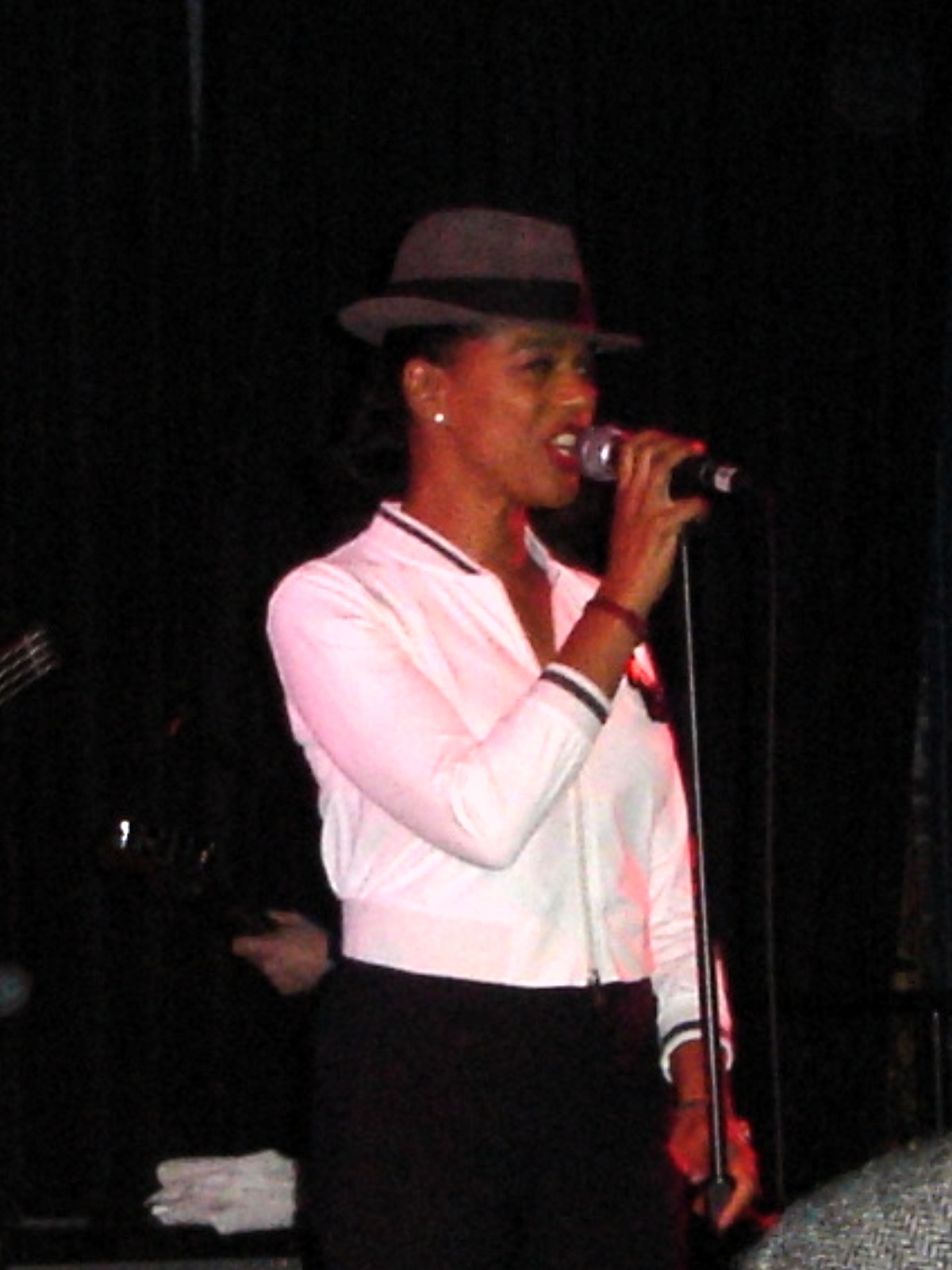
Pauline Black’s career began within a musical adventure. The Selecter belonged to the wave of bands that brought 2 Tone from Coventry in 1979, alongside The Specials, The Beat and Madness. Its mixture of cultures was audible in the music and visible in the people performing it. Black became a central presence, sharing the front of The Selecter with Arthur ‘Gaps’ Hendrickson. Their songs gave audiences something to move to and think about, combining the pleasures of performance with a clear interest in the society beyond the stage.1
From Romford to Coventry
Born in 1953 to a Nigerian father and an Anglo-Jewish mother, Black was adopted by a white working-class family in Romford. Questions of family, race and belonging became central to her memoir, Black by Design. Her circumstances gave those questions urgency. Understanding her background meant considering the family that raised her alongside a birth family whose history she would have to discover. Her memoir follows the process of learning about herself and deciding how to tell that story, connecting personal discovery with her development as an artist.2
She moved to Coventry in 1971 to study science at Lanchester Polytechnic and subsequently trained as a radiographer at Walsgrave Hospital. Before she became widely known as a singer, she therefore had an established direction in education and healthcare. Coventry also widened her social and cultural world. The University of Warwick’s account of her life describes the importance of connections with the city’s Black community and the influence of Black Power ideas on her sense of identity. Her eventual place in a band grew from this broader experience of living, studying, working and meeting people in a new city.3
The places where music grew
Black’s route into performance passed through folk clubs. Recalling her favourite records for The Quietus, she described hearing music in the back room of the Old Dyers Arms in Coventry and deciding to learn songs herself. A support appearance for Bert Jansch brought her into contact with Jamaican politics student Lawton Brown. He introduced her to further music and to Coventry’s Jamaican community. Seeing The Harder They Come, and hearing its soundtrack, expanded her understanding of Caribbean culture. The recollection shows how musical education can happen through friendships, small venues, films and records, with each discovery opening another connection.4
The wider scene acquired a recognisable identity through 2 Tone, the record label Jerry Dammers founded in 1979. As Coventry’s Herbert Art Gallery and Museum explains, its name expressed a wish to overcome racial division. Music, graphic design, clothes and political ideas became closely connected. The Selecter stood within that shared world, while retaining its own character. The Specials, The Beat, Madness and The Bodysnatchers contributed different voices to the movement. Remembering those relationships helps explain why 2 Tone could mean more to an audience than a preference for one band: it offered a way of imagining who could make music together.5
On the radio and into the charts
On My Radio introduced The Selecter to a national audience. Written by guitarist Neol Davies and recorded with producer Roger Lomas, it combined an unusual rhythmic shape with Black’s sharply identifiable vocal performance. The song also carried a joke at the expense of repetitive radio programming, even as radio helped make it successful. Black later recalled the practical difficulty of reaching the Coventry studio with a Hammond organ and its speaker cabinet. Behind the apparent immediacy of the record lay musicians, equipment and the work of turning a live song into a recording.6
The single reached number eight in Britain in 1979. Three Minute Hero followed at number sixteen and Missing Words at number twenty-three in 1980, while the debut album Too Much Pressure reached number five. The Whisper also entered the top forty that year. These results show how quickly the group established a presence beyond its home city. The audience was encountering a sequence of songs and a full album, allowing Black’s voice to become familiar across different material. Chart positions capture only part of that relationship, but they establish the scale of the band’s breakthrough during a relatively short first period.7
Clothes, confidence and a public stance
Black’s clothes became part of her stage presence: tailored trousers, loafers, sharp jackets and a hat. In an interview with Vogue, she described adapting elements of rude-boy dress into an appearance that suited her. The choices gave her room to move and an immediately recognisable outline, while allowing her to play with androgyny. She assembled a visual identity through details that felt right to her. The look’s lasting interest was evident when designer Duro Olowu drew inspiration from her for his autumn 2018 collection. Clothing carried a continuing conversation between music and fashion.8
The stance behind the performance mattered equally. Speaking to Gigantic, Black described anti-racism and opposition to sexism as enduring commitments of 2 Tone. She wanted the opportunity to address an audience to carry a sense of responsibility. Music could remain danceable while expressing difficult ideas, and The Selecter drew on ska, reggae, punk and rock to make that possible. Her position also complicated assumptions about who should lead a band. As a mixed-race woman in a largely male musical environment, she brought experiences that could disappear from accounts focused only on the movement’s men. A shared political outlook still needed room for those differences.9
Beyond the first rush of success
The second album, Celebrate the Bullet, appeared in 1981. Returning to producer Roger Lomas and moving to Chrysalis Records, the band explored a slower, more melodic approach while retaining its attention to racial and social questions. This makes the record useful for hearing the group’s development beyond the first singles. Its songs include Deepwater, Red Reflections and Bristol and Miami alongside the title track. The 2022 expanded reissue brought additional sessions and live material into circulation, making that period easier to revisit. For a reader discovering The Selecter, the second album offers a further stage in the story rather than a repetition of the debut.10
Black has continued to argue for that wider view of a band’s life. In a 2023 interview with writer Malcolm Wyatt, she explained the creative limitations of spending a career performing only the best-known hits. At the time, The Selecter were placing older songs beside material from Human Algebra. The same conversation touched on her friendship with Rhoda Dakar, another prominent woman in 2 Tone. Black welcomed their mutual support but stressed that they were individual artists. That distinction matters in writing women’s musical history: their common experience can illuminate the conditions they faced, while their separate work deserves attention. The continuation of a scene depends partly on allowing its musicians to change, choose collaborators and find subjects that interest them now.11
Acting and telling her own story
After the original band’s early-1980s split, Black developed work in theatre and television. Her screen credits included The Bill, Hearts and Minds and Two Thousand Acres of Sky. On stage, she portrayed Billie Holiday in All or Nothing at All, a performance that won a Time Out acting award in 1991. Black by Design, first published in 2011, brought another form of expression into her career. The memoir followed music and performance alongside her search for her birth parents. Writing allowed her to determine the connections between those experiences, giving readers a perspective that a set of record reviews could never provide.2
The documentary Pauline Black: A 2-Tone Story later brought that account to the screen. Directed by Jane Mingay and written by Mingay with Black, it draws on the memoir, archive material, music and contributions from fellow artists. Those contributors include Gaps Hendrickson, Rhoda Dakar, Don Letts, Skin and Sonia Boyce. Their participation places one life within a network of musicians and cultural figures, while Black remains involved in how her experiences are presented. The project also demonstrates the different evidence available to a music documentary: recorded performances, personal recollection and the observations of people who shared parts of the journey.12
New songs and old partnerships
Human Algebra, released in 2023, shows how The Selecter continued to address contemporary life. In an interview with Mick Burgess, Black described writing during the pandemic and developing songs about knife crime, political behaviour, environmental concerns and relationships. The title track grew from reports of young people being stabbed. Scandalous addressed government conduct, and Stop Them concerned environmental issues; relationship songs kept individual experience alongside the public questions. These were specific subjects requiring new words, rather than an assumption that earlier songs could answer every later situation. She also welcomed the return of original drummer Charley ‘Aitch’ Bembridge, explaining how his placement of the offbeat affected the whole group’s playing. The combination of new material and an established musical relationship gave the band another way forward. Her account makes clear that keeping a group active involves both responding to the world and paying attention to the sound its members make together.13
Hendrickson’s death in 2024 marked a significant loss. He had reunited with Black in the reformed Selecter in 2010, renewing a partnership that linked the later band to its beginnings. Their shared presence belongs in the account of her achievement. Black’s individuality was expressed within a group, and the musicians beside her were participants in creating its character, its performances and its continuing life.1
A place in Coventry’s history
Museums have helped preserve the world around these records. The Herbert’s 2 Tone: Lives and Legacies exhibition brought together clothes, memorabilia, interviews and accounts of the movement’s influence. Such material allows music history to include the people who listened, dressed up, went to concerts and carried ideas between cities. It also places Coventry at the centre of a story with international connections. Black’s career belongs to that history of local spaces and travelling sounds, where Caribbean music, British youth culture and shared experience met through making and hearing music.5
Her contribution to Coventry has extended into its civic life. She supported the city’s bid to become UK City of Culture, performed during Coventry Moves and presented the 2021 Turner Prize. Warwick awarded her an honorary doctorate in 2022, the year she received an OBE for services to entertainment. These forms of recognition sit beside the records, books and performances through which audiences know her. Together they show the reach of a working life shaped by a city, and an artist’s sustained involvement in how that city understands itself.3
Sources and further reading
1. The Selecter official website: The Selecter: biography.
2. Serpent’s Tail: Black by Design: A 2-Tone Memoir, publication details and author biography.
3. University of Warwick: Pauline Black OBE: honorary degree oration, 21 July 2022.
4. The Quietus: On Her Radio: Pauline Black’s 13 Favourite Albums — The Harder They Come.
5. Herbert Art Gallery and Museum: 2 Tone: Lives and Legacies.
6. MusicRadar: Pauline Black recalls The Selecter’s breakthrough single On My Radio.
7. Official Charts Company: The Selecter: Official Chart history.
8. Vogue: Pauline Black on the origins and evolution of her rude-girl style.
9. Gigantic: Interview with The Selecter: Pauline Black.
10. Chrysalis Records: Celebrate the Bullet: Deluxe Edition, 2022 remaster.
11. Malcolm Wyatt / writewyattuk: Stepping forward with The Selecter: interview with Pauline Black.
12. The Selecter official website: Pauline Black: A 2-Tone Story — film credits and synopsis.
13. IPA Music / Mick Burgess: Pauline Black on her ska legacy, staying creative and Human Algebra.
Photograph
Pauline Black performing with The Selecter in San Francisco, 12 October 2005. Photo: Miles Gehm, SELECTER at Slim’s in SF was tremendous, CC BY 2.0.
