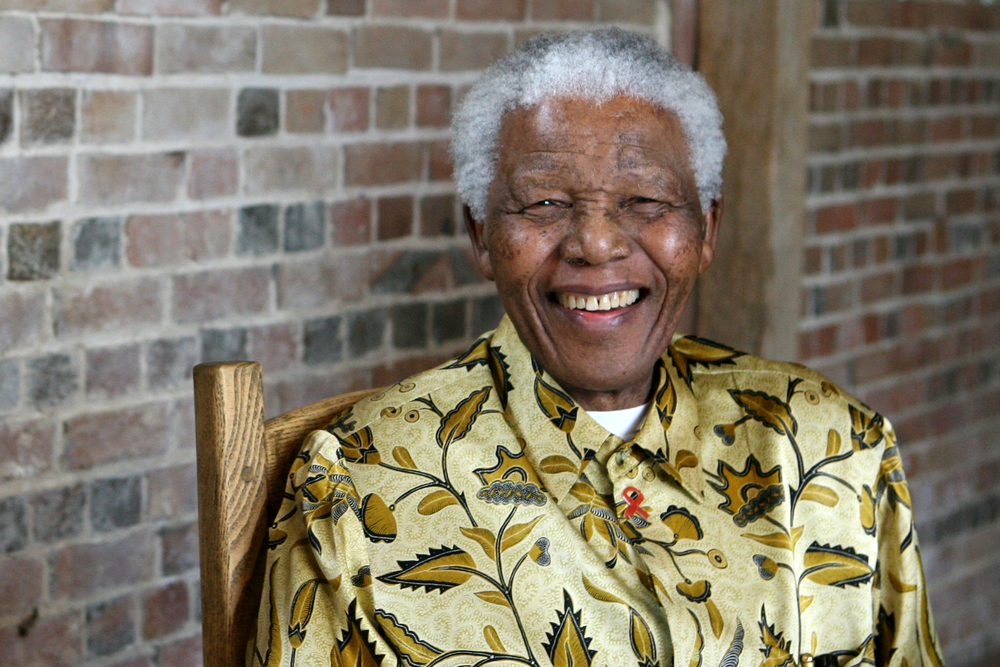
On 10 May 1994, Nelson Mandela became South Africa’s first democratically elected president. The inauguration marked the defeat of a political system that had denied the Black majority an equal voice in governing their country. It also began another test: whether a liberation movement could govern a society still shaped by dispossession and racial inequality. Mandela’s life connects those two tasks. To understand his achievement requires attention to the organiser and negotiator as well as the celebrated prisoner.1
Learning to organise
Rolihlahla Mandela was born in Mvezo in the Eastern Cape on 18 July 1918. His childhood connected him to the Thembu royal household, and after his father’s death he became a ward of the acting king, Jongintaba Dalindyebo. Mission education took him to the University College of Fort Hare, where participation in a student protest interrupted his degree. The future president’s education already involved an encounter with authority and the consequences of resisting it.2
He reached Johannesburg in 1941. Through Walter Sisulu he found a route into legal work, completing his BA through the University of South Africa and studying law. The city introduced him to people with different experiences. Sisulu’s influence was especially important: friendship, practical assistance and political argument helped turn an ambitious young man into an organiser.2
Mandela joined the African National Congress in 1944 and helped establish its Youth League. His political development belonged to a generation seeking more forceful resistance. After the National Party took power in 1948, opposition confronted an expanding machinery of apartheid. Mandela’s commitments would change through argument and experience, but organised resistance remained central. He worked within a movement, acquired responsibilities through it and depended on relationships that would outlast decades of imprisonment.2, 3
In the 1952 Defiance Campaign, he served as Volunteer-in-Chief in a joint ANC and South African Indian Congress programme of civil disobedience. He and Oliver Tambo also practised law together in Johannesburg, representing people caught in apartheid’s legal machinery. These activities addressed the same system at different points: lawyers challenged its effects on clients, while volunteers deliberately broke discriminatory laws to expose their injustice. Arrests and banning orders restricted Mandela’s ability to work openly.4
The politics of cooperation had to be learned. Working with Sisulu and colleagues including Yusuf Dadoo, Ahmed Kathrada and Moses Kotane helped move Mandela beyond an exclusively African nationalist outlook towards the Congress movement’s non-racial approach. That development matters. His later insistence on a common South African citizenship emerged through particular relationships and political disagreements; it was not a complete philosophy with which he had simply begun adult life.4
Repression and the turn to armed resistance
The Treason Trial, which began after mass arrests in 1956, ended with Mandela and the remaining accused acquitted in 1961. Meanwhile, the Sharpeville massacre and the banning of the ANC in 1960 had transformed the conditions of opposition. An organisation prevented from operating legally faced urgent arguments about its methods. Mandela went underground. The change brought further danger and separation from family, alongside the practical work of keeping resistance alive.6
In 1961 he helped establish Umkhonto weSizwe, usually known as MK. Explaining that decision at his later trial, Mandela said its initial policy was sabotage directed at infrastructure and government targets, with instructions to avoid killing people. He presented it as a response to the closing of peaceful avenues of resistance. This was his defence of a deliberate strategic choice. His place in the armed struggle should remain visible in any account of a man later celebrated for reconciliation.5
Arrested in August 1962, he received a five-year sentence for inciting a strike and leaving the country without permission. The subsequent Rivonia Trial placed him and fellow activists at risk of execution. In June 1964, Mandela and seven co-accused received life sentences. Their names included Walter Sisulu, Ahmed Kathrada, Govan Mbeki and Denis Goldberg. The trial removed a group of experienced organisers from public life, not a solitary leader.6
In his statement from the dock on 20 April 1964, Mandela accepted responsibility for planning sabotage and set out the history behind that decision. He ended by affirming a democratic society with equal opportunities and opposition to both white and Black domination. Read in full, the speech is an extended political argument about exclusion, resistance and a possible future. Its force exceeds the famous closing words so often detached from the reasoning that precedes them.5
Prison and the people beyond its walls
Mandela spent nearly eighteen of his 27 years in prison on Robben Island before transfer to Pollsmoor in 1982. Other political prisoners shared those years, bringing their own experience, convictions and endurance. Remembering the group prevents the island from becoming merely the setting for one exceptional individual’s story. The future of a movement depended on people whose lives had been forcibly narrowed while political conditions outside continued to change.6, 15
His correspondence reveals how much labour survival required. Mandela wrote to prison officials about treatment and conditions, and to family members whose lives continued without him. Letters and photographs could disappear into the restrictions on communication. He was refused permission to attend the funerals of his mother and his son Thembi. These losses resist any easy description of prison as useful preparation for the presidency. His letters preserve the work of sustaining affection, advocating for others and remaining a father across an enforced distance.7
Outside South Africa, campaigners made his imprisonment a public issue. In Britain, Glasgow granted him the freedom of the city in 1981. The 1988 Wembley birthday tribute and the march from Glasgow to London placed the demand for his release before large audiences. Such events depended on sustained organising by the Anti-Apartheid Movement and its supporters. They gave a recognisable name to a wider campaign, while reminding the apartheid government that its prisoners had not disappeared from international attention.8
Negotiating a democratic country
Mandela walked out of Victor Verster Prison on 11 February 1990. Freedom did not arrive with an agreed constitution attached. The ANC was legal again, but the distribution of political power remained unresolved. In 1991 Mandela became ANC president, succeeding Oliver Tambo in that role. His personal authority now had to operate within negotiations where decisions affected millions of people and could be challenged by his own supporters.6, 3
The process repeatedly broke down. Violence, including the 1992 Boipatong massacre, deepened mistrust. Cyril Ramaphosa and the government’s Roelf Meyer maintained a negotiating channel that helped produce the September 1992 Record of Understanding. Their work illustrates the distance between a familiar photograph of Mandela beside FW de Klerk and the detailed bargaining behind an agreement. Questions about constitutional power, guarantees and the route to elections had to be settled through teams and institutions, under pressure from events beyond the meeting rooms.9
After Chris Hani’s assassination in April 1993, Mandela addressed a grieving and angry country, urging a response that would preserve the possibility of democratic change. His authority mattered at such moments because the transition could still be derailed. Later that year, he and de Klerk shared the Nobel Peace Prize. Recognition of their negotiations did not make their political histories equivalent or remove the conflict between the interests they represented.10, 11
The responsibilities of government
The presidency required constitutional protections as well as reconciliation between former enemies. Mandela signed the new Constitution in December 1996. Its Bill of Rights protected equality and freedom of expression, prohibited unfair discrimination on grounds including race, sex and sexual orientation, and recognised rights concerning housing, healthcare and education. These guarantees gave citizens standards against which government itself could be judged. The creation of a democratic order meant establishing authority with limits, rather than transferring unrestricted power to admired leaders.1, 12
Material change was slower and uneven. In his February 1999 parliamentary address, Mandela reported expanded water and electricity provision, while acknowledging that the government would miss its target of one million houses. He put the number built or under construction at 700,000. He also addressed corruption among officials of the new order. These admissions belong alongside the achievements of his administration. Political freedom had created possibilities for change, but it had not automatically supplied homes, secure livelihoods or honest public service. His own assessment resisted the idea that the transition’s great symbolic moments completed its work.13
A public life after the presidency
Mandela left office in 1999 after one term. He continued public work, including through the Nelson Mandela Children’s Fund and the foundation bearing his name. Relinquishing the presidency demonstrated that his standing did not require permanent occupation of the state’s highest office. The distinction between the person and the institution was itself part of the democratic practice his country was building.2, 12
HIV and AIDS became a major concern in this later period. Addressing the International AIDS Conference in Durban in July 2000, he urged collective action centred on people who were suffering. He called for prevention, care and an end to stigma, and pressed for practical cooperation across political and scientific disputes. Once again, public authority was useful only if it helped change the circumstances in which others lived.14
Mandela died on 5 December 2013. His career leaves a record of decisions taken with others, under pressures that rarely allowed a perfect outcome. The organiser who built alliances, the prisoner separated from his children and the president acknowledging unfinished work belong in the same account. Holding them together makes it possible to value his achievement while taking seriously the freedom his fellow South Africans still had to make real in everyday life.3, 13
Sources and further reading
1. Milestones of 20 Years of Freedom. South African Government.
2. Biography of Nelson Mandela. Nelson Mandela Foundation.
3. Nelson Mandela: Biographical. Nobel Prize.
4. Facing Down the Enemy: 1944 to 1962. Nelson Mandela Foundation.
5. Nelson Mandela’s Statement from the Dock, 20 April 1964. Nelson Mandela Foundation.
6. Trials and prisons chronology. Nelson Mandela Foundation.
7. The Prison Letters of Nelson Mandela. Nelson Mandela Foundation.
8. Free Nelson Mandela!. Anti-Apartheid Movement Archives.
9. Early 90’s violence through to CODESA 1 & 2. The O’Malley Archives / Nelson Mandela Foundation.
10. Address to the Nation on the Assassination of Chris Hani, 10 April 1993. Nelson Mandela / The O’Malley Archives.
11. The Nobel Peace Prize 1993. Nobel Prize.
12. Constitution of the Republic of South Africa, 1996: Chapter 2, Bill of Rights. South African Government.
13. President Nelson Mandela: Opening of Parliament 1999. South African Government.
14. Closing Address at the 13th International AIDS Conference, 14 July 2000. Nelson Mandela / Government Communication and Information System, archived by Polity.
15. 50 years ago: Mandela arrives on Robben Island. Nelson Mandela Foundation.