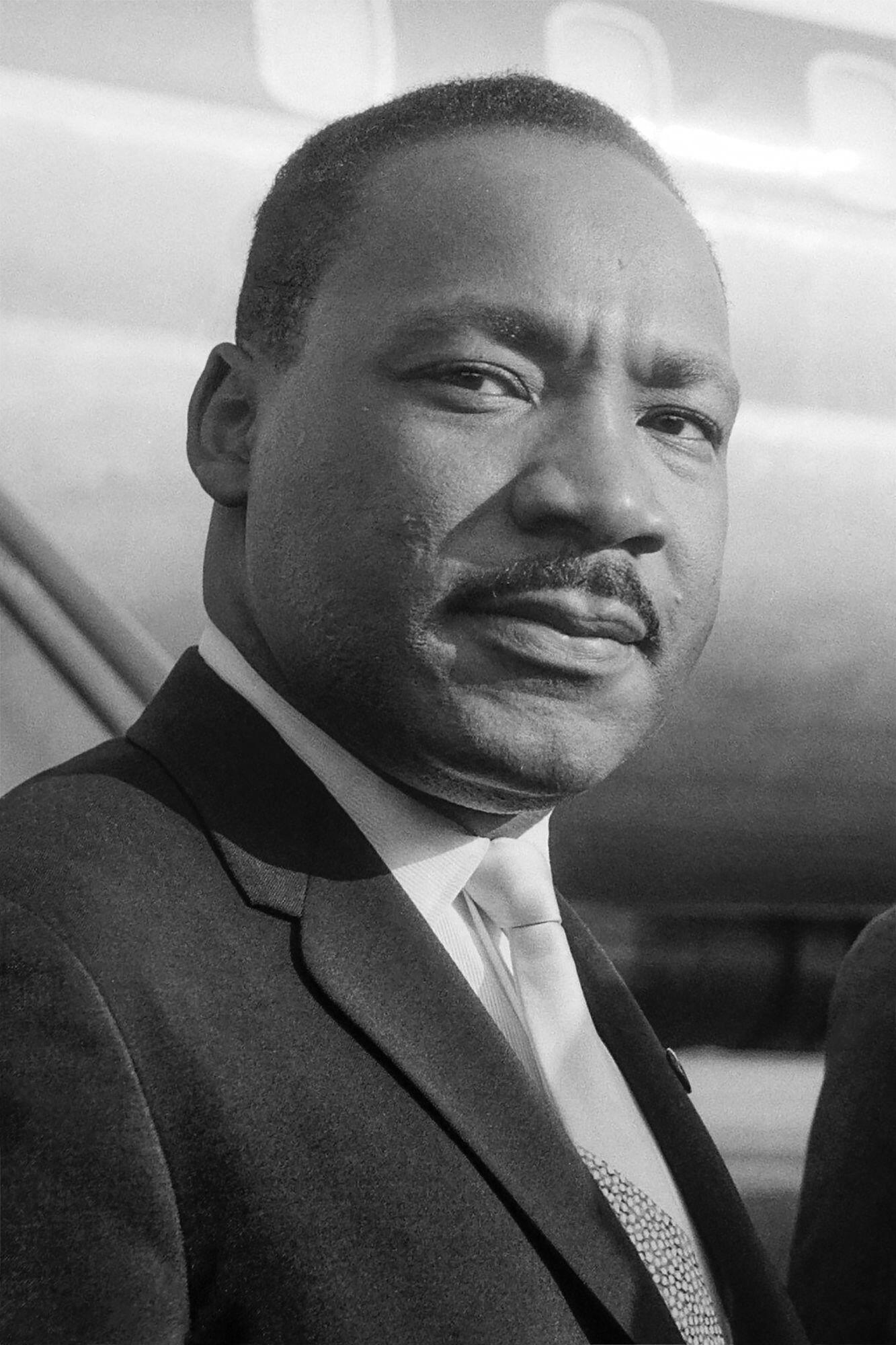
Martin Luther King Jr.’s public life joined ministry with organising. Churches supplied meeting places, and volunteers turned community demands into sustained action. His final campaign brought him alongside striking sanitation workers. Across these settings, he argued that equal citizenship had to affect how people lived, worked and participated in decisions about their communities.4, 14
Faith, family and education
King grew up in Atlanta in a family closely connected to the Baptist church. His father and maternal grandfather combined ministry with campaigns against racial discrimination. That example introduced him to a tradition in which faith carried responsibilities beyond the congregation. The conditions around him also raised questions about poverty and opportunity: his father’s work included challenges to unequal teachers’ salaries and barriers preventing Black citizens from voting.1
He entered Morehouse College in 1944. Its president, Benjamin Mays, became an important influence, presenting education and religious leadership as ways to confront segregation. King took part in debating, student organisations and an interracial discussion group. His writing for the college newspaper considered what education should achieve, including the development of judgement and moral responsibility. These experiences helped shape the public voice that he would later use from pulpits and protest platforms.2
After Morehouse, King studied at Crozer Theological Seminary in Pennsylvania and then pursued doctoral studies at Boston University. In Boston he met Coretta Scott, who was studying music at the New England Conservatory. They married in 1953. The following year he became pastor of Dexter Avenue Baptist Church in Montgomery, Alabama. His new ministry placed him in a city where local Black organisers were already challenging discrimination on public transport.1
Learning through the Montgomery campaign
Rosa Parks’s arrest in December 1955 brought that organising into a new phase. Jo Ann Robinson and E. D. Nixon helped launch plans for a one-day bus boycott. When participation demonstrated the extent of public support, local ministers and community leaders formed the Montgomery Improvement Association and chose King as president. He was taking responsibility within a campaign built by people who had longstanding experience of the city and its transport system.3
The association organised shared car journeys, raised money, held mass meetings and supported the legal challenge to segregation. Sermons and music helped sustain a campaign that lasted through most of the following year. When the court order ending compulsory segregation reached Montgomery in December 1956, the boycott ended. King had gained experience in negotiation, public communication and keeping an organisation functioning under pressure.3
In 1957 he joined other ministers and organisers in establishing the Southern Christian Leadership Conference, or SCLC. It linked local groups through a regional organisation. Its work included voter education and leadership training, with people such as Dorothy Cotton and Andrew Young helping communities develop skills. This structure mattered: local knowledge, church networks and organised participation supported the campaigns with which King’s name became associated.4
His understanding of nonviolence continued to develop. In 1959 he travelled to India with Coretta and historian Lawrence Reddick, meeting people involved in the independence struggle and discussing Gandhi’s methods. The visit offered opportunities to consider how organised resistance could confront injustice without retaliation. King returned with a strengthened commitment to those methods and to explaining them as an active means of struggle.5
Birmingham and the demand for change
In 1963 SCLC joined Fred Shuttlesworth and the existing movement in Birmingham, Alabama. The campaign combined marches, sit-ins and a boycott of downtown businesses. Its timing during the Easter shopping season put economic pressure behind demands for desegregation. Young people became central participants. When police used dogs and high-pressure hoses against demonstrators, photographs and broadcasts carried the violence far beyond Birmingham. Negotiations eventually produced an agreement covering lunch counters, employment and other aspects of segregation.6
Arrested in April, King wrote the Letter from Birmingham Jail. He explained why organisers used direct action to bring about negotiations, setting it within a process of gathering evidence, preparing participants and seeking change. He also described the damage caused by repeatedly asking people facing discrimination to wait. The letter circulated through pamphlets and periodicals before appearing in his book Why We Can’t Wait. It gave readers a detailed account of the reasoning behind the demonstrations.7
On 28 August 1963, more than 200,000 people joined the March on Washington for Jobs and Freedom. A. Philip Randolph and Bayard Rustin helped bring together a coalition of civil rights, religious and labour organisations. King’s address at the Lincoln Memorial became the event’s best-known speech, but the march also set out specific demands: protection for voters, desegregation, fair employment and work for unemployed people. Those economic demands were part of its purpose from the beginning.8
Recognition and the continuing voting struggle
King received the Nobel Peace Prize in December 1964. On the journey to Oslo, he stopped in London and preached at St Paul’s Cathedral. He accepted the award on behalf of the wider movement, and shared the prize money among civil rights organisations. The recognition brought an international audience to methods developed through local campaigns. It also gave him another platform from which to connect racial justice with poverty and peace.9
Voting rights became the focus of national attention in Selma, Alabama, in 1965. On 7 March, John Lewis and Hosea Williams led marchers who were attacked by state troopers and local officers. King was in Atlanta that day. He subsequently called on religious leaders to join the campaign and took part in the later, federally protected march to Montgomery. In August, he was among the civil rights leaders present when President Lyndon Johnson signed the Voting Rights Act. Organising, public pressure and legislation had come together around access to the ballot.10
Housing, work and peace
In 1966 King and SCLC worked with Chicago organisations led by Albert Raby to challenge housing discrimination. King and his family moved into a flat in the city. The campaign examined conditions facing Black residents and the restrictions that limited where families could live and obtain mortgages. Marches brought these questions into public view. A negotiated agreement included commitments on housing and lending, while organisers continued working on the practical changes required to make those commitments effective.11
At New York’s Riverside Church on 4 April 1967, King set out his opposition to the Vietnam War in the speech Beyond Vietnam. Historian Vincent Harding was among those who helped prepare it. King argued that the effects of war on Vietnamese civilians and the use of resources needed by poor Americans belonged within the same moral discussion. His position followed from his belief that nonviolence should inform international affairs as well as domestic protest.12
Later in 1967 he developed plans for the Poor People’s Campaign. It would bring people experiencing poverty to Washington to demand employment, adequate income and improved educational opportunities. The proposed coalition included Black Americans alongside Native American, Mexican American, Puerto Rican and poor white communities. King’s argument was that voting and desegregation needed to be accompanied by economic security. The campaign sought to give people affected by poverty a direct presence in debates about government policy.13
Memphis and the work that continued
In early 1968, Black sanitation workers in Memphis went on strike after the deaths of Echol Cole and Robert Walker in a refuse truck. They sought safer conditions, better pay and recognition of their union. King supported the workers and returned to Memphis in April. On 4 April he was assassinated at the Lorraine Motel. Coretta Scott King, union leaders and other organisers continued the public campaign, and an agreement on pay and union recognition followed later that month.14
Coretta established the King Center to preserve his work and develop education in nonviolence. Its archives and teaching programmes provide ways to study the practices behind the public speeches: preparation, disciplined participation, negotiation and sustained pressure. The record of King’s life remains rooted in concrete demands made by communities for access to transport, the vote, housing and secure working lives. Those campaigns give substance to the words for which he is remembered.15, 4
Sources and further reading
1. Introduction: Martin Luther King, Jr. — The Martin Luther King, Jr. Research and Education Institute, Stanford University.
2. Morehouse College — The Martin Luther King, Jr. Research and Education Institute, Stanford University.
3. Montgomery Improvement Association (MIA) — The Martin Luther King, Jr. Research and Education Institute, Stanford University.
4. Southern Christian Leadership Conference (SCLC) — The Martin Luther King, Jr. Research and Education Institute, Stanford University.
5. India Trip — The Martin Luther King, Jr. Research and Education Institute, Stanford University.
6. Birmingham Campaign — The Martin Luther King, Jr. Research and Education Institute, Stanford University.
7. Letter from Birmingham Jail — The Martin Luther King, Jr. Research and Education Institute, Stanford University.
8. March on Washington for Jobs and Freedom — The Martin Luther King, Jr. Research and Education Institute, Stanford University.
9. Nobel Peace Prize — The Martin Luther King, Jr. Research and Education Institute, Stanford University.
10. Selma to Montgomery March — The Martin Luther King, Jr. Research and Education Institute, Stanford University.
11. Chicago Campaign — The Martin Luther King, Jr. Research and Education Institute, Stanford University.
12. Beyond Vietnam — The Martin Luther King, Jr. Research and Education Institute, Stanford University.
13. Poor People’s Campaign — The Martin Luther King, Jr. Research and Education Institute, Stanford University.
14. Memphis Sanitation Workers’ Strike — The Martin Luther King, Jr. Research and Education Institute, Stanford University.
15. Who We Are — The King Center.