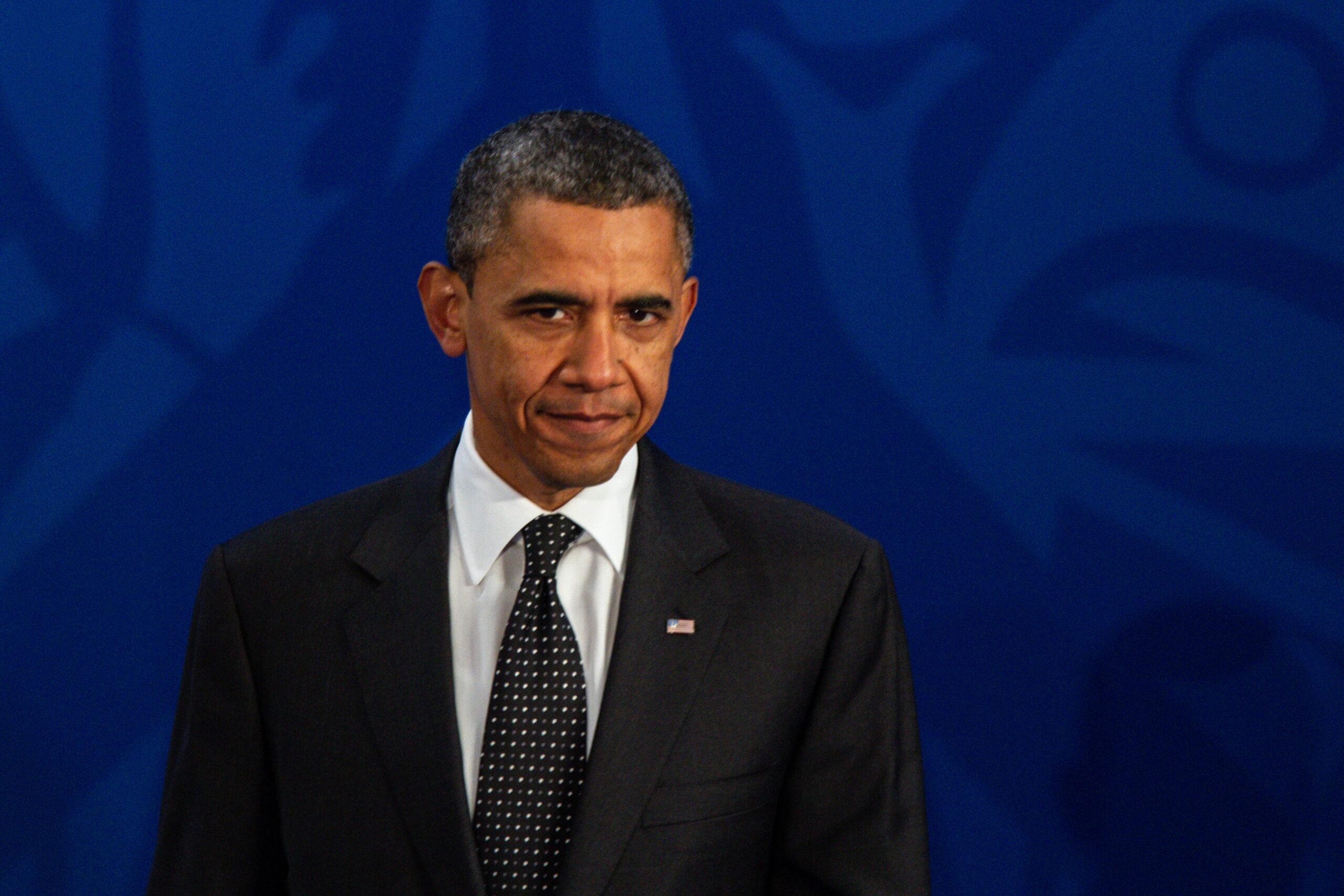
When Barack Obama took office on 20 January 2009, the United States had a Black president for the first time. His route to the White House had passed through community organisations, a legal career and elected office in Illinois.1
From Hawaii to Chicago
Obama was born in Honolulu on 4 August 1961. His father was Kenyan; his mother, Ann Dunham, was an American from Kansas. He spent part of his childhood in Indonesia before returning to Hawaii, where he lived with his maternal grandparents and attended Punahou School. These years connected his upbringing to more than one country and culture. After beginning university at Occidental College in Los Angeles, he transferred to Columbia University in New York, graduating in political science in 1983. He worked briefly in business research before moving towards community organising, arriving in Chicago in 1985.1, 6
On Chicago’s South Side, Obama worked with the Developing Communities Project. The organisation brought him into contact with residents concerned about employment, education and the conditions in which their families lived. Its work included job training, preparation for college and tenants’ organising at Altgeld Gardens. This was politics through meetings, local institutions and practical projects. The emphasis was on residents acting together around shared concerns. In 1992, after completing his legal studies, Obama directed Illinois Project Vote!, helping register minority voters. Community organising and voter registration offered different ways of bringing people into decisions that affected their lives, and both became part of his preparation for elected office.2
Law, teaching and elected office
At Harvard, Obama’s election as the first Black president of the Harvard Law Review in 1990 attracted national attention. The position involved overseeing a student editorial team producing a legal journal, with responsibility for the selection and preparation of scholarly work. Contemporary reporting in The Harvard Crimson recorded that he intended to return to public service after graduation, while remaining open about whether that would mean elected office or community programmes. The episode connected his academic work with questions he had already encountered in Chicago: who held authority, how institutions operated and where he might contribute.3
Back in Chicago, he combined legal work with teaching. The University of Chicago records that he was a lecturer from 1992 to 1996 and a senior lecturer from 1996 to 2004. His teaching covered constitutional law, voting rights, and racism and the law. Those subjects placed legal principles alongside the institutions through which people exercised rights. His classroom work continued during his years in state politics, so teaching and public office developed alongside each other.4, 5
Obama won election to the Illinois State Senate in 1996. He developed relationships with legislators from both parties, with the Democratic leader Emil Jones Jr. becoming a political mentor. Work in a state legislature involved negotiating bills and learning how proposals became law. In 2004, his campaign for the United States Senate brought a wider audience. His keynote speech at the Democratic National Convention placed his family story within an argument about shared national belonging. He won the Illinois Senate election that November, moving from state government towards the national stage.6
The move to the White House
The 2008 presidential election put Obama and his running mate Joe Biden on the Democratic ticket against Republicans John McCain and Sarah Palin. Obama won 365 electoral votes to McCain’s 173. The state results show the geographical reach required to win the presidency, extending far beyond his political base in Illinois. Four years later, voters returned Obama and Biden to office: they won 332 electoral votes, against 206 for Mitt Romney and Paul Ryan. The two victories gave the administration eight years in which to develop its programme.7, 8
Government, work and healthcare
Obama entered office during the Great Recession. In February 2009, Congress enacted the American Recovery and Reinvestment Act, a package of spending and tax measures intended to support the economy. It directed money towards state and local services, education, transport and construction, while extending unemployment support and providing temporary tax relief. The Congressional Budget Office’s later account shows the range of institutions involved, from local authorities receiving funds to households receiving benefits. This gives a practical picture of the response: federal policy reached people through schools, public services, employment support and investment projects, with implementation spread across different levels of government.9
Another early measure concerned pay discrimination. Obama signed the Lilly Ledbetter Fair Pay Act on 29 January 2009. The law changed how the time limit for bringing certain pay discrimination claims was calculated, allowing a discriminatory pay cheque to start a fresh period for making a complaint. Its effect was specific and practical: an employee’s opportunity to challenge unequal pay was linked to the continuing payment of discriminatory wages. The measure connected the administration’s early legislative work with an issue affecting people in their everyday working lives.10
Healthcare became one of the administration’s central domestic projects. The Affordable Care Act, enacted in March 2010, used several mechanisms to widen access to insurance. These included subsidies to help eligible households buy cover and an expansion of Medicaid, the public programme serving people on low incomes. The legislation also supported changes in how care was delivered. For readers in Britain, it is useful to understand the American setting: the reforms worked through a combination of public programmes and insurance arrangements. The act changed the ways people could obtain and pay for cover within that system.11
A government analysis reported in April 2016 estimated that the law’s provisions had enabled about 20 million adults to gain health insurance between 2010 and early 2016. It included Medicaid expansion, marketplace coverage and changes allowing young adults to remain on a parent’s insurance until 26. The estimate was tied to that period and methodology. It illustrates why insurance became such a prominent part of Obama’s domestic record: legislation translated into new routes to coverage for households across the country.12
Supporting young people
In 2014, Obama launched My Brother’s Keeper, an initiative addressing gaps in opportunity affecting boys and young men of colour. It connected work in education, mentoring and employment, involving communities, businesses, foundations and public bodies. The programme identified milestones from early childhood through further education and entry into work. Its emphasis on mentoring recognised the role that adults outside the immediate family could play in helping young people plan for the future. It also brought presidential attention to work already taking place in local organisations, linking national coordination with relationships built in neighbourhoods, schools and community settings.13
International cooperation
Relations with Cuba changed during Obama’s second term. The United States and Cuba resumed diplomatic relations on 20 July 2015, upgrading their existing interests sections to embassies. Obama and Cuban president Raúl Castro agreed the arrangements through an exchange of letters. The decision restored formal diplomatic relations after their severance in 1961. It gave the relationship between the two countries a new official framework, with embassies providing an established channel through which their governments could conduct business.14
Climate diplomacy brought another form of cooperation. In September 2016, Obama and China’s president Xi Jinping announced that their countries were formally joining the Paris Agreement. The United Nations climate secretariat described their participation as a significant step towards bringing the agreement into force. Paris set a shared framework for limiting global warming and strengthening countries’ ability to respond to its effects. The negotiations and implementation involved many governments; the American and Chinese commitments formed part of that wider international process.15
Writing and public life after office
Writing has accompanied Obama’s public career. His books include Dreams from My Father, published in 1995, and A Promised Land, published in 2020. The first explored family and identity; the later book returned to his political life. Together they offer his own account alongside the official records through which his career can be studied.1
After the presidency, the Obama Foundation developed programmes supporting people working in public service, business and community organisations. Its Leaders programme brings together participants from Africa, Asia Pacific, Europe and the United States through group learning, coaching and exchanges between peers. The foundation describes this as a way to help participants develop their work and build lasting professional relationships. That focus returns to a practical thread running through Obama’s public life: people meeting, organising and learning how to turn an idea into work that can be carried out in their own communities.16
Sources and further reading
1. Barack Obama Presidential Library, National Archives: President Barack Obama.
2. The Obama Foundation: Chicago: Where it Began.
3. The Harvard Crimson: Obama Named New Law Review President, 6 February 1990.
4. University of Chicago Law School: Statement Regarding Barack Obama.
5. University of Chicago Law School: Obama Returns to the Law School, 7 April 2016.
6. Miller Center, University of Virginia: Barack Obama: Life Before the Presidency.
7. National Archives: 2008 Electoral College Results.
8. National Archives: 2012 Electoral College Results.
9. Congressional Budget Office: Estimated Impact of the American Recovery and Reinvestment Act on Employment and Economic Output in 2014.
10. US Equal Employment Opportunity Commission: Notice Concerning the Lilly Ledbetter Fair Pay Act of 2009.
11. US Department of Health and Human Services: About the Affordable Care Act.
12. Centers for Medicare & Medicaid Services: Champions for Coverage update, 4 April 2016, pages 6–8.
13. Obama White House archive, National Archives: My Brother’s Keeper.
14. Office of the Historian, US Department of State: Cuba: A Guide to the United States’ History of Recognition, Diplomatic, and Consular Relations.
15. United Nations Framework Convention on Climate Change: China and US Bring Early Paris Entry into Force Big Step Closer, 3 September 2016.
16. The Obama Foundation: Leaders Program.