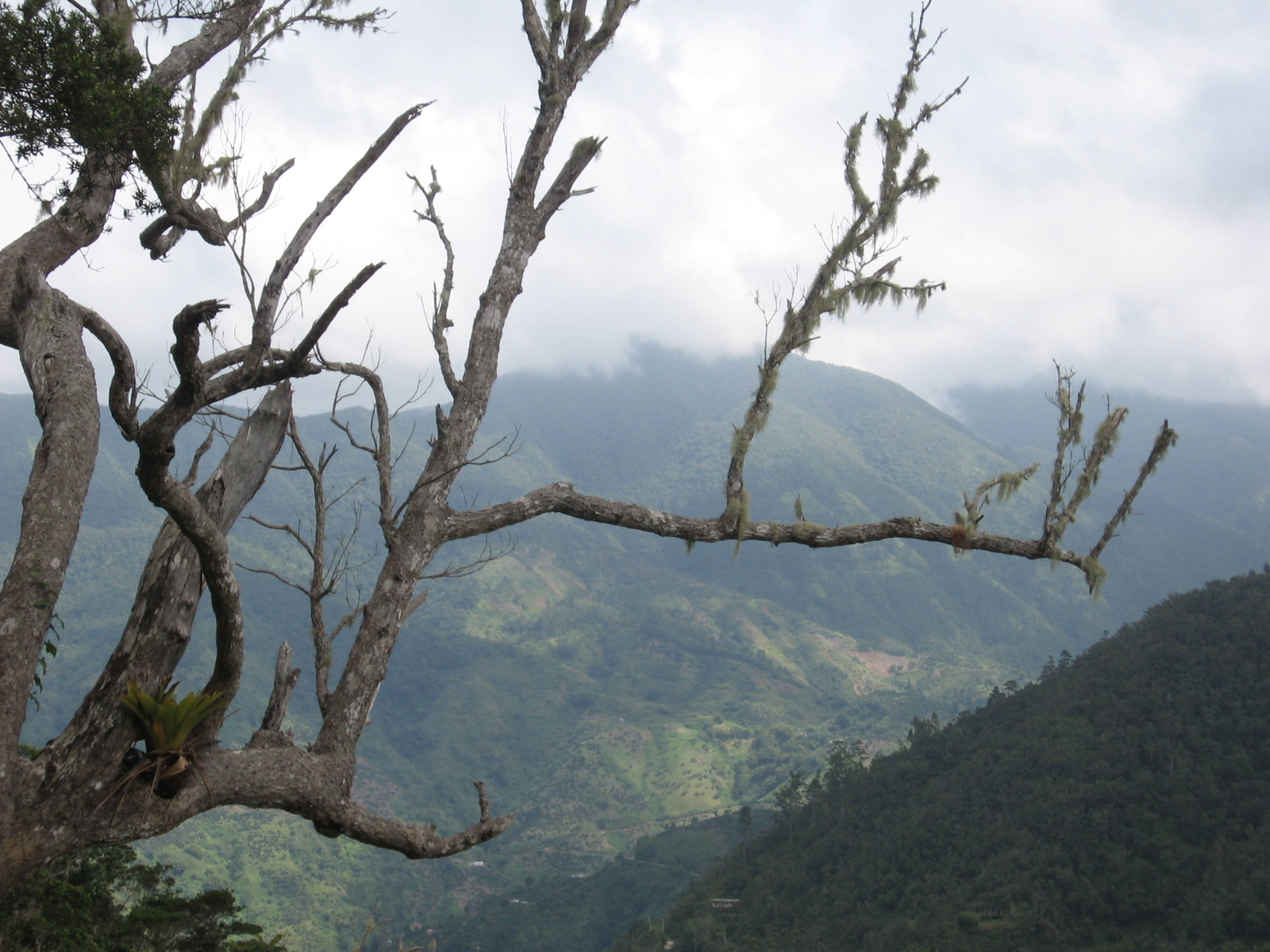
The mountain paths of eastern Jamaica carry a history that cannot be read from a battlefield alone. Routes between settlements, lookouts and hiding places made it possible for people escaping slavery to defend freedom and build homes. UNESCO’s account of the Blue and John Crow Mountains recognises this connected landscape, including the Nanny Town Heritage Route. Forests provided resources, while particular places acquired spiritual meaning. Maroon history therefore belongs to cultivated knowledge of a lived environment as much as to the dramatic moments when colonial armies entered it.1
Communities made through escape
Maroon communities emerged during Spanish rule and expanded around the British conquest of Jamaica in 1655. Africans who gained or seized freedom during that struggle were joined by people escaping British plantations. Their settlements developed different regional histories. The Windward communities occupied the east; the Leeward communities were associated with the west, including Trelawny Town and Accompong. These names describe a changing network of communities, rather than one army permanently commanded from a single headquarters.2
That distinction matters when following individual leaders. Cudjoe became central to the Leeward struggle, while Nanny and Quao are associated with Windward resistance. The colonial authorities faced opponents who used ambushes, information and difficult terrain to offset differences in weapons and resources. Escapees carried knowledge between the plantation world and the mountain settlements. British control of the island’s ports and estates consequently did not mean that every part of its interior was securely under colonial authority.2
Nanny and the defence of home
Nanny occupies a particularly powerful place in this history. Jamaica recognises her as a National Hero, and accounts of her leadership combine military authority with spiritual knowledge and the transmission of customs. The Jamaica Information Service describes her importance in sustaining inherited stories, songs and practices within the Windward communities. This makes leadership a broader activity than issuing orders in battle: maintaining collective confidence and teaching the next generation also helped a threatened community continue.3
Her biography nevertheless requires care. Oral traditions preserve memories of extraordinary powers and successful resistance, while surviving written accounts leave substantial gaps. Exact life dates and many personal details cannot be supplied with confidence. Oral history should be identified as oral history, without being dismissed as useless or converted into documentary certainty. Nanny’s place in community memory is itself historical evidence: it tells us whom later generations honoured, which qualities they associated with survival and how a woman’s authority remained central to their account of freedom.3
Nanny Town also had a physical history of building and rebuilding. The Jamaica National Heritage Trust records repeated British attacks during the early 1730s, including several in 1734. Houses were destroyed and reconstructed. Those details change the scale at which the struggle can be understood. A settlement under attack contained the accumulated work of people making shelter and establishing a place to live. Destruction therefore threatened the ordinary foundations of community, while rebuilding asserted an intention to remain. Military campaigns were also campaigns against homes.4
Knowledge that made survival possible
Archaeology offers another route into these lives. E. Kofi Agorsah’s research at Nanny Town set out to establish patterns of settlement, chronology and social adaptation through material evidence. The questions extend beyond whether a famous battle happened exactly as described. Why was a site chosen? How did people organise their occupation of it? What changed over time? Such investigations allow houses, objects and landscape relationships to enter a history often dominated by official reports of pursuit. They also make room for the labour of people whose names were never recorded.5
The abeng, made from a cow’s horn, was one of the tools through which local knowledge became collective defence. Maroon communities used coded calls to communicate over distance. A sound that carried information to trained listeners could remain unintelligible to an approaching enemy. Understanding the instrument meant understanding a shared system, not simply being able to blow a horn. The Jamaica Information Service connects the abeng with warnings and coordination during the struggle against colonial forces. Communication helped dispersed people act together without surrendering all their information to outsiders.6
Treaties, land and difficult obligations
Cudjoe’s 1739 treaty made the terms of a negotiated freedom explicit. It recognised freedom for his community and provided 1,500 acres within specified boundaries. It also allowed cultivation and trade in products including coffee, cocoa, ginger and livestock, subject to colonial rules. These provisions show how farming and exchange belonged to the political settlement. Freedom needed land and livelihoods. The treaty did not imagine a community surviving indefinitely on warfare: it set out an economic place within an island where plantation slavery continued.7
Its obligations were severe. Maroons were required to return people who subsequently escaped slavery and to assist the colonial government against rebellion and foreign invasion. White representatives would live among them, and their authority over punishment had limits. Securing one community’s recognised freedom could therefore expose other enslaved people to recapture. These clauses remain essential to understanding the treaties. They record both the pressure Maroon resistance placed on Britain and the colonial government’s determination to turn a dangerous opponent into an instrument of plantation security.7
Windward settlements followed their own course through negotiation and resettlement. The Jamaica National Heritage Trust links Nanny’s community with New Nanny Town, later Moore Town, and Quao’s with Crawford Town. Colonial superintendents formed part of the resulting arrangements. Peace brought recognised places of residence, but it also created continuing relationships with officials claiming authority over the island. The different towns cannot be treated as interchangeable. Their leaders, land and dealings with government developed distinct histories, even where a shared account of resistance connected them.8
War, deportation and another Atlantic crossing
The fragility of the relationship became clear in the Second Maroon War of 1795–96. After that conflict, Britain deported more than 500 Trelawny Town Maroons to Nova Scotia. This was the forced movement of a community, including children, rather than simply the removal of defeated soldiers. Parks Canada’s account describes roughly 150 families and records suffering during the journey. The fate of Trelawny Town should not be assigned to every Jamaican Maroon community: the different towns did not all share the same position in the war.9
In Nova Scotia, officials pressed the newcomers towards Christian institutions and changes to practices rooted in Akan traditions. The Maroons maintained a collective identity and petitioned to leave. Most eventually went to Sierra Leone in 1800, while some remained in Canada. Their insistence on departure is part of the history of resistance too. Even after military defeat and transportation, they continued to contest the conditions under which an imperial government expected them to live.9
The Nova Scotia Archives places this episode within a wider Black Atlantic history. The Maroons settled principally in Preston Township, worked on the Citadel’s defences and Government House, and served in the militia. Some farmed near Sackville. They arrived in a province already inhabited by free and enslaved Black people, including refugees from the American Revolution. Following these connections prevents the Jamaican story from ending at the departure of a ship. Exile created further relationships between Caribbean communities, northern colonial labour and West African settlement.10
Living traditions and their custodians
At Moore Town, Kromanti ceremonies bring together drumming, song, dance and relationships with ancestral spirits. UNESCO’s recognition of this heritage concerns the practices of a living community. Its description also links cultural continuity with communal treaty lands and local political arrangements. Land, authority and ceremony consequently belong in the same account. The inherited past is encountered through participation and responsibility, as well as through stories about the eighteenth century. Treating these practices only as colourful entertainment would remove much of their social and spiritual meaning.11
Moore Town’s own description of its government identifies a Colonel and a council drawn from the community. Their responsibilities include land use, resolving disputes, welfare and relations with the Jamaican state. The council also describes work with descendants overseas through a Diaspora Ambassadors initiative, including support for education, farming, crafts and cultural events. Here the language of continuity meets practical questions about resources and opportunity. A tradition of autonomy must be exercised through contemporary decisions about education, livelihoods and community projects. Reading the community’s account alongside state and international heritage descriptions gives its members a direct voice in explaining what Maroon institutions are for and how they intend to sustain them.15
Other towns maintain their own public commemorations. At Accompong, the annual gathering on 6 January provides a prominent occasion for remembering Maroon history. The Jamaica National Heritage Trust identifies the celebration as a continuing feature of the community. The date brings descendants and visitors into contact, but a visitor’s experience is only one aspect of the occasion. Accompong is a home with its own institutions and historical claims. A commemorative event should be understood in relation to that continuing community, rather than allowing the festival to stand for the whole of its life.12
Songs offer a particularly close connection between collective memory and individual experience. Smithsonian Folkways discusses the Maroon song “Country”, which remembers a mother and child separated while escaping British forces. Its emotional force brings family loss into a history often told through commanders and treaties. The same collection emphasises that Maroon musical traditions developed creatively from different inheritances. Cultural survival involved making new forms as well as retaining old ones. Listening therefore reveals adaptation, grief and invention alongside the pride associated with successful resistance.13
Connections that continue
These traditions also travel through contemporary relationships across the Atlantic. In 2026 Jamaica presented a gumbe drum and an abeng to the museum at Cape Coast Castle in Ghana, alongside a copy of an emancipation record. Jamaica’s foreign ministry connected the presentation with the histories linking the two countries. The gumbe had also travelled with Maroons to Sierra Leone in 1800. Following an instrument across these different journeys gives cultural history a material form: objects can connect forced movement, inherited skill and deliberate acts of remembrance generations later.14
The mountain landscape remains another such connection. UNESCO identifies threats including encroachment, invasive species, fire and climate change, while recognising the importance of Maroon communities’ relationships with ancestral places. Protecting this history consequently involves both cultural authority and the places through which it is expressed. Nanny’s memory, the treaty towns and the forest paths survive through continuing decisions about what to teach, maintain and defend.1
Sources and further reading
1. UNESCO World Heritage Centre: Blue and John Crow Mountains.
2. National Library of Jamaica: The Maroons.
3. Jamaica Information Service: Nanny of the Maroons.
4. Jamaica National Heritage Trust: Nanny Town.
5. E. Kofi Agorsah / Portland State University: Nanny Town Excavations: Rewriting Jamaica’s History? (1993).
6. Jamaica Information Service: The Maroons and the Abeng.
7. Harvard University, transcription of the treaty: The Treaty with Cudjoe, 1739.
8. Jamaica National Heritage Trust: Moore Town.
9. Parks Canada: The Jamaican Maroons in Nova Scotia (1796–1800).
10. Nova Scotia Archives: People of African Heritage in Nova Scotia.
11. UNESCO Intangible Cultural Heritage: Maroon heritage of Moore Town.
12. Jamaica National Heritage Trust: Accompong.
13. Smithsonian Folkways Recordings: Rebel Music: A Musical Tour of Maroon Communities.
14. Jamaica Ministry of Foreign Affairs and Foreign Trade: Jamaica Presents Symbols of Maroon Heritage to Museum at Cape Coast Castle (3 June 2026).
15. Moore Town Maroon Council: Our Story: Governance and Diaspora Ambassadors.
Photograph
The Blue Mountains of Jamaica, viewed from the Oatley Mountain trail at Holywell, 25 January 2007. Photograph: Wolmadrian; public domain. Photo: Wolmadrian, Blue Mountains, Jamaica.jpg, Public domain — photographer’s worldwide release. Original Commons photograph; no edits made.

