In Pressure, a young Black Londoner leaves school expecting to find work and a place in the society that educated him. Tony’s difficulties reach into his family, friendships and encounters with police. Horace Ové and novelist Samuel Selvon built their screenplay around a life in which public prejudice and private disagreement could become inseparable.1
Learning to make films
Ové was born in Belmont, Port of Spain, Trinidad, in 1936 and came to Britain in 1960. His interests included painting, photography and design. Work as an extra on Cleopatra took him to Italy, where he encountered the work of directors including Vittorio De Sica and Michelangelo Antonioni. Returning to London, he studied at the London School of Film Technique.2
Films could follow people through streets, attend to ordinary surroundings and experiment with the shape of a story. Those possibilities suited an artist interested in several forms.2
Giving a discussion screen time
In an interview with June Givanni, recorded in 1995 and published the following year, Ové described the practical difficulty of getting started. A commission about acupuncture gave him a completed film to show. He then raised money to record James Baldwin and Dick Gregory speaking at London’s West Indian Students’ Centre, after obtaining Baldwin’s agreement.3
The resulting documentary, Baldwin’s Nigger, preserved an encounter between speakers and audience. Ové’s account makes the work of finding support part of the story: an independent production could begin through a personal introduction and the determination to record a discussion that mattered to those taking part.3
Reggae developed another kind of public encounter. Filmed around the 1970 Caribbean Music Festival at Wembley, it combines performances with interviews and audience responses. The Maytals, Desmond Dekker and other musicians appear, while commentators discuss the music’s history and influence. Franco Rosso’s editing connects the stage to the people listening.4
The result gives a concert a wider setting. Reggae becomes something people argue about, dance to and identify with, as well as a sequence of songs. The film registers Jamaican music’s growing presence within British youth culture.4
Pressure in west London
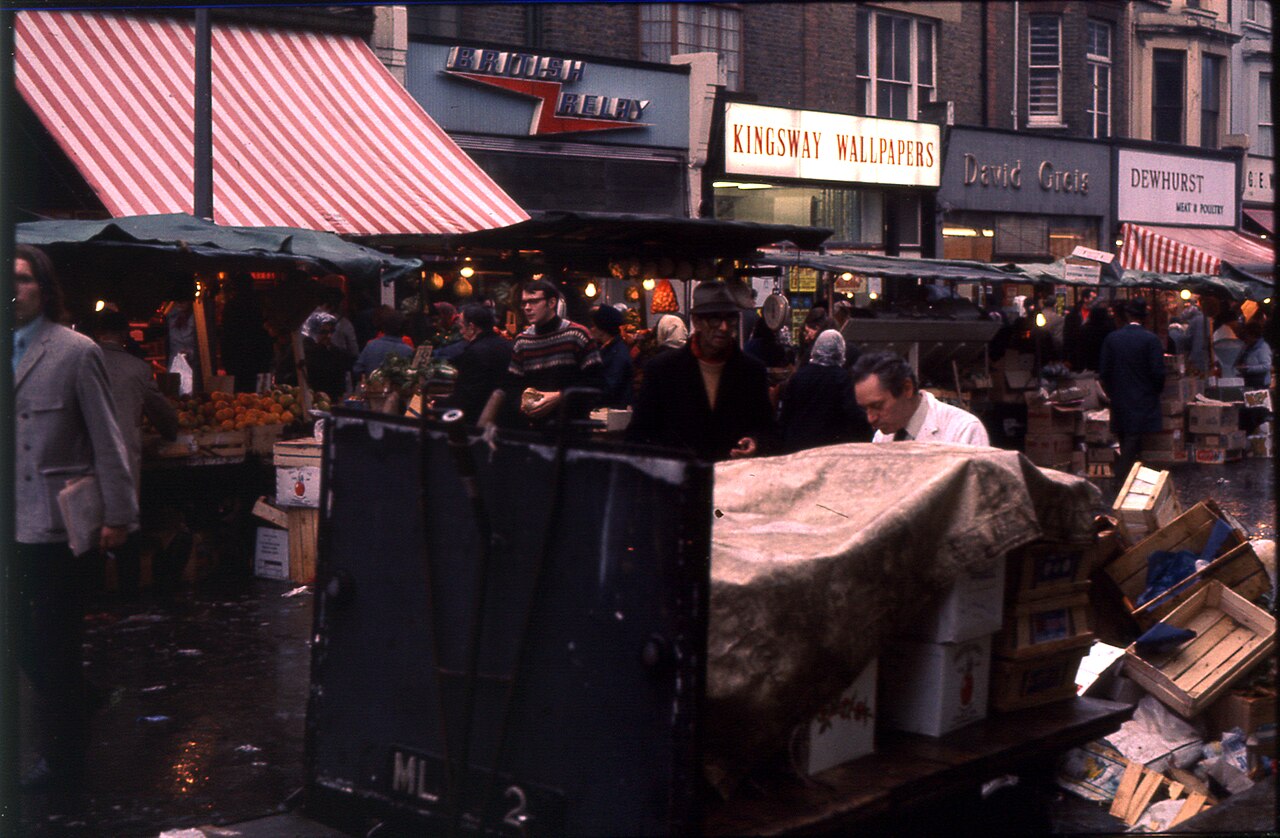
Pressure was shown at the London Film Festival in 1975. Produced by Robert Buckler, it was filmed around Ladbroke Grove and Portobello Road. Herbert Norville played Tony, whose British upbringing differs from his parents’ Caribbean experiences and his older brother’s political commitments. These differences give the family several ways of understanding the same hostile circumstances.1
The film’s wider release was delayed. Accounts have attributed this to both anxieties about its politics and complicated distribution arrangements. Film critic Ashley Clark’s examination of those accounts leaves a more complicated history than a simple claim that the film was banned.2
Photographing a changing Britain
Photography ran alongside Ové’s filmmaking. The Photographers’ Gallery’s record of its 1984 exhibition, Breaking Loose, describes his reportage for publications including Oz and Race Today. His subjects included Notting Hill Carnival and Black political activity, as well as scenes encountered on journeys through Europe, Africa and the Caribbean.5
The exhibition also drew attention to his interest in unusual arrangements and unexpected moments: a bedstead in a courtyard, an isolated figure, the contrast between grand colonial architecture and poorer housing. Social observation and visual surprise could occupy the same photograph. The still camera offered another way to connect people with the spaces they inhabited.5
Drama beyond one neighbourhood
Ové’s later work moved between forms and places. Playing Away, written by Caryl Phillips, brings a cricket team from Brixton to an English village for a charity match. The comedy depends on tensions within each group as well as the awkwardness between visitors and hosts. An invitation intended to display goodwill exposes less comfortable assumptions.6
For television, The Orchid House adapted Phyllis Shand Allfrey’s novel into a four-part series in 1991. Filmed in Dominica, it follows a returning family largely through the perspective of a former nurse, placing domestic relationships within a colonial society. These works show how far Ové’s attention could travel while retaining an interest in people constrained by their surroundings.6
Works returning to view
In 2019, his son Zak curated Get Up, Stand Up Now at Somerset House. Historic works, new commissions and material from personal archives brought generations of Black creativity into conversation. The exhibition placed Horace Ové within a wider artistic world, linking film and photography with other practices rather than treating them as isolated achievements.7
The restoration of Pressure by the BFI National Archive and The Film Foundation brought another opportunity to encounter his work. Presented at festivals and released again in cinemas in 2023, it returned the performances, street locations and family arguments to a large screen. The restored film allows the attention Ové gave to a young Londoner’s life to remain available in the form he made for it.8
Sources and further reading
1. Pressure. Renegade Films.
2. Horace Ové obituary: director who opened the door for Black British filmmaking. Ashley Clark, BFI.
3. Horace Ové: reflection on a thirty-year experience. June Givanni, Black Film Bulletin.
4. 10 great reggae films. Alex Ramon, BFI.
5. Breaking Loose: Horace Ové. Alex Noble, The Photographers’ Gallery.
6. Where to begin with Horace Ové. Alex Ramon, BFI.
7. Get Up, Stand Up Now. Somerset House.
8. Sir Horace Ové celebrated with 4K restoration and re-release of Pressure and BFI Southbank season. BFI.
Featured image. Portobello Road Market, photographed in August 1968. The street later became one of the filming locations for Horace Ové’s Pressure. Photograph: Peter Watt / Geograph, August 1968, via Wikimedia Commons. Image record · CC BY-SA 2.0
