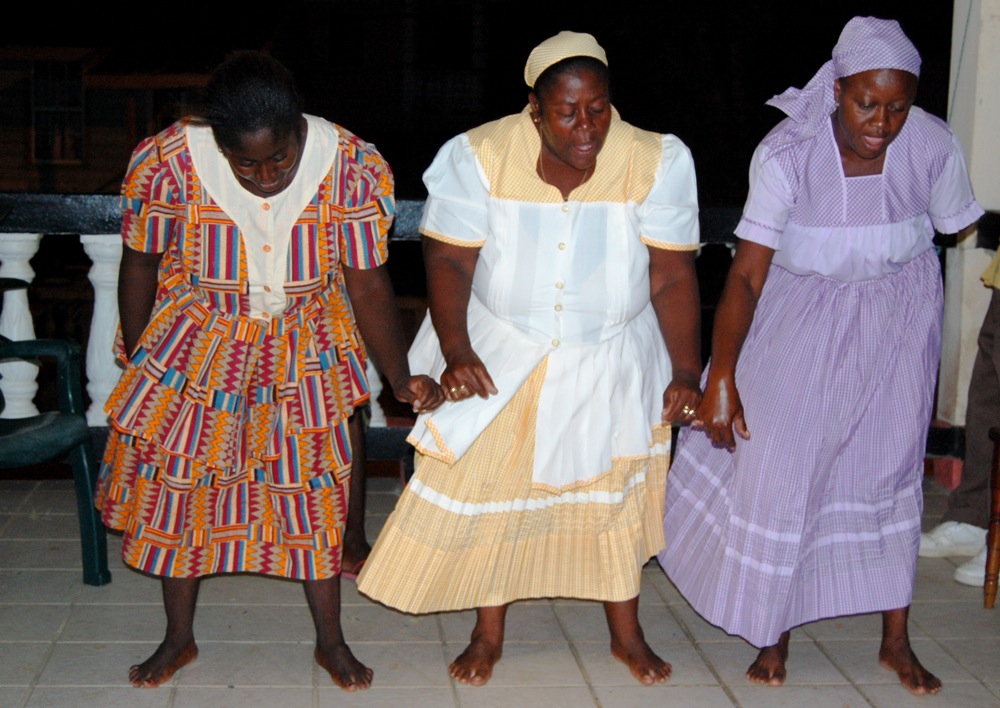
On Garifuna Settlement Day in Belize, boats arriving at the shore make a historical journey visible again. The Yurumein ceremony recalls the movement of the Garinagu from St Vincent, through exile, towards new homes in Central America. Food plants, drums, music and dance form part of the commemoration. The sea is therefore more than a picturesque setting: it connects an ancestral homeland, a forced departure and the work of rebuilding community. Held on 19 November, the celebration asks people to remember both what was lost and what travelled with the survivors. It provides a starting point for a history that crosses several modern national borders.1
A people formed in the Caribbean
Garifuna history begins on St Vincent, known as Yurumein, where African and Indigenous Caribbean lives became intertwined. Garifuna is used for the language and as an adjective; Garinagu is the plural name for the people, although usage varies. These names matter because European records commonly described the community as ‘Black Caribs’, a colonial classification that cannot fully explain how people understood themselves. The Belizean scholar I. Myrtle Palacio’s primer approaches this history from within Garifuna cultural life. It treats identity as something carried through language, relationships, memory and practice. African ancestry and Indigenous belonging are connected parts of this story, rather than alternatives from which people must choose. Calling the Garinagu simply an African migrant group would miss their long attachment to an Indigenous Caribbean homeland.2
The community developed over generations. Accounts of shipwrecked Africans are part of its history, alongside escape from enslavement and relationships with Indigenous inhabitants. A single shipwreck story cannot stand for the formation of an entire people. Historian Christopher Taylor places the defence of freedom at the centre of Garifuna history: on St Vincent, communities built an independent life while neighbouring islands became plantation colonies. European settlers could be trading partners, allies or enemies, depending on the circumstances. Their arrival did not mean that the Garinagu accepted European ownership of their land. This distinction is essential. The later wars were fought by people defending homes and political autonomy, not merely resisting conditions within an established plantation.4
Land, treaties and war
The Treaty of Paris in 1763 assigned St Vincent to Britain without obtaining the consent of its Indigenous inhabitants. British commissioners planned surveys, roads and land sales, while Garifuna leaders resisted the encroachment. The resulting First Carib War of 1772–1773 ended in a treaty that preserved an area for the community but also imposed British sovereignty and restrictions. Its provisions concerning people escaping slavery are revealing: the signatories were required to return fugitives and stop sheltering them. The settlement therefore linked the defence of Garifuna territory to the surrounding plantation system. It was neither complete independence nor a simple surrender without conditions. Land, movement and the authority to decide who could find refuge remained deeply contested. The treaty also addressed fishing, trade and access to the authorities when inhabitants believed they had been wronged. Reading these provisions together reveals the scale of the negotiations: everyday economic life was inseparable from questions about who governed the island and controlled its future.3
Joseph Chatoyer became the best-known leader of the resistance, but leadership was shared. Taylor identifies figures including Tourouya and Bigot alongside him. Remembering several leaders helps restore the community behind the famous name: collective resistance depended on more than one exceptional individual.4
Chatoyer died in March 1795, during renewed war with Britain. His death did not immediately end the fighting.12
British forces captured and removed large numbers of Garinagu in 1796, holding them on Balliceaux before deporting survivors to Roatán, off the coast of present-day Honduras, in 1797.5, 12
Many died during the ordeal. This was a forced expulsion from a homeland, not a voluntary voyage in search of opportunity. From Roatán, survivors established new lives along the Central American coast. The sequence matters when reading later celebrations of arrival: the achievement of building communities followed military defeat, confinement, bereavement and displacement. Garifuna history holds these experiences together, without allowing the violence of exile to become the only story told about the people who survived it.5
Language and the knowledge of everyday life
Garifuna belongs to the Arawakan language family, carrying a profound Indigenous connection across the African diaspora. Its oral traditions include úraga narratives, while songs transmit experience, commentary and cultural knowledge. UNESCO recognised Garifuna language, dance and music in its 2001 proclamation of masterpieces of oral and intangible heritage; the element entered the Representative List in 2008. The recognition covers communities in Belize, Guatemala, Honduras and Nicaragua. Such a listing can draw international attention, but the heritage itself exists through speakers, singers, storytellers and listeners. A language survives when people use it to speak to children, tell jokes, explain work and discuss the present. Its value cannot be measured only by the age of a song or the visibility of a festival.6
Everyday skills also connect people to earlier generations. In Belize, Garifuna food includes fish, plantain, cassava and coconut. Hudut combines a coconut-based fish soup with mashed plantain; ereba is cassava bread. Making these foods involves particular equipment and learned techniques: the woven ruguma presses liquid from grated cassava, while a híbise sifts the material used for bread. Knowing the names and uses of these tools preserves more than a recipe. It connects cultivation, craft, preparation and family life. Fishing and farming supported coastal communities, although livelihoods have changed over time. Garifuna educators also travelled widely through Belize, teaching in rural schools. These contributions deserve a place beside the more familiar public images of drummers and dancers. Culture is practised in kitchens, classrooms and working lives as well as on a stage. The National Institute of Culture and History places their extensive work in rural primary education across the century from the 1870s to the 1970s.7
Making a public place for memory
Thomas Vincent Ramos helped turn shared history into a public institution. Born in Honduras in 1887, he settled in Dangriga in 1923 and combined working life with community organising, music and religious involvement. His Carib Development and Sick Aid Society, founded in 1924, linked cultural activity with support for people who needed assistance. In 1941 he began the celebrations that developed into Garifuna Settlement Day. Others helped organise and petition for recognition, including Domingo Ventura and Pantaleon Hernandez. The holiday gained recognition in Stann Creek District in 1943 and became nationwide in 1977. Ramos’s work shows how commemoration is made: people write letters, form organisations, negotiate with officials and persuade neighbours to participate. The celebration was not simply handed down unchanged from the moment of arrival. It became part of Belizean public life through sustained local effort.8
Music with many voices
An older recording provides another route into the history. Smithsonian Folkways preserves a 1952 album issued under the colonial-era title The Black Caribs of Honduras. Its documentation names places and performers: women singing in Barrio Cristales at Trujillo and in Masca, drummers in Travesía, and men singing there with guitar accompaniment. The track list includes different song and performance forms rather than one undifferentiated ‘Garifuna sound’. Women’s voices are especially prominent. Read carefully, the recording’s documentation helps recover a varied musical world across several communities. It also reminds listeners that an archive is a selection made at a particular time. A record can preserve valuable performances without containing everything a community knows, believes or creates.9
Later musicians brought this cultural work to new audiences. Andy Palacio co-founded and led the Garifuna Collective, combining musical performance with a commitment to the language and culture. The Smithsonian’s documentation of the group at its 2011 festival describes artists from different generations continuing that work after Palacio’s death in 2008. Their appearance connected musicians from Belize and Guatemala with an international audience. The emphasis on several generations is significant: transmission can involve collaboration between experienced performers and younger artists, rather than the mechanical repetition of an older model. Recording, touring and performing abroad can create opportunities to hear Garifuna as a living language. They also place responsibility on presenters to identify the musicians and their communities, instead of offering an anonymous image of Caribbean culture.10
Learning, performance and historical imagination
Teaching remains central to that continuity. A UNICEF report from 2019 described a fourteen-week Wanaragua programme in Belize that brought together costume making, drumming, singing and dancing. Young people learned through the Habinahan Wanaragua initiative, with experienced community members passing on practical skills. The report followed Jaheim Jones, a teenage participant who was not himself Garifuna but was learning the language and helping younger children with costumes. His experience shows how cultural education can support both belonging and exchange. A performance requires preparation: somebody makes the clothing, someone teaches the rhythm, and learners return to practise. Supporting these processes gives young people a role beyond watching a finished spectacle. It also recognises cultural practitioners as teachers with knowledge that deserves time and resources.11
Garifuna history has travelled through theatre as well. Scholar Désha Osborne traces Chatoyer’s afterlife in transatlantic performance, including William Alexander Brown’s The Drama of King Shotaway, staged in New York in 1822. The play is associated with Brown’s African Grove company and drew on the war in St Vincent. Its text has not survived, which limits what can be said about its exact treatment of events. Even so, the production connects Caribbean resistance with an early institution of Black theatre in the United States. The same history could move through oral accounts, printed descriptions and dramatic performance. Following those routes reveals a wider Black Atlantic conversation about freedom and dispossession, while the missing script reminds historians to distinguish surviving evidence from attractive speculation.12
A future made by communities
International safeguarding programmes have addressed the practical work of continuity. A UNESCO project implemented between 2006 and 2009 supported language revitalisation, teaching, inventories, archives and the promotion of Garifuna cultural forms across four countries. Its emphasis was on strengthening communities’ capacity to sustain their heritage. That remains a useful way to understand the task. A festival may bring attention for a day; a language lesson, an accessible recording or support for an experienced teacher can make knowledge available throughout the year. Garifuna history therefore continues through decisions about what people can learn, where they can gather and whose voices are heard. The journey from Yurumein is remembered because later generations have kept making places for that memory in their own lives.13
Sources and further reading
1. National Institute of Culture and History, Belize: Belize Cultural Celebrations Series: Yurumein.
2. I. Myrtle Palacio / National Institute of Culture and History: The First Primer on the People Called Garifuna, 2024 edition.
3. David Wells / West India Committee: Joseph Chatoyer and the Garinagu: The Treaty of Paris and the First Carib War.
4. Christopher Taylor / University Press of Mississippi: The Black Carib Wars: Freedom, Survival, and the Making of the Garifuna — publisher’s abstract.
5. Department of Culture, St Vincent and the Grenadines: Garifuna Exile Story.
6. UNESCO: Language, dance and music of the Garifuna.
7. Rolando Cocom / National Institute of Culture and History: Who are the Garifuna People of Belize?.
8. Phylicia Pelayo / National Institute of Culture and History: Thomas Vincent Ramos and Garifuna Settlement Day.
9. Smithsonian Folkways Recordings: The Black Caribs of Honduras, 1952 recording and track documentation.
10. Smithsonian Folklife Festival: The Garifuna Collective of Belize/Guatemala, 2011.
11. Brent Toombs / UNICEF Belize: Protecting youth from violence through cultural dance, 2019.
12. Désha Osborne / Folger Shakespeare Library: The [Carib] Garifuna Chief: Transatlantic Images of Chatoyer in the Early 19th Century.
13. UNESCO: Action Plan for the Safeguarding of the Garifuna Language, Music and Dance, 2006–2009.
Photograph
Garifuna dancers in Dangriga, Belize, photographed on 8 October 2009. Photo: Rick Goldman, Garifuna dancers in Dangriga, Belize, CC BY-SA 2.0. Original Commons image bytes; no further edits made.
