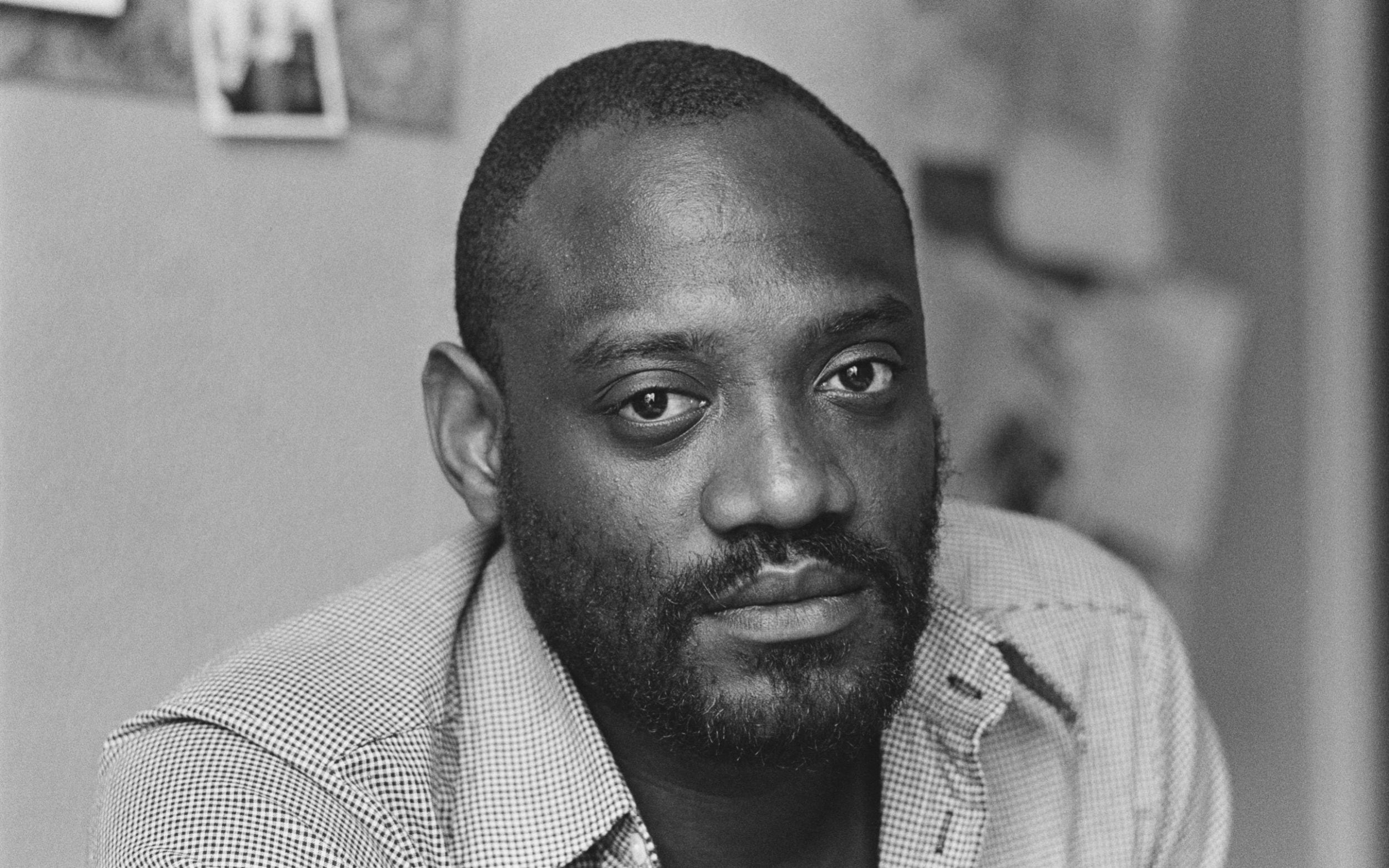
Darcus Howe’s public life moved between the street, the printed page and the television studio. He became widely known as a broadcaster, but that work grew from years of community organising and independent journalism. The campaigns around the Mangrove Nine and the New Cross fire, alongside his work at Race Today, place him within a wider history of Black people making their experiences part of British public debate.13
Trinidad, education and the move to Britain
Born in Moruga, Trinidad, in 1943, Howe grew up in a community surrounded by sugar-cane cultivation. His father was a headmaster and an Anglican deacon. In a later interview, Howe described an upbringing shaped by Christianity, an interest in language and an insistence on reason. He also recalled his father’s opposition to prejudice based on skin colour and social standing. These experiences helped form his political outlook before he came to Britain.1
He arrived in 1961 intending to study law, having won a scholarship to Queen’s Royal College in Port of Spain. He began legal studies at the Middle Temple but did not complete them. His route into public life instead developed through journalism and political activity, drawing on experiences in Britain and the Caribbean.1
The Britain he encountered differed from the expectations encouraged by colonial education. Discrimination affected employment, housing and encounters with the police. In Notting Hill, Howe became part of a Caribbean community creating its own means of communication. He worked on Hustler!, a publication supported by Frank Crichlow, the owner of the Mangrove restaurant. Writing offered a way to connect personal experiences with wider arguments about equal treatment.2
In 1969, he edited Black Dimension, associated with the Black Eagles group. Its demands included decent housing and changes to the treatment of Black defendants. The magazine also reported struggles beyond Britain, including campaigns involving Black students in North America. The historian Robin Bunce’s account of this period shows how Howe’s political education crossed borders. Reading, travel and contacts with Caribbean and American thinkers helped connect a local campaign with international movements against racism and colonialism.2
The Mangrove Nine
In 1971, Howe was one of nine defendants tried at the Old Bailey after a protest against police treatment of the Mangrove restaurant in Notting Hill. The case became known as the Mangrove Nine trial. After 55 days, all nine were acquitted of the most serious charges. A dispute rooted in a Caribbean meeting place had become a public challenge to police racism.3
Howe represented himself. That decision gave him a direct role in contesting the prosecution’s account and describing the circumstances surrounding the protest. The defence brought together defendants with personal knowledge of the community and lawyers working on the case. It also brought their experiences before people who might otherwise have encountered Black London primarily through reports of crime or disorder.4
Race Today and the work of a collective
At Race Today, Howe helped develop a publication in which reporting and organising were closely connected. Its pages followed Black and Asian workers’ struggles, questions of policing, women’s liberation and anti-colonial movements. Contributors included Linton Kwesi Johnson, Mala Sen, Barbara Beese, Farrukh Dhondy, Selma James and John La Rose. The range of writers placed culture and political debate within the same publishing project.6
Leila Hassan Howe’s oral history describes how she became his assistant editor and how the journal moved into Brixton in 1974. The account gives a sense of the work behind a magazine: editorial meetings, reporting, production and learning from other writers. Political study and discussion formed part of the collective’s routine. Ideas were debated alongside decisions about what should appear in the next issue.5
The aim, in Hassan Howe’s account, was to give a community a voice in describing its own circumstances. This involved asking how people had come to Britain, what had shaped their lives and how they were organising within it. Articles could follow a campaign as it developed and allow readers to recognise connections with their own experiences. Publishing became one part of the work of building a political community.5
The journal’s international coverage also mattered. Accounts of life in Britain appeared alongside struggles in Africa, the Caribbean and elsewhere. Its attention to race, class and women’s experiences allowed several kinds of inequality to be discussed together. That breadth helps explain why the magazine remains useful to readers interested in the period’s political and cultural life.6
Carnival as a public presence
Howe was closely involved with Notting Hill Carnival, campaigning for it to remain on the streets and participating in masquerade in Britain and Trinidad. His association with the Race Today Mangrove Renegades connected Carnival with the same community networks that supported publishing and political organising. Music, costume and public celebration formed part of his understanding of how people expressed their presence in Britain.4
In an Open University interview, he stressed the independence of Carnival’s many participating groups. He valued the energy that came from people organising themselves, even when that made the event difficult to direct from the centre. This perspective treated Carnival as a cultural institution made by its participants. It also connected his love of the event with his wider interest in collective action.7
New Cross and a national day of action
On 18 January 1981, a fire at a birthday party in New Cross, south London, led to the deaths of thirteen young Black people. Howe became involved in the New Cross Massacre Action Committee, which was chaired by John La Rose. Its members also included Leila Hassan, Roxy Harris, Alex Pascall and Irma La Rose. Their response involved support for bereaved families as well as demands concerning the police investigation.8
The committee’s work joined immediate human needs with a wider campaign. The George Padmore Institute’s records describe support including counselling and the development of protests over the handling of the case. Within weeks, organisers had arranged a national demonstration. Howe’s contribution belonged to that collective effort, which brought families, local organisations and campaigners into a shared demand that the loss of Black lives receive a serious public response.8
The Black People’s Day of Action took place on Monday 2 March 1981. Thousands came from London and other parts of the country, marching from New Cross towards Hyde Park. The weekday timing was intended to make the demonstration felt across the city. The route took the protest through Fleet Street, then the centre of the national newspaper industry, while a delegation led by La Rose delivered the Declaration of New Cross to public authorities.9
Photographer Vron Ware’s account, published by UCL, records the sharp differences between national and local newspaper coverage. The demonstration itself had made a public statement about dignity, visibility and collective organisation. The argument over its portrayal showed why campaigners also needed their own photographs, publications and accounts of what had happened.9
Bringing those perspectives to television
Howe carried his experience into broadcasting. The Bandung File, commissioned for Channel 4 by Farrukh Dhondy, placed him alongside Tariq Ali as a joint programme editor. Its name referred to the 1955 Bandung conference of African and Asian states. The programme connected the experiences of communities in Britain with developments elsewhere, giving international affairs a perspective shaped by the histories of colonialism and migration.10
Beginning in 1985, its reporting addressed subjects including the treatment of people entering Britain, events in Haiti and Jamaica, and the history of the Grunwick strike. These were sustained subjects for investigation, rather than occasional appearances within a general discussion of race. The work extended questions already explored in independent publishing to the different possibilities of television: interviews, location reporting and the combination of spoken testimony with images.10
Devil’s Advocate became another part of his broadcasting career. The BFI’s account of that work places it within a collaborative television world involving producers, commissioners and researchers, including his daughter Tamara Howe. His interest in literature and the arts also carried into broadcasting. The change of medium widened his audience while retaining the connection between political argument, cultural life and the experiences of the people he spoke with.11
A record that remains available
Howe died in London on 1 April 2017. His papers at Columbia University preserve correspondence, court material, publications, recordings and photographs. They include records of his relationship with C. L. R. James and of his work within the Race Today collective. Together, these materials allow his arguments to be followed across different periods and forms of public activity.12
The Race Today online archive and a commemorative issue launched in 2023 offered further ways to read that history. For someone encountering Howe first through a television clip, the magazine opens a longer story of meetings, campaigns, cultural work and editorial decisions. His public voice developed within those relationships. The surviving record shows how much of it depended on people thinking, writing and acting together.13
Sources and further reading
1. High Profiles, Simon Joseph Jones: Darcus Howe: Let’s Be Reasonable, interview recorded 20 September 2004.
2. Our Migration Story, Dr Robin Bunce, University of Cambridge: Darcus Howe and Britain’s Black Power movement.
3. The National Archives: The Mangrove Nine.
4. Darcus Howe Legacy Collective: Darcus Howe.
5. University of Manchester, James Baldwin and Britain project: Leila Hassan Howe: oral history interview.
6. Goldsmiths, University of London Library: How Race Today evolved into the forefront radical, anti-racist publication in 1970s Britain.
7. The Open University: Carnival and the performance of heritage: Notting Hill Carnival challenges.
8. George Padmore Institute: New Cross Massacre Action Committee Archives 42 years on, 17 January 2023.
9. University College London, Vron Ware and Autograph ABP: The Black People’s Day of Action 1981: online exhibition.
10. British Film Institute, Programme Notes and Tise Vahimagi: A Focus on the Bandung File, 2 March 2026.
11. British Film Institute, Southbank Programme Notes: A Date with the Devil: Darcus Howe’s journey from Black Power to broadcasting, 6 November 2021.
12. Columbia University Rare Book & Manuscript Library: Darcus Howe papers: finding aid.
13. Darcus Howe Legacy Collective: Race Today online archive and commemorative issue launch, February 2023.