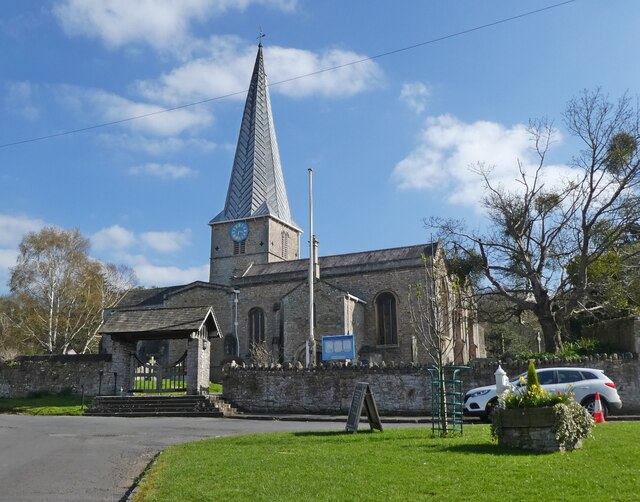
Among the possessions recorded after Cattelena’s death was a cow. It belonged to a woman living in Almondsbury, a Gloucestershire village near Bristol, in the early seventeenth century. Her surviving inventory offers an unusual route into Black history: a list of things used in everyday life.1
A name in a probate inventory
The inventory is dated 24 May 1625. Such documents were made to list and value a deceased person’s goods as part of dealing with an estate. They could preserve details that had no reason to appear in a chronicle or a public account of notable people.5
Bristol Archives holds Cattelena’s document. A reproduced portion shows the description “a negra”, which the City Archivist notes was added later. That wording forms part of the evidence for identifying her as a Black woman. The inventory also describes her as a single woman. It does not record where she was born or how she came to Almondsbury.1, 2
Things for cooking, sleeping and storing
Historian Miranda Kaufmann’s discussion of the inventory identifies bedding, pots and pans, a pewter candlestick, a tin bottle, a dozen spoons, clothing and a coffer. These are practical possessions, concerned with eating, keeping things and making a place to sleep.2
The small objects deserve as much attention as the livestock. A coffer provided storage; bedding and clothes were personal goods that could move with their owner. The candlestick and cooking vessels add to a picture of material resources used within a household. The inventory brings these resources together because someone had to assess their value after Cattelena died.
Each object had a place in the valuation of Cattelena’s estate. Taken together, they show how food, clothing, storage and comfort depended on a collection of portable goods. These details make it possible to include her household resources in a history of rural England.2
The value of one cow
Selly Manor Museum gives the cow’s valuation as £3 10 shillings and the total value of Cattelena’s goods as £6 9 shillings and 6 pence. The animal therefore accounted for more than half the recorded estate. That proportion conveys its importance more clearly than an uncertain conversion into today’s money.3
A cow could provide milk for household use and for making other dairy foods. Surplus produce might also be sold. Historians have consequently suggested that dairying helped Cattelena support herself. This is a reasonable interpretation of a valuable productive possession, although the inventory contains no surviving account of her sales or earnings.3
The distinction matters economically. An estate valuation measures what was left at one moment; income depends on what could be produced and sold over time. The cow suggests a possible source of continuing support alongside the domestic goods. It cannot tell us how reliably that support met her needs.
Household connections in Almondsbury
A widow named Helen Ford administered Cattelena’s estate. Kaufmann suggests that the absence of furniture from the inventory may indicate that Cattelena lived in someone else’s household, possibly Ford’s. That remains a possibility rather than a documented living arrangement. Administration of an estate does not by itself establish that the two women shared a home.4
Nor does the inventory provide a complete statement of Cattelena’s legal position. It is clear evidence of possessions attributed to her, but that fact alone cannot settle every question about status or employment. The description of her as unmarried likewise leaves much of her family life unknown.2, 4
What remains is a recognisable set of needs and resources: utensils, bedding, clothing, storage and an animal of considerable value. Cattelena’s place in Almondsbury makes rural life part of the history of early Black Britain. Her goods also preserve the outline of a particular household economy, modest in scale and substantial enough to be recorded after her death.4
Sources and further reading
1. Black Bristolians – evidence in the archives. Allie Dillon, Bristol Archives, 2021. Includes part of the inventory, reference EP/J/4/18 (1625/18).
2. The Inventory of Cattelena’s Possessions. Miranda Kaufmann, FutureLearn.
3. Black Tudors: An Ordinary Life. Selly Manor Museum, 2023.
4. The Men and Women in Black Tudors: The Untold Story. Miranda Kaufmann, section on Cattelena.
5. Black Tudors: full bibliography. Miranda Kaufmann. Dates the inventory to 24 May 1625 under archival reference FCI/1620–1632/19.
Featured image. St Mary’s Church in Almondsbury, photographed in 2023: a modern view of the village where Cattelena lived. Photograph: Roger Cornfoot / Geograph, 3 April 2023. Reused unchanged. Image record · CC BY-SA 2.0