A tin of Jamaican ackees bought at Ridley Road Market in 1998 now belongs to Hackney Museum. An ordinary purchase has become a record of how people supplied their kitchens. The museum also preserves Mrs Rigg’s recollection of arriving from Jamaica in 1951 with bananas from her ship, astonishing a neighbour who had struggled to find them locally. By her 1998 interview, she described a much wider choice of familiar produce.1
Finding the ingredients
The growth of Caribbean food shops answered a practical need. Migrants could bring recipes, preferences and cooking skills with them, but preparing familiar meals depended on what they could buy. Researcher Ivy Scott, writing for the Food Museum, describes the early difficulty of obtaining ingredients and the expansion of specialist shops as imports became more accessible. Behind a home-cooked meal stood a changing commercial network.2
This history extends beyond the largest cities. Scott’s account identifies Tropical Fruits in Ipswich alongside London markets as places to find ingredients and speak with traders. Local shops helped make Caribbean cooking part of daily life in smaller centres, as well as neighbourhoods with large Caribbean populations.2
A Saturday gathering place
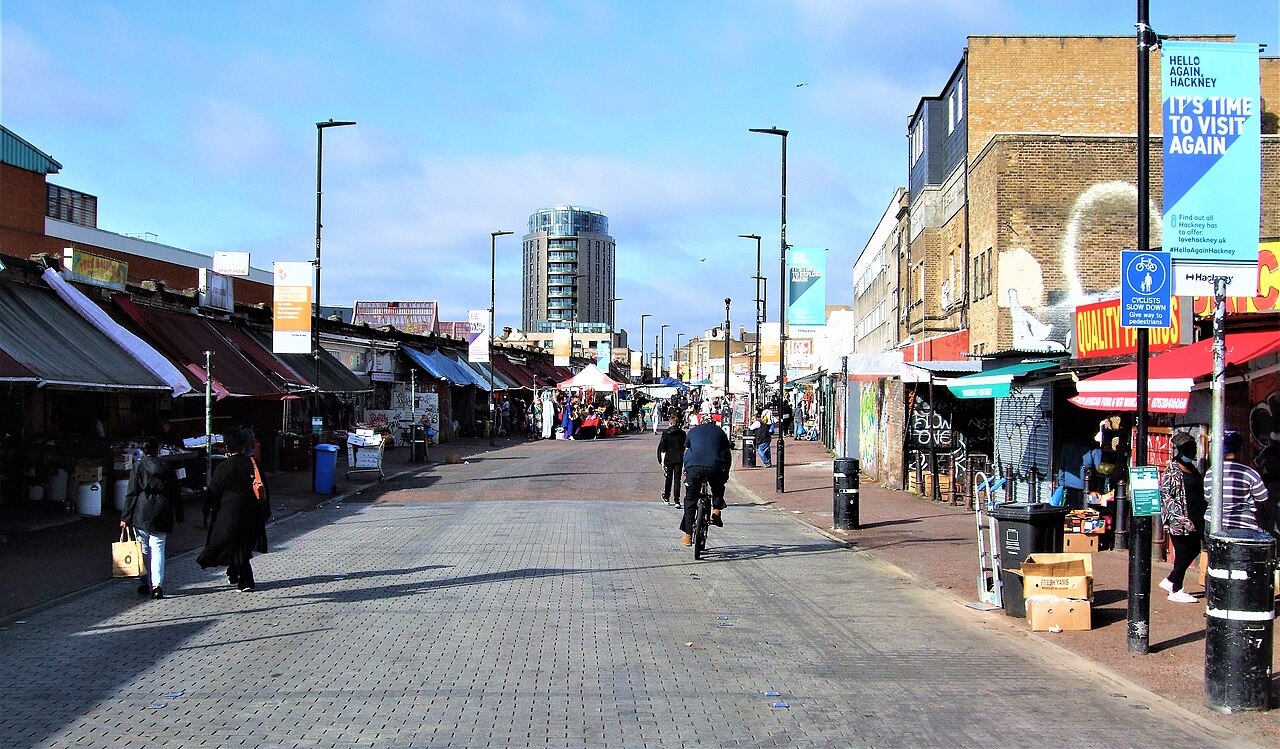
Shirley V Boateng’s oral history gives the shopping journey a personal scale. She remembered visiting Ridley Road for plantain, dasheen, cornmeal and ingredients for souse. Sorrel and mauby were available there too. Finding these goods brought recognition as well as convenience: the displays connected her working life in Hackney with foods she already knew.3
Distance and money shaped those journeys. Brixton offered another shopping destination, but travelling there cost more than her budget comfortably allowed. Ridley Road was closer. On Saturdays she expected friendly faces, greetings and conversations, including with people she did not know. Shopping created opportunities for company within the ordinary task of buying food.3
Across the counter
The people selling Caribbean ingredients did not all share the same background as their customers. Birmingham’s Millennibrum collection includes an interview with a radio producer recorded under the name Asian Irish Englishman. He recalled his Punjabi family’s food business on Stratford Road and African-Caribbean customers who stayed to talk. His memories place the counter within a neighbourhood of overlapping relationships.4
The distinction is useful: a shop serving Caribbean households was not necessarily Caribbean-owned. A family’s shopping routes could connect Black business owners, South Asian traders and other local suppliers. In this Birmingham recollection, conversation accompanied trade across those different backgrounds.4
Different foods, different choices
Caribbean food also encompasses differences of country, religion and household practice. Food writer Riaz Phillips describes the significance of Ital shops and roti shops in Britain, connecting them with traditions he researched in Jamaica, Trinidad and Guyana. Their menus complicate a narrow image of Caribbean cooking based only on a few meat dishes.5
Writing about his own experience, Phillips recalls conversations with business owners as part of learning about food and its cultural meanings. These prepared-food businesses performed a different task from a grocer selling raw ingredients, yet belonged to the same wider food landscape. They offered places to encounter dishes and discuss how they were made.5
The high street around the shop
London Museum’s history of Ridley Road describes a market shaped successively by Jewish, African, Caribbean, Turkish, South Asian and other communities. Fruit stalls stood alongside butchers, fishmongers and shops. People could buy food, clothing and household goods within the same stretch of streets, making the market useful for much more than a single specialist purchase.6
That usefulness depends on the survival of places to trade. The museum documents disputes over redevelopment and traders’ concerns about changing local demand. The history of Caribbean food shopping therefore reaches into the history of rents, buildings and access to neighbourhood services. Familiar ingredients need suppliers; suppliers need customers and somewhere to work.6
Sources and further reading
1. Revisiting Windrush and Beyond: A New Generation. Hackney Museum.
2. A Taste of the Caribbean. Ivy Scott, Food Museum.
3. Oral history interview with Shirley V Boateng. Hackney Museum.
4. Millennibrum interview: Asian Irish Englishman. Birmingham Archives.
5. Natural eating in Jamaica and the Caribbean. Riaz Phillips, Wellcome Collection.
6. Ridley Road Market: Fighting fascism & gentrification. London Museum.
Featured image. A view west along Ridley Road Market in Dalston, photographed in September 2021. Photograph: Jim Linwood, 23 September 2021, via Wikimedia Commons. Image record · CC BY 2.0
