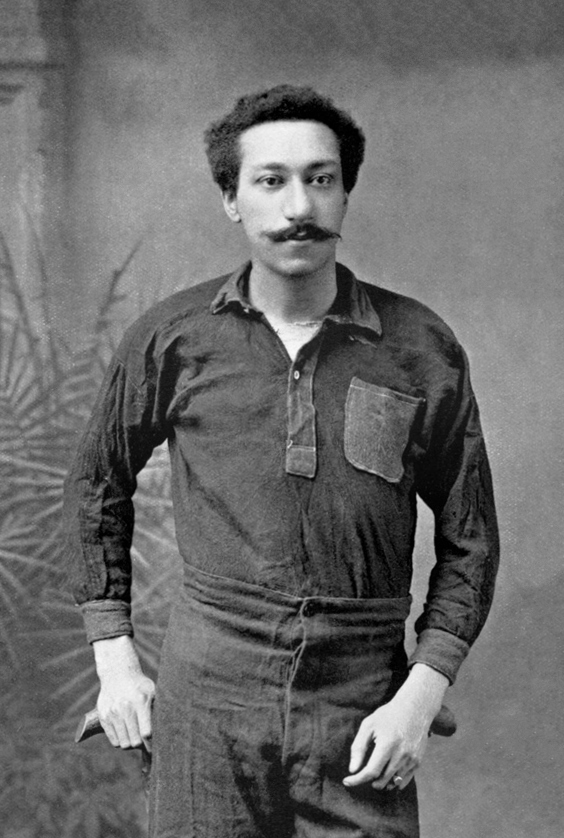
At Stamford Bridge on 3 July 1886, Arthur Wharton won the Amateur Athletic Association’s 100-yard championship in ten seconds. The Prince Hassan Cup recognised a national sprint champion. The same athlete was developing a football career in goal: speed was one part of a sporting life that crossed several disciplines.1
From the Gold Coast to Darlington
Wharton was born in 1865 in Jamestown, in what is now Accra, Ghana. He came to England in the early 1880s to train as a Methodist missionary, but sport became his occupation. Darlington was an important setting for that change, bringing him into football and the wider world of organised competition.7
He played for Darlington as an amateur goalkeeper and gained representative recognition in the north-east. A move to Preston North End followed, and he helped the club reach the FA Cup semi-final in the 1886–87 season. He left in 1888 to concentrate on running. His Preston career therefore belonged to the years before the club’s famous unbeaten League and Cup season of 1888–89.3
A champion in an expanding sport
World Athletics describes Wharton’s two ten-second runs at the 1886 championships as equalling the world best. The distance was 100 yards, the sprint contested at the meeting. His achievement came during an important period for organised athletics. Founded in 1880, the AAA sought consistent rules and an annual championship; it also removed the earlier amateur definition’s exclusion of mechanics, artisans and labourers. Questions about who could compete were woven into the development of the sport in which Wharton excelled.2
He retained his AAA title in 1887 before turning to professional running. That progression matters to his career: amateur success established his ability, while paid competition offered a way of making sport his livelihood. He won Sheffield’s September Handicap in 1888, adding a professional sprinting achievement to his championship titles.4
Earning a living through sport
In 1889 Wharton joined Rotherham Town as a professional footballer. He later played for Sheffield United, Stalybridge Rovers, Ashton North End and Stockport County. These moves placed him in the developing professional game across northern England. At Sheffield United in 1894–95, he made a First Division appearance against Sunderland, taking his career into the Football League’s highest division.3
Football was only part of the working year. Wharton earned money through league cricket during the summer, including a professional engagement with Stalybridge Cricket Club in 1896. Later, in 1914, he declined an offer to coach cricket in County Durham because there was insufficient additional work to supplement the wages. The decision shows the practical calculation behind a sporting career: an attractive role still had to provide a viable living across the year.5
The goalkeeper under scrutiny
At Sheffield United, Wharton competed with the young William Foulke for a place in goal. He had considerable experience, but appearances in the first team were limited. His career included selection battles and setbacks alongside the achievements that later made him a pioneering figure in football history.4
A surviving comment in The Athletic Journal in 1887 reveals another pressure. Writing under the name Whispers, a columnist attacked Wharton’s apparent playfulness in goal while using racist language about his intelligence. The passage shows racial contempt being folded into a judgement about sporting performance. It also preserves a disagreement about style: what some observers considered composure, the writer dismissed as unsuitable behaviour. Wharton was being assessed as a goalkeeper through language that also marked him out by race.6
Work, memory and recognition
After his football career ended, Wharton worked as a colliery haulage hand in South Yorkshire. He continued to play cricket. His later working life belongs alongside the sprint results and team photographs: professional sport had brought distinction, but did not provide lasting financial security.4
Wharton died in 1930 and was buried at Edlington. A campaign by Football Unites Racism Divides secured a headstone in 1997. In 2014, a statue by Vivien Mallock was unveiled at St George’s Park, England’s national football centre. The memorial brought his name into a place devoted to the training of players and coaches, connecting recognition of his earlier achievements with the everyday work of the modern game.7
Sources and further reading
1. Arthur Wharton: athlete — Arthur Wharton Foundation.
2. Remembering the pioneering AAA — Mel Watman, World Athletics.
3. Arthur Wharton: a sporting pioneer and trailblazer — Premier League.
4. Arthur Wharton — Phil Vasili, Football Unites Racism Divides.
5. Arthur Wharton: cricketer — Arthur Wharton Foundation.
6. Comment on Wharton’s goalkeeping, 1887 — Whispers, The Athletic Journal; reproduced by FURD.
7. Pioneer Arthur Wharton honoured at St George’s Park — Jamie Reid, The Football Association.
Featured image. Arthur Wharton in a photograph dated to about 1896. Unknown photographer; public-domain image via Wikimedia Commons. Image record · Public domain
