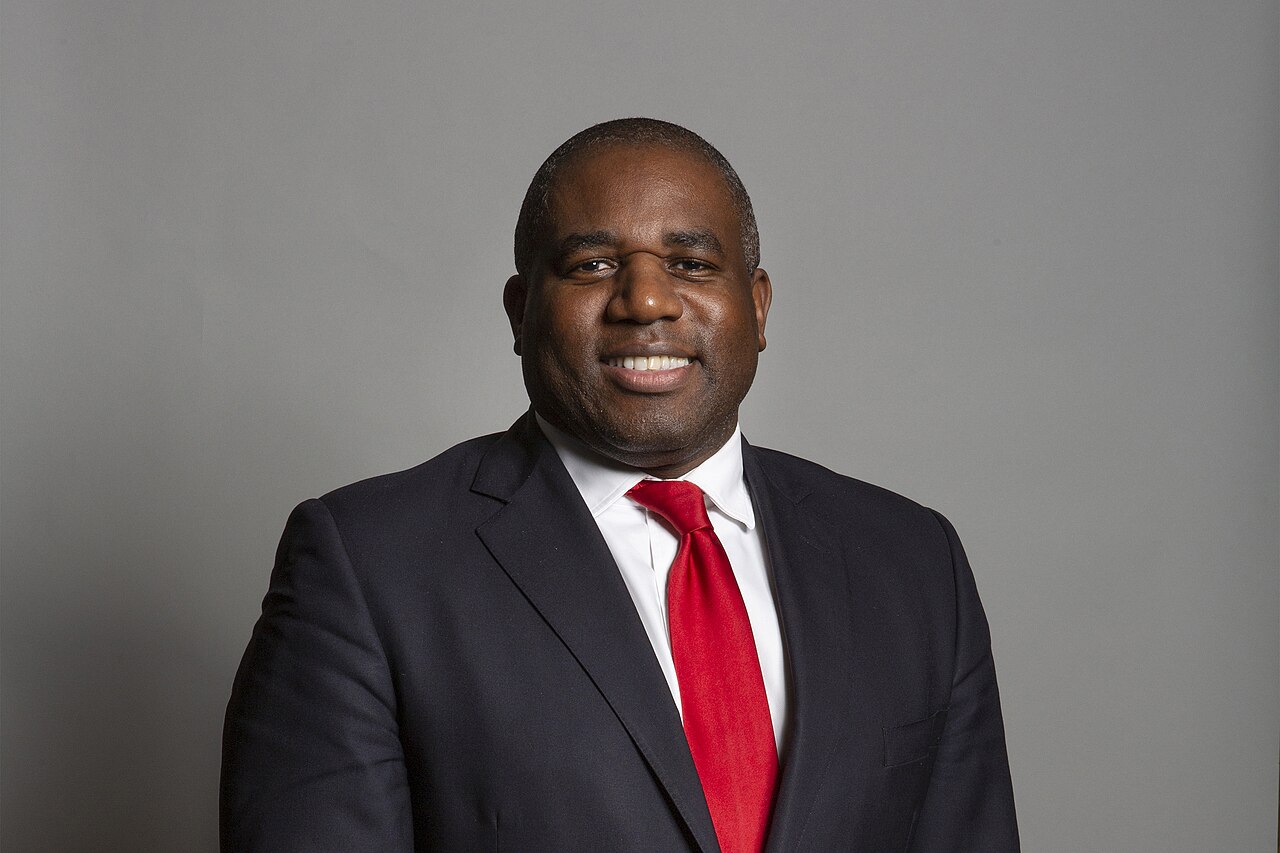
David Lammy entered Parliament for Tottenham in June 2000. His career has included junior ministerial work, senior opposition responsibilities and service as Foreign Secretary, followed by a period leading the Ministry of Justice. 3
Tottenham, education and law
Lammy grew up in Tottenham with parents who had migrated from Guyana. In a 2025 Harvard Law School interview, he recalled a neighbourhood shaped by families from the Caribbean, Ireland, Cyprus and elsewhere. He attended school in Peterborough and sang in a cathedral choir, gaining educational opportunities while also encountering racist bullying. Looking back, he connected those experiences with questions about unequal resources and opportunity. He also remembered following events in apartheid South Africa and becoming more politically aware as a teenager. These are his retrospective explanations of why social justice interested him and why he was drawn towards law. 1
He studied law at SOAS, was called to the Bar of England and Wales in 1995 and completed pupillage at 3 Serjeants’ Inn the following year. He then took an LLM at Harvard Law School in 1997. Work at an American law firm followed, before he returned to a British firm. When he entered Parliament, he registered as non-practising. 2
A career across departments
His early government appointments covered health, constitutional affairs, culture, skills and higher education between 2002 and 2010. Later, as an opposition frontbencher, he held the justice brief from 2020 and the foreign-affairs brief from November 2021. Those shadow posts involved challenging government policy and developing alternatives, without directing the departments concerned. 3
Examining the criminal justice system
The Lammy Review’s final report appeared on 8 September 2017 after eighteen months of work. It examined the treatment and outcomes of Black, Asian and other minority ethnic people in the criminal justice system in England and Wales. One finding complicated claims of progress in youth justice: although fewer young people were in custody overall, the minority ethnic proportion had increased. The review also examined mistrust, including differences in defendants’ decisions about guilty pleas. 4
Its thirty-five recommendations included greater transparency in sentencing, better information about ethnicity and changes to rehabilitation. Lammy proposed allowing some lower-level offenders to undertake rehabilitation before entering a plea, with charges dropped after successful completion. He also wanted more careful assessment of young people’s maturity. These proposals addressed decisions at different stages of a case, rather than treating unequal outcomes as a single problem confined to prisons. 4
Windrush and parliamentary scrutiny
On 16 April 2018, Lammy asked an urgent question about the immigration status of people who had arrived as children of the Windrush generation. He challenged Home Secretary Amber Rudd about detention, loss of work, denied healthcare and pensions, demanding an apology and a clear timetable for action. Rudd acknowledged anxiety and announced a dedicated team to help people establish their right to remain and obtain services. 5
The urgent question brought the Home Secretary before MPs to explain her department’s response publicly. Lammy’s intervention pressed the government on the experiences of affected individuals and on the practical response it would provide, placing those questions on the Commons record. 5
Foreign policy and later office
In his Kew lecture of 17 September 2024, delivered during his time as Foreign Secretary, Lammy linked climate change with security, economic opportunity and international inequality. He argued that vulnerable communities, including those in the Caribbean, bore heavy costs from the crisis. He proposed a Global Clean Power Alliance and new special representatives for climate and nature, alongside efforts to expand access to finance. The speech set out a diplomatic programme in which energy systems, investment and environmental protection were connected. It also presented cooperation with countries in the Global South as central to that programme. He argued for more accessible finance and for expanding electricity grids and storage, identifying practical obstacles to the spread of clean power. 6
Parliament records his Foreign Secretary tenure as July 2024 to September 2025. He then served as Deputy Prime Minister, Lord Chancellor and Justice Secretary from 5 September 2025 until 20 July 2026. These dated appointments form separate chapters in a parliamentary career that began with representing Tottenham. 3
Sources and further reading
1. A Man for All Seasons. Harvard Law School.
2. The Rt Hon David Lammy MP. UK Government.
3. Parliamentary career for Mr David Lammy. UK Parliament.
4. Lammy publishes historic review. Ministry of Justice.
5. Windrush Children (Immigration Status), 16 April 2018. UK Parliament.
6. The Kew Lecture: Foreign Secretary’s speech on the climate crisis. Foreign, Commonwealth & Development Office.
Featured image. David Lammy in his official parliamentary portrait from December 2019. Photograph: David Woolfall / UK Parliament, 18 December 2019, via Wikimedia Commons; source-provided crop. Image record · CC BY 3.0
