Rotimi Fani-Kayode’s London studio was a place for making photographs and testing ways of being seen. Between 1983 and his death in 1989, he lived and worked in Brixton, producing staged portraits concerned with desire, cultural difference and spiritual experience. Gesture, lighting and the arrangement of bodies gave those subjects a physical form. 1
Learning across countries
Born in Lagos in 1955 into a Yoruba family, Fani-Kayode moved to England during childhood. His education later took him to Georgetown University and the Pratt Institute in the United States before he settled in London in 1983. 1
He began studying at Georgetown in 1976. The university’s later retrospective placed his work within the cultural worlds of Washington, New York and London. These cities offered different artistic and social settings, and his photographs drew on a wide field of references, including Yoruba religious traditions, classical mythology and urban subcultures. 2
The finished pictures could be theatrical, humorous or unsettling. They involved deliberate arrangements and varied photographic processes, leaving a body of hundreds of images from a brief working career. Their symbolism allows several histories to enter the same composition. Looking at an image can involve recognising a familiar reference while also questioning what it means in this particular setting. 2
Trust between photographer and model
Dennis Carney, a friend and model, recalled meeting Fani-Kayode in a Black gay club in Soho around 1985 or 1986. Speaking to Autograph’s Mark Sealy in 2024, Carney remembered a gentle person whose appearance and self-possession made a strong impression. Their friendship preceded the photographs, and that relationship shaped his experience of being photographed. 3
Carney described feeling frightened before his first nude modelling session. Fani-Kayode helped him feel comfortable in a studio that was also his home. This recollection adds something that a finished print cannot supply on its own: the negotiation and trust involved in making it. Carney’s memories connect the images with friendships, clubs and Black gay networks through which people met and supported one another. 3
Artists learning from each other
Another sitter was Ajamu, the photographer and archive-maker who appears in City Gent, made in Brixton in 1988. In Autograph’s account of the work, Ajamu remembers taking his own prints and contact sheets to Fani-Kayode’s flat. Modelling also became an opportunity to watch, listen and learn from another photographer. 4
The photograph therefore records a relationship within an artistic community, as well as a carefully constructed image. Autograph has conserved and digitised City Gent, lent it to exhibitions and researched its contact sheets. Those surrounding materials matter: a single selected photograph is the result of other poses, frames and decisions. Examining the sequence can reveal how an image took shape rather than treating the final print as an isolated object. 4
Building a place for photography
Fani-Kayode also served as one of Autograph’s first chairs. 1
Established in 1988 as the Association of Black Photographers, Autograph began in a small office in Brixton’s Bon Marché Building. It organised exhibitions, publications and events, bringing work into galleries, museums, festivals and public spaces. This was an institutional response to questions about who could produce photographs, exhibit them and enter the published history of the medium. 5
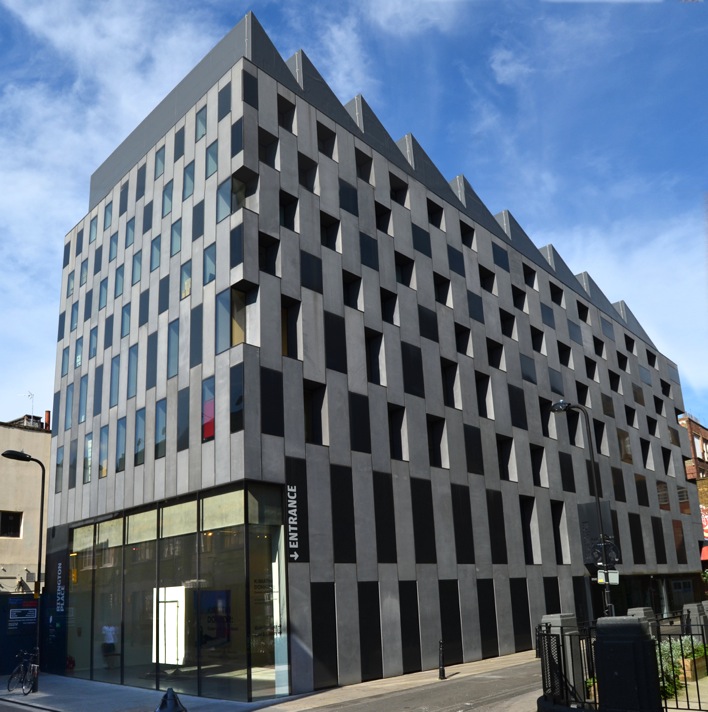
The organisation initially operated as an agency, working through partnerships rather than a permanent public gallery. It developed commissions and a photographic collection alongside its publishing and research. Its move to Rivington Place in Shoreditch came in 2007, long after Fani-Kayode’s lifetime. The later building should therefore be understood as part of Autograph’s continuing history. 5
Reading the archive
Many photographs were made in collaboration with Fani-Kayode’s partner, Alex Hirst. The exhibition Tranquility of Communion, organised with Autograph at the Wexner Center for the Arts in 2024–25, brought this wider practice into view. It assembled colour and black-and-white series alongside archival prints and previously unexhibited work from his student years. 6
Such material broadens the account beyond a handful of frequently reproduced pictures. Student photographs, working prints and collaborative projects allow different stages of a practice to be considered together. They also keep questions of authorship and partnership visible. Fani-Kayode’s studio photographs emerged through relationships with the people before the camera and the people working alongside him; the archive preserves evidence of those encounters. 6
Sources and further reading
1. Rotimi Fani-Kayode: The Studio – Staging Desire. Autograph.
2. The Georgetown University Art Galleries are pleased to present two new exhibitions. Georgetown University.
3. Tender Encounters with Rotimi Fani-Kayode. Autograph.
4. Rotimi Fani-Kayode: City Gent, 1988. Autograph.
5. History of Autograph. Autograph.
6. Rotimi Fani-Kayode: Tranquility of Communion. Autograph.
Featured image. A later view of Autograph’s home at Rivington Place in London, photographed in September 2012. Photograph: Patterncutter, 17 September 2012, via Wikimedia Commons. Image record · CC BY-SA 3.0 · About Autograph
