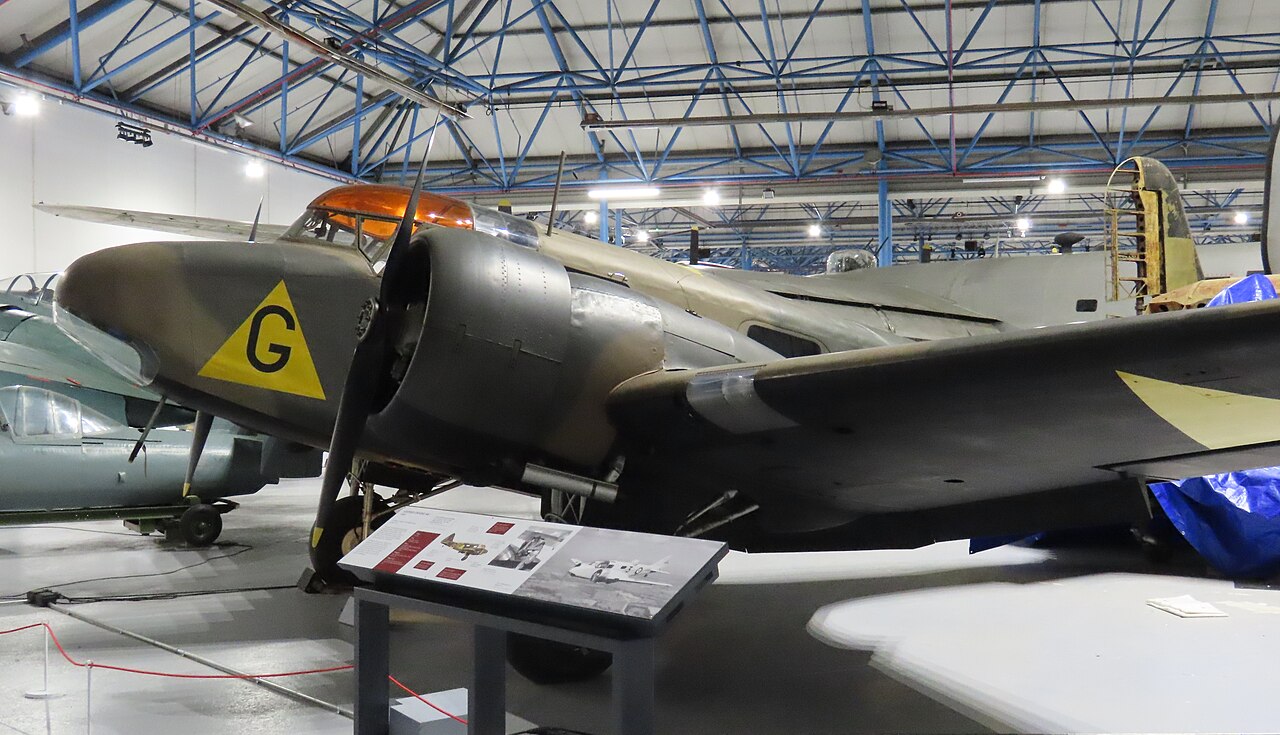
Lilian Bader’s place in RAF history lies in skilled work on the ground. At RAF Shawbury, she maintained aircraft instruments, including those fitted to Airspeed Oxford aircraft. Instruments required attention before crews could rely on them in flight. Her service opens a view of aviation history through technical preparation and maintenance, as well as the more familiar accounts of people in the cockpit.2
Growing up in Britain
Bader was born in Liverpool in 1918, to a Barbadian father and an Irish mother. Orphaned during childhood, she grew up in a convent and received a basic education. She later entered domestic service. Historian Patricia Fara’s account places these early limits on schooling beside Bader’s much later return to study. The distance between the two helps explain why her adult education belongs at the centre of her biography, rather than appearing as a brief addition to the wartime story.4
Exclusion, then an opportunity to train
At the beginning of the war, Bader worked in a NAAFI canteen but lost the job because of her family’s racial background. On 28 March 1941 she joined the Women’s Auxiliary Air Force. She trained as an instrument repairer and passed with a first-class result, becoming one of the early women to qualify for that work. The RAF Museum records her progression to acting corporal. These details concern selection, learning and responsibility within a technical occupation: she had entered a service that offered a substantially different opportunity from the canteen job from which she had been dismissed.1
The expanding work of the WAAF
The WAAF had been formed in June 1939. Its purpose included releasing RAF men for other duties, but the work its members undertook extended across the operation of airfields and aircraft. Imperial War Museums lists maintenance, weather reporting and intelligence among their roles. By 1943, the service had about 182,000 members. This wider setting helps make Bader’s occupation legible. An aircraft in the air depended on many kinds of preparation on the ground, with women entering jobs involving equipment, information and technical knowledge. Bader’s own route was one part of that larger wartime expansion, with its particular requirements for training and discipline.5
The catalogue of Bader’s later interview at Imperial War Museums identifies RAF Melksham as a place of instrument training before her service at Shawbury. It also lists subjects including working hours, accommodation, pay and relationships between different ranks. Those details show the range of a servicewoman’s working life beyond a qualification certificate. The catalogue includes discussion of racial discrimination and of differences between men’s and women’s pay. Such subjects should not disappear beneath an account of successful promotion: they form part of the evidence she chose to leave about military service.3
Family life and another course of study
In 1943 she married Ramsay Bader, a Black tank driver. She left the WAAF in February 1944 because she was pregnant. Her military employment thus ended through a change in family circumstances, after a relatively short but substantial period of technical service.1
After her children had grown older, Bader returned to formal study. She worked towards school-level qualifications before taking a degree at the University of London and becoming a teacher. The sequence involved several stages rather than an immediate move from military service to a classroom career. It also makes visible an adult learner pursuing qualifications she had not obtained through her earlier education.4
Leaving accounts of her own
Bader’s memoir, Together: Lilian Bader, Wartime Memoirs of a WAAF 1939–1944, was published in 1989. A later government account of the international contribution to the war identified the book alongside her technical service. The existence of the memoir matters because it places her among those who wrote about their own wartime employment. A published first-person account can be approached alongside institutional records, with attention to its date, purpose and retrospective perspective.6
Imperial War Museums also catalogues a 140-minute interview recorded by Margaret Ann Brooks on 11 November 1989. Its description ranges from recruitment and training to daily duties and leaving the service. The catalogue preserves those subjects even where the recording itself is not available to hear online, identifying a substantial personal account for further research.3
Sources and further reading
1. Technician Leading Aircraftwoman Lilian Bader — RAF Museum.
2. Black History Month 2024 — Royal Air Force.
3. Lilian Mary Bader interview, catalogue 10479 — Imperial War Museums.
4. Lilian Bader — Minerva Scientifica; Patricia Fara.
5. The Vital Role of Women in World War Two — Imperial War Museums.
6. The world’s war in Europe — UK Government.
Featured image. Airspeed Oxford MP425 displayed at the RAF Museum in Hendon, photographed in October 2024. Contextual museum image. Photograph: Ad Meskens, 19 October 2024, via Wikimedia Commons. Image record · CC BY-SA 4.0
