In February 1956, London Transport began recruiting in Barbados at the invitation of the island’s government. The employer needed staff, particularly for jobs involving shifts and long hours. This organised recruitment became one route into London transport work, alongside the employment of people who had travelled independently.1
An organised route to London
The Barbadian government offered passage loans, repayable over two years. Recruits were met on arrival and found temporary accommodation near their work. The scheme later extended to Jamaica and Trinidad and continued until 1970. Arrangements for travel and employment could ease a move, but they did not eliminate housing difficulties or racism. Some recruits brought education and skills that exceeded the requirements of their initial posts, while local restrictions could narrow their opportunities within the organisation.1
What prospective recruits were shown
Applicants faced interviews and tests. Those who passed an initial assessment received information about living conditions, including warnings about cold weather and cramped accommodation. Films provided another introduction to the city. The museum’s research distinguishes this practical advice from the attractive account of London offered on screen. Moving Millions, used from 1956, presented a transport system and capital already filmed years earlier. All That Mighty Heart replaced it in 1963, using the sounds and rhythms of a working day to build its picture of metropolitan life.2
These films could show impressive transport operations and destinations without answering every question about a job. Some applicants later criticised the shortage of specific information about their prospective duties. A recruitment film is therefore evidence of how an employer presented itself, requiring comparison with the accounts of people who subsequently undertook the work.2
The women behind everyday services
Women’s employment formed an essential part of this history. Caribbean recruits worked as bus conductors, station staff and canteen workers. London Transport’s catering operation served a large workforce, and its Croydon Food Production Centre supplied staff canteens across south London. This work belonged to the transport system even when passengers never saw it. The museum’s account also records an occupational boundary: women could work as conductors long before they were allowed to drive London buses. Remembering recruitment only through a male driver’s uniform would therefore miss both the variety of jobs and the restrictions shaping access to them. The same account identifies gaps in the museum’s collection concerning Black women, making the survival of photographs and personal histories a continuing issue.3
Employees record their own histories
For Windrush Day in 2020, Transport for London staff created an online exhibition for their workplace intranet. Organised through the RACE staff network, it included poems and personal reflections on migration and family history. Contributors included Valerie Johnson and Gabrielle McDonald, whose work explored connections between earlier arrivals and later generations. These were accounts produced by employees themselves, not simply an anniversary statement written about them. They should also be read in their own form: a poem written decades after migration is a later reflection, capable of expressing memory and interpretation without being treated as a literal record of an earlier journey.4
Building a fuller museum record
London Transport Museum had begun detailed oral history work on Caribbean employees in the 1990s. Curators interviewed people who stayed in London and others who had returned to the Caribbean, often after retirement. That geographical range matters because a history gathered only in Britain would leave some working lives out of view. For the Legacies exhibition developed in 2021 and opened in 2022, an advisory board of people of Caribbean heritage helped shape the narrative, language, object choices and design. Members contributed photographs and new interviews. The project extended the collection while also giving people connected with the subject a role in deciding how it would be presented.5
The seventieth anniversary in 2026 brought these family connections into another public setting. TfL’s commemorations included accounts from staff such as Chris Samson, who recalled transport work within his family, and an art competition featuring employee responses to Caribbean recruitment and Notting Hill Carnival. Five winning works were displayed at Paddington during the summer and early autumn. These were new interpretations made within a workforce still connected to the earlier migration. Alongside recruitment paperwork, films and recorded interviews, they add another kind of evidence: how later employees choose to represent an inheritance of work in London.6
Sources and further reading
1. London Transport’s Caribbean recruitment — London Transport Museum.
2. Moving London: films and Caribbean recruitment — London Transport Museum.
3. Highlighting Black women’s contributions to London Transport — London Transport Museum.
4. Transport for London staff reflect on the Windrush generation — London Transport Museum.
5. How we made our new exhibition Legacies — London Transport Museum.
6. TfL celebrates 70 years of Caribbean recruitment — Transport for London.
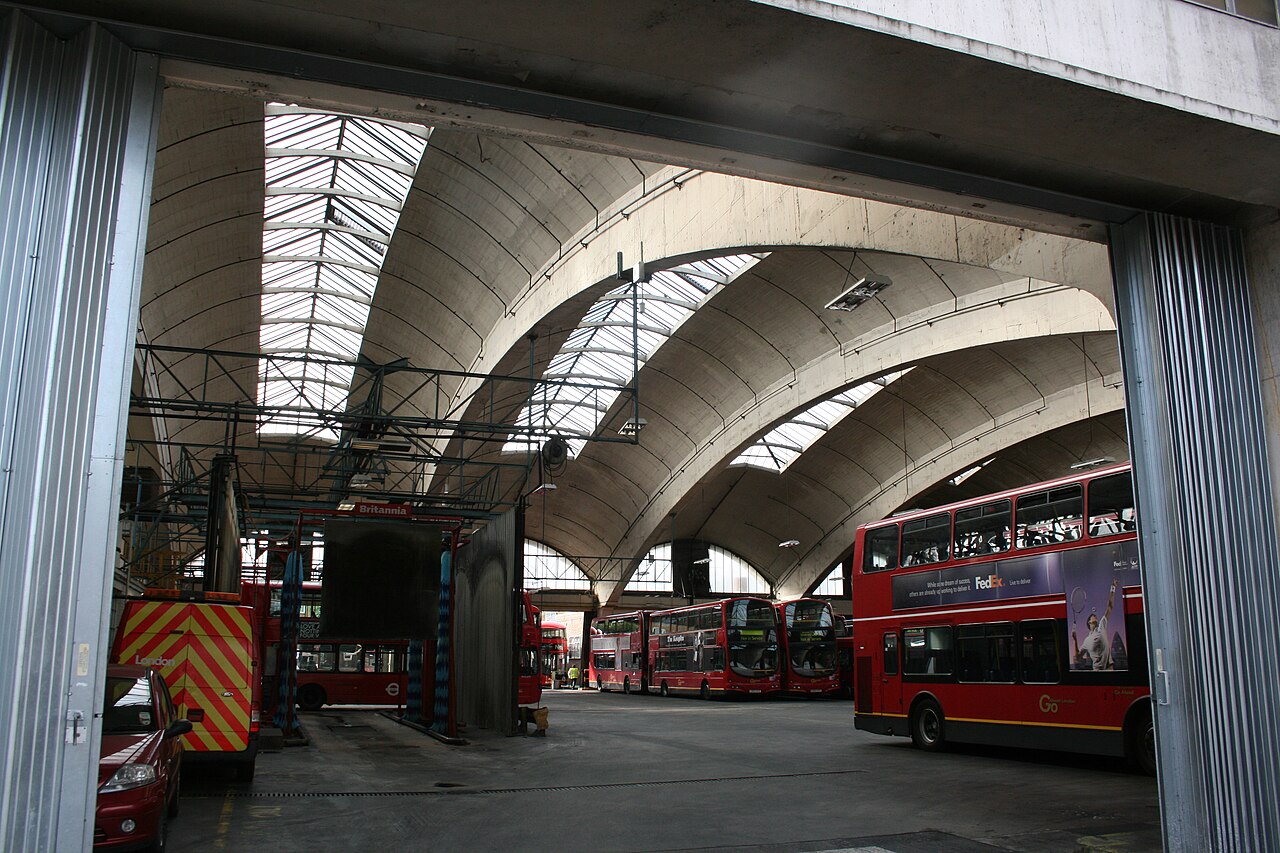
Featured image. The interior of Stockwell Bus Garage, photographed in September 2013. A later view of a London transport workplace. Photograph: YellowFratello, 25 September 2013, via Wikimedia Commons. Image record · CC BY-SA 3.0
