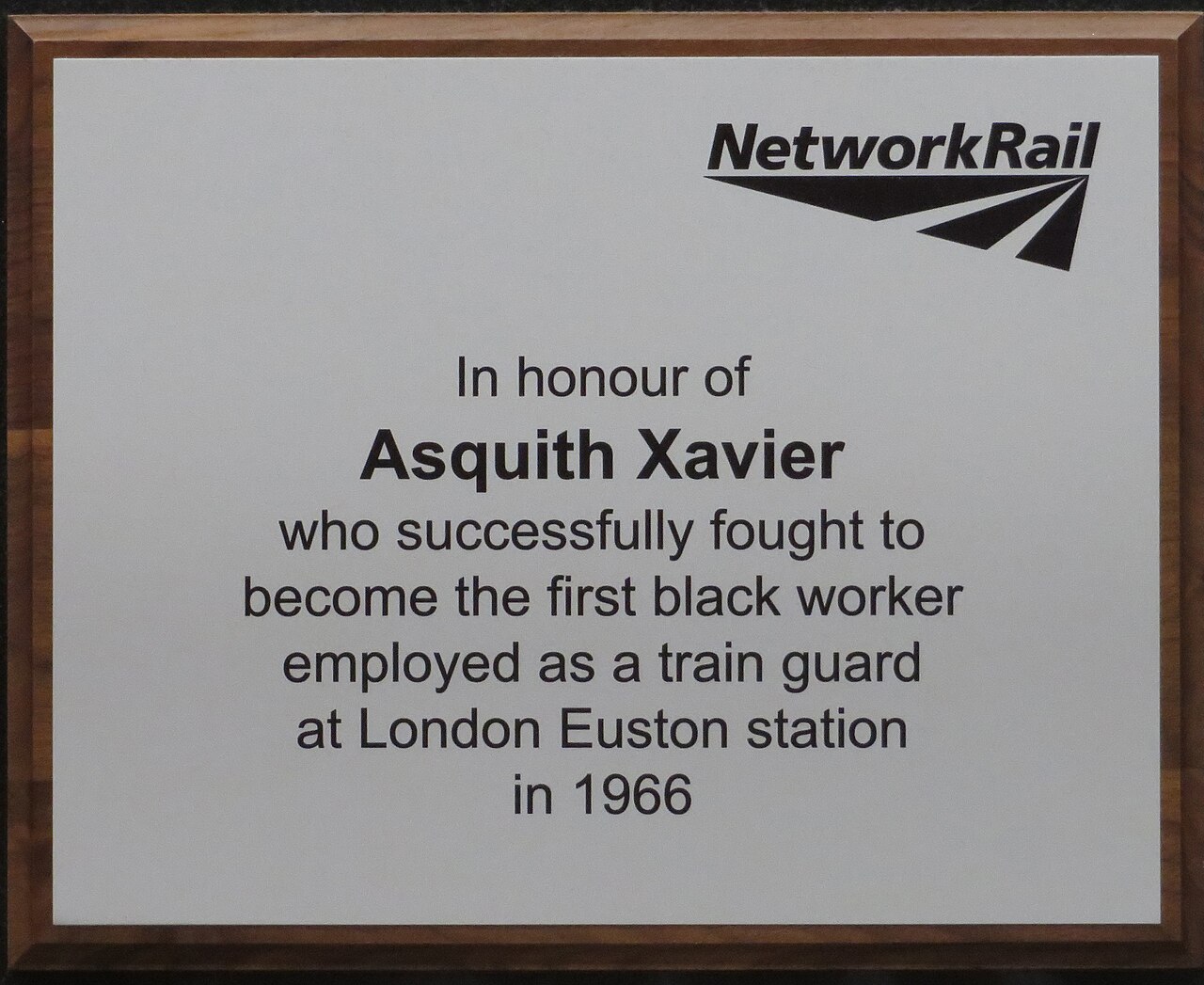
In March 1966, Asquith Xavier applied to transfer from Marylebone to Euston. A written rejection made the obstacle plain: the station operated a racial restriction that excluded him from a guard’s job. Xavier, born in Dominica, had already established a working life on Britain’s railways. He was seeking progression within the same industry, and the refusal forced the rules operating at one of its major London stations into public view.1
An experienced guard faces a closed door
Xavier had progressed from porter to guard at Marylebone. Cuts to services on the former Great Central route threatened the work available there and made a move attractive. The National Railway Museum’s account stresses that British Railways employed Caribbean workers while discriminatory arrangements could still operate at particular workplaces. Euston exposed that difference especially clearly: someone trusted to undertake railway duties elsewhere could be excluded from comparable work because he was Black.2
Colleagues and a public campaign
Trade union involvement did not run in one direction. Local representatives had participated in maintaining the barrier, while other railway workers opposed it. Irish colleague Tony Donaghey refused an Euston job after learning why Xavier had been rejected. Jim Prendergast, secretary of the National Union of Railwaymen’s Marylebone branch, helped publicise the case. The West Indian Standing Conference and the Campaign Against Racial Discrimination also supported the challenge, widening it beyond an internal staffing dispute.2
Questions reach Parliament
The parliamentary record shows how the issue reached government. On 15 July 1966, MPs Lena Jeger and William Hamling asked about discrimination in railway employment and whether the minister would give the British Railways Board a general direction on the matter. Transport Minister Barbara Castle replied that both the government and the board opposed racial discrimination. She nevertheless acknowledged difficulties in securing local acceptance of Black workers and referred to the need for vigilance across the undertaking. Her answer is revealing because it placed an official statement of equality alongside an admission that practice could differ. The published exchange can be read directly in Hansard, preserving the language and limits of the government’s response.4
A gap in the law
Britain had already passed the Race Relations Act 1965, but its protections did not cover employment. The Act addressed discrimination in public places and created a board with a conciliatory role. A dispute about who could become a railway guard therefore fell outside an important part of its reach. The Race Relations Act 1968 subsequently extended protection to employment and housing. This chronology helps explain the significance of Xavier’s case without treating one campaign as the sole cause of legislation. It also distinguishes a legal prohibition from the longer task of changing what happened in individual workplaces.5
The offer and the first working day
Network Rail records that Xavier was offered the job on 15 July, with his pay backdated to May. Acceptance did not bring an immediate end to hostility. He received threatening letters and needed police protection when starting work. Those details complicate a simple account in which a discriminatory rule disappears and everything is resolved. Winning access to a post and being able to do that work without intimidation were separate matters. His experience after the offer belongs within the history of the dispute as much as the decision that overturned the barrier.3
Xavier became Euston’s first Black guard on 15 August 1966. English Heritage describes the six weeks of training that followed, covering the route to Manchester Piccadilly and the signalling and operating knowledge required. The return to training matters: after the publicity, he had a railway job to learn and perform. His professional life continued beyond the moment for which he became known.1
A history marked in several places
A plaque at Euston followed in 2016, and another was unveiled at Chatham in 2020. These locations connect the employment dispute with a later place in Xavier’s life. They also allow the story to be encountered in ordinary journeys through stations and streets, alongside the written records of the campaign.3
In August 2026, RMT reported a further English Heritage plaque at Xavier’s former home in Notting Hill. The union’s account recalled Prendergast’s role and included Xavier’s daughter Maria in its photographs of the commemoration. The address adds a domestic location to the better-known station setting. Together, these memorials trace a person through home, workplace and organised campaigning, while the surviving documents explain the specific exclusion he challenged.6
Sources and further reading
1. Asquith Xavier — English Heritage.
2. Blowing the whistle on the British Railways colour bar — National Railway Museum.
3. Asquith Xavier — Network Rail.
4. Coloured Workers, 15 July 1966 — House of Commons Hansard.
5. An early history of British race relations legislation — House of Commons Library.
6. Blue plaque for Asquith Xavier — RMT.
Featured image. The plaque commemorating Asquith Xavier at Euston station, photographed in August 2018. Photograph: Brian Cooper, 5 August 2018, via Wikimedia Commons. Image record · CC BY 2.0
