When Betty Campbell explained her approach to teaching, she began with an ordinary requirement: children needed to read. Why should their books not include African folk tales or the lives of Black people? At Mount Stuart Primary School in Cardiff, she used the freedom within everyday teaching to give pupils a broader account of the world. Black history belonged inside the curriculum. 1
Returning to Butetown
Born in Butetown in 1934, Campbell grew up in the Cardiff docklands community often called Tiger Bay. Her father was a Jamaican merchant seaman; her mother had Welsh and Barbadian heritage. Her father’s death during the Second World War left the family facing financial hardship. A scholarship took Betty to Lady Margaret High School for Girls. 2
Her route into teaching continued after marriage and motherhood. She entered Cardiff Teacher Training College in 1960 and qualified in 1963. After teaching in Llanrumney, she returned to Mount Stuart, the primary school she had attended herself. Professional training brought her back to a community she knew as a pupil and neighbour. 2
A headteacher with local knowledge
Appointed headteacher in 1973, Campbell became the first Black person to hold that role in Wales. She resisted low expectations of Butetown’s children. During the redevelopment of Cardiff Bay, she also worked with parents to secure a suitable new school site. In her account, educational leadership included challenging decisions about the physical space available to pupils. 1
Plans for the school site competed with a proposed car park. An alternative site proved contaminated. Campbell recalled sustained pressure from parents before the school obtained the location they wanted. 1
History throughout the school year
Black History Wales, for which Campbell served as a patron, describes a school where Black experiences and contributions appeared across the year. She taught about the Caribbean, Africa, enslavement and its consequences. Some people objected to children learning this history. Campbell’s answer was that these events had happened and that pupils should know about them. 3
This approach gave historical knowledge a place in primary education without waiting for children to reach a specialist course. The subjects could be difficult, but they were part of the world pupils were growing up in. Campbell continued running Saturday classes and preparing Black History Month workshops after retirement, carrying that work beyond the school timetable. 3
A voice in national education
Campbell was one of the commissioners on the independent National Commission on Education, established in July 1991 with support from the Paul Hamlyn Foundation. Its remit covered education and training across the United Kingdom and looked towards the following twenty-five years. A headteacher from Butetown therefore helped consider questions that extended from early schooling to adult learning and employment. 4
The commission gathered written and oral evidence, commissioned research and examined subjects including effective schooling, citizenship, the teaching profession and resources. Its report, Learning to Succeed, appeared in 1993. Campbell’s participation placed experience from a primary school alongside the perspectives of other educators, employers and public figures in a debate about the whole education system. 4
Remembering the work
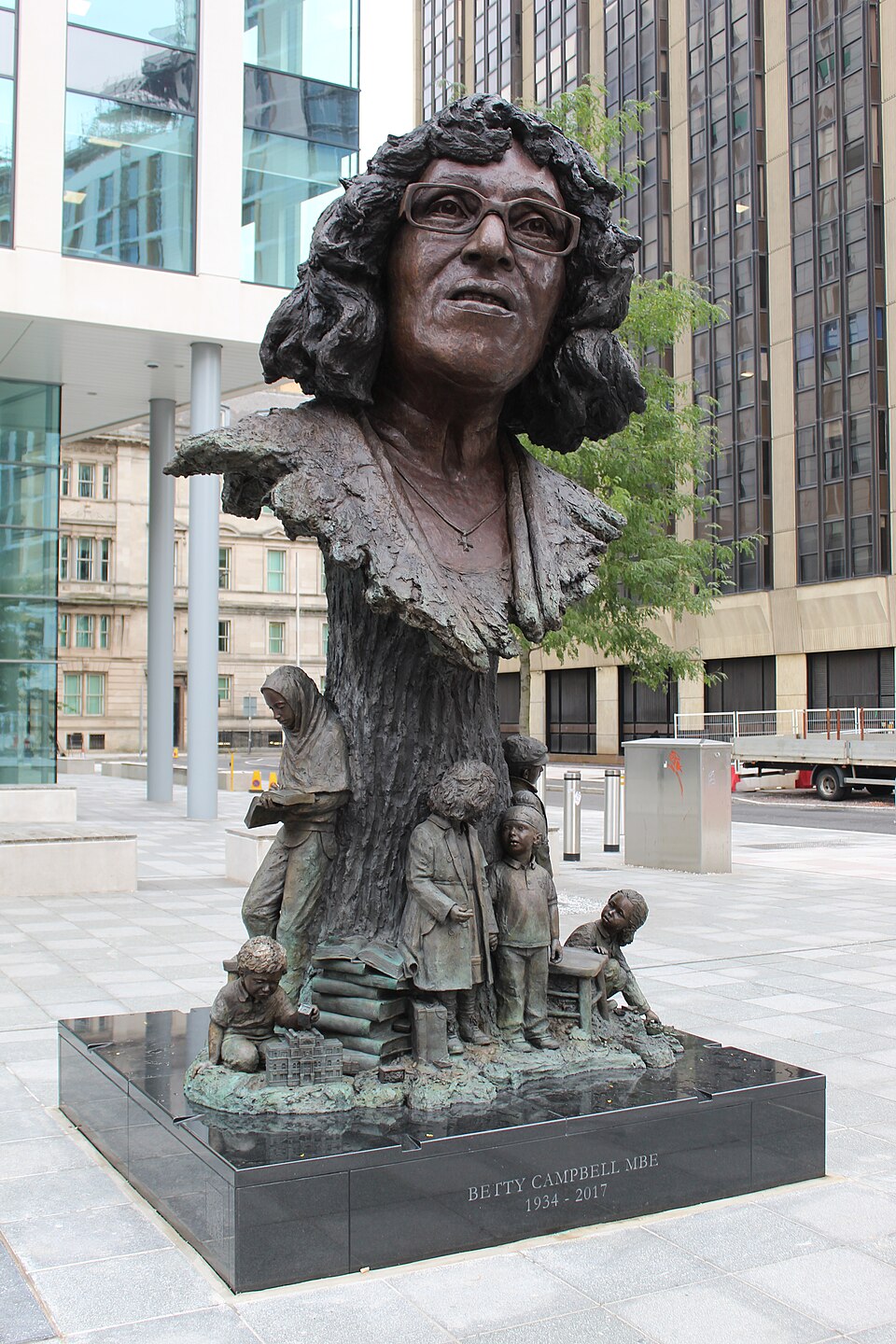
After Campbell’s death in 2017, a campaign for greater recognition of Welsh women helped bring her life into a new public setting. Monumental Welsh Women worked with Women’s Equality Network Wales and BBC Wales on the Hidden Heroines selection. Campbell won the public vote in January 2019. Eve Shepherd’s monument was unveiled by Campbell’s family in Cardiff’s Central Square in September 2021. 2, 5
The school developed its own form of remembrance. After learning about Campbell, pupils wanted a tribute at Mount Stuart itself. With support from governors and Cardiff University, artist Bradley Rmer painted a mural on the school building, officially unveiled in June 2023. The project brought her story back to the place where she had taught. Children who had never been her pupils helped decide how her presence would remain part of their school. 6
Sources and further reading
1. Black Women Headteachers of the Windrush Generation. Bloomsbury; author’s manuscript. 2021.
2. Rachel Elizabeth Campbell, 1934–2017. Dictionary of Welsh Biography. 2022-06-22.
3. Mrs Betty Campbell MBE Monument. Black History Wales. 2021-09-27.
4. Records of the National Commission on Education. UCL Institute of Education.
5. The Campaign. The Betty Campbell Monument.
6. University-sponsored mural of Betty Campbell MBE officially unveiled. Cardiff University. 2023-06-14.
Featured image. Eve Shepherd’s monument to Betty Campbell in Central Square, Cardiff, photographed in October 2021. Sculpture: Eve Shepherd. Photograph: 14GTR, 4 October 2021, via Wikimedia Commons. Image record · CC BY-SA 4.0
