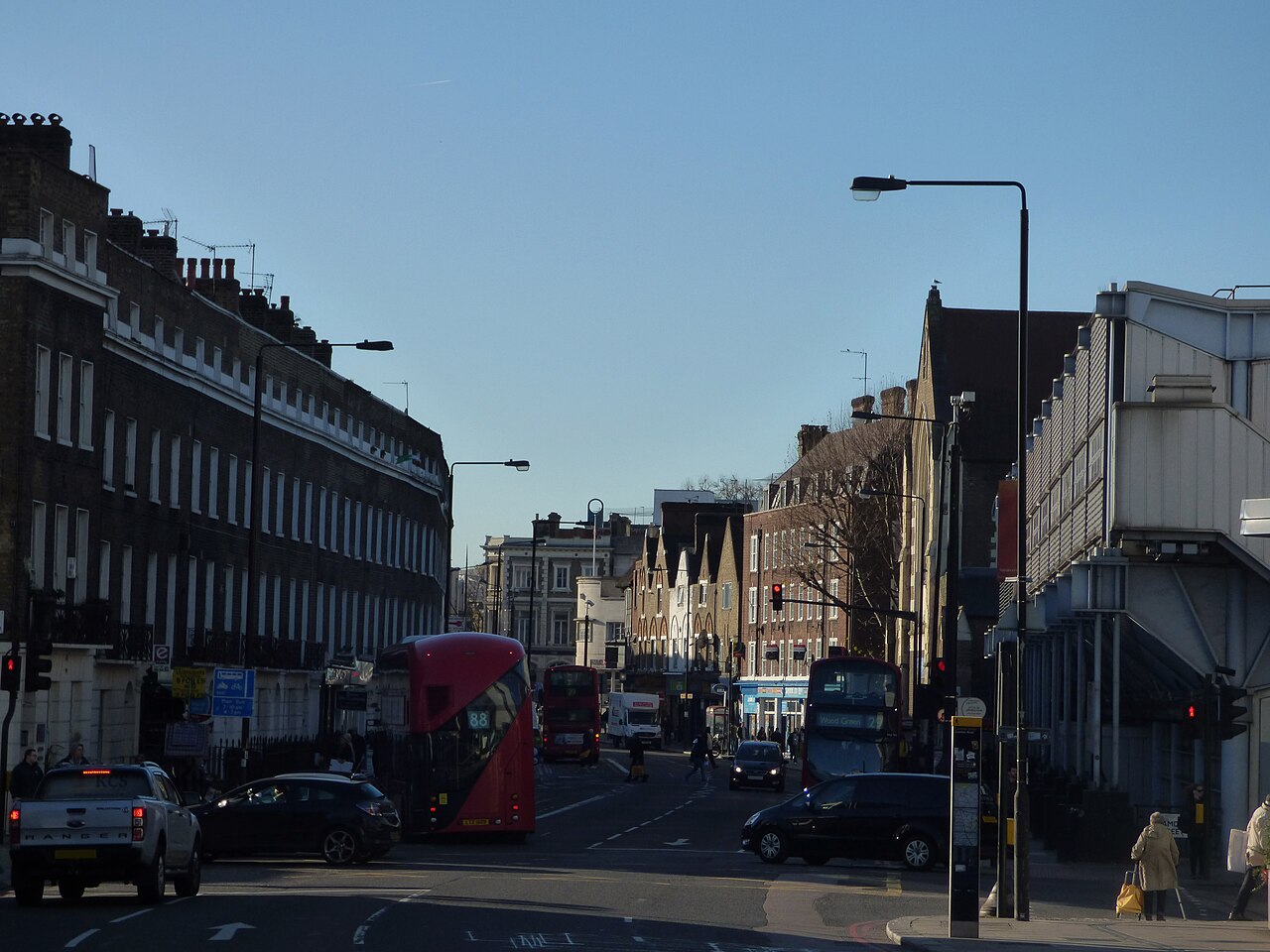
A hostel at 62 Camden Road gave the West African Students’ Union a place of its own in London in 1933.4, 8
Organising around a shared problem
Founded in London in 1925, WASU grew through the efforts of Ladipo Solanke, Herbert Bankole-Bright and the students who joined them. It brought practical support and political campaigning into the same organisation.8
Finding accommodation was an urgent concern. Racial discrimination could make ordinary lodgings difficult or impossible to obtain, even for students who had travelled to Britain to acquire professional qualifications. WASU organised practical support while campaigning against racism and colonial rule. Over its lifetime it established four London hostels, serving students and other African visitors. The organisation gave newcomers somewhere to turn when individual resources and university membership offered insufficient protection. It brought people from different West African societies into a common association.2
The work depended on support on both sides of the journey. Solanke, who had arrived in London in 1922 and studied law at UCL, undertook a three-year fundraising tour in West Africa. Money raised there helped bring the 1933 hostel into existence. A London building was therefore sustained by connections extending well beyond London: the union’s organising linked Britain with West Africa through shared concerns about education and opportunity.3
A journal that travelled
From 1926, the union published Wãsù, distributing it across Europe and Africa. It carried news, fundraising appeals, event announcements and students’ achievements. It connected people who could not all meet in the same room.4
The work of keeping a union alive
Women helped make that community function. Historian Marc Matera documents members working as librarians and treasurers, writing for the journal and organising dances and concerts. Yet women remained excluded from the highest executive posts until the war years.1
A surviving advertisement for a “Tropic Night Dance” appears in the papers of Robert Wellesley Cole, a WASU director, now held at SOAS. It places entertainment alongside the correspondence and organisational business preserved in his collection. Social occasions brought people into contact and gave the union a life between campaigns. The archive records an association maintained through recurring tasks, invitations and meetings, as well as through its public statements.5
Accommodation and political independence
Control of student housing became politically contested. The government preferred to support Aggrey House, a separate hostel in Doughty Street. WASU protested against that scheme in a 1934 pamphlet and organised a boycott. The dispute concerned who would shape the environment in which African students lived and discussed politics. WASU opened another hostel in Camden Square in 1938, continuing its own project.4
As Hakim Adi’s research shows, the union worked as a pressure group: it supported political activity in West Africa, lobbied the Colonial Office and resisted attempts to direct African students’ political lives. Its position in London offered access to the officials responsible for colonial administration. Students could bring grievances to the centre of government and challenge the assumption that those officials alone should decide the terms of debate.6
West Africa within a wider movement
WASU’s members participated in the exchange of ideas among Africans and the wider Black diaspora while maintaining particular aims for West Africa. Adi emphasises that these political identities developed through changing circumstances. Living in Britain placed students in contact with other movements, but their connections to the colonies remained central. The organisation joined together experiences that were often treated separately: racial discrimination in the imperial capital and the unequal distribution of power under colonial government.7
The union remained active into the 1960s, combining practical assistance with opportunities for political discussion.4
The papers preserved at SOAS show some of the continuing labour behind that undertaking. They give WASU a history of organisational relationships and everyday activity, alongside its place in the larger political history of Britain and West Africa.5
Sources and further reading
1. Afro-metropolis: black political and cultural associations in interwar London — University of California Press.
2. West African Students Union (WASU) — SOAS Archives, via Archives Hub.
3. The making of a movement: Ladipo Solanke, founder of WASU — UCL.
4. The Wãsù journal — The National Archives.
5. Papers of Robert Wellesley Cole — Special Collections, SOAS Library.
6. West African students in Britain, 1900–60: the politics of exile — Immigrants & Minorities / Taylor & Francis.
7. Pan-Africanism and West African nationalism in Britain — African Studies Review / Cambridge University Press.
8. Ladipo Solanke — Black Plaque Project.
Featured image. Camden Road in 2016. The West African Students’ Union opened its first hostel on this street, at number 62, in 1933. Photograph: ell brown, 28 November 2016, via Wikimedia Commons. Image record · CC BY-SA 2.0
